In this article
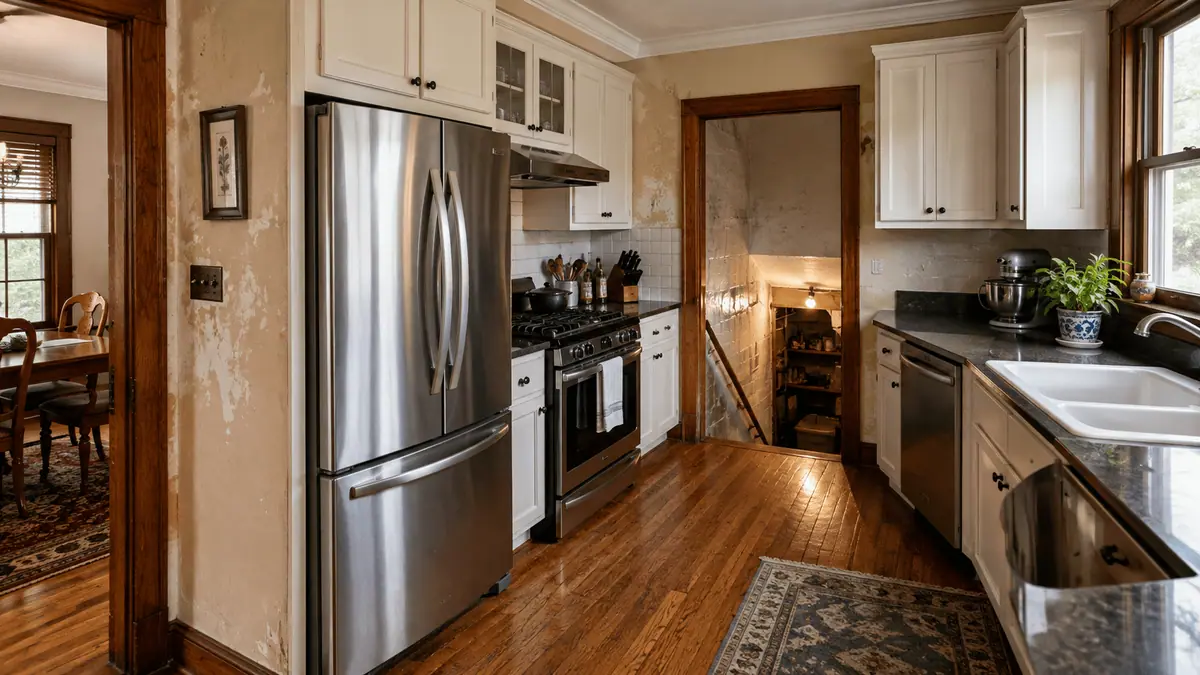
In an older Cleveland house, the appliance often isn't the only thing at fault. Circuits from another era put strain on machines built for a newer home, and so do tired pipes in a damp basement. Fix the house side along with the appliance and the same breakdown is far less likely to come back.
Wiring that was never meant for this many machines
A kitchen wired decades ago might feed the fridge and the microwave from one circuit. Each works fine alone. Together they trip the breaker, and every restart is a small jolt for the fridge's electronics.
Watch for lights that dim when the compressor kicks on. Outlets that feel warm are another sign, and so are two prong outlets with an adapter plugged in. Those are jobs for an electrician, not for us. We'll still tell you when we see them, because a new control board on a weak circuit is money spent twice.
Old pipes and slow water
Galvanized steel pipes rust from the inside. Flakes of that rust travel to the first small opening they meet, and on a washer or dishwasher that's the inlet screen behind the hose. The machine fills slowly. Sometimes it throws an error, or a cycle seems to run forever.
Shut the water off and unscrew the hose. If the little screen is packed with brown grit, rinse it under the tap. Pressure that stays weak afterward points to the house plumbing rather than the machine. Old drains cause the opposite trouble. A washer can pump out faster than a narrow standpipe can swallow, and the overflow ends up on the floor.
Basement laundry rooms
Lots of older homes around here keep the laundry downstairs. Damp air in those basements is hard on motors and control boards, and rust starts on the bottom of the cabinet. Cold floors in January slow a washer's fill and make a drain hose stiff. A dehumidifier helps the whole room, and the machines in it benefit too.
Dryer vents are the bigger worry. Many run a long way to reach an outside wall, often with several bends. Lint builds up at every turn, so the clothes take longer and the dryer runs hotter. Our article on a dryer that gets too hot covers what that heat does.
Tight kitchens and uneven floors
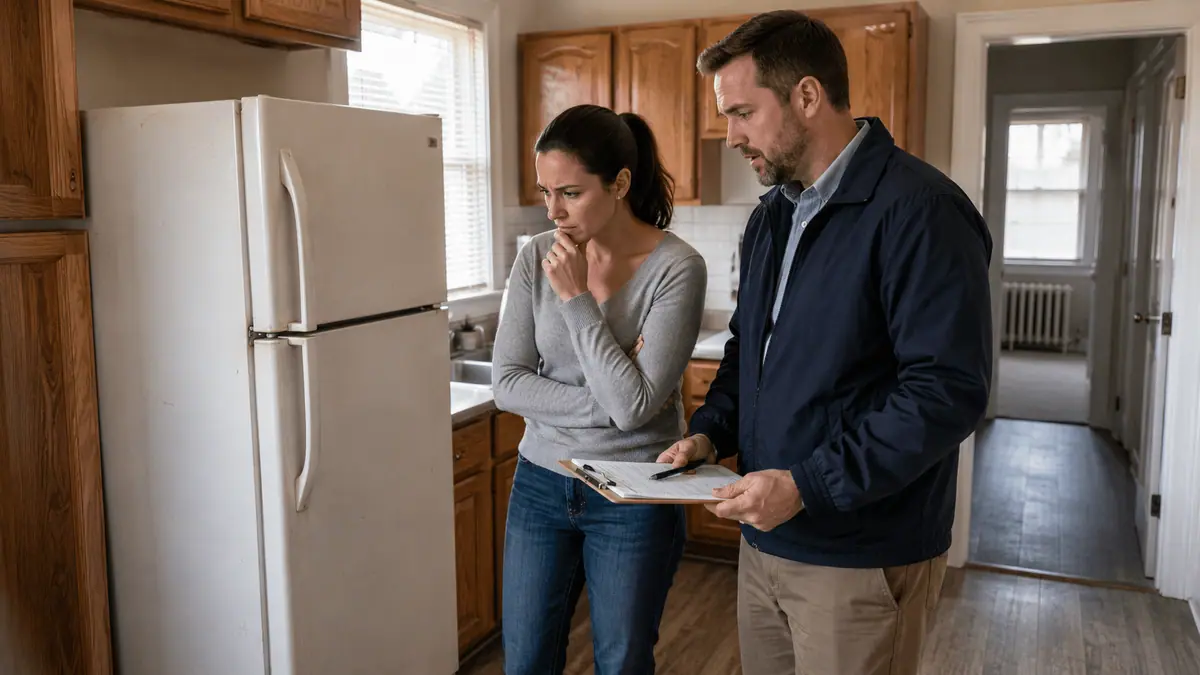
Old kitchens were laid out around smaller refrigerators. Squeeze a modern fridge into that opening and it can't shed heat from its coils. It runs longer and wears out sooner. Leave the gap the installation guide asks for, at the top and the back.
Floors settle over the years, too. A washer on a sloping floor walks during spin and hammers its own suspension. Leveling the feet is the first fix, and we explain how in our guide to a washing machine that shakes.
Why appliances on one street fail around the same time
Neighbors notice this and wonder if it's bad luck. Usually it isn't. Houses on the same block were often built in the same years and updated in the same wave, so the appliances in them are about the same age.
They also share everything around them. The water is the same. So are the aging power lines and the summer storms that flicker the lights. When the power drops and returns, every fridge on the street gets the same hit. So a run of failures nearby is a good reason to check your own machines before they follow.
Did the house next door just lose its fridge? Spend a few minutes on yours. Set a thermometer on the middle shelf and read it the next morning. Look behind the washer for hoses that bulge or weep at the ends. Then just listen. A new rattle or a click that repeats is easier to deal with now than after it stops.
How we approach a repair in an older house
We test the appliance first, the same way we would anywhere. Then we look at what feeds it. Is the outlet steady? Does water arrive at decent pressure? Is the vent clear and the drain wide enough? That extra look is how we avoid replacing a part that the house would ruin again.
We name the price before any part is ordered. Our repairs carry a 90-day warranty. If the house side needs an electrician or a plumber, we'll say so plainly.
Repair or replace in an older home
A newer machine won't fix weak wiring or rusty pipes. Sort those out first, or the replacement will struggle the same way. When the appliance itself is old and the repair is expensive, it pays to read our guide to repairing or replacing an appliance first.
To book a visit, call (216) 352-3935 or use our page for appliance repair in Cleveland. We cover the older neighborhoods across the city and the suburbs around Parma.
Questions people ask
Why are the major appliances in my neighborhood failing around the same time?
Homes on one block were often built and updated in the same years, so their appliances are about the same age. They also share the water and the power lines, and a storm surge hits every house at once. That makes failures cluster.
Do older houses damage new appliances?
They can. Overloaded circuits and rusty pipes shorten the life of a new machine. A cramped fridge opening or a long dryer vent does the same. Fixing those before the new appliance goes in protects it.
Why does my washer fill so slowly in an old house?
Rust and sediment from galvanized pipes often clog the inlet screens where the hoses connect. Rinse the screens. If the pressure is still weak, the house plumbing needs a look.
Why does my breaker trip when the fridge starts?
In many older kitchens the fridge shares a circuit with other appliances. The startup draw can push it over the limit. An electrician can add a dedicated circuit.
Is it worth repairing appliances in an older home?
Often yes, as long as the house side is sorted out too. A repair on a machine that keeps meeting the same weak wiring or clogged vent will not last.
Do you repair appliances in older Cleveland homes?
Yes. We work in older houses across Cleveland and the suburbs, and we look at the outlet and the water supply along with the appliance.