In this article
- Why a washing machine shakes in the first place
- An unbalanced load is the most common cause
- Too much in the drum
- The washer is not sitting level
- New washer shaking violently? Check the shipping bolts
- Worn suspension or shock absorbers
- Drum bearings and loose parts
- When a drain problem makes it shake
- When to stop using the washer
- Washer repair near Parma
- Questions people ask
Some wobble during spin is normal. Wet towels are heavy, and at top speed they yank on the tub pretty hard. Banging into the wall is another story. So is a washer that hops, or one that ends the cycle a few inches from where it started.
Most people assume the machine is broken. Usually it's the load, or the way the washer sits on the floor, and you can sort both out yourself. Worn parts do happen too. They tend to announce themselves slowly, with the banging getting a bit worse every week.
Why a washing machine shakes in the first place
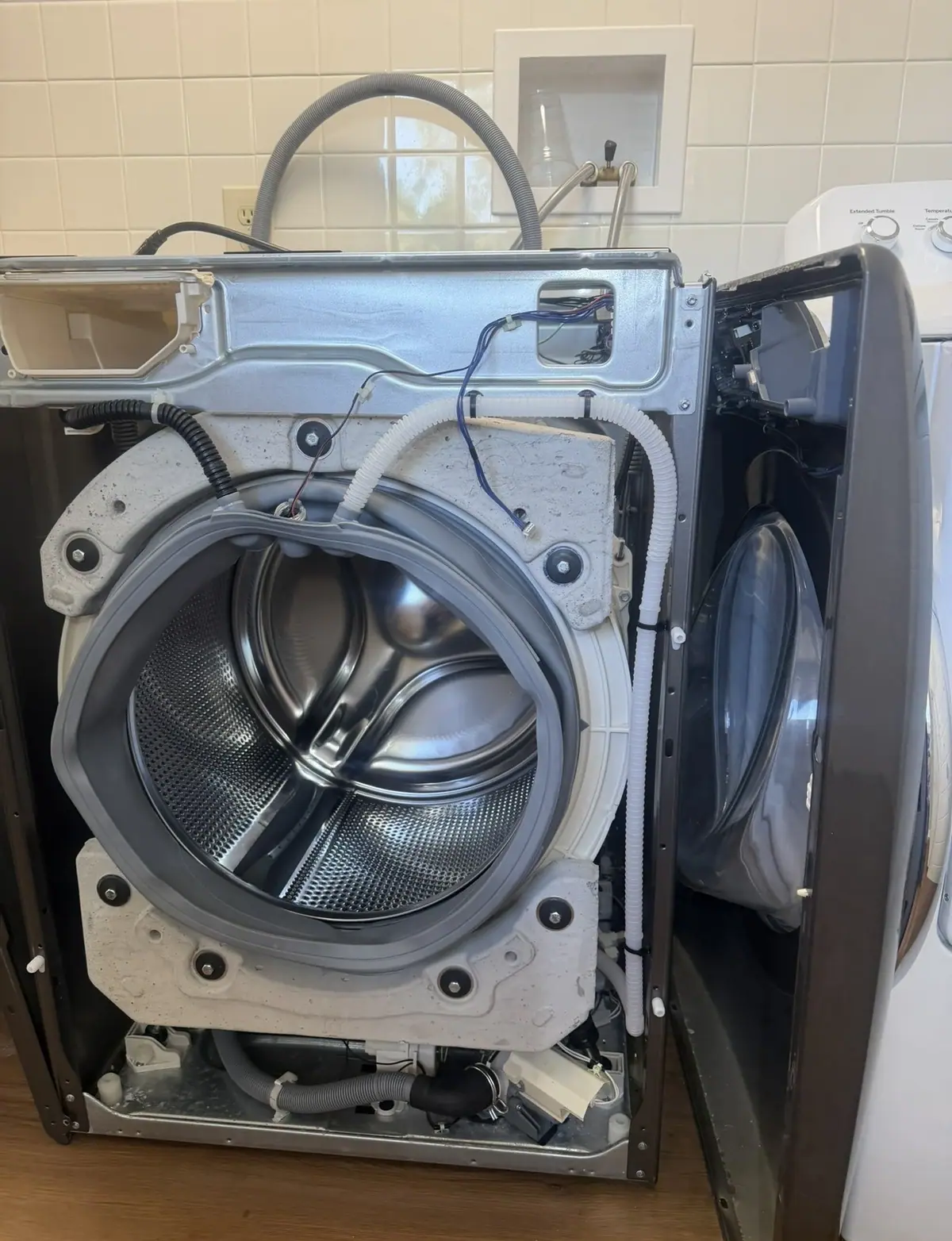
Inside the cabinet the tub basically hangs. Top-loaders hang it from suspension rods or springs. Front-loaders use springs up top, shock absorbers down below and a big chunk of concrete bolted on as a counterweight. Their whole job is to soak up spin.
Clothes spread out evenly, and the drum spins smooth. Clothes balled up on one side, and the drum gets yanked off center every single revolution. More speed, more yank. That's why the wash part can seem perfectly calm and then the final spin starts and the whole thing pounds.
An unbalanced load is the most common cause
Comforters are the worst offenders. A queen size one drinks up water and rolls into a soggy lump. Sheets wrap around each other too. One bath mat by itself does it, and so does one pair of jeans in an otherwise empty drum.
Most newer machines notice. They slow down and shuffle the load around. Then they try the spin again, so you hear it start and stop over and over. Some give up and leave everything dripping. A few just power through and shake like crazy.
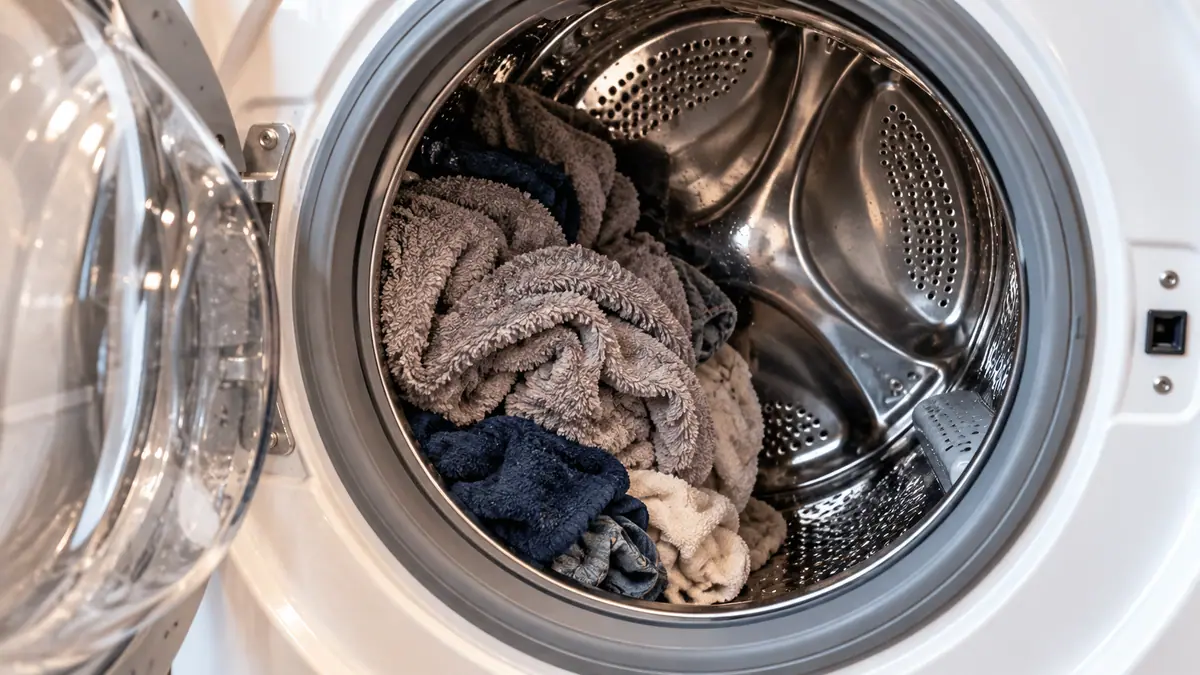
Easy fix. Pause it, open the lid or door and pull the clothes apart by hand so they ring the drum. Washing one heavy thing? Toss in two towels to balance it. Restart the spin. Calm spin now means your washer is probably fine.
Too much in the drum
Stuffing it full causes trouble from the other direction. Packed clothes can't shift into an even ring, and the suspension ends up carrying more weight than it's made for. On a top-loader, keep about a hand's width of room up top. Don't push clothes down into a front-loader to squeeze in one more shirt.
The washer is not sitting level
Even a tiny rock turns a slight imbalance into a big shake. Press down on the front corners one at a time. Do the back corners next. If anything moves, one foot isn't touching down.
The front feet screw up and down. Most have a lock nut too, and you snug it against the cabinet once the height is right. A lot of rear feet set themselves when you tilt the washer forward an inch or two and let it drop back. Set a level on the lid both ways and keep adjusting till the bubble's centered.
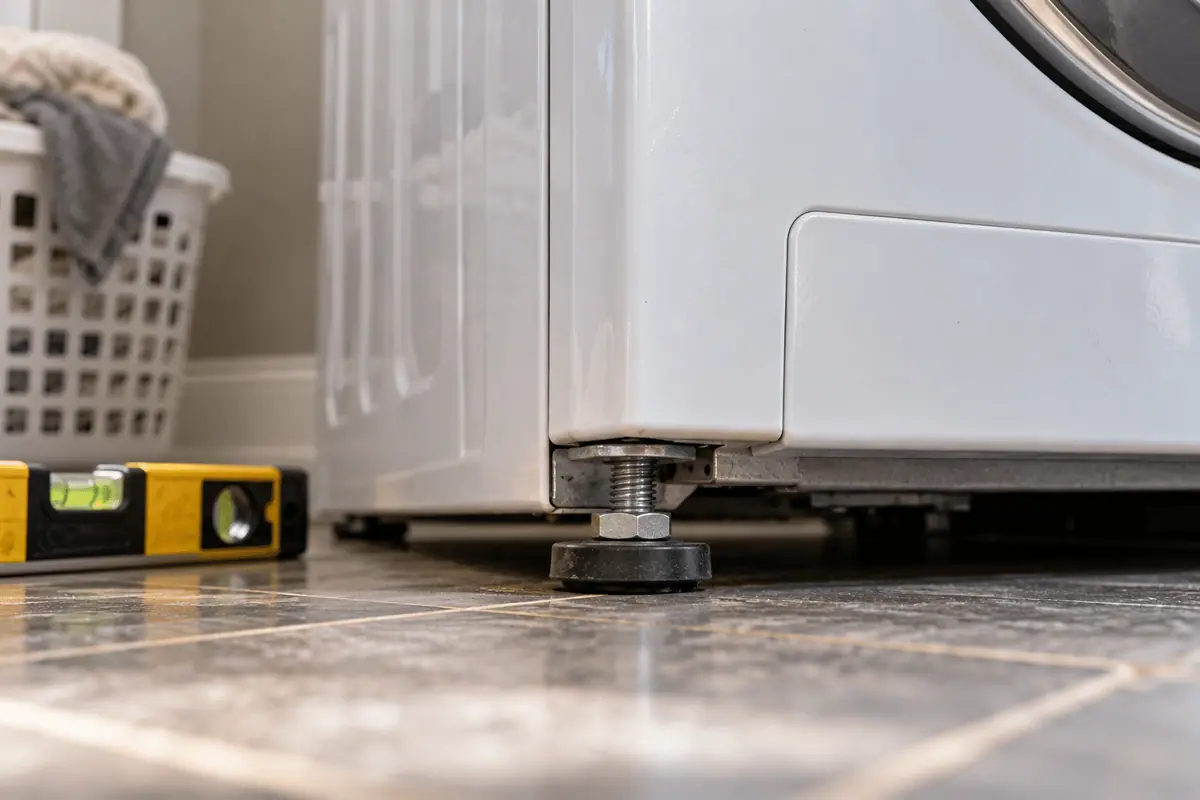
Floors play a part as well. Washers on a wood floor upstairs bounce more than ones on a basement slab, since the joists give. Rubber pads under the feet help a springy floor some. They don't fix a crooked machine or a worn suspension, though.
New washer shaking violently? Check the shipping bolts
Brand new front-loader that tries to walk out of the room on its first spin? Look at the back panel. Front-loaders ship with long bolts that lock the tub in place so it survives the truck ride. Installers are supposed to pull them. Now and then they don't, and with the tub locked solid, the cabinet takes every bit of the shaking.
Bolt heads with plastic spacers that match the drawing in your install guide mean they're still in. Back them out and pop the plastic caps from the parts bag into the holes. Hang onto the bolts. You'll want them if you ever move.
Worn suspension or shock absorbers
An older washer that used to be quiet and now bangs on spin usually has a tired suspension. On top-loaders, the little friction pads in the rod ends wear down, so the tub sags and swings around. On front-loaders it's the shocks. Once they go soft, the drum smacks the cabinet every turn.
A two second test works on either kind. Washer off and empty, push the drum down hard and let go. It should pop back up and stop. Bouncing a few times, or sitting low on one side, means the suspension's done holding it.
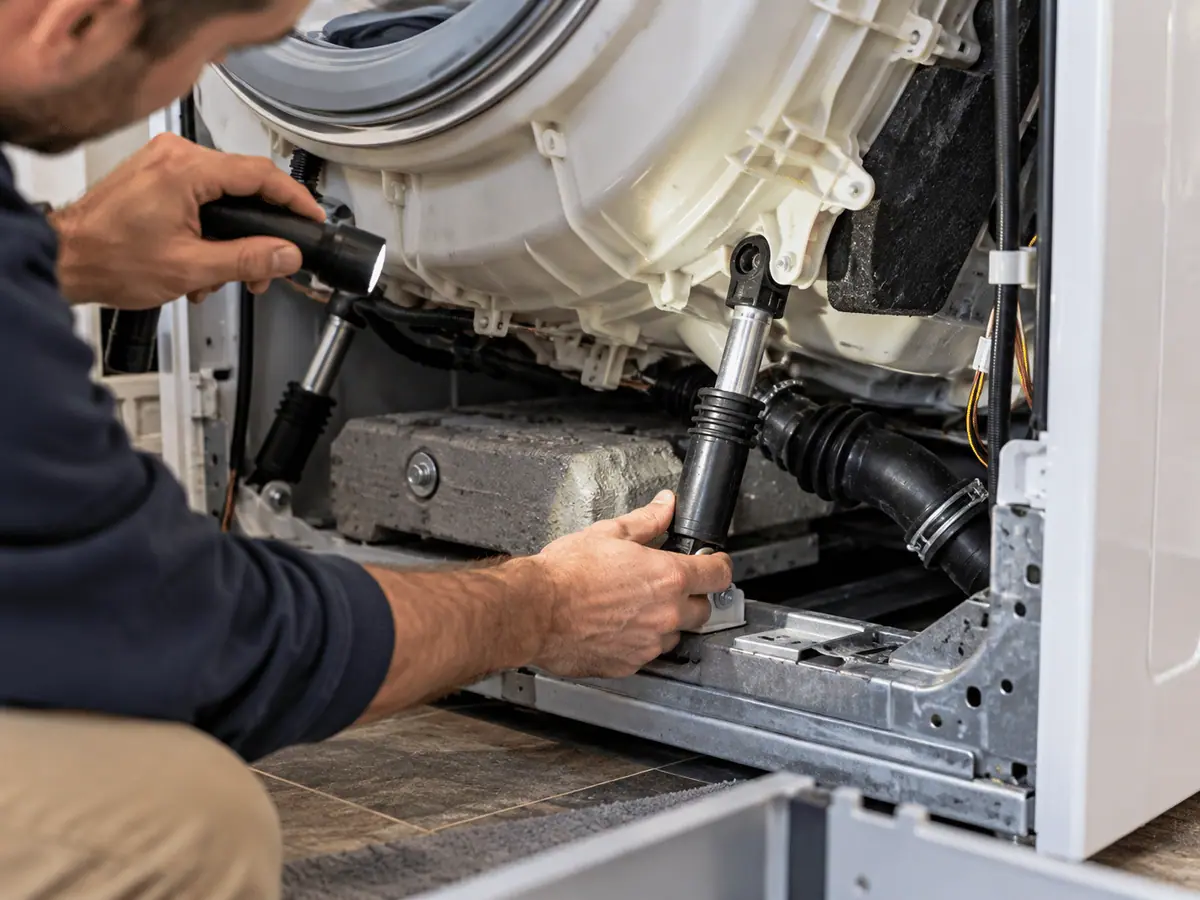
We swap those as a set, because the rest are just as worn as the one that failed. Most of the time it's a single visit.
Drum bearings and loose parts
Bearings sound different. Forget thumping. It's a low rumble that turns into a jet engine as the spin winds up. Grab the top edge of an empty front-load drum and try lifting it up and down. A tiny bit of play is fine. A clunk you can feel isn't.
Bad bearings usually start with a leaky seal that lets water creep in. Getting to it early is worth it. Run a bearing until it falls apart and it can chew up the tub shaft, and then the bill starts looking like a new washer.
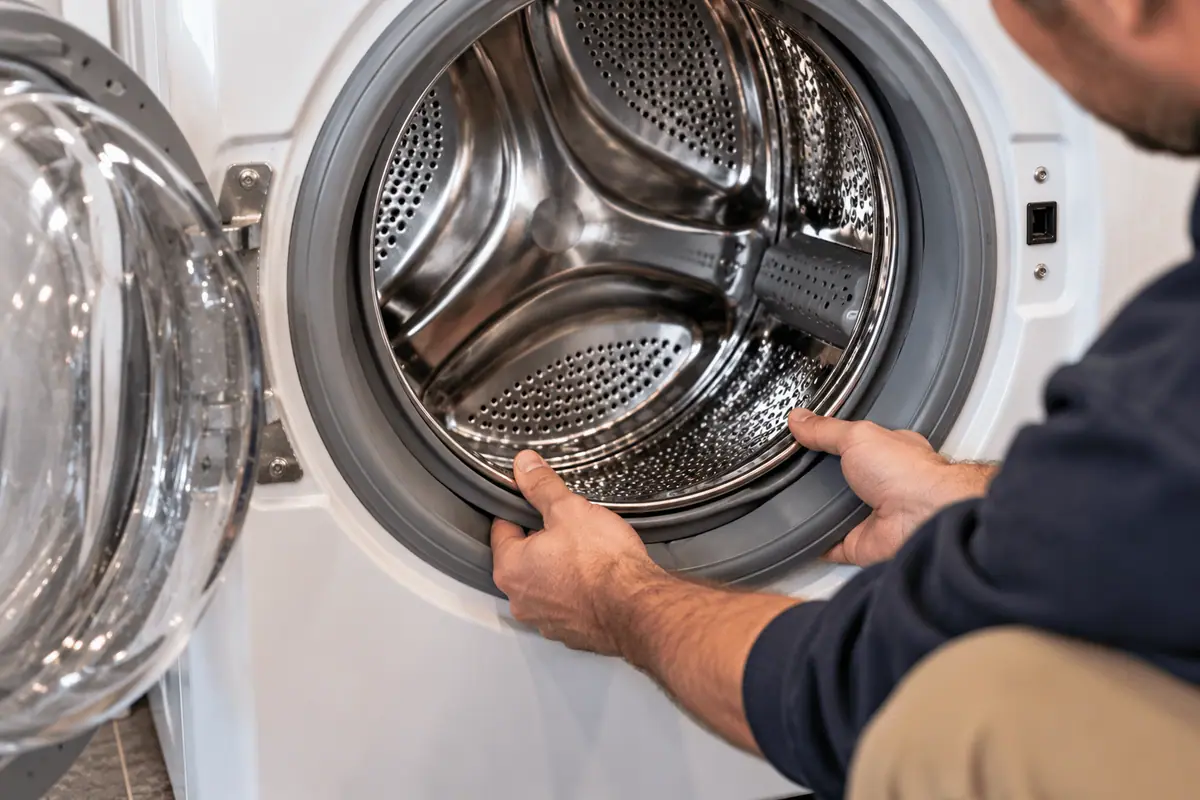
One big knock every turn can be something else entirely. Front-loaders sometimes loosen a counterweight bolt. Or something's stuck between the tub and the drum, usually a coin or a bra wire. Worth ruling out before anyone orders bearings.
When a drain problem makes it shake
A washer that can't pump out spins with water still sloshing in the bottom. That water slams back and forth, so even a nicely balanced load shakes, and the clothes come out soaked.
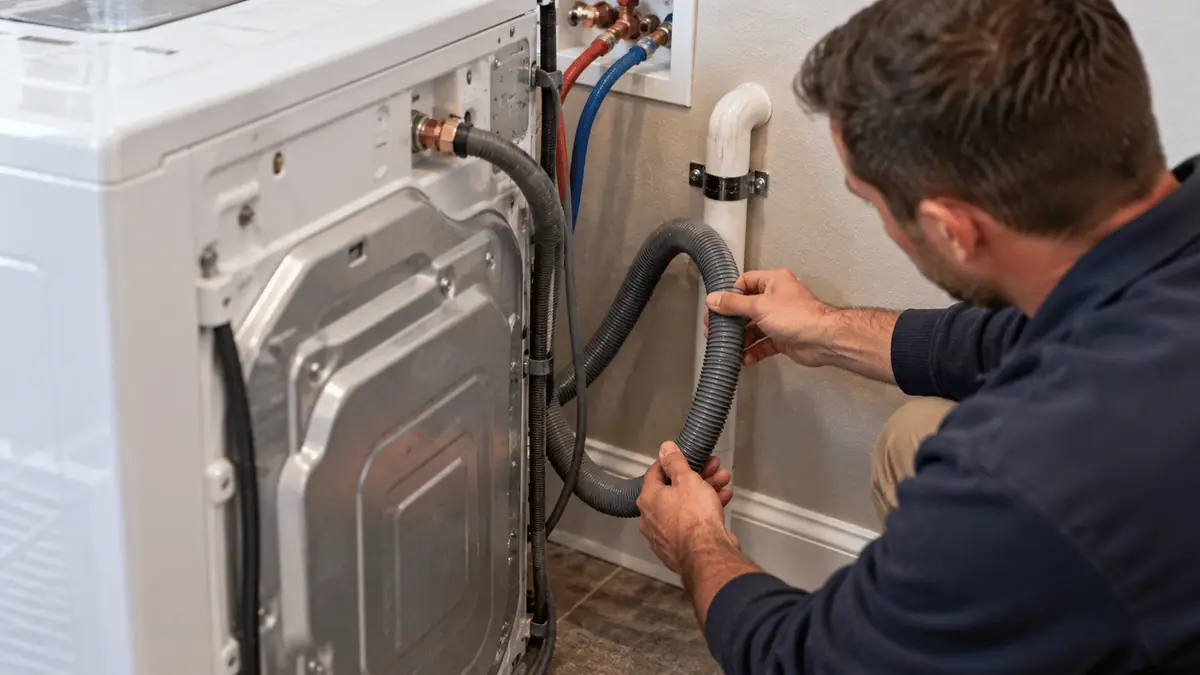
Check behind the machine for a hose that's kinked or squashed against the wall. Front-loaders have a little pump filter behind a panel down at the bottom front. Before you twist it open, lay down an old towel and slide a baking sheet underneath. Still draining slow after that? The pump itself needs a look.
When to stop using the washer
Quit running it once it moves far enough to tug on the hoses or the cord. A grinding or scraping noise is a stop sign too. So is a burning smell, and so is water on the floor. A washer that walks can rip the fill hose right off the valve, and then you've got a flooded basement.
Until somebody looks at it, wash small loads on a slower spin. Shut the water valves when you're done for the day.
Washer repair near Parma
Load balanced and the washer level, but it still bangs? Then we'll find the worn part. Our technicians fix top-loaders and front-loaders all over Parma and Cleveland. You get the price before we start, and the repair's covered for 90 days.
Book through our washing machine repair page or call (216) 352-3935. Washer stopping halfway through the cycle too? Read why a washer stops mid-cycle.
Questions people ask
Why is my washing machine shaking violently?
On a new front-loader, make sure the shipping bolts came out. Otherwise start with the load. One heavy item or a balled-up comforter throws the drum off center. Balanced load, level machine and it still shakes? Then the suspension or the bearings are probably worn.
Why does my washer shake only during the spin cycle?
Spin is the fastest part of the cycle, so any imbalance pulls hardest right then. An uneven load shows up there first. So does a washer that rocks on its feet, and so does a tired suspension.
How do I stop my washing machine from shaking?
Spread the clothes around the drum and don't wash one heavy thing by itself. Level the washer and lock the nuts on the front feet. Still shaking after that means it's time to have the suspension checked.
Is it safe to use a washer that bangs during spin?
For a short while, with small loads on a slower spin. A washer that walks can stretch or tear its hoses. Stop using it if it moves, grinds or leaks.
Can a shaking washer damage itself?
It can. Constant banging wears out the suspension faster and can crack the tub or ruin the bearing seal. Fixing it early usually keeps the repair small.
Do you repair washers that shake or bang?
Yes, top-loaders and front-loaders from all the usual brands. We rule out the load and the leveling first. Then we check the suspension and bearings and give you the price before any work.