Why Your Dryer Takes Longer to Dry in Humid Weather
Published: August 5, 2026

Your refrigerator starts clicking on a Friday night. The washer stops with a drum full of wet clothes. The dryer still tumbles, but one load suddenly takes two hours. At that moment, most Cleveland homeowners ask the same question: Should I repair this appliance, or is it finally time to replace it?
It sounds like a simple financial choice, but the right answer depends on much more than the price printed on a repair estimate or store display. Age, reliability, safety, energy use, installation difficulty, household routines, and the condition of the home’s electrical, plumbing, gas, and ventilation systems all belong in the conversation.
A repair that looks expensive may still be the smarter move when the appliance is high quality, properly installed, and likely to provide several more dependable years. A discounted replacement may look attractive until delivery fees, removal charges, new hoses, electrical work, cabinet modifications, and lost food are added to the total.
Cleveland homes make the decision even more interesting because many properties contain older kitchens, basement laundry areas, narrow doorways, uneven floors, aging utility connections, and appliance openings designed for models that are no longer common. A new machine may not slide into the old space as neatly as the measurements suggest.
At the same time, repairing an outdated appliance with a serious safety issue or an unavailable control board can become a money pit.
The goal is not to save every old appliance, and it is not to replace equipment at the first strange noise. The goal is to compare the total cost, likely outcome, and practical inconvenience of both options.
Once you stop treating the decision as a coin toss and start looking at the whole situation, the answer usually becomes much clearer.
The repair-or-replace question becomes confusing because homeowners are rarely comparing two complete numbers. They are usually comparing one visible repair estimate with one highly advertised appliance price.
The repair estimate may include diagnosis, labor, the replacement component, and testing, while the store price may cover only the machine sitting at the curb or warehouse. That is not an equal comparison.
A technician may quote a substantial amount to replace a refrigerator control board, and the homeowner immediately notices a seemingly affordable refrigerator online. Yet the new model may be smaller, less durable, unavailable for immediate delivery, or unable to fit through the kitchen doorway without removing doors and trim.
The existing water line may need replacement, the outlet may be in the wrong location, and the old refrigerator may require a separate disposal fee.
On the other hand, homeowners can also become emotionally attached to an appliance that has already failed several times. They remember what they paid for it, like its familiar controls, and keep approving repairs because replacing it feels wasteful.
That history can cloud the decision. Money already spent is gone, and it should not automatically justify spending more.
The useful question is what each option is likely to cost and deliver from today forward.
Timing matters too. A refrigerator failure during a summer heat wave creates different pressure than a dishwasher failure before a quiet weekend.
A family with young children may value an immediate washer repair more than waiting several weeks for a preferred replacement model. A landlord may prioritize predictable serviceability, while a homeowner planning a kitchen remodel next year may avoid purchasing a premium appliance that will not fit the future design.
There is no universal answer because the same repair can be smart in one household and unreasonable in another. The decision becomes easier only after the hidden costs, risks, and practical limitations are brought into view.
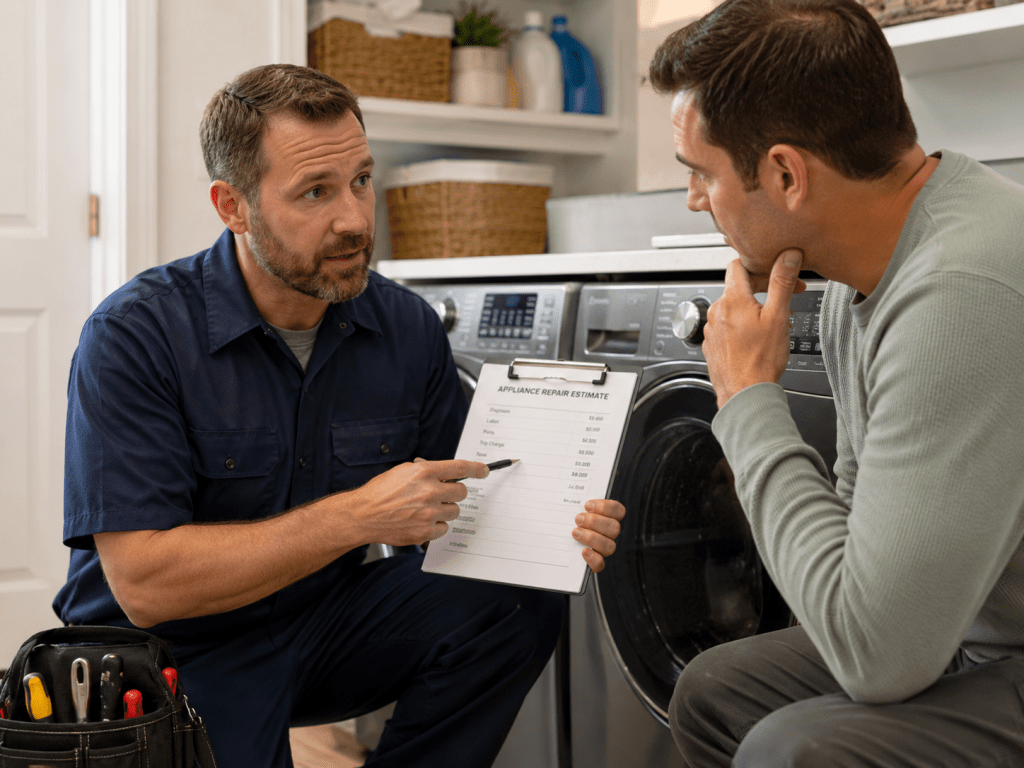
A repair estimate tells you what it costs to address the diagnosed failure, but it does not automatically predict the appliance’s entire future. That distinction matters.
Suppose a dryer needs a new heating element. If the drum rollers, motor, belt, controls, and venting system are all in good condition, replacing the element may restore dependable operation for years. The repair bill is then buying real remaining value.
If the same dryer has a noisy motor, cracked drum support, damaged wiring, and a badly restricted vent, the heating-element replacement may be only the first expense in a series.
A good technician should help you understand that difference by explaining not only what failed but also the appliance’s overall condition. Ask whether the diagnosed part is a common wear component or a sign of a larger decline. Ask whether related components were tested, whether the failure was caused by an external condition, and whether the replacement part has a reasonable warranty.
Downtime also has a cost, even when it does not appear on an invoice. A broken refrigerator can mean spoiled groceries, restaurant meals, coolers, ice, and time away from work. A failed washer can create laundromat trips and transportation headaches.
If you’re dealing with a cooling problem, professional refrigerator repair can help determine whether the issue is isolated or a sign that replacement may be the better long-term solution.
Repairing the appliance quickly may be financially sensible even when the bill is not small because it prevents those secondary expenses.
Reliability has value too. A homeowner who repairs an appliance but continues worrying about the next failure has not necessarily purchased peace of mind.
The most useful repair estimate includes a realistic description of the likely outcome. No technician can promise the future, but an experienced professional can usually tell whether the appliance appears mechanically sound apart from the diagnosed defect.
Repair makes the most sense when the cost restores a machine with meaningful life remaining, parts are available, and the failure is isolated rather than one symptom of widespread deterioration.
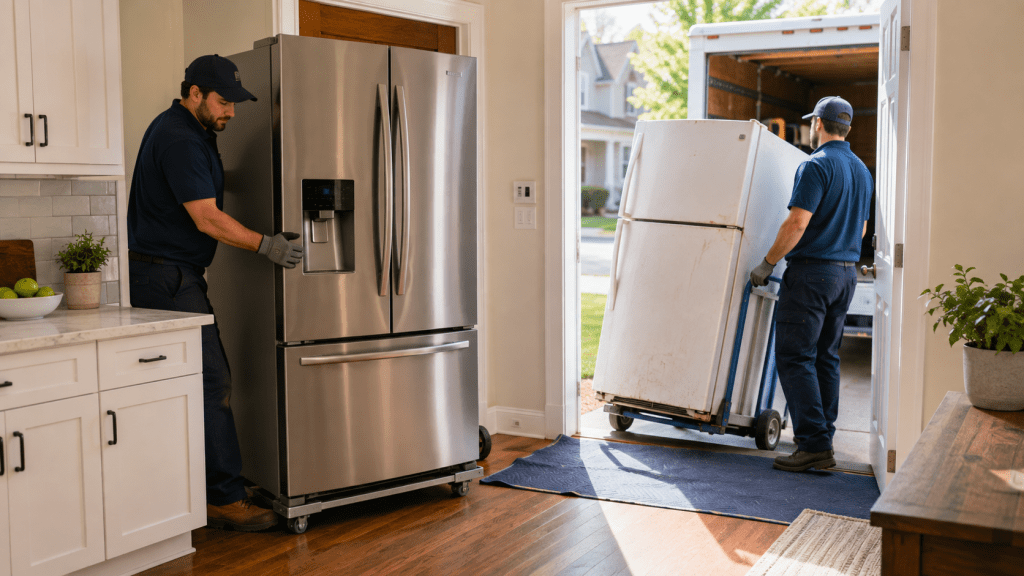
The price tag on a new appliance is only the opening number.
Delivery may cost extra, especially when the installation involves stairs, narrow entries, long carries, or difficult parking. Removing the old machine may be a separate charge.
New water hoses, gas connectors, dryer ducts, electrical cords, drain lines, mounting hardware, or trim kits can add to the total.
Some retailers include basic installation but exclude any work involving corroded valves, nonstandard wiring, damaged flooring, cabinet modifications, or inaccessible connections.
Those exclusions matter in older Cleveland homes, where utilities may have been altered several times. A dishwasher can be trapped behind flooring that was installed after the machine. A refrigerator opening may be slightly narrower at the back than at the front. A basement washer may fit down the stairs only after doors, railings, or appliance panels are removed.
Many of these installation challenges are common in older Cleveland homes, where aging utility connections and limited installation space can make appliance replacement more complicated than expected.
A modern electric range may require a different receptacle or cord configuration, while a gas dryer may expose an old shutoff valve that no longer operates safely.
Even when the installation is straightforward, a replacement introduces a learning curve. New controls, app features, sensor cycles, lower water levels, and unfamiliar sounds can frustrate homeowners who expected the machine to behave like the old one.
Capacity can also be misleading. A larger exterior does not always provide more usable interior space, and a highly efficient machine may use longer cycles by design.
Availability deserves attention too. The exact model you want may not be in stock, and a quick replacement may require accepting a less suitable option.
A repair can sometimes restore the existing appliance the same day or within a short parts-order window.
Replacement may still be the better decision, but it should be compared using the complete installed cost, expected delivery time, warranty coverage, fit, features, and likely reliability.
A bargain stops being a bargain when it requires unexpected plumbing work, damages a cabinet, or leaves the household without an essential appliance for weeks.
A good decision framework should be simple enough to use under stress but flexible enough to handle real-life complications.
Begin with five questions:
Those questions create a useful baseline, but they should not be treated as a rigid formula.
Safety can override cost. A gas appliance with repeated combustion problems deserves a different level of caution than a dishwasher with a worn door latch.
Convenience can also change the answer. A relatively expensive washer repair may be worthwhile for a large family that cannot easily manage weeks without laundry equipment. A lower-cost repair may still be a poor choice when the appliance is noisy, inefficient, rusting, and no longer meets the household’s needs.
The following table provides a practical comparison:
| Factor | Repair Usually Looks Better When | Replacement Usually Looks Better When |
| Appliance age | The unit is in the first half of its expected service life | The unit is near or beyond its typical service range |
| Failure type | One accessible wear component has failed | A compressor, tub, major control system, or several systems have failed |
| Repair history | This is the first significant breakdown | Repairs have become frequent or increasingly expensive |
| Parts availability | Original or reputable replacement parts are available | Critical parts are discontinued or available only used |
| Installation | Replacement would require modifications | A new unit fits existing utilities and space easily |
| Safety | No overheating, gas, wiring, or structural concern exists | The appliance has repeated safety-related symptoms |
| Performance | Capacity and features still meet household needs | The unit is too small, inefficient, noisy, or inconvenient |
Use the framework to organize the decision, not to avoid judgment. Two appliances with the same age and repair price can deserve different answers because one was well maintained and the other has extensive corrosion.
The best choice is the one that produces the strongest combination of safety, reliability, and value over the next several years.
The 50 percent rule is a common repair heuristic: when the repair approaches half the cost of a comparable new appliance, replacement may deserve serious consideration. It is useful because it prevents homeowners from approving a large repair automatically, but it is not a law of appliance economics.
The word “comparable” does most of the work. Comparing the repair of a high-capacity, counter-depth refrigerator with a small entry-level top-freezer model produces a misleading answer. Compare capacity, configuration, features, build quality, installation requirements, and warranty. The replacement figure should include delivery, setup, required accessories, removal, and expected modifications.
The rule also ignores appliance age. Spending nearly half the replacement cost on a two-year-old premium washer may be entirely reasonable, especially when the problem is isolated and the machine otherwise looks new. Spending a much smaller percentage on a fifteen-year-old unit with rust, noise, and discontinued parts may be a poor bet.
The expected lifespan of the repaired component matters too. A new compressor installed by an experienced sealed-system technician may provide meaningful value in a premium refrigerator, while a used control board purchased because the original is discontinued may offer uncertain reliability. Ask what warranty applies to both parts and labor.
The 50 percent rule also struggles with built-in appliances. Replacing a built-in refrigerator or wall oven can involve cabinetry, trim, flooring, electrical work, and long lead times. A repair that appears expensive compared with the bare appliance price may be very economical compared with the complete replacement project.
Treat the rule as a yellow traffic light, not a stop sign. When the repair reaches a substantial share of realistic replacement cost, pause and investigate. Then consider age, overall condition, repair history, safety, fit, availability, and household needs.
The percentage starts the conversation, but the condition of the appliance should finish it.
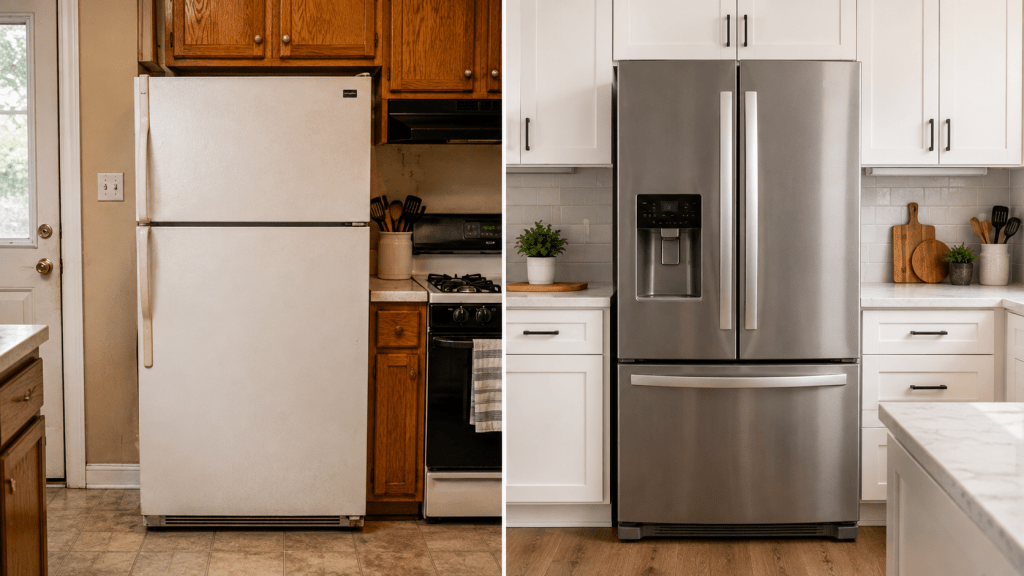
Age matters because every appliance contains components that wear at different rates. Motors accumulate hours, seals harden, wiring connections experience heat cycles, bearings lose lubrication, and electronic controls endure voltage fluctuations.
An older appliance with one failed component may still have years left, but the probability of additional failures generally increases as the machine ages. The useful comparison is not simply “old versus new.” It is the appliance’s age relative to its design, usage, maintenance, and operating environment.
A lightly used freezer in a clean, climate-controlled space may remain dependable far longer than a heavily used refrigerator squeezed beside an oven. A washer running ten loads every week experiences more wear than the same model serving a one-person household.
Maintenance changes the picture too. A dryer with a clean, short vent and balanced drum lives an easier life than one that has overheated for years behind a clogged exhaust. A dishwasher using appropriate detergent and receiving regular filter cleaning may age more gracefully than one fighting hard-water scale and food debris.
General service-life estimates can provide context, but they are planning ranges rather than expiration dates. A twelve-year-old appliance does not automatically deserve replacement, and a three-year-old unit can still be a poor repair candidate if it has severe damage or chronic design problems.
Look for physical evidence. Rust around a washer cabinet, oil beneath a refrigerator compressor, cracked wiring, worn door hinges, multiple noisy bearings, and repeated water leaks matter more than the birthday alone.
A leaking refrigerator or cooling problems should also be evaluated before assuming replacement is necessary. In many cases, professional refrigerator repair can resolve an isolated issue and extend the appliance’s useful life.
Also consider whether the appliance still fits the household. A couple may happily repair a smaller refrigerator that suits their routine, while a growing family may view the same failure as an opportunity to gain capacity.
Age becomes meaningful when combined with condition and future usefulness. The question is not, “How many years has this appliance existed?” It is, “How much dependable, useful service is it likely to provide after this repair?”
Repair usually makes the strongest financial sense when the appliance is relatively young, the failure is isolated, the rest of the machine is in good condition, and the necessary part is available at a reasonable cost.
Door switches, drain pumps, heating elements, igniters, belts, rollers, fans, thermostats, water valves, and certain sensors are often replaceable without rebuilding the entire appliance. The exact answer depends on the model and accessibility, but these failures can offer good value because the repair directly restores a well-understood function.
Repair also makes sense when replacement creates significant complications. A refrigerator may fit a narrow opening that modern models cannot match. A wall oven may be surrounded by custom cabinets. A dishwasher may have a panel that matches the kitchen. A stacked laundry setup may require replacing both machines if the new washer cannot connect to the old dryer’s stacking kit.
Many of these replacement challenges are common in older Cleveland homes, where limited space, aging utilities, and custom cabinetry can make installing a new appliance far more complicated than expected.
In these situations, the true alternative to repair is not simply purchasing one new appliance. It may involve remodeling, replacing a pair, or accepting a major change in appearance and function.
Repair can also be the more sustainable option. Keeping a serviceable machine operating avoids the manufacturing, transportation, packaging, and disposal associated with replacement. Sustainability should not be used to justify unsafe or endlessly unreliable equipment, but it is a valid benefit when the repair is durable.
A recent appliance may also remain under a manufacturer, retailer, credit-card, or extended warranty. Homeowners sometimes forget to check coverage before authorizing paid service. Even when the original warranty has expired, a specific component such as a refrigerator compressor or washer motor may have longer limited coverage. Labor may not be included, but the part coverage can change the economics.
The best repair cases share one theme: the service call solves a defined problem and returns the owner to a machine that is worth keeping.
A first major failure on an otherwise dependable appliance is often a strong repair candidate. Imagine a six-year-old dryer that has dried every load normally until a worn idler pulley begins squealing. The drum, motor, controls, cabinet, and heating system remain healthy, and the vent is clean. Replacing the worn pulley and belt can be far more sensible than discarding the entire dryer.
The same logic applies to a dishwasher with a failed inlet valve, a washer with a damaged drain pump, or a range with a worn bake element. These components perform specific jobs, and their replacement does not necessarily indicate that the whole appliance is declining.
If the problem is limited to a worn component, professional dryer repair or service for the affected appliance can often restore reliable performance without the expense of full replacement.
Repair is also attractive when the failure was caused by a correctable external condition. A dryer thermal fuse may open because the exhaust vent is clogged. Replacing the fuse and professionally clearing the vent can restore reliable operation.
A refrigerator fan motor may fail after years of dust buildup around the condenser. Cleaning the airflow path and replacing the motor addresses both the damage and its cause. The repair becomes weaker when the external condition remains unresolved because the new component may fail the same way.
Cosmetic condition matters more than people realize. An appliance with clean controls, solid hinges, intact shelves, a rust-free cabinet, and quiet operation is often worth preserving.
Availability is another point in favor of repair. If a reputable technician can obtain the correct part quickly and provide a meaningful warranty, uncertainty falls.
Repair can also make sense when the household likes the appliance. Familiar controls, proven cycle performance, a preferred rack layout, or a quiet operating sound have real value. Newer does not automatically mean better for every person.
A repair decision should not be driven by nostalgia alone, but satisfaction with the machine is a legitimate factor. When the appliance meets your needs, has a clean repair history, and suffers one well-defined failure, fixing it is often the practical choice rather than a compromise.
Premium and built-in appliances change the repair calculation because their replacement costs extend far beyond the machine. A built-in refrigerator may require custom panels, specialized installation, careful cabinet removal, and precise alignment. A wall oven can have unusual dimensions that no current model matches exactly. A professional-style range may need specific gas, electrical, ventilation, and floor-support conditions.
Replacing one of these appliances can trigger a renovation rather than a simple delivery.
That does not mean every premium appliance deserves unlimited repair spending. Expensive machines can still become unreliable, and parts can still disappear. The difference is that a substantial repair may represent a smaller share of the real replacement project.
A sealed-system repair on a built-in refrigerator may sound costly until it is compared with a new unit, panel work, delivery, removal, and installation.
Premium equipment may also have serviceable construction. Components can sometimes be replaced individually rather than bundled into large assemblies. Manufacturers may support parts longer, and specialized technicians may be familiar with rebuilding systems that would be considered disposable on a basic model.
Yet specialization creates its own risk. Not every repair company services every luxury brand, and parts may require longer lead times. Before approving the repair, confirm that the technician has appropriate training, tools, and access to model-specific information.
Built-in appearance matters too. Homeowners who invested in matching cabinetry may strongly prefer repair because a replacement could disrupt the kitchen design. The existing appliance may also fit a unique opening that would require expensive carpentry to modify.
Ask for a full-condition assessment rather than focusing only on the failed component. If the compressor, controls, hinges, seals, and internal liners are all deteriorating, premium branding does not magically restore value.
If the rest of the appliance remains solid, however, a high repair estimate can still be an intelligent investment. The correct comparison is the repair versus the complete cost and disruption of installing a genuinely comparable replacement.
Replacement usually becomes the stronger choice when the appliance has reached an advanced age, the repair involves a major component, additional systems are already deteriorating, or parts are difficult to obtain.
A single failure may be repairable, but the whole machine can still be a poor investment.
Consider a washer that needs a major tub or bearing repair while also showing cabinet rust, a worn door boot, and control-panel problems. Fixing the tub does not reverse those other weaknesses.
A refrigerator with a failing compressor, damaged door seals, broken shelving, and recurring electronic errors tells a similar story.
Replacement also makes sense when the appliance no longer serves the household. A small washer that requires constant loads, a noisy dishwasher that lacks useful rack space, or a refrigerator that cannot accommodate the family’s groceries may not deserve a major repair even if the machine could technically be saved.
Efficiency can matter, although homeowners should avoid assuming that energy savings will instantly repay the entire purchase price. Newer appliances may use less water or electricity, but the financial benefit depends on usage, utility costs, and the efficiency difference between the specific models.
Reliability and convenience may be more important than the monthly savings.
Replacement deserves serious consideration after repeated repairs. One service call does not establish a pattern, but several failures across unrelated systems suggest that wear is spreading. At that point, each new repair becomes a bet that nothing else will fail soon.
If an appliance has experienced multiple breakdowns over time, it’s often worth reviewing its complete repair history before deciding whether another repair is the best investment.
Safety can end the discussion entirely. Severe rust affecting structure, repeated electrical overheating, damaged insulation, unsafe gas operation, and recurring leaks near electrical components can make replacement the responsible choice.
A trustworthy technician should be willing to say when an appliance is technically repairable but economically or practically unwise to repair.
The best replacement decisions happen before desperation forces the homeowner to accept the first available model.
Safety should outrank the usual financial formulas. An appliance that repeatedly overheats, sparks, leaks gas, trips a correctly sized breaker, melts electrical connections, or exposes damaged wiring requires immediate attention.
Some safety failures can be repaired completely, but the appliance’s overall condition determines whether that repair is wise. A dryer with a burned terminal block may be repairable when the damage is localized and the household outlet is corrected. The same symptom in a severely rusted, lint-filled machine with damaged internal wiring may justify replacement.
Gas appliances deserve particular care. A failing igniter is commonly repairable, while a cracked or corroded burner system, repeated combustion problem, or damaged gas connection may shift the decision. Any gas odor should be treated as an urgent safety issue rather than an ordinary repair appointment.
Major component failures also change the economics. Refrigerator compressors, sealed-system components, washer tubs, transmission assemblies, large electronic control systems, and structural drum parts can involve substantial labor and parts expense.
The repair may still make sense on a young or premium appliance, especially when warranty support exists, but it deserves careful comparison. Ask what caused the major failure. A compressor replacement without correcting poor condenser airflow, unstable voltage, or a refrigerant leak may not provide lasting value.
A washer bearing repair without addressing overloading, an uneven floor, or water intrusion may face the same stress again.
Structural damage often favors replacement. Cracked tubs, severe cabinet corrosion, deformed frames, damaged drum mounts, and deteriorated insulation can affect multiple systems and make safe reassembly difficult. Flood or fire exposure creates similar concerns because damage may extend beyond the visible area.
Safety problems are not the place to bargain with probability. When a qualified professional identifies widespread heat, gas, electrical, or structural damage, replacement often provides the clearer path to dependable operation and peace of mind.
One repair is an event. Several unrelated repairs within a relatively short period can become a pattern.
A dishwasher may first need a drain pump, then a control board, then a circulation motor. A refrigerator may receive a fan, ice-maker repair, and temperature sensor before developing a compressor problem. Each individual repair can seem reasonable at the moment, but the combined history shows that the appliance is becoming less predictable.
Keep records of dates, symptoms, parts, labor, and warranties. Memory tends to minimize past repair spending once the machine works again. A written history makes the trend easier to see.
Repeated breakdowns also create inconvenience that does not appear in the totals. Missed work, spoiled food, laundromat trips, dishes washed by hand, and multiple appointments all have value.
Parts availability can make an otherwise repairable appliance a poor candidate. Manufacturers discontinue components, suppliers run out of inventory, and certain electronic boards become available only through rebuilding services or used-part markets.
A reputable rebuilt control can sometimes be a practical solution, but warranty terms and reliability should be understood. Used parts may be the only option for rare models, and that uncertainty belongs in the decision.
Long parts delays matter for essential appliances. Waiting several weeks for a refrigerator board may be technically possible but practically unreasonable for a busy household.
Cosmetic parts also disappear. A functional repair might be available while broken shelves, racks, knobs, or door bins cannot be replaced. The appliance then returns to operation without returning to usefulness.
Ask the technician whether the required part is original, aftermarket, rebuilt, or used, and whether related components remain available. A repair can be successful today while future service becomes nearly impossible.
When repair history is growing and parts support is shrinking, replacement usually offers a more predictable path—even when one additional repair appears affordable by itself.
Different appliances fail in different ways, so one universal rule cannot produce good decisions.
Refrigerators contain sealed cooling systems, fans, sensors, water components, and electronic controls. Washers combine water, high-speed rotation, suspension, bearings, pumps, valves, and complex controls. Dryers are mechanically simpler in many cases, but airflow and electrical or gas safety are critical.
Dishwashers live in a hot, wet environment where pumps, heaters, seals, and sensors operate in close quarters. Ranges and ovens can remain useful for many years because their basic structures are durable, yet modern controls and specialized surface components can be expensive.
Microwaves may be less attractive to repair when they are inexpensive countertop models, while built-in units can justify service because removal and trim replacement add cost.
The appliance category also affects urgency. A refrigerator failure threatens food within hours. A dryer can often wait while clothing is air-dried or taken elsewhere. A broken dishwasher is inconvenient, but a broken range may disrupt nearly every meal. The homeowner’s lifestyle changes the value of speed.
When comparing repair and replacement, ask what the appliance does, how difficult it is to live without, how costly the likely major components are, and how complicated replacement will be.
Also consider the external system supporting it. A new dryer connected to a clogged vent will still dry poorly. A new dishwasher attached to a corroded valve or restricted drain may leak or perform badly. A new refrigerator squeezed into an unventilated cabinet can overheat.
Replacement should not become a way to avoid correcting the house-related problem that damaged the old appliance.
The following appliance-specific guidance provides a stronger starting point than a generic age formula.
Refrigerators often create the most emotionally charged decision because they protect expensive food and operate continuously.
Repair is usually attractive when the problem involves a fan motor, thermostat, sensor, start device, defrost component, water valve, dispenser part, door gasket, or accessible control—provided the rest of the refrigerator cools well and remains physically sound.
If your refrigerator is no longer cooling properly, professional refrigerator repair can help determine whether the problem is isolated or part of a larger issue that makes replacement the better long-term option.
A failed ice maker does not necessarily justify replacing an appliance that maintains excellent temperatures. Homeowners should separate convenience features from core refrigeration.
The decision becomes more complicated when the compressor or sealed system is involved. These repairs require specialized tools and training, and labor can be substantial. They may still make sense on a newer, built-in, high-end, or warranty-supported refrigerator.
On an older basic model with damaged door seals, cracked shelving, recurring electronic problems, and poor efficiency, replacement is often easier to justify.
Temperature history matters. A refrigerator that has struggled for months, runs constantly, and shows widespread frost or corrosion may have more than one problem. A technician should check airflow, fans, defrost behavior, compressor operation, and condenser condition before declaring the sealed system defective.
Installation can change everything. Counter-depth refrigerators, panel-ready units, and unusual openings are expensive to replace. Measure the full path into the kitchen, not just the cabinet opening. Doorways, islands, trim, radiators, and stair turns can block delivery.
Water-line condition deserves inspection too. A new refrigerator should not be connected to a brittle tube or corroded saddle valve.
Freezers are often simpler, and repair can be attractive when the cabinet and compressor are healthy. Yet severe liner damage, widespread rust, or an unavailable thermostat may favor replacement.
Protect food first, then make the financial decision with accurate temperature and component information. Panic purchasing is rarely the best way to choose an appliance expected to run every day for years.
Washers deserve careful inspection because minor and major failures can produce similar symptoms. A machine that will not drain may need a relatively straightforward pump repair, or it may have a control, wiring, or tub obstruction problem. A washer that bangs violently may simply be unlevel, while another may have worn suspension, bearings, or structural damage.
Repair is often sensible for inlet valves, pumps, door locks, lid switches, hoses, belts, certain controls, and suspension components when the cabinet and tub remain healthy.
If your washer is experiencing one of these common problems, professional washer repair can help determine whether the issue is isolated or part of a larger mechanical failure.
Major bearing, transmission, or tub repairs require a closer look, especially on older machines.
Water leaks can range from a loose hose to a cracked outer tub. The source matters more than the puddle size. Front-loaders with extensive door-boot damage, bearing noise, and control problems may be approaching replacement territory, while a single failed door lock can be a strong repair case.
Dryers are frequently worth repairing because many failures involve serviceable components such as belts, rollers, idler pulleys, heating elements, igniters, gas-valve coils, thermostats, thermal fuses, and sensors.
The vent must be evaluated at the same time. A new dryer connected to a restricted exhaust will remain slow, overheat, and damage safety components.
Routine dryer repair can often resolve these common issues before they lead to more expensive component failures or safety concerns.
Replacement makes more sense when the dryer has severe cabinet corrosion, a damaged drum, failing motor, burned wiring across multiple areas, or several noisy support components.
Gas and electric supply conditions also matter. An electric dryer may tumble without heat because the household has lost part of its 240-volt supply. A gas dryer may fail to heat because of ignition components rather than the burner structure.
Diagnosis should come before shopping.
Laundry pairs create another complication. A stacked setup may require both machines to be compatible, and replacing one can force replacement of the other. Color, height, doors, pedestals, and controls may also matter to the household.
Compare the entire laundry configuration rather than treating the failed appliance as an isolated box.
Dishwashers are often worth repairing when the problem involves a latch, inlet valve, drain pump, dispenser, sensor, gasket, or heating component and the tub remains intact.
Replacement becomes more attractive when the circulation system, major control, and rack structure are all deteriorating, especially on an older basic model.
If the dishwasher is otherwise in good condition, professional dishwasher repair is often the more cost-effective option compared with replacing the entire appliance.
Installation difficulty can push the answer back toward repair. Older kitchen flooring may trap the machine beneath the countertop, while corroded shutoff valves and nonstandard wiring can turn replacement into a larger project.
Hard-water scale and drainage restrictions should be corrected regardless of the decision.
Ranges and ovens can be excellent repair candidates because their cabinets and cooking cavities often remain durable. Bake elements, igniters, temperature sensors, switches, and some controls are replaceable.
High-end ranges may justify significant repair because comparable replacements are expensive and installation requirements are demanding.
Replacement deserves consideration when the appliance has repeated control failures, severe corrosion, damaged insulation, unsafe gas operation, or unavailable proprietary components.
Cooktop glass can be particularly expensive, and a cracked surface may create both safety and financial concerns.
Built-in wall ovens require exact measurements; a new unit may need cabinet modification even when its advertised width appears correct.
Microwaves divide into two groups. Basic countertop models are often less economical to repair because replacement is simple and internal service involves high-voltage hazards.
Built-in, drawer, and over-the-range microwaves may justify repair because trim kits, ventilation, mounting, and installation add significant cost.
Internal microwave work should always be handled professionally because capacitors can retain dangerous energy after the appliance is unplugged.
Across all these categories, the correct question is not whether the appliance can be repaired. Almost anything can be repaired with enough time and money.
The useful question is whether the repair creates a safe, dependable, and financially reasonable result compared with a fully installed replacement.
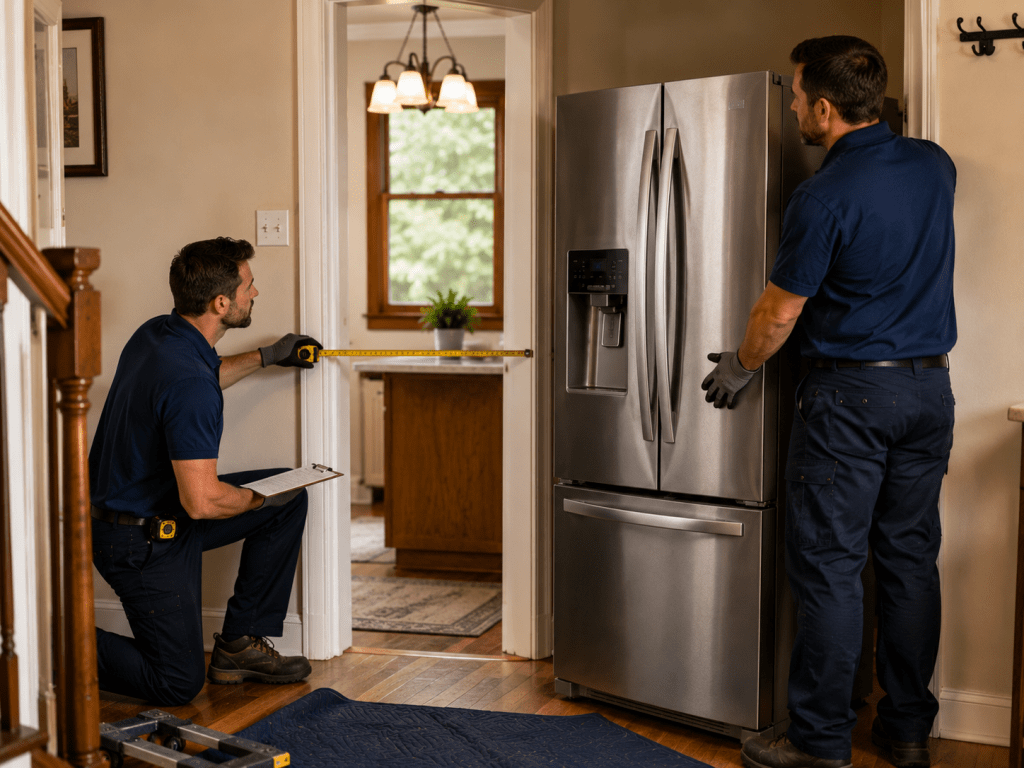
Cleveland’s housing variety can dramatically change appliance economics. Many homes have older kitchens, basement laundry rooms, narrow staircases, layered flooring, mixed-era plumbing, and electrical systems that were updated in stages.
An appliance replacement that sounds simple over the phone may expose a corroded water valve, undersized drain, ungrounded outlet, damaged gas shutoff, or vent route that no longer meets the new machine’s requirements.
These discoveries do not mean the home is defective. They mean the replacement project must account for the building around the appliance.
Many of these installation challenges are common in older Cleveland homes, where aging utilities and limited installation space can significantly affect both repair and replacement decisions.
Climate matters too. Humid summers can expose refrigerator airflow problems, dryer vent restrictions, washer odors, and basement moisture. Cold winters can affect appliances located in garages, enclosed porches, or poorly conditioned spaces.
A repair may fail again when the environmental cause remains. For example, replacing a freezer control does not solve extreme garage temperatures if the model is not designed for that location. A new dryer will not overcome a long, lint-filled basement vent. A new washer may shake violently on an uneven concrete floor unless it is installed and leveled correctly.
Cleveland homeowners should also think about access. Measure doors, halls, stairs, turns, and ceiling height before ordering. Delivery teams may charge extra or refuse installation when a path is unsafe.
Older cabinetry can create nonstandard openings, and countertops may have been installed around the existing appliance.
Utility work should be included in the replacement budget. A licensed electrician may be needed for a circuit or receptacle, a plumber for a valve or drain, and a qualified gas professional for a connector or shutoff.
Repair may make more sense when these changes are extensive, particularly if the existing appliance remains otherwise solid. Replacement may be the better opportunity when the home already needs utility upgrades and the old appliance no longer performs well.
The house is part of the decision because every appliance depends on the space, power, water, gas, drainage, and airflow surrounding it.
The repair-or-replace decision becomes much easier when you stop comparing one repair estimate with one advertised appliance price. Compare the complete outcomes instead.
A successful repair restores the existing machine, avoids delivery and installation disruption, and may provide years of additional service. A successful replacement provides a new warranty, updated performance, and a clean break from repeated failures. Either choice can be smart when the evidence supports it.
Repair usually makes sense when the appliance is relatively young, the failure is isolated, parts are available, and the rest of the machine remains in good condition. It becomes even more attractive for premium, built-in, panel-ready, or unusually sized appliances whose replacement would involve cabinetry, utility work, or a major change in appearance.
Replacement generally becomes stronger when failures are recurring, the appliance is physically deteriorated, major systems have failed, parts are disappearing, or safety concerns are present.
Age matters, but condition matters more. The 50 percent rule can start the comparison, yet it should never make the decision by itself. Use a realistic replacement cost that includes delivery, removal, accessories, installation, and home modifications.
Consider the inconvenience of downtime, the appliance’s repair history, the household’s needs, and the likely reliability of the repaired machine.
Cleveland homes add another layer because older utilities, basement installations, tight spaces, humidity, hard water, and long vent runs can influence both repair and replacement. If you’re dealing with these challenges, our guide to appliance repair in older Cleveland homes explains how aging infrastructure can affect both repair costs and replacement projects.
Correct those external conditions regardless of which option you choose.
The best decision is not necessarily the cheapest one today. It is the option most likely to provide safe, dependable service without creating avoidable expense and frustration tomorrow.
A careful diagnosis gives you that clarity. Once you know what failed, why it failed, and what the rest of the appliance looks like, the choice usually stops feeling like a gamble.
If you’re unsure which option makes the most financial sense, scheduling a professional appliance diagnosis is often the best first step before committing to a major repair or purchasing a replacement.
It can be. Ten years is not an automatic expiration date, and appliance categories age differently. A ten-year-old dryer with a failed belt may be an excellent repair candidate because the repair is focused and the remaining systems may be healthy. A ten-year-old refrigerator with a compressor problem, damaged door seals, broken shelving, and recurring control errors presents a much weaker case. Look at the failure type, repair history, physical condition, parts availability, and complete replacement cost. Usage matters too. A lightly used appliance may have less wear than a younger machine serving a large household every day. Ask the technician whether the repair addresses one isolated component or whether several systems show decline. When the machine has been reliable, still meets your needs, and can be restored with a well-supported part, age alone should not force replacement.
Pause and compare carefully. The 50 percent rule is a useful warning point, but the replacement price must represent a genuinely comparable appliance and include delivery, removal, installation, required accessories, and modifications. A high-end built-in refrigerator cannot fairly be compared with a small entry-level model simply because both keep food cold. Appliance age and condition matter as much as the percentage. A repair near half the replacement cost may be reasonable on a newer premium unit with an isolated failure. A much cheaper repair may still be unwise on an old appliance with corrosion and repeated breakdowns. Also consider warranty coverage and how quickly each option can restore normal household use. Use the percentage to trigger a closer review, not an automatic rejection.
Dryers are often strong repair candidates because belts, rollers, heating elements, igniters, thermostats, fuses, sensors, and gas-valve coils can frequently be replaced without rebuilding the entire machine. Ranges and ovens can also be economical to repair when the cabinet is sound and the problem involves an element, igniter, switch, or sensor. Washers, dishwashers, and refrigerators vary more widely because a small pump or fan failure may be reasonable, while a tub, compressor, or major control failure can be expensive. Premium and built-in appliances may justify larger repairs because equivalent replacement and installation costs are much higher. The model’s condition and part availability always matter more than the category alone.
No. Newer appliances may use less electricity or water, but the savings do not automatically recover the purchase and installation cost quickly. The result depends on how inefficient the old appliance is, how frequently the household uses it, local utility rates, and the actual performance of the replacement model. Efficiency can strengthen a replacement decision when the old machine is already unreliable, undersized, or expensive to operate. It is rarely a complete reason to discard a healthy appliance by itself. Compare estimated operating use for the specific models and consider maintenance, warranty, capacity, and expected reliability. A durable repair can sometimes be the more economical and environmentally responsible choice.
Choose an appliance repair professional who provides a diagnosis rather than a guess. The technician should identify the failed component, explain how it was tested, describe the overall condition of the appliance, and mention any external cause such as restricted venting, unstable voltage, poor drainage, hard-water scale, or insufficient airflow. Ask about part availability, warranty, and the likelihood of additional near-term repairs. An electrician, plumber, or gas professional may also be needed when the supporting household system is involved. A trustworthy technician should be comfortable saying that a repair is possible but not financially wise. That honest assessment is often more valuable than the repair itself.
We repair a wide range of household appliances including refrigerators, washers, dryers, ovens, dishwashers, and more. No matter the brand or model, our experienced technicians are ready to help. We repair commercial appliances as well: commercial washers dryers, commercial refrigerators & freezer & more.
We service a wide range of household appliances, including refrigerators, dryers, washers, ranges, cooktops, dishwashers, freezers, ice makers, ovens, and double ovens. Our technicians operate across many locations in Ohio, covering major cities like Cleveland, Akron, and Parma. We also serve surrounding areas including Lakewood, Westlake, Strongsville, and Brooklyn. Our service area extends to Rocky River, Euclid, Solon, Beachwood, and Cleveland Heights, as well as counties such as Cuyahoga, Lorain, Lake, and Medina. Additional cities we cover include North-Olmsted, North Ridgeville, Valley-City, Lorain, Avon Lake, Richfield, Brecksville, Garfield Heights, Seven Hills, Brunswick, Oakwood, Mentor, and Willoughby.