Why Your Washing Machine Stops Mid-Cycle in Cleveland
Published: September 16, 2026
A clothes dryer is supposed to get hot. That is literally part of the job. But there is a major difference between normal drying heat and a machine that feels like it is trying to turn your laundry room into a sauna. If your clothes come out painfully hot, the top or sides of the dryer feel unusually warm, you notice a burning smell, or the appliance repeatedly shuts itself down, dryer overheating should move pretty high on your household priority list.
The reason is simple: a dryer depends on a carefully controlled balance between heat and airflow. The heating system raises the temperature, the drum moves clothing around, and the blower pulls moisture-laden hot air through the machine and sends it outside through the exhaust vent. If airflow is restricted or the heating system fails to shut off when it should, temperatures can climb far beyond normal operating conditions. The dryer may continue running for a while, but components are being subjected to heat they were never intended to tolerate.
Overheating problems are particularly deceptive because the dryer may still dry clothes. In fact, homeowners sometimes assume an extra-hot dryer is working better. The clothes are dry, after all, so what is there to worry about? The problem is that excess temperature can damage fabrics, stress electrical components, trip thermal safety devices, and increase fire risk when lint is present inside the vent system.
Some causes are relatively simple. A lint screen packed with debris can restrict air movement. A vent hose crushed behind the appliance can trap hot air. Other causes involve components such as the heating element, cycling thermostat, thermistor, blower wheel, or electronic controls. Those failures typically require more careful testing and may call for professional dryer repair.
The important thing is not to normalize a dryer that has suddenly become noticeably hotter. Appliances tend to develop patterns, and when a familiar machine changes behavior, that change matters. An overheating dryer is usually telling you that heat is being created faster than it can be controlled or removed. Finding out why sooner rather than later can prevent a much more expensive—and potentially dangerous—problem.
Dryer overheating does not always announce itself with smoke or a dramatic electrical smell. Quite often, the first signs are subtle. You open the dryer door and the metal drum feels much hotter than you remember. Towels or jeans are uncomfortable to touch immediately after the cycle ends. Maybe the outside cabinet is noticeably hot, especially around the top or back, or the laundry room feels unusually warm whenever the dryer runs. These clues are easy to dismiss because, technically, heat is expected from a dryer.
The key is recognizing a change from normal behavior. If your dryer has operated the same way for years and suddenly starts scorching delicate fabrics, finishing cycles with extremely hot clothes, or making the room much warmer, something has changed inside the drying system. Another common sign is longer drying time. That may seem backward—why would an overheating dryer take longer to dry? Because drying is not just about temperature. Moisture has to leave the machine. If the exhaust path is restricted, the dryer can become extremely hot while humid air remains trapped around the clothes, creating a cycle that is both inefficient and excessively hot. If longer cycles are one of the main symptoms you are seeing, see why your dryer takes too long to dry clothes.
You may also notice the dryer shutting off before the cycle finishes. Many dryers include thermal protection designed to interrupt operation if temperatures become unsafe. The machine may work again after cooling, leading homeowners to assume the problem fixed itself. It did not. The safety device may simply have done exactly what it was designed to do.
Odors deserve special attention. A slight warm-fabric smell is normal, but a burning, electrical, rubbery, or scorched-lint odor is different. Turn the appliance off and investigate before running another load.
The back of a dryer may naturally feel warm because that is where much of the heat and exhaust movement occurs. What matters is degree and context. Excessive cabinet heat combined with slow drying, repeated shutdowns, burning smells, unusually hot clothing, or poor airflow at the exterior vent is a pattern that strongly suggests overheating rather than normal operation.
A dryer looks pretty simple from the outside: clothes go in wet and come out dry. Inside, though, the appliance is constantly balancing heat, airflow, moisture, and time. Electric dryers use a heating element, while gas models use a burner assembly. In both cases, heated air enters the drum, passes through tumbling clothing, picks up moisture, and is pulled through the lint filter and exhaust system by a blower.
The blower is every bit as important as the heater. Think of the system like a fireplace chimney. Producing heat is only half the equation; that heat and moisture need a clear path to escape. When the airflow is healthy, warm air continuously moves through the drum and exits through the vent. The dryer can maintain a useful temperature without heat collecting in one area.
Temperature controls manage the process. Depending on the model, the dryer may use cycling thermostats, thermistors, high-limit thermostats, thermal fuses, moisture sensors, and an electronic control board. These components monitor conditions and turn the heater on and off as necessary. The heating system is not supposed to stay at full output for the entire cycle.
Imagine driving a car where the accelerator could only be fully pressed or completely released. You would need a control system constantly deciding when to add power and when to back off. A dryer’s heating system works in a similar rhythm. If the temperature is below target, the heater energizes. Once enough heat builds, the control interrupts power or gas flow until the temperature falls again.
Problems arise when that balance is disrupted. Restricted airflow can keep heat trapped inside even if the thermostat works correctly. A defective thermostat can fail to cycle the heater properly. A shorted electric heating element can sometimes continue producing heat when the control system is trying to shut it off.
That is why diagnosing overheating requires looking at both sides of the equation: Is the dryer creating too much heat, or is it failing to move normal heat out efficiently? In many real-world cases, airflow is the first place to investigate because dryers simply cannot control temperature correctly when their exhaust path is restricted.
When a dryer gets excessively hot, people often assume the heating element must be failing. Sometimes that is true, but airflow problems are just as important—and often more common. A dryer is designed as an air-moving system. Block that air, and temperatures can rise even when every heating component is technically functioning.
Lint is one of the biggest enemies. It forms naturally as clothing tumbles, and even a good lint screen cannot capture every tiny fiber. Over months and years, lint can accumulate deeper inside the machine and exhaust duct. If the vent system has too many turns, is excessively long, or uses poor-quality material, that buildup can happen faster.
Installation problems can create the same symptoms. A flexible vent hose may become crushed when the dryer is pushed too close to the wall. A bird nest or debris can partially block the exterior vent hood. In cold climates, moisture and lint can sometimes create stubborn buildup around an exterior termination.
Then there are mechanical and electrical failures. A blower wheel may loosen from the motor shaft and move less air even though you can hear the motor running. A cycling thermostat or thermistor can report incorrect temperature information. An electric heating element may sag or break in a way that causes it to contact its metal housing and remain energized unexpectedly.
The challenge is that several failures can look almost identical from the laundry room. Long drying times, extremely hot clothes, a hot cabinet, and repeated thermal shutdowns can result from multiple causes. Replacing the heater just because the machine feels hot is a perfect example of troubleshooting backward.
A better diagnostic approach starts with airflow. Is the lint screen clean? Is the exhaust hose open and undamaged? Is strong air movement reaching the outside vent? If airflow is good, temperature controls and the heating system move higher on the list.
Understanding the common causes below can help you recognize what you are seeing without turning the repair into a guessing game.
The lint screen is the simplest part of the dryer to maintain, yet it has an enormous effect on airflow. Every load releases fibers from clothing and towels, and those fibers collect on the screen before air reaches deeper parts of the exhaust system. If the screen becomes heavily covered, the blower has a harder time moving air. Hot, humid air remains inside the dryer longer, and internal temperatures can rise.
Most homeowners know they should clean lint after each load, but there is another problem that is less obvious: invisible residue on the lint screen. Dryer sheets and fabric-softening products can leave a waxy film on some mesh filters. The screen may look clean when held normally, yet airflow can still be restricted. If water poured onto the screen pools instead of flowing through easily, residue may be blocking the mesh.
Cleaning recommendations vary by manufacturer, so follow the care instructions for your dryer. In many cases, gentle cleaning with warm water and a soft brush can remove buildup, but the screen should be completely dry before reinstalling. Never operate the dryer without its lint filter unless the manufacturer specifically instructs otherwise for a test.
A damaged screen also deserves replacement. Holes or tears allow lint to bypass the filter and collect in the internal ductwork or exhaust vent, creating a more serious restriction over time.
Pay attention to the area where the filter slides into the dryer. Lint can accumulate below or around the housing where it is difficult to reach. Do not push tools deep into the machine while it is connected to power.
Cleaning the filter every cycle may feel like a tiny habit, but it protects the entire drying system. Better airflow means more efficient moisture removal, more stable temperatures, and less stress on the heater.
If a clean filter does not improve an overheating problem, continue investigating the rest of the exhaust path. The screen is only the first checkpoint in a much longer airflow system.
The exhaust vent is one of the most important—and most neglected—parts of a dryer installation. It carries warm, moist air from the appliance to the outside of the house. Every bend, joint, and foot of duct creates some resistance, which is why dryer manufacturers specify limits for vent length and configuration. When lint accumulates inside, that resistance can increase dramatically.
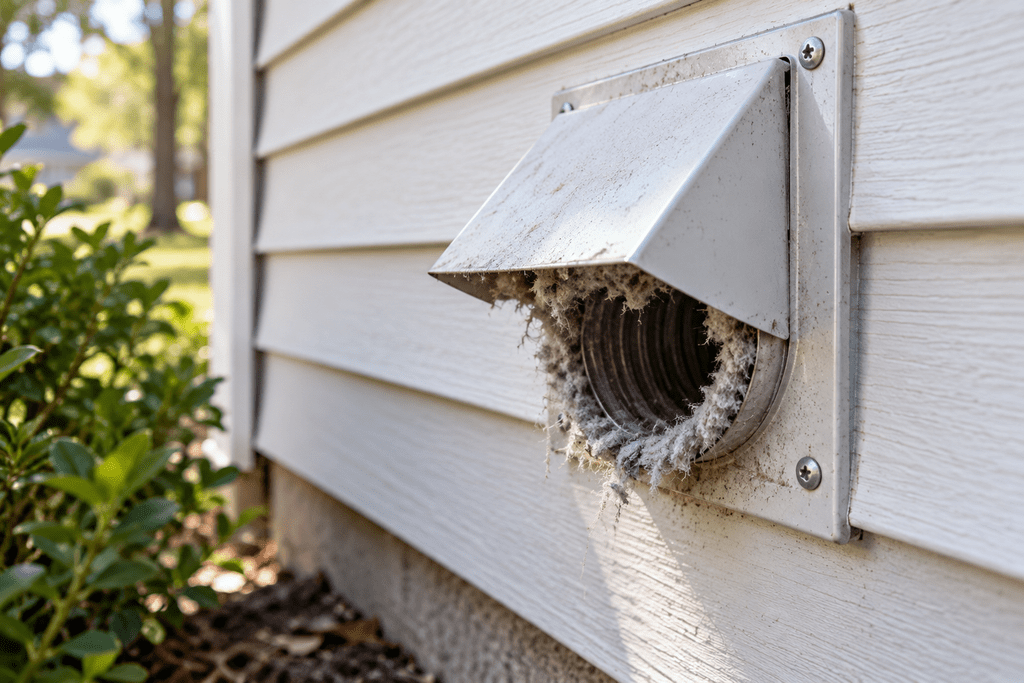
A partially blocked vent creates a strange combination of symptoms. The dryer can become extremely hot while clothes stay damp much longer than expected. That happens because heat remains inside the system, but moisture cannot escape efficiently. Running the dryer another 30 or 40 minutes may eventually dry the clothes, yet it also subjects the appliance and vent system to prolonged high temperatures.
You can often spot a vent problem by checking the exterior vent hood while the dryer is operating. Airflow should generally feel strong, and the flap should open appropriately if that style of vent is installed. Weak flow does not prove there is a clog, because blower problems can create the same symptom, but it tells you the exhaust system deserves attention.
Lint is not the only possible obstruction. Outdoor vent covers can collect leaves or debris, and animals sometimes build nests around poorly protected openings. Damaged dampers can remain partly closed. Long runs hidden through walls or ceilings may contain buildup that cannot be seen from either end.
Dryer vent maintenance becomes especially important because lint is combustible. Hotter operating temperatures combined with restricted airflow and accumulated lint are a bad combination. If the dryer is overheating and the vent has not been inspected in years, do not assume the machine alone is responsible.
Professional vent cleaning or inspection may be appropriate when ductwork is long, inaccessible, or routed through multiple floors. A properly functioning dryer needs a clear exhaust path from the blower all the way to the outside. Cleaning only the first few inches behind the appliance does not help if the restriction is 15 feet farther down the line.
Sometimes there is no serious lint clog at all. The airflow problem begins directly behind the dryer. Flexible exhaust ducts can become crushed, folded, or sharply kinked when the appliance is pushed back toward the wall. From the front, everything looks perfectly normal. Behind the machine, however, hot air may be trying to squeeze through a vent passage that has been reduced to a fraction of its proper size.
This problem often appears after the dryer has been moved. Maybe the floor was cleaned, a repair was performed, or a new appliance was installed. The dryer is pushed back a little too far, and the vent hose collapses. Drying times gradually increase, the cabinet gets hotter, and homeowners begin suspecting an internal failure when the actual problem is installation.
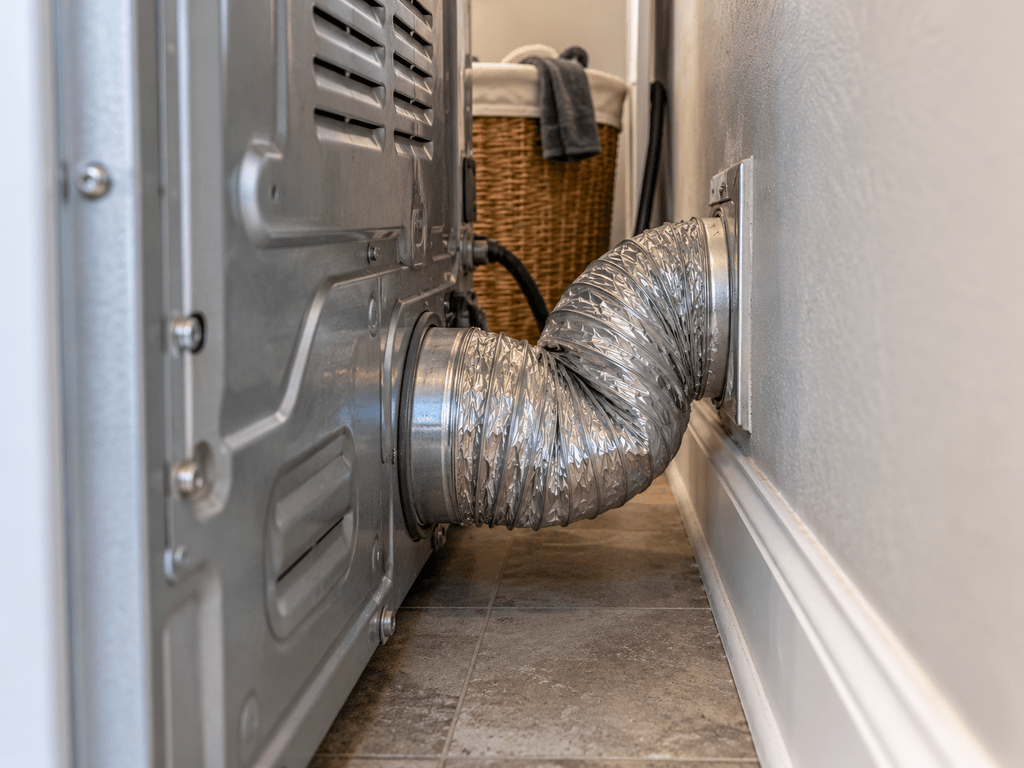
Vent material matters too. Dryer exhaust systems should follow the appliance manufacturer’s instructions and applicable local requirements. Thin, easily crushed ducting can create more resistance and collect lint around ridges and bends. Excessively long flexible hoses folded behind the machine are especially problematic because every unnecessary loop slows airflow.
The vent should not terminate in an attic, crawl space, basement, or wall cavity. Moisture and lint need to leave the building. An improper termination can create both dryer-performance problems and moisture issues in the home.
If you inspect behind the dryer, disconnect power before moving the appliance and take care with gas connections if you have a gas dryer. Dryers are heavy, and supply lines should never be stretched or stressed.
A crushed vent is a good example of why overheating does not automatically mean an expensive component has failed. Restoring airflow can sometimes completely change the machine’s behavior. Clothes dry faster, the cabinet operates at a more normal temperature, and heating cycles become more controlled.
If the hose repeatedly crushes because the dryer sits close to the wall, a more appropriate vent configuration may be needed. The goal is not simply connecting the appliance to the wall—it is providing a smooth, safe path for a large volume of hot, moist air.
Electric dryers use a resistance heating element that becomes extremely hot when electrical current passes through it. Under normal operation, the control system cycles that element on and off to maintain the correct temperature. A damaged element can disrupt that control in ways that are not always obvious.
One failure occurs when part of the heating coil breaks or sags and touches the metal housing around it. Depending on the dryer’s electrical design, that contact can create a path that allows the element to remain partially energized when it should be off. The dryer may produce heat continuously or at unexpected points in the cycle, causing temperatures to climb beyond the intended range.
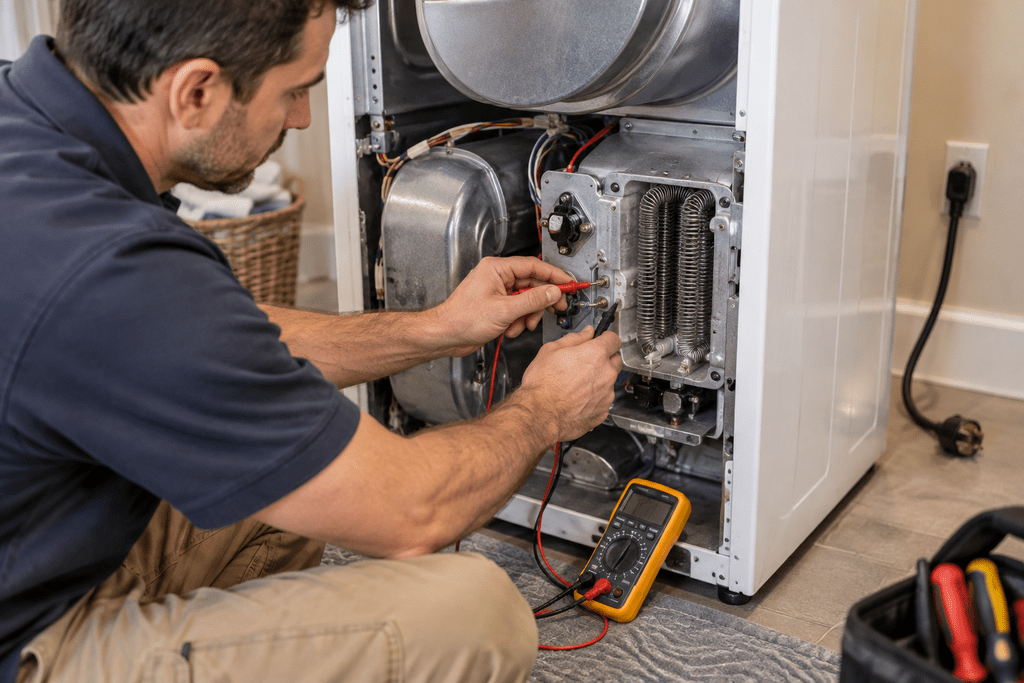
This is different from a heating element that burns out completely. A completely open element usually produces no heat, making the symptom easy to recognize. A grounded or partially shorted element may still heat—and sometimes heat far too much—which makes diagnosis more complicated.
The heating element can also develop hot spots before total failure. Repeated thermal cycling causes metal to expand and contract thousands of times over the appliance’s life. Eventually, the coil may weaken, deform, or break.
Visual inspection requires accessing internal panels, and testing typically involves electrical measurements with the dryer disconnected from power. Because many electric dryers operate on a 240-volt circuit, this is not a component to casually probe or bypass.
A technician can test whether the element has continuity where expected and whether it is electrically isolated from its housing. The technician can also verify whether a relay or control board is incorrectly supplying power. If the heating system cannot regulate temperature correctly, professional dryer repair may be needed to identify the actual cause rather than replacing parts based on symptoms alone.
If your dryer continues producing strong heat even on an air-only or no-heat setting, that is a particularly important clue. Stop using the machine until it is inspected. A dryer that cannot reliably turn its heating system off has moved beyond an efficiency problem.
Excess heat is dangerous precisely because it may not immediately stop the appliance. The machine can continue tumbling normally while the internal temperature control has already been compromised.
Dryers rely on temperature-sensing components to decide when the heating system should cycle. Older and simpler dryers often use mechanical thermostats, while newer models commonly use thermistors whose electrical resistance changes with temperature. These components act like the dryer’s internal thermometer and messenger. If they send inaccurate information, the heating system can behave incorrectly.
Imagine your home’s thermostat reading 60°F when the room is actually 85°F. The furnace would keep running because the control system believes more heat is needed. A faulty dryer temperature sensor can create a similar situation. The heater stays on longer than intended because the machine does not “realize” how hot the airflow has become.
A cycling thermostat can also stick or drift away from its intended operating range. The dryer may allow temperatures to rise too high before interrupting power to the heater. High-limit thermostats and thermal cutoffs provide backup protection, but they are not supposed to regulate normal drying temperature. If those safety devices are repeatedly being pushed to their limits, the underlying problem should be identified.
On electronically controlled dryers, thermistor problems may produce error codes, but not always. A sensor can drift enough to affect performance while remaining within a range that does not trigger an obvious fault.
Testing temperature controls requires more than simply checking whether they “look burned.” Many failed sensors appear perfectly normal. A technician can measure electrical resistance and compare it with specifications, sometimes at different temperatures, to determine whether the component responds correctly.
It is also important to remember that a thermostat may be reacting properly to an airflow problem. If hot air cannot escape, replacing a temperature sensor will not solve the underlying restriction.
That is why good diagnosis follows a sequence. First confirm that air can move through the system. Then investigate whether the control components are accurately sensing and regulating heat. A thermostat or thermistor is a small part, but when it gives the dryer bad information, the entire heating cycle can become unpredictable.
The blower wheel is the hidden fan responsible for pulling air through the dryer and pushing it into the exhaust vent. It is connected to the motor on many dryer designs, so you may hear the motor running normally even when airflow is poor. If the blower wheel cracks, loosens from its shaft, or becomes packed with lint, the dryer may lose a significant amount of air movement.
This can create nearly the same symptoms as a clogged vent. Clothes take longer to dry, the cabinet becomes hotter, and you may feel weak airflow at the outside vent. Because the exhaust duct is usually the more common culprit, blower problems can remain hidden until the vent system has already been checked.
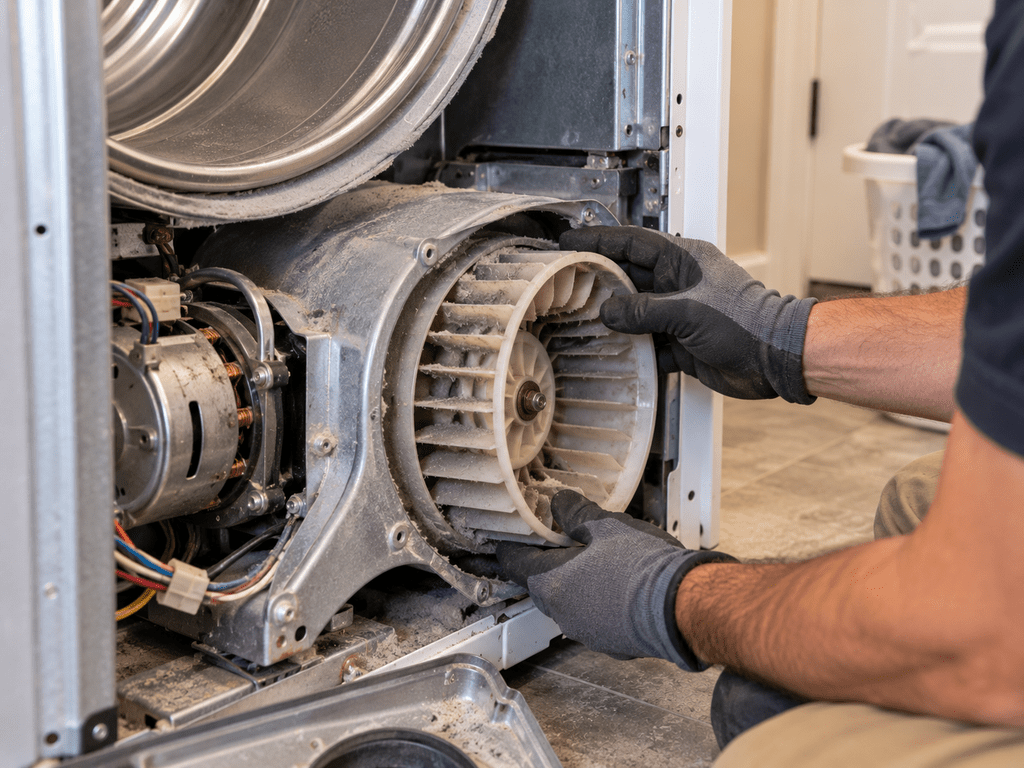
Noise can provide a clue. A loose blower wheel may produce rattling, thumping, scraping, or unusual humming sounds. In some cases, the wheel slips on the motor shaft and spins inconsistently. The motor sounds active, the drum turns, and the heater works, but the volume of air moving through the machine is far below normal.
Lint buildup around the blower housing can also reduce efficiency. Even with regular lint-screen cleaning, small fibers can escape into internal ductwork over years of use. If seals around the lint system are damaged, that accumulation may happen faster.
Accessing the blower often requires substantial dryer disassembly. On some models, the front panel, drum, or internal ducting must be removed. This is a good example of a repair that looks straightforward in a video but can become complicated quickly, especially when electrical connections and sharp sheet-metal edges are involved.
A technician can evaluate airflow, inspect the blower wheel for damage, and check whether the motor is operating correctly under load. The important point is that a dryer does not cool itself simply by turning the heater off occasionally. It depends on continuous air movement.
If heat cannot leave the machine, temperatures rise. Whether the restriction comes from the wall vent or a damaged blower wheel, the result is the same basic problem: too much hot air staying where it should not.
An overheating dryer is not just an appliance-performance problem. It affects safety, energy use, fabric life, and the longevity of the machine itself. Excessive heat places stress on wiring, bearings, motor components, seals, thermostats, control boards, and the drum-support system. A problem that starts with restricted airflow can eventually create secondary failures because everything inside the cabinet operates hotter than intended.
Fire risk is the concern most homeowners immediately think about, and there is a good reason lint gets so much attention. Lint consists of small, dry textile fibers that can burn. A dryer and its vent system naturally create heat, which means excessive temperature combined with accumulated lint deserves immediate attention rather than months of “we’ll get to it later.”
The thermal fuse is one of the dryer’s last lines of defense. Many dryers include a one-time thermal fuse designed to open the electrical circuit if temperature reaches an unsafe level. When that fuse blows, the appliance may stop heating or stop running entirely, depending on the design. Replacing the fuse without identifying why the dryer overheated can lead to another failure.
Your clothing can suffer too. Elastic materials, athletic fabrics, synthetic blends, and delicate items are particularly vulnerable to excessive heat. Repeated overheating can shrink garments, weaken fibers, fade colors, and damage elastic. If you are constantly replacing clothing because everything seems to age rapidly in the dryer, excessive temperature may be part of the reason.
Energy efficiency also takes a hit. A clogged vent can make a load take twice as long even though the dryer itself becomes hotter. That means the motor and heater run far longer than necessary, wasting electricity or gas while putting additional hours on mechanical components.
Most importantly, dryers rarely begin overheating for no reason. There is usually a physical explanation: restricted airflow, improper installation, a failed control component, or a heating-system problem.
Treat the change as information. If the dryer suddenly feels much hotter, starts shutting down, gives off unusual odors, or takes dramatically longer to dry, inspect it quickly. The cost of identifying a vent restriction or failed thermostat early is usually much easier to deal with than the consequences of allowing overheating to continue.
You do not need to disassemble the dryer to gather useful information. Start with the lint filter. Remove it and make sure the entire screen is clear. If residue is visible or water does not pass through normally, clean it according to the manufacturer’s instructions and allow it to dry completely before reinstalling it.
Next, look behind the dryer if you can safely access the area. Check whether the exhaust hose is crushed, kinked, disconnected, or sharply bent. Do not pull a gas dryer away from the wall aggressively because the gas line can be stressed. If moving the appliance would put tension on a connection, leave that part to a professional.
While the dryer is operating, check the exterior vent termination. You should generally notice a steady flow of warm air when the machine is running. A flap that barely opens or extremely weak airflow may indicate restriction, although the problem could also involve the blower.
Pay attention to drying time. A normal load suddenly taking much longer than it did a few weeks ago is important information. So is a dryer that becomes extremely hot in the first few minutes or continues heating on a no-heat setting.
Clean around the dryer as well. Lint and dust can accumulate behind and underneath the appliance, especially in small laundry closets. Keeping those areas clean reduces combustible debris and helps ventilation around the machine.
Check whether the dryer is overloaded. Heavy, tightly packed loads restrict airflow inside the drum and take longer to dry. Divide oversized loads and see whether performance changes.
What homeowners should not do is bypass thermostats, thermal fuses, or door switches. Do not run the dryer with safety devices intentionally defeated, and do not open electrical panels while the appliance is connected to power.
If basic airflow checks reveal no obvious problem but the dryer continues overheating, professional inspection is appropriate. The next diagnostic steps may require temperature measurements, electrical resistance testing, internal airflow evaluation, and access to heating or control components.
The goal of homeowner troubleshooting is not to prove you can repair everything yourself. It is to rule out simple causes safely and recognize when the machine is showing symptoms that need deeper investigation.
Professional inspection is a good idea whenever overheating persists after basic airflow checks or when the dryer shows warning signs involving electricity, burning odors, or repeated shutdowns. If the machine becomes so hot that touching the cabinet is uncomfortable, clothes smell scorched, or a cycle ends unexpectedly because the appliance overheated, do not keep testing it with load after load.
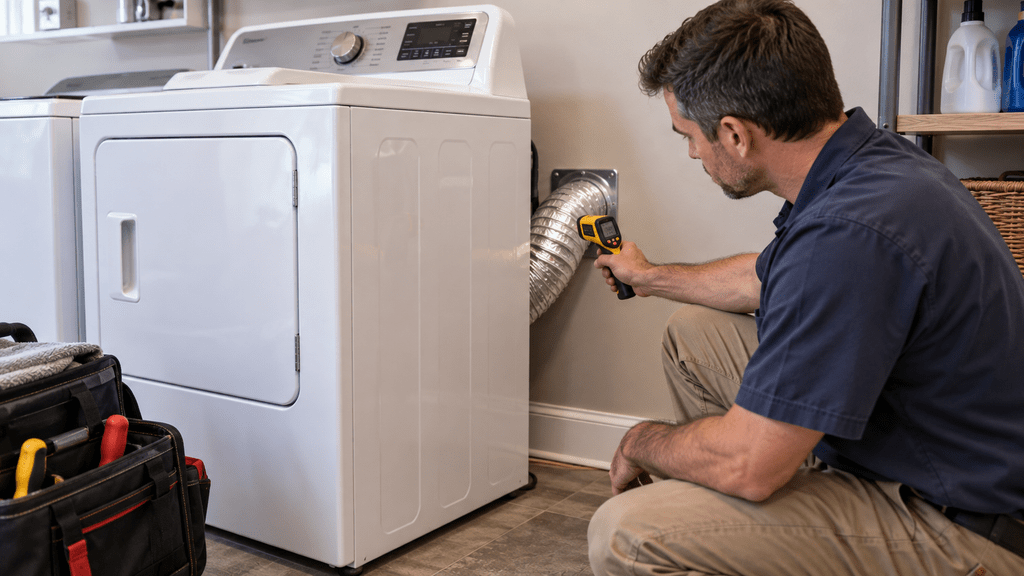
One strong warning sign is heat on an air-only setting. If the dryer is clearly producing significant heat when the controls are set to no heat, the heating circuit may not be shutting off correctly. That can involve a grounded heating element, stuck relay, control-board failure, or wiring problem.
Repeated thermal-fuse failure also requires investigation. A fuse that opens is usually responding to a condition. Replacing it over and over without correcting airflow or temperature control is like replacing a smoke alarm battery because the alarm keeps interrupting dinner.
Burning smells, sparking, buzzing, melted connectors, or breaker trips deserve immediate professional attention. These symptoms can indicate loose electrical connections, overheating wires, motor problems, or short circuits. Do not simply reset a breaker repeatedly if it continues tripping when the dryer runs.
Gas dryers bring additional considerations. If you smell gas or suspect an ignition problem, stop using the dryer and follow appropriate gas-safety procedures. Burner systems should be inspected by someone qualified to work on gas appliances.
A professional technician can measure operating temperature, verify airflow, inspect the vent connection, test thermostats and thermistors, check the heater or burner system, and evaluate the blower. Instead of replacing parts based on symptoms alone, the technician can identify whether the machine is creating excess heat or failing to remove normal heat. When these symptoms require diagnosis and repair, professional dryer repair can address the appliance itself after the basic external airflow checks have been ruled out.
When scheduling service, mention exactly what you noticed. Tell them whether the cabinet gets hot, clothes are scorching, drying times have increased, the dryer shuts off, or there is weak airflow outside. Include any error codes or unusual noises.
Overheating is one of those appliance symptoms where early inspection makes sense. The dryer may continue functioning today, but the conditions causing excessive temperature can damage additional parts every time the machine runs.
A dryer should be warm. It should not feel out of control. When clothes emerge painfully hot, drying times increase, the cabinet becomes unusually warm, or the appliance repeatedly shuts itself down, those symptoms are telling you that the relationship between heat and airflow is no longer working the way it should.
In many homes, the cause turns out to be airflow. A dirty lint screen, clogged exhaust duct, crushed hose, blocked exterior vent, or damaged blower wheel can trap heat inside the machine. That trapped heat makes the dryer run hotter while often making it worse at drying clothes because moisture cannot escape efficiently.
Other cases involve the heating and temperature-control system itself. A grounded heating element can remain energized too long. A thermostat or thermistor can send incorrect information. An electronic relay can fail to switch power properly. These problems may not be visible from the outside, but they can raise operating temperatures significantly.
The best response is to start with safe basics and pay attention to patterns. Clean the lint filter, inspect accessible venting, check exterior airflow, and note whether the machine behaves differently on specific settings. If those checks do not explain the problem, stop guessing and arrange an inspection.
Waiting rarely improves an overheating dryer. Restricted airflow usually becomes more restricted as lint accumulates. Weak components tend to continue deteriorating. Repeated overheating can damage other parts that were not originally defective.
Think of excessive heat the same way you would think about an engine temperature warning in your car. The vehicle may still be moving, but continuing to drive without checking the cause is a gamble. Your dryer is giving you similar information.
A quick inspection can identify a simple maintenance issue before it becomes an expensive repair. More importantly, it can make sure the appliance is operating with proper airflow, temperature control, and safety protection. That is worth addressing before the next pile of laundry goes in.
We repair a wide range of household appliances including refrigerators, washers, dryers, ovens, dishwashers, and more. No matter the brand or model, our experienced technicians are ready to help. We repair commercial appliances as well: commercial washers dryers, commercial refrigerators & freezer & more.
We service a wide range of household appliances, including refrigerators, dryers, washers, ranges, cooktops, dishwashers, freezers, ice makers, ovens, and double ovens.
Our technicians operate across many locations in Ohio, covering major cities like Cleveland, Akron, and Parma. We also serve surrounding areas including Lakewood, Westlake, Strongsville, and Brooklyn.
Our service area extends to Rocky River, Euclid, Solon, Beachwood, and Cleveland Heights, as well as counties such as Cuyahoga, Lorain, Lake, and Medina.
Additional cities we cover include North Olmsted, North Ridgeville, Valley City, Lorain, Avon Lake, Richfield, Brecksville, Garfield Heights, Seven Hills, Brunswick, Oakwood, Mentor, and Willoughby.