How Cleveland Weather Affects Appliances
Published: August 21, 2026
When an appliance suddenly stops working, most homeowners have the same first reaction: grab the phone and schedule a repair. That response makes sense, especially when wet laundry is trapped inside the washer, the refrigerator is getting warm, or dinner is sitting uncooked in the oven. Still, a surprising number of service calls begin with issues that homeowners can identify safely in a few minutes. A tripped breaker, blocked vent, incorrectly selected cycle, clogged filter, closed water valve, or loose plug can make a perfectly repairable appliance look completely dead.
That does not mean you should become an amateur technician or start removing electrical panels. In fact, knowing what not to touch is just as important as knowing what to check. The goal is to rule out simple external causes, collect useful clues, and decide whether the appliance needs professional attention. Think of it like checking whether your car has fuel before calling for a tow. You are not rebuilding the engine in the driveway; you are making sure the problem is not something obvious.
Cleveland homes add a few local wrinkles to appliance troubleshooting. Many properties have older electrical systems, basement laundry rooms, long dryer vents, uneven floors, cold garages, humid utility areas, and plumbing that has been modified over several decades. Lake-effect weather can contribute to outages, voltage interruptions, frozen lines, condensation, and drainage trouble. When these conditions lead to an appliance problem that requires professional diagnosis, homeowners can turn to appliance repair in Cleveland. An appliance may be reacting to the environment around it rather than suffering from a failed internal component.
A short, organized inspection can save time even when a technician is absolutely necessary. The details you collect help the professional arrive better prepared, bring likely parts, and spend less time reproducing the problem. Instead of saying, “The washer is broken,” you can explain that it fills normally, stops before draining, displays a specific code, and leaves water in the drum. That is useful information.
The checks below are designed for ordinary homeowners. They focus on accessible controls, visible connections, basic cleaning, and safe observation. When electricity, fuel, refrigerant, internal wiring, or major disassembly becomes involved, the inspection ends and professional service begins.
A pre-call check is not about avoiding professional repair at all costs. It is about making sure the service call solves a real mechanical or electrical problem instead of ending with someone flipping a switch, opening a valve, or removing a sock from a drain filter. Even a brief visit has a cost because the technician must travel to your home, diagnose the appliance, document the work, and reserve time that could have been used for another repair. Spending five or ten careful minutes before calling can prevent a needless appointment.
Simple causes are more common than many homeowners realize. An appliance can stop because someone changed a setting, activated a control lock, selected a delayed-start option, or failed to close a door completely. Refrigerators may seem warm because food blocks an interior air vent. Dryers may run without drying because the lint screen or exterior vent is restricted. Dishwashers may leave dirty dishes because a large pan stopped the spray arm from rotating. None of these situations requires replacing a motor or control board.
A basic inspection also helps you judge urgency. A washer that will not start because the lid is not closing properly is inconvenient. A washer leaking near an electrical outlet is potentially dangerous. A refrigerator that feels slightly warmer after the door was left open may recover. A refrigerator that is silent, hot near the compressor area, and unable to hold temperature needs prompt attention. The more precisely you observe the symptoms, the better your next decision becomes.
There is another benefit: you learn how your home operates. Appliances rarely function in isolation. They depend on circuits, valves, drains, vents, room temperature, water pressure, and installation conditions. When you understand those connections, you are more likely to notice a weak dryer vent, aging hose, damp outlet, or recurring drainage issue before it causes major damage.
Approach the pre-call check calmly. Do not start pushing random buttons or resetting breakers repeatedly. Write down what happened, when it happened, and what the appliance was doing immediately beforehand. Then move through the checks in a logical order. A structured process gives you information. Random experimentation often hides the original symptom and makes diagnosis harder.
The first question is wonderfully unglamorous: Is the appliance actually receiving power? Homeowners often assume the answer is yes because the plug looks connected or because another light in the room works. However, outlets, breakers, switches, cords, and safety devices can fail independently. A refrigerator light may turn on even when the compressor circuit has a problem, while a washer display may remain dark because a wall outlet lost power.
Start by looking at the plug and cord without moving a heavy appliance unnecessarily. The plug should sit firmly in the outlet. The cord should not be crushed, frayed, burned, sharply bent, or trapped under a machine foot. If you see melted plastic, dark discoloration, exposed wire, or a warm outlet, stop immediately. Do not touch or reconnect the appliance. Shut off power from a safe location and arrange professional electrical or appliance service.
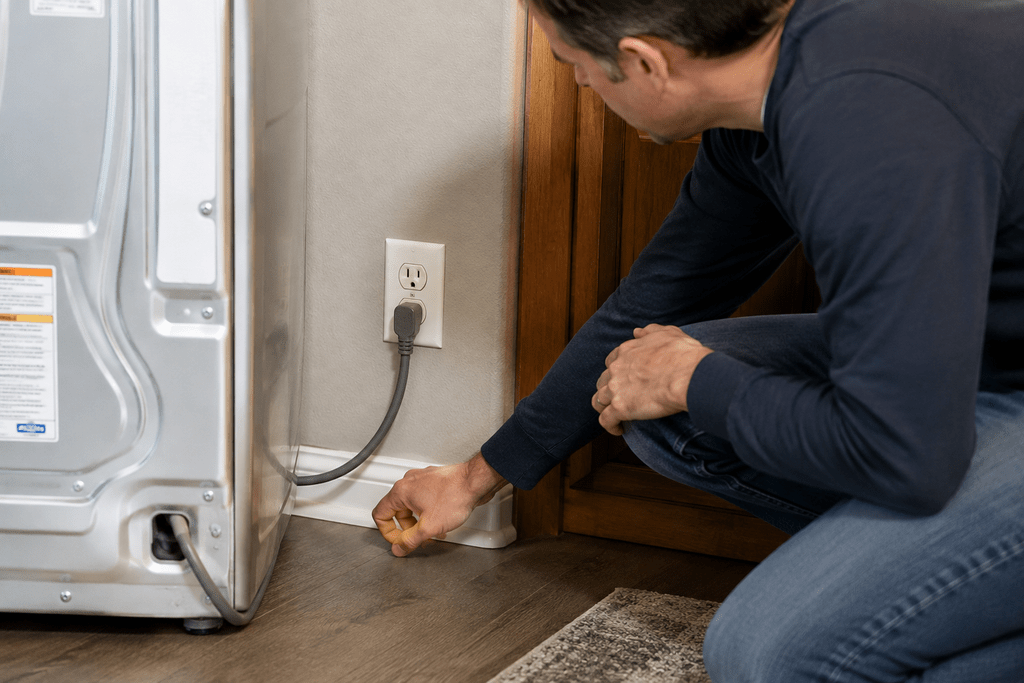
Check the electrical panel for a tripped breaker. A tripped breaker may sit halfway between the on and off positions rather than appearing fully off. Reset it once by moving it completely off and then back on. If it trips again, leave it off. Repeated resetting is not troubleshooting; it is repeatedly energizing a fault. The problem could involve the appliance, the circuit, moisture, damaged wiring, or another device sharing the same line.
Some kitchens, garages, laundry areas, and basements use outlets with built-in protective reset buttons. If one has tripped, other outlets farther along the circuit may also lose power. Reset it only when the area is dry and no obvious damage is present. If the device will not reset or immediately trips again, call an electrician or qualified technician.
Also look for wall switches. In some homes, an appliance outlet may be controlled by a nearby switch that resembles a light switch. Garbage disposals, dishwashers, and utility-room outlets can be affected by remodeling or unusual wiring choices. Ask whether anyone recently cleaned the room, moved furniture, used a portable heater, or operated a power tool. Another device may have overloaded the circuit.
Never test a major appliance through a lightweight extension cord. Large machines require a properly rated, grounded supply. If power remains uncertain, stop there. Electrical diagnosis beyond visible cords, accessible breakers, and safe outlet resets belongs to a professional.
Appliance controls have become more flexible, but flexibility creates opportunities for confusion. A machine can appear broken when it is actually obeying a setting that someone selected accidentally. Before assuming a motor or control has failed, look carefully at the display, indicator lights, knobs, cycle position, temperature selection, and any lock symbols.
Control locks are a common culprit. They are designed to prevent children or accidental touches from changing settings, but they can also prevent a cycle from starting. Depending on the control layout, the lock may require holding a button for several seconds rather than pressing it once. Look for a small lock symbol or text indicating that controls are disabled. Use the appliance’s operating instructions rather than guessing at button combinations.
Delayed start can create another false alarm. A dishwasher or washer may accept the cycle but wait several hours before beginning. Homeowners press start, hear nothing, and assume the machine is dead. Check whether a delay indicator is active. Cancel the setting according to the normal controls and select a basic cycle.
Dryers and ovens may have modes that change normal behavior. An air-only dryer setting will tumble clothes without heat. An energy-saving dishwasher cycle may use less heat and leave plastic items wetter. A refrigerator may have been placed in a cooling-off, showroom, vacation, or temperature-adjustment mode during cleaning. Freezers can be affected when a control knob is bumped by stored items.
Cycle interruption matters too. Some machines require the start button to be pressed again after the door is opened. Others cancel the cycle if the door remains open too long. A washer may pause while balancing the load and appear inactive for several minutes. Give the appliance enough time to respond before repeatedly changing settings.
Return the controls to a simple, normal operating mode. Avoid specialty cycles during diagnosis. Select an ordinary wash, bake, dry, or cooling setting and observe what happens. Write down which lights appear and whether you hear a click, pump, fan, motor, or valve.
Settings are the easiest problem to fix, but they are also easy to overlook because homeowners know their appliances well and assume nothing changed. One bumped button can create a surprisingly convincing breakdown.
Many appliances will not start unless a door or lid closes securely. This safety feature prevents water, heat, or moving parts from creating a hazard. A door can look closed while a latch, seal, dish, piece of clothing, rack, or food container prevents full engagement. Before calling for service, open the appliance and inspect the entire closing path.
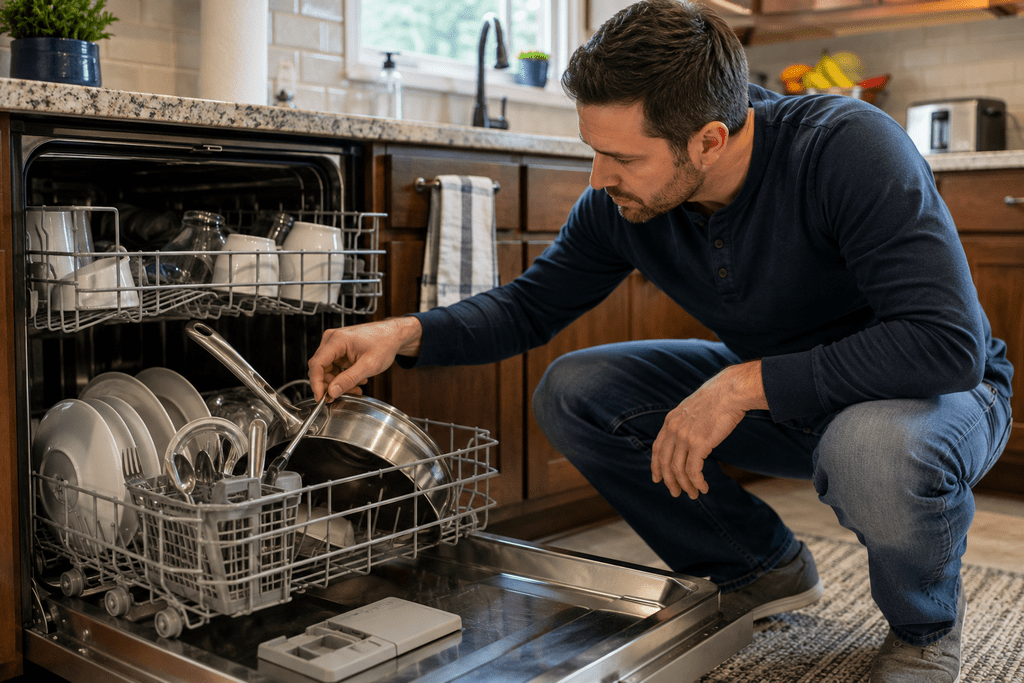
For a dishwasher, make sure a utensil, pan handle, cutting board, or rack is not pressing against the door. Check that the racks slide fully into position. A tall item can also block the detergent dispenser or stop a spray arm from turning. Spin accessible spray arms gently by hand before starting the cycle. If they strike something, rearrange the load.
On a washer, look for clothing trapped between the door and seal. A small sock, drawstring, or corner of a towel can prevent closure or create a leak. Top-loading machines may refuse to spin when the lid does not latch correctly. Do not bypass or defeat the lid lock. It exists to keep hands away from high-speed moving parts. If the washer still will not start, drain, or spin after these basic checks, the problem may require professional washer repair.
Dryers can behave similarly. A dryer door may bounce slightly open if the latch is worn or if clothing is trapped near the opening. Clean lint and debris from the latch area, but do not force a damaged door shut. Check whether the drum is overloaded. Heavy, wet items can prevent proper tumbling and may make the motor struggle.
Refrigerator and freezer doors deserve attention even when the appliance is running. Food packages, ice buildup, misaligned shelves, or dirty gaskets can prevent a tight seal. The machine then runs longer, temperatures rise, and condensation develops. Clean the gasket and check that the door closes without needing a hard push.
Load size matters across appliances. An unbalanced washer may pause or refuse to spin. An overloaded dryer may tumble poorly and take hours to dry. A crowded refrigerator may block interior vents. A packed dishwasher may leave dishes dirty. Remove part of the load and test again.
Simple obstructions are like a pebble in a door hinge: tiny object, big effect. Clear the path before assuming the internal mechanism has failed.
Airflow and water flow are the circulatory systems of household appliances. When a filter, vent, coil, or screen becomes clogged, the machine works harder and performs worse. Homeowners may interpret longer cycles, weak cooling, damp clothes, dirty dishes, or overheating as major component failure when routine cleaning is the real solution.
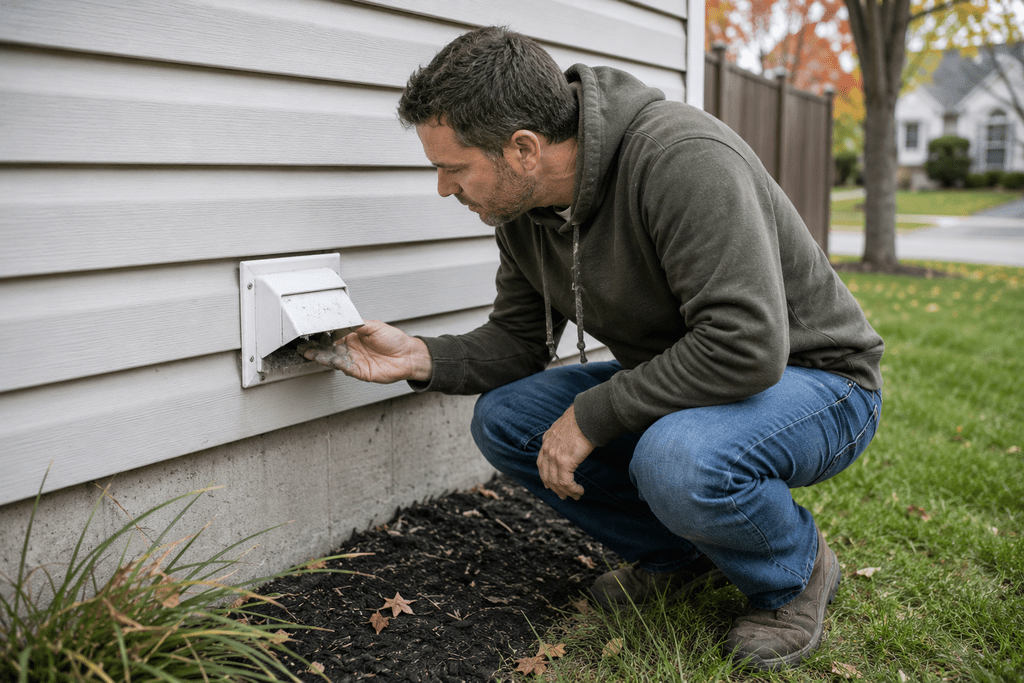
Start with the dryer lint screen. Clean it before every load. Then check the exterior vent while the dryer is running. The flap should open, and airflow should feel strong. Weak flow may indicate a crushed duct, lint buildup, excessive duct length, or a blockage at the exterior opening. Snow, leaves, nesting material, and ice can obstruct vents in Cleveland weather. If the dryer becomes unusually hot or clothes take multiple cycles to dry, stop using it until airflow is restored. If cleaning the accessible lint screen and checking the exterior vent do not resolve the problem, professional dryer repair may be needed.
Dishwasher filters collect food particles, labels, grease, glass, and other debris. Remove and clean accessible filters according to their locking design. Wear gloves because sharp fragments may be present. A dirty filter can cause odors, gritty dishes, weak circulation, and standing water. Clean the housing carefully without pushing debris deeper into the drain.
Refrigerators and freezers need clear ventilation. Dust and pet hair around accessible coils, grilles, or lower ventilation areas can make the cooling system run longer. Disconnect power before cleaning areas near electrical components, and use a soft brush or vacuum attachment without bending tubing or damaging wiring. Make sure food is not blocking interior vents. Cold air needs a path between shelves and compartments.
Washers may have accessible pump filters or small drain screens. These can collect coins, buttons, hair, fabric, and small garments. Open them only when the machine is off, cool, and prepared for water release. Place towels and a shallow container nearby because retained water may spill.
Range hoods and appliance ventilation grilles also need cleaning. Grease restricts airflow and can create odors or overheating. Use methods appropriate for the filter material.
Cleaning should be gentle and targeted. Avoid soaking controls, mixing chemicals, or poking metal objects into openings. You are restoring flow, not performing internal surgery. If performance improves after cleaning, you have likely found either the problem or an important contributing factor.
Appliances that use water depend on a reliable supply. A washer, dishwasher, refrigerator dispenser, or ice maker may appear mechanically defective when the water valve is closed, the hose is kinked, the line is frozen, or household pressure is too low. Before requesting appliance repair, inspect the visible parts of the supply system.
Begin with shutoff valves. Make sure the appropriate valve is open, but do not force a valve that is stuck or heavily corroded. Older valves can begin leaking when disturbed after years in one position. If a handle will not turn with gentle pressure, call a plumber rather than using a wrench and hoping for the best.
Look at supply hoses and lines. They should not be pinched behind the appliance, stretched tightly, rubbing against sharp edges, or showing bulges, cracks, rust, or moisture. Washer hoses deserve special attention because a failure can release a large amount of water. If you see swelling near a fitting or dampness around a connection, shut off the supply and arrange replacement.
For a dishwasher, check beneath the sink. The supply valve may have been closed during plumbing work and never reopened fully. Storage items can press against hoses or connections. Look for drops of water, mineral crust, warped cabinet material, or staining that suggests a slow leak.
Refrigerator water lines can be damaged when the appliance is moved for cleaning. A tight bend may reduce flow to the dispenser or ice maker. Small leaks may appear only when the valve opens, so inspect the floor and wall behind the refrigerator if it is safe to move.
Cleveland winters can also affect lines in garages, additions, exterior walls, and poorly insulated spaces. Frozen or partially frozen water lines may stop appliance filling. Do not use an open flame or intense direct heat to thaw them. Address the frozen section safely and inspect for splitting once it warms.
Observe water flow elsewhere in the home. If several fixtures have low pressure, the problem may be with household plumbing rather than the appliance. A plumber may be the right first call.
Water supply checks are valuable, but leaks change the priority. When water is near electricity, stop the appliance, shut off the supply if it is safe, and keep away from wet electrical connections.
A machine that fills but does not drain often gets labeled “broken,” yet the blockage may be outside the appliance. Dishwashers, washers, and some refrigerator systems rely on clear drain paths. A clogged filter, kinked hose, slow sink drain, blocked standpipe, or frozen line can prevent water from leaving even when the internal pump is operating normally.
Start by observing the water. Is it clean, soapy, dirty, or foul-smelling? Did the appliance stop during the cycle, or did it complete the cycle and leave water behind? The answer helps distinguish an interruption from a drainage restriction. Do not reach blindly into standing water. Broken glass, sharp metal, or moving parts may be hidden below the surface.
For a dishwasher, clean the filter and inspect the accessible sump area. Check the drain hose beneath the sink for kinks or compression. If the kitchen sink drains slowly, the dishwasher may be connected to the same restricted path. Water returning to the dishwasher after the cycle can indicate a routing or household drain issue.
For a washer, examine the drain hose. It should not be crushed behind the machine, pushed too deeply into the standpipe, or sealed in a way that interferes with airflow. A blocked household drain can cause water to back up around the laundry area. If the washer hums but does not drain, a clogged filter, jammed pump, or failed pump may be involved. If these basic checks do not resolve the drainage problem, professional washer repair may be needed.
Listen during the drain stage. A steady pumping sound with no water movement suggests a restriction. Grinding may indicate debris in the pump. Complete silence may point to a control, wiring, switch, or pump problem. Do not keep running repeated cycles, because the pump may overheat and water may escape.
Check nearby floor drains too. Basement appliances can be affected by slow or backed-up drainage after heavy rain, snowmelt, or sewer problems. If multiple drains are gurgling or slow, call a plumber.
Standing water is both a symptom and a warning. It promotes odors, residue, and leaks. Basic filter and hose checks are reasonable, but pump disassembly and electrical testing should be left to a technician.
Your senses can provide more diagnostic information than a dozen random button presses. Before moving the appliance or removing any part, stand nearby and observe. What do you see, hear, and smell? These details help separate a simple operating issue from a developing safety problem.
Begin with your eyes. Look for water beneath the machine, rust around the base, scorched outlets, loose hoses, damaged cords, frost patterns, unusual condensation, smoke, sparks, or objects blocking moving parts. Check the floor and nearby cabinets because leaks often travel away from their source. A small stain under a dishwasher or refrigerator can reveal a slow problem long before a puddle appears.
Listen to the sequence of operation. Does the appliance click and then go silent? Does a motor hum without starting? Is there grinding, squealing, rattling, banging, or repeated stopping? A washer that bangs only during the spin cycle may be unbalanced or unlevel. A refrigerator that clicks repeatedly without cooling may be struggling to start. A dryer that scrapes on every rotation may have a drum-support or foreign-object issue. Record a short video or audio clip from a safe distance.
Smell is especially important. A burning odor, melting-plastic smell, fuel odor, or sharp electrical scent is not something to monitor casually. Stop the appliance and shut off power from a safe location. If fuel is suspected, leave the area and follow emergency safety procedures. Do not turn switches on or off in a space where a fuel leak may be present.
A musty smell suggests trapped moisture, poor drainage, or residue. A sour dishwasher odor may point to a dirty filter or standing water. A hot, dusty smell can occur when heating equipment is used after a long break, but persistent or intensifying odor still deserves attention.
Touch should be used cautiously. Do not touch wet electrical areas or hot metal. You may notice that an appliance cabinet feels unusually hot, but avoid reaching behind or beneath it while powered.
The strongest diagnostic clues often appear before the machine stops completely. Paying attention early can turn a major breakdown into a smaller repair.
Electronic appliances occasionally freeze in the same way a computer does. A temporary power interruption, interrupted cycle, control input, or sensor conflict may leave the machine unresponsive. A safe reset can sometimes restore normal operation, but it should be performed once, carefully, and only when no leak, burning smell, damaged cord, or electrical hazard is present.
Start with the appliance’s normal cancel or power-off procedure. Give the machine time to stop pumps, unlock doors, or complete a safety sequence. Some washers keep the door locked until water drains or the drum stops moving. Do not force the door. If the controls remain frozen, disconnect power using the plug only when it is accessible, dry, and safe to reach. Otherwise, switch off the correct breaker.
Leave the power off for several minutes so the control can fully discharge. Then restore power and select a basic cycle. If the appliance returns to normal, continue watching it closely. A reset may clear a one-time control error, but repeated freezes suggest an underlying problem.
Record any error code before resetting. Take a photo of the display because codes can disappear when power is removed. Write down which stage of operation failed, what was inside the machine, and whether there had been an outage or flickering lights. Error codes are clues, not complete diagnoses. The same code may result from a failed sensor, loose connection, blocked component, or external condition.
Do not repeatedly reset a breaker or unplug and reconnect the appliance in rapid succession. Compressors and motors may need time before restarting. Repeated power cycling can hide symptoms or increase stress.
Avoid online button combinations that are not clearly intended for homeowner use. Some sequences enter service modes, erase stored errors, activate individual components, or change calibration settings. That can make diagnosis harder and create unsafe operation.
A reset is like restarting a stalled conversation. Sometimes it solves the misunderstanding; sometimes it only pauses the deeper issue. When the problem returns, stop resetting and schedule service with the recorded clues in hand.
Different appliances have different “first checks,” and narrowing the problem by category helps prevent wasted effort. A refrigerator that is not cooling requires a completely different thought process from a washer that will not drain. You do not need to diagnose the failed part. You only need to describe which basic function is missing.
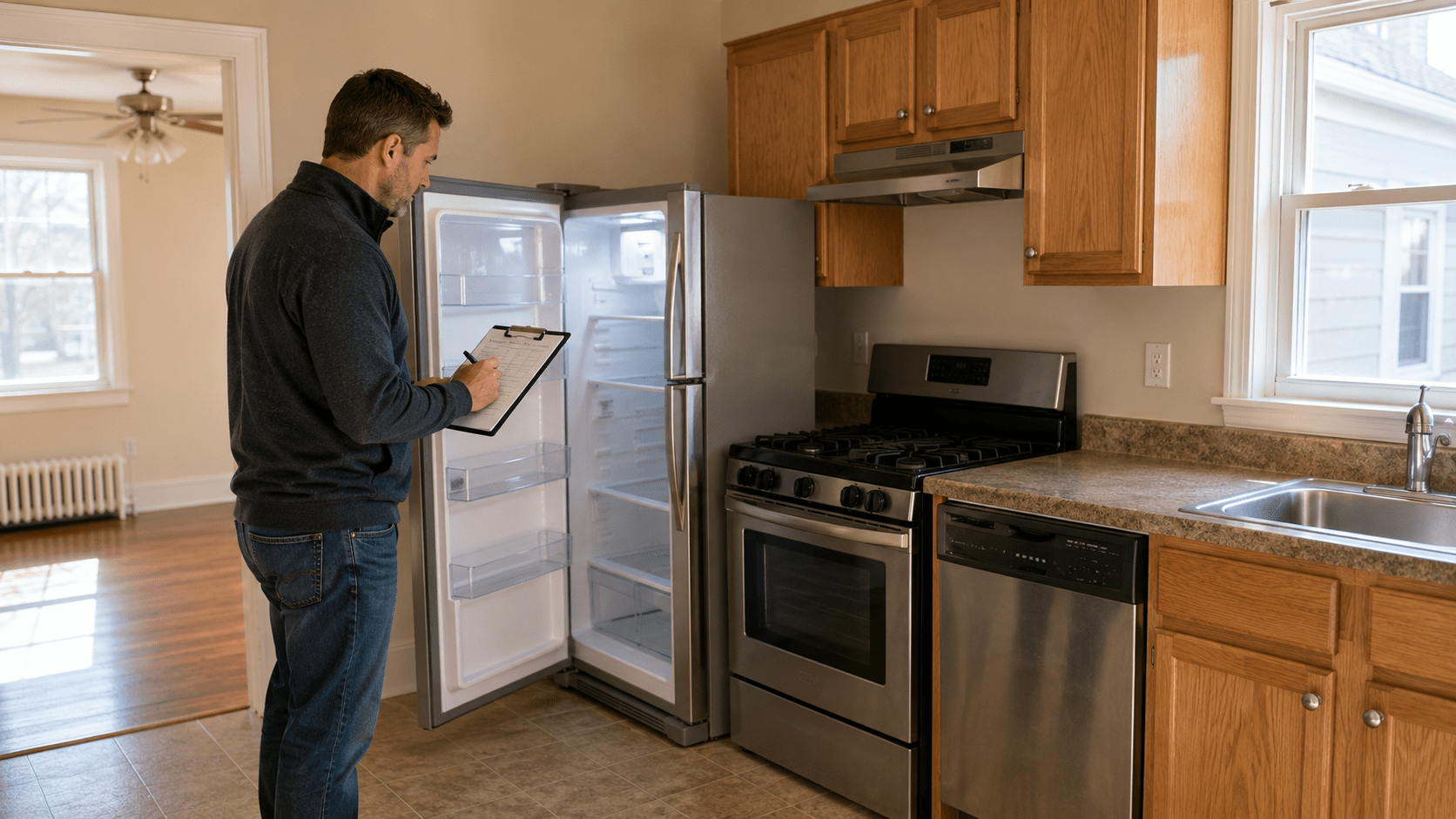
For a refrigerator or freezer, check power, control settings, door seals, interior airflow, room temperature, and whether the unit is running. Make sure food packages are not blocking vents. Use an appliance thermometer rather than judging temperature by touch. If the light works but the machine is silent and warming, note that clearly. If it runs continuously but does not cool, that is a different symptom.
For a washer, identify whether the failure occurs during filling, agitation, draining, or spinning. Confirm that water valves are open, the door or lid closes, the load is balanced, and the drain hose is not kinked. Standing water and a humming sound may point toward a drainage issue. No water entering may involve supply conditions or an inlet problem.
For a dryer, separate tumbling from heating. Does the drum turn? Is there heat? Is exterior airflow strong? Clothes that remain damp despite normal heat often point to ventilation restriction. A dryer that does not tumble may have a different mechanical or electrical problem.
For a dishwasher, inspect loading, spray-arm movement, filter cleanliness, water temperature, detergent release, and drainage. Dirty dishes with grit suggest filtration or drain trouble. Cold, wet dishes may point to heating or cycle settings.
For an oven or range, determine whether the display works, each heating area responds, and the problem affects bake, broil, or every function. Fuel odors, sparking, and damaged connections require immediate professional attention.
For an ice maker or water dispenser, check supply valves, filters, frozen lines, and freezer temperature before assuming the mechanism failed.
Describe what the appliance does do, not only what it fails to do. “The dryer tumbles and heats, but airflow outside is weak” is much more useful than “The dryer does not work.”
Sometimes the appliance is fine, but the room around it is not. This is especially important in Cleveland homes, where garages can become extremely cold, basements can stay damp, and lake-effect storms can cause power interruptions or snowmelt. Environmental conditions can change appliance behavior and create symptoms that resemble internal failure.
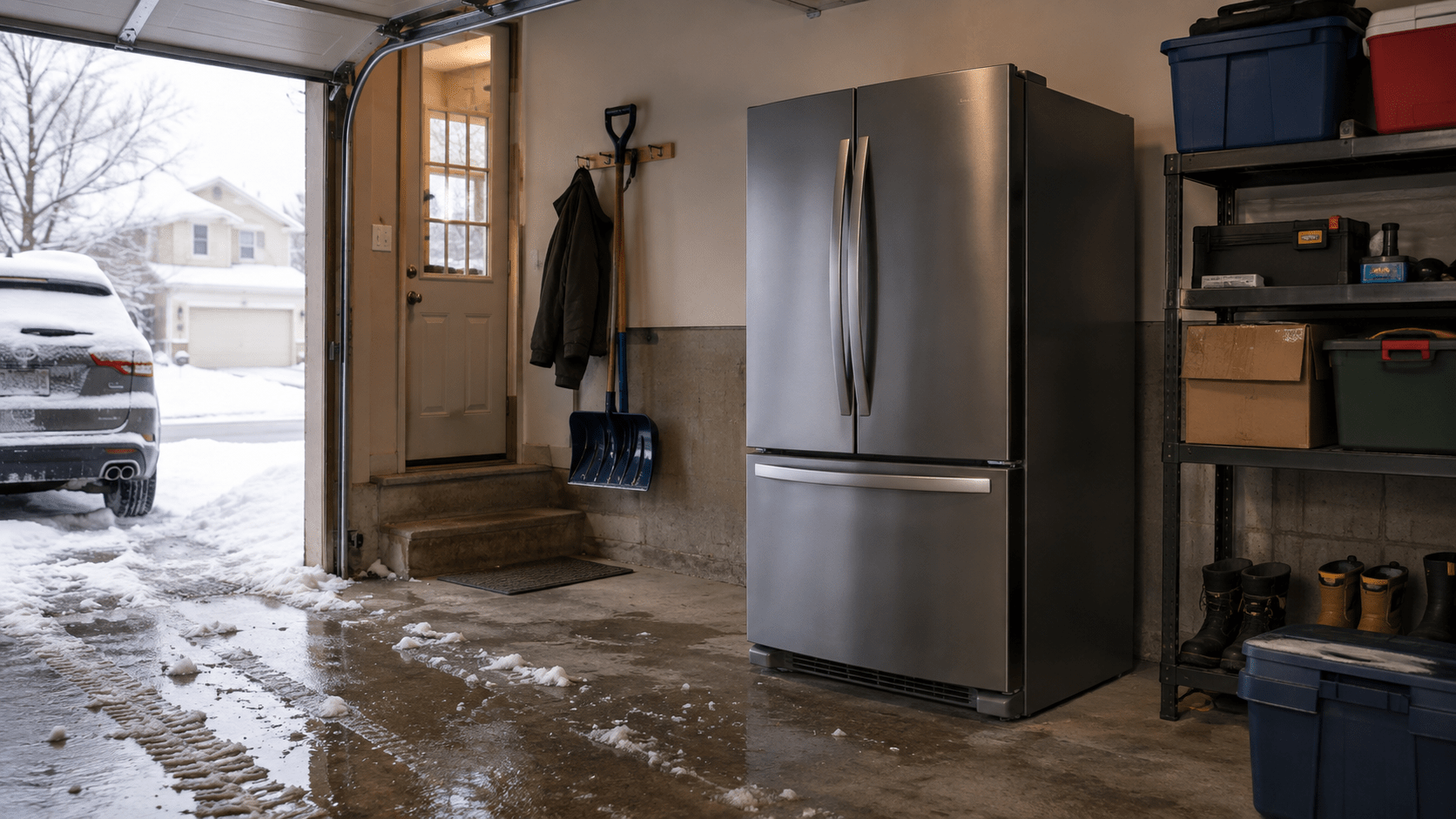
A refrigerator in an unheated garage may struggle during very cold weather. The surrounding air can interfere with thermostat behavior, causing the freezer section to warm even though the refrigerator area seems cool. In summer, the same garage may become hot enough to make the compressor run constantly. Check actual temperatures and compare the appliance’s location with its intended operating environment.
Basement humidity can affect washers, dryers, freezers, and electrical connections. Condensation may form on cold metal surfaces during a sudden thaw. Moisture encourages rust, odor, and corrosion. Look behind appliances and near exterior walls, pipes, floor drains, and foundation cracks. The front of the machine may look dry while the back sits in damp air.
Installation clearance matters too. Refrigerators need room to release heat. Dryers need a clear exhaust path and enough room to avoid crushing the duct. Washers need a level, stable floor. Dishwashers need properly routed hoses and secure connections. An appliance pushed tightly against a wall may pinch its own cord, water line, or drain hose.
Storms create electrical clues. If the problem began immediately after an outage, voltage interruption, or flickering lights, tell the technician. Do not assume the appliance recovered simply because the display turned back on. Motors, compressors, and controls can restart incorrectly.
Snow and ice can block exterior dryer vents. Cold can freeze water lines in garages or additions. Rapid thawing can produce basement seepage or floor-drain problems. These are house conditions, not appliance defects, but they still affect operation.
Ask yourself what changed around the time of failure. Was there plumbing work, remodeling, a new floor, a moved appliance, extreme cold, heavy rain, or a power event? The answer may lead directly to the real cause.
Once the basic checks are complete, gather information before scheduling service. This step can shorten the diagnosis, help the technician bring likely parts, and prevent misunderstandings about the problem. A detailed description is far more valuable than saying the appliance is “acting weird.”
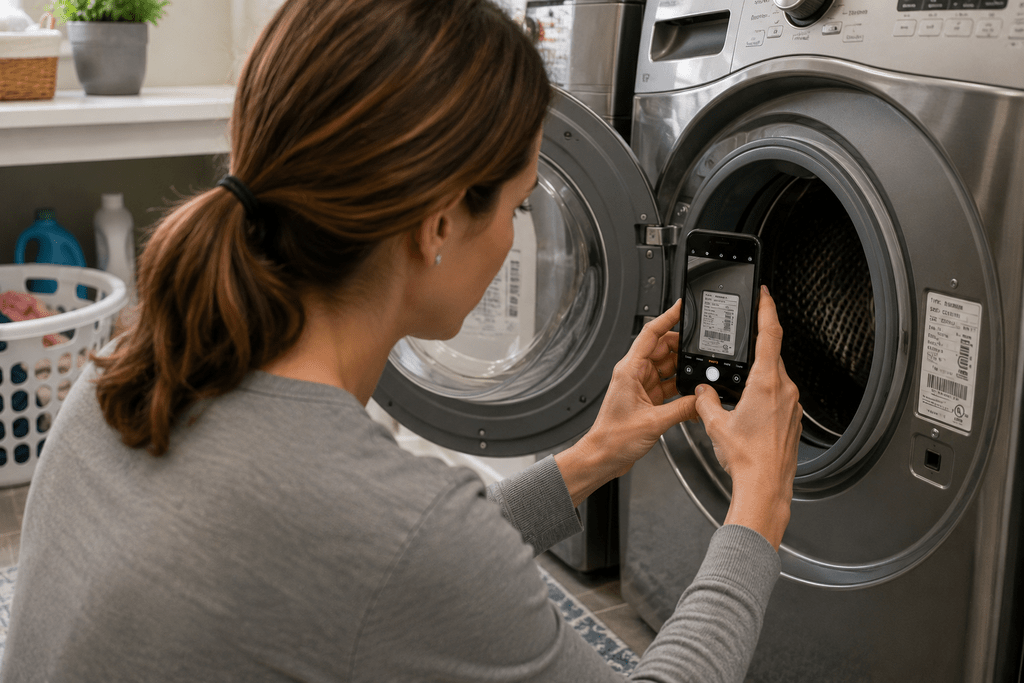
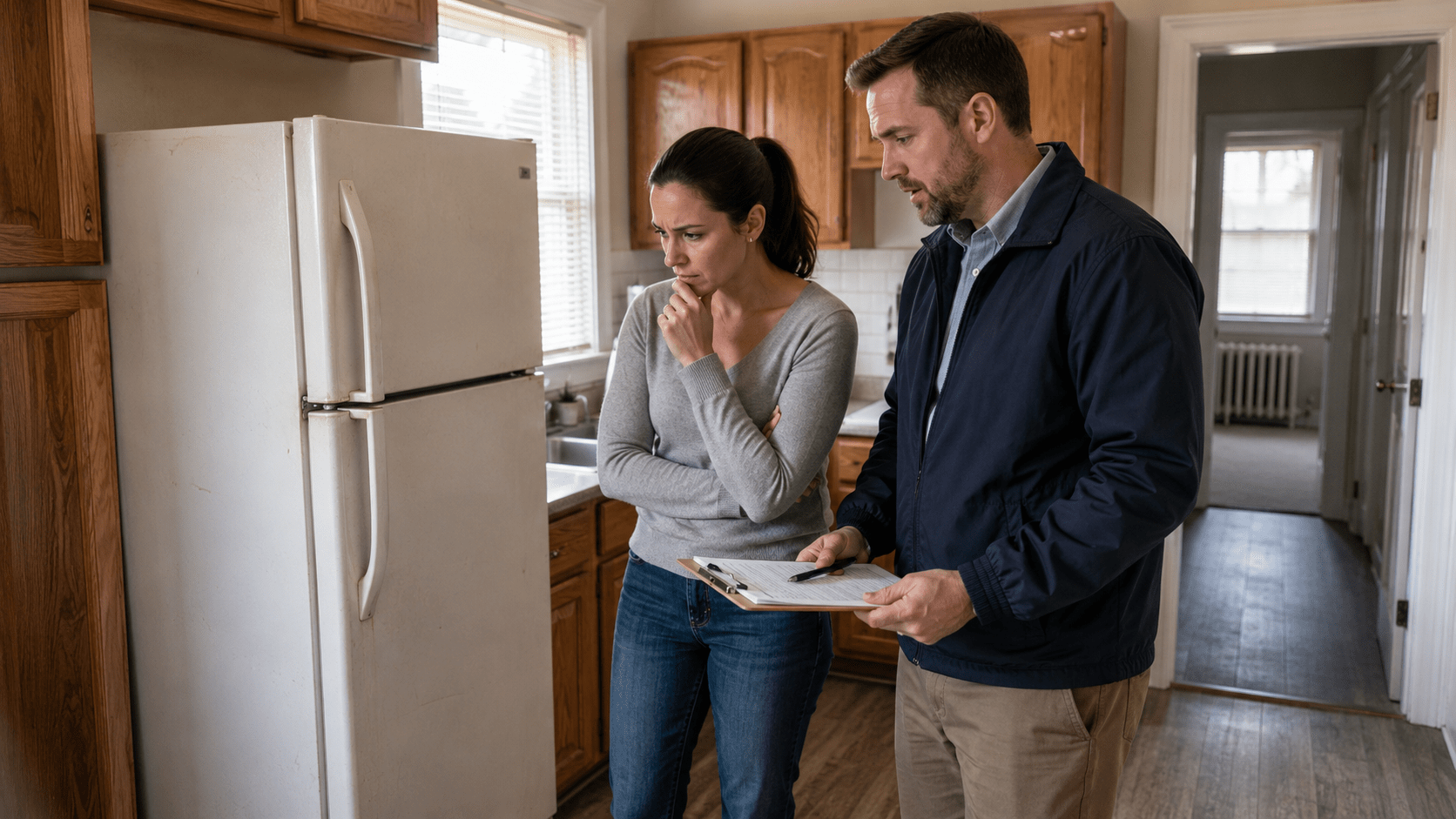
Start with the appliance type, approximate age, and identifying information from the model label. The label may be inside a door, along a frame, behind a drawer, beneath a lid, or on the back. Do not move a heavy appliance unsafely to find it. Take a clear photo when the label is accessible. Model information helps the repair company check parts availability and known service procedures.
Describe the exact symptom. Does the appliance fail to start, stop mid-cycle, leak, overheat, make noise, display a code, or perform one function but not another? Mention when the problem began and whether it happens every time. Intermittent problems are difficult to reproduce, so videos, photos, and notes are valuable.
Explain what you already checked. Tell the technician that the breaker is on, the outlet has power, the filter is clean, the water valves are open, or the dryer vent has weak airflow. Do not claim a part has failed unless it was professionally diagnosed. Observations are more useful than guesses.
Include environmental details. Mention recent outages, plumbing work, freezing temperatures, basement water, appliance relocation, or remodeling. If the machine was moved before the problem appeared, a crushed hose or loose connection becomes more likely.
Describe sounds and smells accurately. “Three clicks every minute” is better than “a strange noise.” “Hot electrical smell near the outlet” is more urgent than “smells funny.”
Clear the area around the appliance before the visit. Remove laundry, dishes, storage boxes, pet items, and anything blocking access. Keep pets safely away. Make sure the technician can reach the electrical panel, shutoff valves, and exterior vent when relevant.
Good preparation does not replace diagnosis. It gives the professional a head start and helps the service call focus on solving the problem.
A homeowner inspection should end the moment a safety risk appears. There is no prize for discovering the failed part yourself, especially when electricity, fuel, high heat, refrigerant, sharp components, or pressurized water is involved. The best troubleshooting decision is sometimes stepping back.
Stop using the appliance if you smell burning plastic, hot wiring, fuel, or strong chemical odors. Turn off power from a safe location when possible. If a fuel leak may be present, leave the area and follow emergency procedures. Do not operate switches, create sparks, or attempt to locate the leak with a flame.
Active water near an outlet, cord, motor, or electrical panel is another immediate stop sign. Do not stand in water to unplug the machine. Shut off power at the panel only when the path is safe and dry. Close the water supply if the valve is accessible without entering the wet area.
Repeated breaker trips require professional evaluation. A breaker is a safety device, not an inconvenient switch. Resetting it again and again can energize a short circuit, overheating motor, damaged heater, or compromised wire.
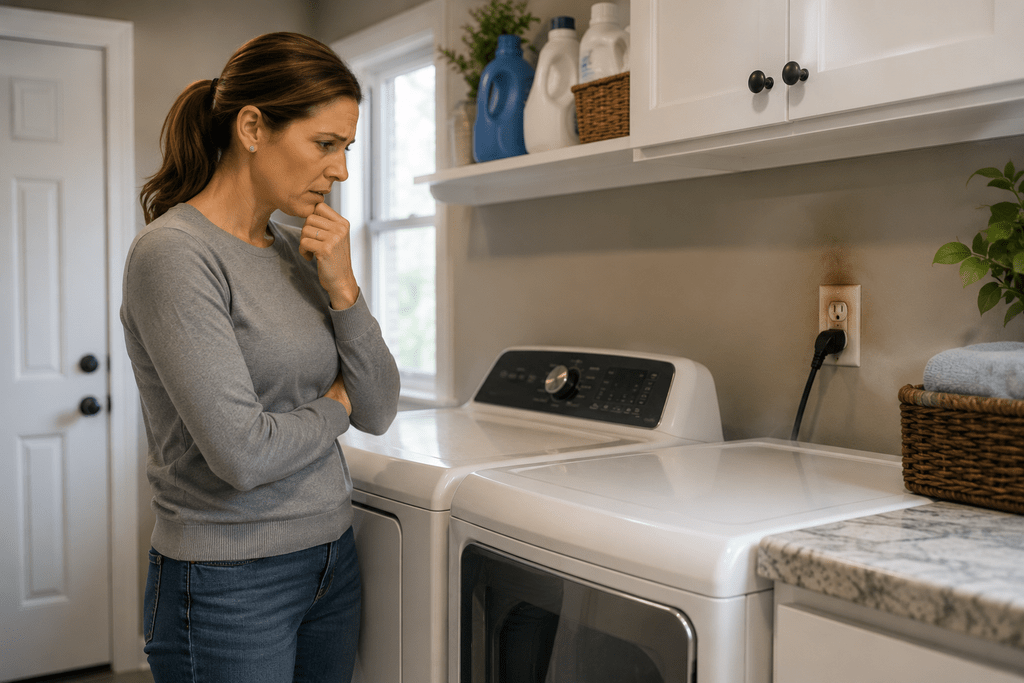
Grinding, metal scraping, violent movement, smoke, sparks, and severe overheating also call for immediate shutdown. A washer that walks across the floor can tear hoses. A dryer with restricted airflow can become dangerously hot. A refrigerator compressor that repeatedly clicks and overheats may suffer additional damage if it keeps trying to start.
Do not open sealed refrigeration systems, fuel valves, internal electrical panels, or high-voltage sections. Do not bypass door locks, thermal devices, sensors, or fuses. These components exist for safety.
Food temperature can create urgency too. If a refrigerator or freezer cannot hold safe conditions, move food to another cold location and limit door opening. Do not wait several days hoping the appliance will recover.
A qualified technician has test equipment, service information, and experience that a homeowner does not. Calling early can prevent water damage, food loss, electrical damage, or a much larger repair. Safe troubleshooting is about knowing the boundary—and respecting it.
Before calling an appliance repair technician, Cleveland homeowners should begin with the simple things: power, settings, doors, loads, filters, vents, water supply, and drainage. These checks do not require technical training, and they often reveal the cause of a problem quickly. Even when they do not solve the issue, they produce useful information for the professional who will.
The most important habit is moving in a logical order. Confirm power before examining cycles. Check settings before assuming a control board failed. Clear obstructions before blaming a motor. Clean filters and vents before concluding that performance has permanently declined. Inspect visible hoses and drains before requesting an internal pump replacement.
Your senses matter. Water stains, frost patterns, weak airflow, unusual clicks, grinding sounds, burning odors, and repeated error codes all tell a story. Record those clues rather than repeatedly resetting the machine. A clear timeline can save diagnostic time and help distinguish an appliance problem from a plumbing, electrical, ventilation, or installation issue.
Cleveland conditions deserve special attention. Cold garages can affect refrigeration equipment. Humid basements can promote corrosion and odors. Snow and ice can block exterior vents. Rapid thaws can contribute to seepage. Storms can interrupt power. The appliance may be reacting to the room, the weather, or the house system around it.
At the same time, do not let curiosity pull you into unsafe work. Visible plugs, accessible breakers, filters, hoses, and controls are reasonable homeowner checks. Internal wiring, fuel systems, refrigerant circuits, major disassembly, and repeated electrical faults are not. Stop when water reaches electricity, a breaker trips again, a burning smell appears, or the appliance behaves violently.
A five-minute check may solve the problem. It may also confirm that professional repair is necessary. Either result is useful. You will avoid guessing, communicate more clearly, and give the technician a better chance of resolving the issue efficiently on the first visit.
We repair a wide range of household appliances including refrigerators, washers, dryers, ovens, dishwashers, and more. No matter the brand or model, our experienced technicians are ready to help. We repair commercial appliances as well: commercial washers dryers, commercial refrigerators & freezer & more.
We service a wide range of household appliances, including refrigerators, dryers, washers, ranges, cooktops, dishwashers, freezers, ice makers, ovens, and double ovens. Our technicians operate across many locations in Ohio, covering major cities like Cleveland, Akron, and Parma. We also serve surrounding areas including Lakewood, Westlake, Strongsville, and Brooklyn. Our service area extends to Rocky River, Euclid, Solon, Beachwood, and Cleveland Heights, as well as counties such as Cuyahoga, Lorain, Lake, and Medina. Additional cities we cover include North-Olmsted, North Ridgeville, Valley-City, Lorain, Avon Lake, Richfield, Brecksville, Garfield Heights, Seven Hills, Brunswick, Oakwood, Mentor, and Willoughby.