When Appliance Repair in Cleveland Shouldn’t Wait
Published: September 7, 2026

Nobody gets excited about opening a utility bill and discovering that the number has jumped for no obvious reason. You start mentally retracing the month. Did the air conditioner run more? Was everybody taking longer showers? Did somebody secretly turn the basement into a tropical greenhouse? Sometimes the answer is much less dramatic. Household appliances can slowly become less efficient when basic maintenance is ignored, and because that decline happens little by little, homeowners often do not notice until the energy bill starts doing the talking.
That is especially relevant in Cleveland homes, where appliances deal with very different conditions throughout the year. Summer brings heat and humidity, which can make refrigerators, freezers, dryers, and basement appliances work harder. Winter brings long heating seasons, cold utility spaces, and homes that stay closed up for months at a time. Add older housing stock, basement laundry rooms, tight refrigerator spaces, aging vents, and appliances that may have been installed years after the surrounding plumbing or electrical systems, and you have plenty of opportunities for energy to disappear without doing anything useful.
The important thing to understand is that energy efficiency is not determined only when you buy an appliance. It changes throughout the life of the machine. A refrigerator with dirty coils may run longer than it should. A dryer connected to a lint-packed vent can need two cycles for a load that once dried in one. A dishwasher with clogged filters or weak water flow may leave dishes dirty enough that you run them again. A washing machine that struggles to drain may extend cycles or force you to repeat them. Even a worn refrigerator door gasket can turn into a tiny energy leak that operates twenty-four hours a day.
Regular maintenance is not about obsessing over every watt of electricity. It is about removing the little problems that make appliances work harder than necessary. When a machine can breathe, drain, seal, spin, heat, and cool the way it was designed to, it usually uses its energy more productively. And in a Cleveland household where several major appliances run every day, those small efficiency improvements can add up.
An appliance rarely jumps from “perfectly efficient” to “complete energy hog” overnight. Most of the time, efficiency declines gradually. A little dust collects here, airflow gets slightly worse there, a gasket begins losing flexibility, or a drain line becomes partially restricted. The appliance still works, so nobody worries. But the machine has to compensate. It runs longer, heats more often, pumps harder, or repeats part of its cycle. In other words, you are paying for extra work without getting extra results.
Think about driving a car with underinflated tires. The vehicle still moves. You can get to work, go grocery shopping, and drive across town. But the engine has to overcome more resistance the entire time. Appliance maintenance works on a similar principle. A dryer with poor vent airflow faces resistance. A refrigerator surrounded by dust struggles to release heat. A dishwasher with blocked spray openings cannot move water as effectively. Each machine keeps trying to do the same job, but now it needs more operating time or more cycles to accomplish it.
This is why homeowners should look beyond whether an appliance technically works. A refrigerator that runs almost constantly may still keep food cold. A dryer may eventually get towels dry after ninety minutes. A dishwasher may clean the plates if you use the longest cycle twice. None of those appliances is technically “dead,” but all three may be wasting energy.
Maintenance also protects efficiency by preventing small defects from placing extra stress on expensive components. When a refrigerator door does not seal correctly, the cooling system runs more. When dryer airflow is restricted, heating components remain active longer. When dishwasher filters are clogged, water circulation and drainage become less effective. Every extra minute of operation contributes to energy use and mechanical wear at the same time.
The useful question is therefore not, “Does the appliance still work?” It is, “Is it working normally?” Pay attention to cycle length, temperature, noise, heat, vibration, and how frequently an appliance runs. Changes in those patterns are often the first indication that maintenance is slipping and energy use may be creeping upward.
Refrigerators and freezers deserve special attention because they are among the few appliances in the house that never really get a day off. Your washing machine might run several times a week. Your oven may sit unused for an entire day. The refrigerator keeps cycling morning, noon, and night, all year long. That means even a small efficiency problem can repeat thousands of times before you notice it.
Cooling equipment works by moving heat from inside the cabinet to the surrounding room. That sounds simple, but the process depends on several things working together: good airflow, clean heat-transfer surfaces, proper door sealing, functioning fans, reasonable room temperature, and enough clearance around the appliance. When one of those conditions deteriorates, the cooling system usually compensates by running longer.
You can sometimes hear this happening. A refrigerator that once cycled on and off normally may begin running for long stretches. The sides or surrounding cabinet area may feel warmer than they used to. The freezer may develop extra frost, or the refrigerator section may struggle to maintain a consistent temperature. Homeowners often assume the machine is simply “getting old,” but age alone is not always the reason. Maintenance conditions can create the same symptoms. If those problems continue after basic maintenance, they may indicate a need for refrigerator repair rather than normal age-related changes.
Location matters too. Refrigerators pushed tightly into older Cleveland kitchen cabinetry may not have ideal ventilation. Basement freezers may collect dust or sit in humid spaces where nobody cleans around them very often. Storage boxes can gradually creep closer until airflow is restricted. None of these situations looks dramatic, yet they make heat removal harder.
Another common problem is overstuffing. A full refrigerator can hold temperature well, but food packed so tightly that internal air cannot circulate can create warm spots and longer cooling cycles. The same goes for blocking internal vents with large containers.
Because refrigeration operates continuously, maintenance here has an outsized effect. Cleaning, checking seals, monitoring temperature, and protecting airflow are simple tasks, but they reduce the amount of unnecessary work the cooling system has to perform every single day.
One of the simplest ways to help a refrigerator operate efficiently is to keep its heat-releasing surfaces and ventilation areas reasonably clean. Depending on the appliance design, condenser coils or related components may be located underneath, behind, or within a covered area. Their job is to release heat that has been removed from inside the refrigerator. If dust, pet hair, grease, or debris builds up around those areas, heat cannot move away as easily.
Imagine trying to cool yourself on a hot Cleveland afternoon while wearing a winter coat. You could stand in front of a fan, but you would still have to work harder to get comfortable. A dirty condenser creates a similar problem for refrigeration. The compressor may run longer because the system cannot reject heat efficiently. Longer operation means more electricity and additional wear.
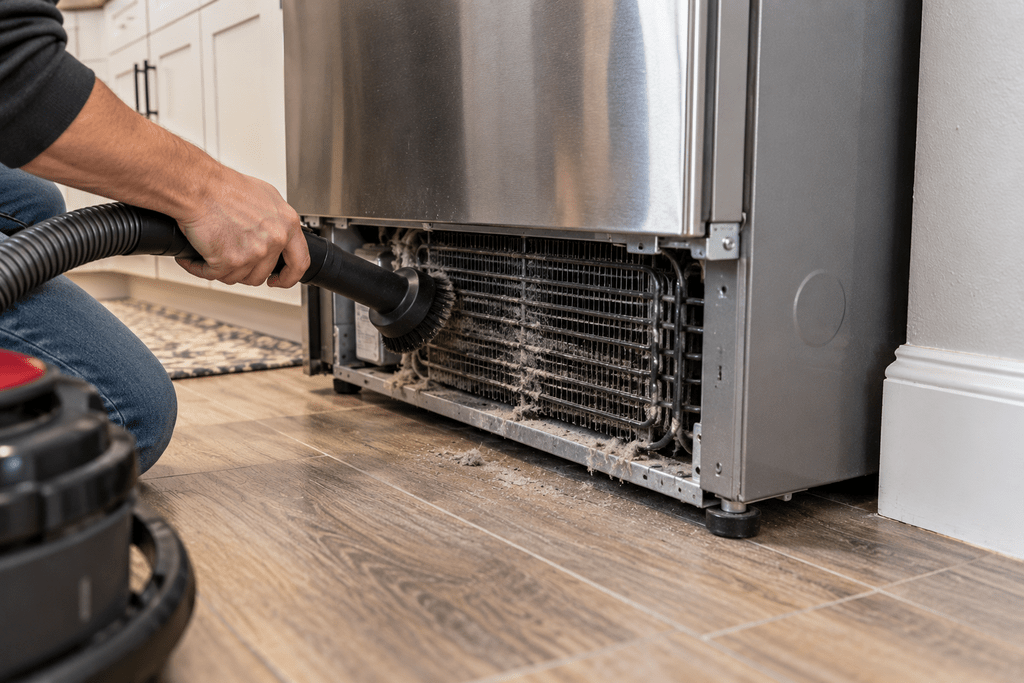
Before cleaning around any appliance, follow safe shutdown practices appropriate for the machine. Accessible dust can often be removed carefully with a vacuum or soft cleaning tool, but homeowners should not remove sealed components or reach into electrical areas they are not qualified to service.
Airflow outside the refrigerator matters as much as cleanliness. Avoid packing boxes, kitchen items, or other objects tightly around required ventilation areas. If a refrigerator sits inside cabinetry, make sure the installation leaves the clearance needed for heat to escape. Older kitchens sometimes contain refrigerator openings that were designed for smaller or differently ventilated equipment, which can create efficiency problems even when the appliance itself is in good condition.
Basement freezers need the same attention. Because they are out of sight, they often accumulate dust for years. A freezer surrounded by storage bins and coated in debris is being asked to move heat into an environment where that heat has nowhere convenient to go.
The goal is not constant cleaning. It is preventing airflow restriction from becoming permanent background resistance. When the cooling system can release heat freely, it usually reaches its target temperature faster and spends less time running simply to compensate for conditions around the appliance.
A refrigerator door gasket may look like a boring strip of rubber, but it has a twenty-four-hour job: keeping cold air inside and warm kitchen air outside. When the gasket becomes dirty, cracked, hardened, or misaligned, the refrigerator can lose cold continuously. The opening may be tiny, yet the compressor has to compensate all day and all night. That makes a weak seal one of those classic problems where a small physical defect can create a surprisingly large amount of unnecessary operating time.
Start with a visual inspection. Look for cracks, torn sections, food residue, or areas where the gasket does not sit evenly against the cabinet. Clean sealing surfaces gently so crumbs and sticky residue do not prevent good contact. Also check whether the refrigerator is level enough for doors to close naturally. Older Cleveland homes often have floors that slope slightly, and even a modest tilt can affect door behavior over time.
Temperature settings matter too. A refrigerator should generally keep food at 40°F or below, while the freezer is typically kept around 0°F. Setting the refrigerator colder than necessary does not make food meaningfully “safer” once it is already within the proper range; it simply requires the cooling system to maintain a larger temperature difference from the room. That can increase energy use, particularly in summer.
A simple appliance thermometer removes guesswork. If the refrigerator is holding at 35°F and food is occasionally freezing in the fresh-food section, there may be room to adjust the setting slightly while still remaining safely below 40°F. If the temperature is fluctuating upward, maintenance or repair may be needed. Persistent cooling problems can also be compared with these signs that a refrigerator may need repair.
Door habits matter as well. Standing with the refrigerator open while deciding what to cook sends cold air into the kitchen and warm humid air into the appliance. In summer, that exchange is even more expensive because the refrigerator must cool and dehumidify the incoming air.
A good seal, sensible temperature setting, and fewer long door openings cost almost nothing, yet together they can reduce unnecessary compressor run time every day.
Dryers are one of the easiest appliances to recognize when efficiency starts slipping because the symptom is painfully obvious: clothes take longer to dry. What once required forty-five minutes turns into sixty minutes, then seventy-five, and before long everyone in the house accepts that towels simply need a second cycle. That extra cycle is not free. The dryer is using energy for heat, airflow, and drum movement during every additional minute.
The most common reason is often not that the dryer has suddenly become weak. It is that moist air cannot leave the appliance efficiently. Dryers work by moving heated air through wet clothing and exhausting that moisture outside. If the airflow path is restricted, the machine keeps heating and tumbling while humid air lingers inside. It is like trying to dry a wet towel in a bathroom with the door closed and the exhaust fan off. Heat alone is not enough; the moisture has to go somewhere.
Lint screens are the first line of defense and should be cleaned regularly, typically after each load. But the lint screen is only one part of the airflow path. Flexible connectors can become crushed behind the machine. Ducts can accumulate lint farther downstream. Exterior vent flaps may stick or become obstructed. Basement installations in Cleveland homes can involve long vent routes with several bends before reaching an outside wall, and every bend adds resistance.
Maintenance also includes watching for unusual heat. A dryer that runs hotter than normal may be struggling to move air. Excess heat is not only an efficiency issue; it can also increase wear and create a safety concern.
If drying times increase, do not automatically choose a hotter or longer cycle. That is treating the symptom by spending more energy. Check airflow and venting first. If normal airflow has been restored but the problem continues, dryer repair may be needed to determine why the appliance is taking longer to dry clothes. A well-maintained dryer should remove moisture efficiently, not win a battle of endurance against a blocked exhaust system.
A clogged or restricted dryer vent creates one of the clearest examples of energy waste in a household appliance. The dryer produces heat, but the moisture-laden air cannot escape quickly enough. Clothes remain damp, the cycle stretches out, and the machine may run again. From an energy standpoint, you are paying for heat and motor operation that are not efficiently accomplishing the job.
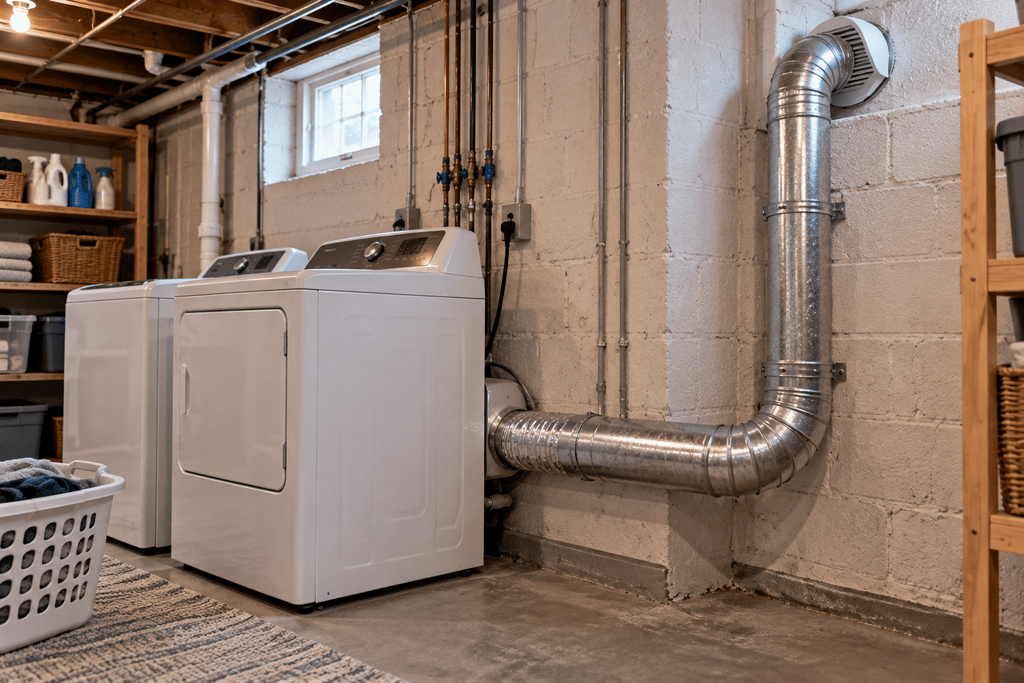
The physics is straightforward. Warm air can hold more moisture than cold air, so the dryer heats incoming air and passes it through wet fabric. That warm, humid air then has to leave the machine. If it remains trapped, the air becomes increasingly saturated and loses its ability to pick up more water from the clothes. At that point, adding more heat has diminishing returns.
Long vent runs make this problem worse. Many Cleveland homes have laundry rooms in basements or interior spaces, which means the exhaust may travel a significant distance before reaching the exterior. Add multiple elbows, a crushed flexible connection, or years of lint accumulation, and airflow drops.
You can often spot the symptoms without special equipment. Drying times increase. The laundry room becomes warmer or more humid. Clothes feel extremely hot yet remain slightly damp. The dryer cabinet may feel hotter than it used to. The exterior vent may show weak airflow while the machine is operating.
Cleaning the lint filter is essential, but it should not create false confidence. A perfectly clean screen does not guarantee that the rest of the vent is clear. Periodic inspection and cleaning of the entire accessible exhaust route can restore performance when restriction is the problem.
This is one maintenance task that affects energy use, appliance wear, drying performance, and safety at the same time. If you are running two cycles for loads that previously needed one, the dryer is essentially sending you a monthly reminder through your utility bill. The guide to why your dryer takes too long to dry clothes covers other possible causes when correcting an airflow restriction does not restore normal drying time.
Washing machines are often discussed in terms of water savings, but maintenance can affect electricity and gas use too. The machine itself uses electricity to control valves, move the drum, pump water, and run spin cycles. More importantly, every gallon of hot or warm water used in the wash has to be heated somewhere. If a washer operates inefficiently, requires repeated cycles, or fails to spin water out of clothing properly, the energy cost can continue into the dryer.
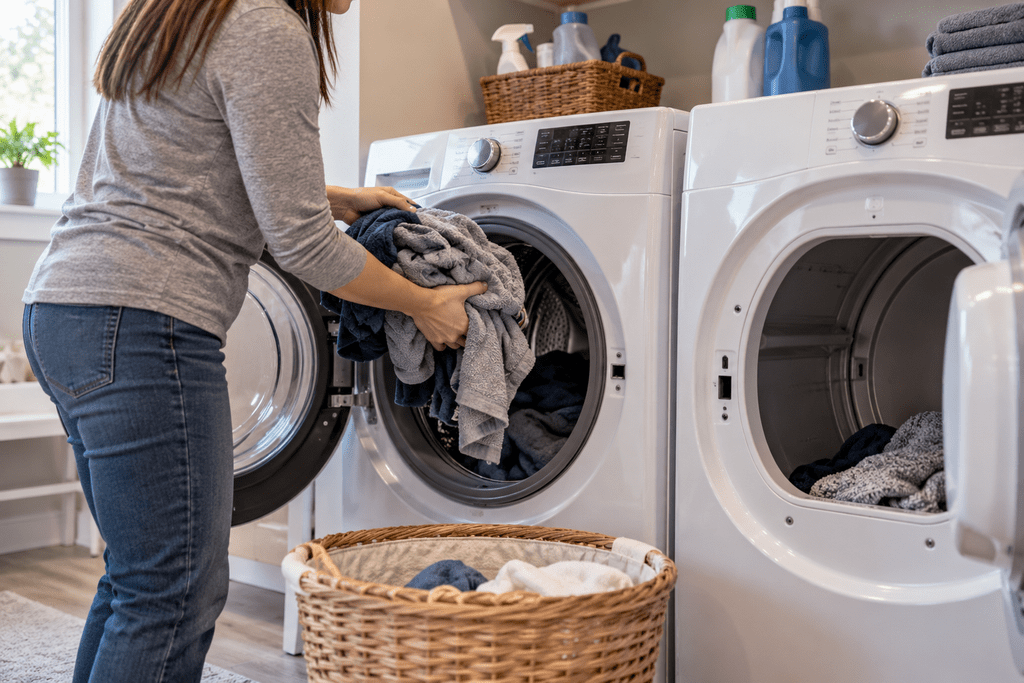
That last connection is easy to miss. A washer with poor spin performance sends wetter clothes into the dryer. The dryer then needs extra time and heat to remove the water that should have been extracted mechanically. So a washing-machine problem can show up on the energy bill as a dryer problem.
Start with loading habits. Overloading the machine can reduce cleaning and rinsing effectiveness, while badly unbalanced loads may prevent full-speed spinning. Underloading every cycle can waste water and energy because you’re operating the entire machine for only a handful of items. Aim for reasonable loads that allow clothing to move properly.
Supply hoses and inlet screens can also affect performance. Reduced water flow may extend fill times or interfere with cycles. Drain systems matter too. If the washer struggles to pump water out, a clogged pump filter, restricted hose, or household drainage problem may be involved. Any issue that makes cycles longer or forces you to rewash clothing increases resource use.
Listen to spin performance. If clothing suddenly comes out much wetter than it used to, do not assume the dryer simply needs a longer setting. The washer may not be reaching full spin speed because of an unbalanced load, suspension issue, drain problem, or mechanical fault. If the problem persists after basic checks, washer repair may be needed to identify the cause.
Cold-water washing can also reduce energy use for many everyday loads when appropriate for the fabric and cleaning need, because water heating is a major part of laundry energy consumption.
Regular maintenance makes the entire laundry system work as a team. A washer that drains and spins properly gives the dryer less work to do, which is why improving one appliance can lower the energy burden on another.
A dishwasher saves effort, but it is still easy to waste energy if the machine cannot circulate water the way it was designed to. The appliance depends on a coordinated system: water enters, gets heated as needed, sprays across dishes, passes through filters, drains away, and repeats according to the selected cycle. If filters are clogged or spray openings become restricted, cleaning quality drops. The machine may still complete the cycle, but dishes come out dirty enough that you run them again.
There is your energy waste. The most inefficient dishwasher cycle is the one you have to repeat. Rewashing uses more water, more electricity, more detergent, and more of your time.
Regular filter cleaning is one of the simplest ways to protect performance. Food particles and debris can reduce circulation or redeposit onto dishes. Spray arms and accessible openings also need to remain clear enough for water to reach the full load. If one area of the rack consistently comes out dirty, do not immediately assume the dishwasher needs replacement. A blocked spray path or loading issue may be the real problem.
Hot-water supply matters too. Extremely hot household water wastes energy and creates safety concerns, while water that arrives too cold can affect cleaning performance depending on how the dishwasher manages heating. Long plumbing runs in older Cleveland homes can also mean the kitchen waits a while for hot water. Running the nearby faucet briefly until hot water arrives before starting certain cycles may improve initial performance in some setups, though household water-use habits should remain reasonable.
Door seals deserve inspection as well. A minor leak means heated water is escaping instead of staying where it belongs. Drainage problems can leave dirty water behind, creating odors and poor cleaning that encourage repeated cycles.
Modern dishwashing habits also matter. Scraping off large food debris is useful, but excessively pre-rinsing every plate with hot water can waste significant energy and water before the dishwasher even starts.
The maintenance goal is simple: let the machine complete one effective cycle instead of forcing it to compensate for clogs, poor circulation, or drainage problems. When water can move freely, the appliance performs better and wasted repeat cycles become far less likely. If dishes continue coming out wet or dirty after basic maintenance, see the guide to why your dishwasher leaves dishes wet or dirty for other possible causes.
Cooking appliances are different from refrigerators and dryers because their energy waste is often harder to spot. If an oven takes longer to preheat or fails to hold temperature accurately, you may simply adjust your cooking time without realizing that something has changed. People become remarkably good at adapting to appliances. “This oven always needs fifteen extra minutes” becomes household knowledge, even though the longer heating time may signal a worn element, temperature sensor issue, damaged door seal, or another problem.
Oven door sealing is particularly important. Heat escaping through a worn gasket forces the heating system to cycle more frequently. The kitchen also becomes warmer, which is especially unpleasant during a humid Cleveland summer when the air conditioner may then work harder to remove the extra heat. That creates a double penalty: the oven uses more energy, and the cooling system may have to deal with more indoor heat.
Keep the oven interior reasonably clean, but avoid assuming that aggressive cleaning is always better. Heavy buildup can affect heat distribution and create smoke, yet cleaning methods should follow safe practices appropriate for the appliance. Burners and heating elements should also be kept free from debris that interferes with normal operation.
Match cookware to the heating area when possible. Using a small pan on a much larger electric element wastes some heat around the sides. Covering pots while boiling water or simmering food can reduce cooking time. These are operating habits rather than repairs, but they work together with maintenance.
Pay attention to preheat time. If an oven that once reached temperature quickly now needs noticeably longer, do not simply accept it. A weakening heating element or temperature-control issue may be developing. Similarly, a burner that heats unevenly can increase cooking time. When abnormal preheating or temperature problems persist, oven repair may be needed to determine what is causing the change.
Cooking appliances do not usually run long enough to dominate annual household electricity use the way some other systems can, but inefficiency still adds up when you cook every day. More importantly, unusual heating behavior is often an early warning sign worth diagnosing before the component fails completely.
Cleveland’s seasons give household appliances very different working conditions throughout the year. Summer brings heat and humidity, while winter brings cold outdoor temperatures and a long heating season. Appliances do not operate in a laboratory; they operate inside houses whose temperature, humidity, and ventilation change with the weather. That means a maintenance issue that seems minor in April can become much more noticeable in July or January.
Refrigeration is the clearest summer example. A refrigerator in a warm kitchen has to move heat from a cold interior into already warm surrounding air. If the condenser area is dirty or ventilation is poor, that job becomes harder. Add humid air entering every time the door opens and the appliance also has to deal with additional moisture. The result can be longer run times and more frost or condensation. These seasonal effects are discussed in more detail in common refrigerator problems during Cleveland summers.
Dryers face summer challenges too. Warm, humid outside air can reduce the difference between indoor and outdoor conditions, while long or dirty exhaust runs make moisture removal even harder. Basement laundry rooms can remain damp, making the entire drying process less efficient if ventilation is poor.
Winter changes the picture. Appliances in unconditioned or minimally heated garages, porches, or utility spaces may operate outside the temperatures they were designed for. Refrigerators and freezers can behave differently when surrounding air becomes very cold. Washing-machine hoses and plumbing connections in poorly protected areas also face additional stress. Homeowners with appliances in these spaces can learn more about how Cleveland weather affects garage and basement appliances.
Cleveland homeowners often experience their highest utility bills during weather extremes, so appliance inefficiency can hide inside a much larger heating or cooling bill. You may assume the entire increase comes from the furnace or air conditioner when part of it is a refrigerator running longer, a dryer needing extra cycles, or another appliance struggling.
That is why seasonal appliance maintenance makes practical sense. Before the hottest months, clean refrigeration airflow areas and inspect dryer ventilation. Before winter, check appliances in colder spaces, inspect water connections, and make sure ventilation routes remain clear. Weather will always affect energy use. Maintenance helps prevent appliances from adding unnecessary waste on top of that unavoidable seasonal demand.
Cleveland has plenty of older homes with character—solid woodwork, plaster walls, deep basements, original flooring, and layouts that have evolved through several generations of remodeling. Those houses can be wonderful places to live, but modern appliances sometimes end up working around infrastructure that was never designed for them.
Start with electrical systems. A newer appliance may be installed on a circuit that has been upgraded at some point, while other parts of the system remain older. Loose connections, voltage issues, or overloaded circuits can affect appliance performance and create heat. If several appliances show strange electrical behavior, the problem may not be energy “efficiency” in the usual sense; it may be a building electrical issue that deserves professional evaluation.
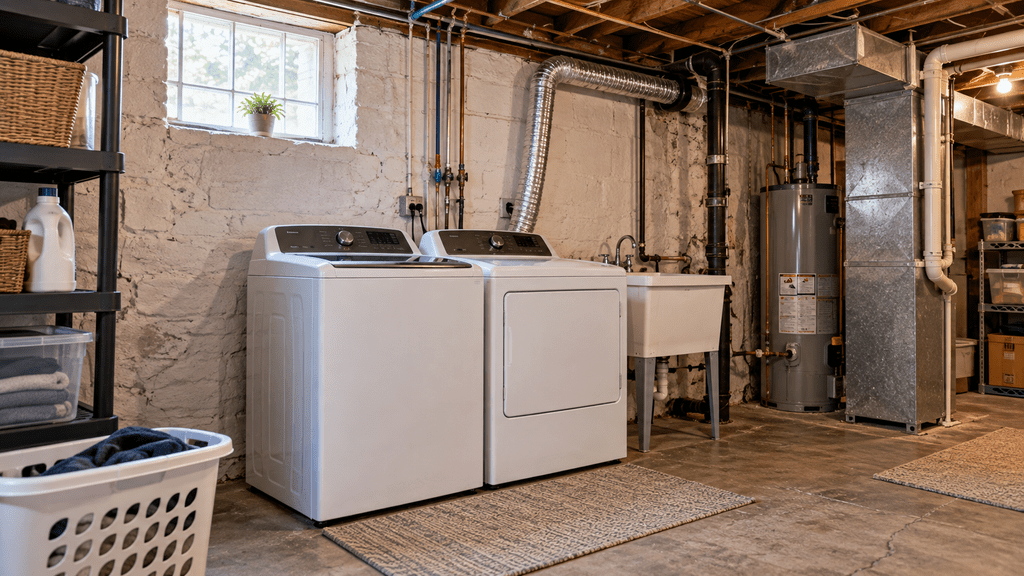
Plumbing can also influence energy use. Old supply lines with internal restriction may slow dishwasher or washing-machine fill. Partially blocked drains can extend cycles or reduce performance. A washer that cannot drain properly may leave clothes wetter, forcing the dryer to work longer.
Ventilation is another major factor. Dryer vents in older homes sometimes take long, winding routes from basement laundry areas to an exterior wall. Every turn increases resistance, and years of lint buildup make it worse. Kitchen exhaust systems may also have been added long after the original construction and may not move air as effectively as expected.
Then there are floors and clearances. A refrigerator wedged into an old cabinet opening may have poor airflow. A washer on a sloping basement floor may vibrate or fail to spin optimally. A dishwasher installed beneath uneven cabinetry may not sit perfectly level, potentially affecting drainage.
This is why appliance efficiency in an older Cleveland house cannot always be diagnosed by looking at the appliance alone. The machine may be functioning correctly while the building around it creates resistance. The article on common appliance problems in older Cleveland homes explains additional ways older-home conditions can affect appliance operation.
When energy bills rise or an appliance takes longer to complete its job, look at the whole system: electricity, water flow, drainage, ventilation, clearance, and level. Sometimes the cheapest efficiency improvement is not a new appliance. It is fixing the old-house condition that has been forcing the existing appliance to work harder.
The good news is that reducing appliance energy waste does not require turning your weekends into an endless maintenance project. Most of the useful habits are short, simple, and inexpensive. The trick is consistency. Five minutes every few weeks is more valuable than a massive cleaning session once every five years.
Start with the dryer lint filter. Clean it regularly and pay attention to whether airflow and drying time remain normal. If loads begin taking longer, investigate the vent rather than automatically increasing cycle time.
Check refrigerator and freezer temperatures with simple thermometers. Make sure doors close fully, gaskets remain clean, and ventilation areas are not buried under dust or blocked by storage. If you have a basement freezer, include it in the routine instead of forgetting about it until something goes wrong.
Clean dishwasher filters on a schedule that matches how heavily the machine is used. Look at spray arms for obvious blockages. If dishes begin coming out dirty, troubleshoot the cause before running every load twice.
For washing machines, inspect supply hoses and drainage. Pay attention to how wet clothes feel after the final spin. If they suddenly hold much more water, the dryer will pay the energy penalty. More preventive steps are covered in the guide on how to extend the life of your washing machine.
Watch oven preheat times and refrigerator run times. You do not need a stopwatch. Just notice meaningful changes. Homeowners are very good at recognizing when an appliance begins behaving differently once they make a habit of paying attention.
Use full but reasonable loads. Running half-empty dishwashers and washing machines more often than necessary wastes energy and water, while chronic overloading can reduce cleaning performance and lead to repeat cycles.
Keep appliance surroundings clear. Refrigerators need airflow. Dryers need unobstructed exhaust. Freezers in basements should not be completely surrounded by boxes. These conditions cost nothing to correct.
Finally, write down recurring problems. If the dryer vent has been cleaned twice and drying times keep increasing, you may have a deeper issue. Maintenance works best when you track patterns instead of repeatedly treating the same symptom. The biggest savings often come from solving one persistent inefficiency that has quietly been adding minutes to every cycle for months.
A higher energy bill does not automatically mean an appliance is failing. Weather, utility rates, occupancy, heating and cooling use, hot-water consumption, and lifestyle changes can all affect monthly costs. But when a bill rises alongside a noticeable change in appliance behavior, that combination deserves attention.
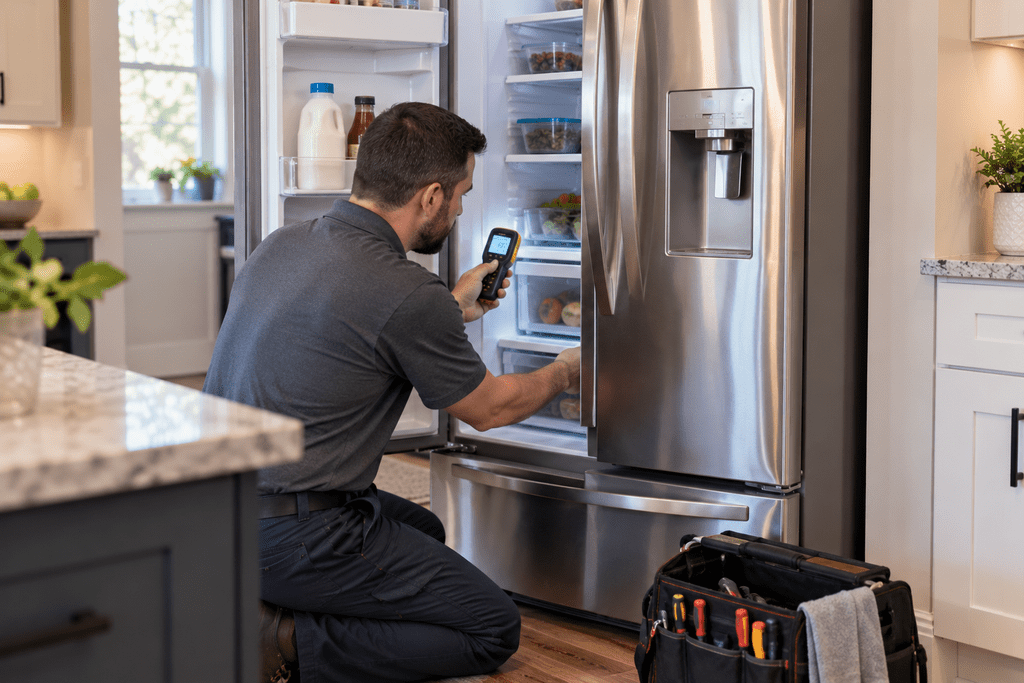
Start with refrigerators and freezers. If one suddenly runs almost continuously, becomes unusually hot around the cabinet, struggles to maintain temperature, or develops heavy frost, energy consumption may rise because the cooling system is working harder. Maintenance problems such as blocked airflow or poor door seals should be checked first, but mechanical faults can produce similar symptoms.
Dryers are another obvious clue. If drying time has increased substantially while load size and fabric type remain similar, the machine is consuming energy for longer periods. Restricted venting is common, but failing heating controls, moisture sensing, or mechanical components can also affect cycle length.
Dishwashers that need repeated cycles and washing machines that leave clothing excessively wet create indirect energy waste. The first machine may use additional hot water and electricity, while the second pushes extra work onto the dryer.
Listen for motors that struggle to start, repeated clicking, buzzing, or frequent cycling. Electrical components can consume abnormal amounts of energy when they operate under stress, and unusual heat around plugs, outlets, or wiring should be treated as a safety concern rather than merely an efficiency problem.
One useful strategy is to compare behavior before comparing bills. Ask yourself: Which appliance is doing something different from six months ago? Longer cycles, more frequent starts, extra heat, weaker cooling, reduced airflow, and repeated resets are all clues. The guide on what to check before calling for appliance repair in Cleveland can help homeowners separate simple checks from symptoms that deserve professional attention.
If basic maintenance does not restore normal performance, repair may be the more efficient next step. Continuing to operate a struggling appliance can cost you twice: once through higher utility use and again through accelerated component wear.
Energy bills are rarely diagnostic on their own. But combined with changes in appliance behavior, they can act like a smoke alarm for inefficiency—telling you that something deserves a closer look before the next bill arrives.
Lowering energy bills in a Cleveland home is not always about making one dramatic upgrade. Sometimes it is about helping the appliances you already own stop wasting energy. A clean refrigerator condenser, a properly sealing door, an unobstructed dryer vent, a clear dishwasher filter, and a washing machine that drains and spins correctly may not sound exciting, but each removes resistance from a machine that works for you every week.
That is the basic relationship between regular appliance maintenance and lower energy costs. Appliances use energy to perform a job. When dirt, poor airflow, worn seals, clogged filters, drainage problems, or mechanical wear make that job harder, the machine compensates by running longer or repeating work. You pay for those extra minutes whether or not they produce a better result.
Cleveland’s climate makes maintenance even more important. Summer heat and humidity can push refrigeration and drying equipment harder, while winter creates its own challenges for appliances in basements, garages, and other cooler spaces. Older homes add another layer through long vent runs, aging plumbing, uneven floors, and installations that may have been adapted over decades.
You do not need to become an appliance technician to make a difference. Clean what you can safely access. Keep vents and airflow paths open. Inspect hoses and door gaskets. Monitor refrigerator temperatures. Pay attention when drying, washing, or preheating suddenly takes longer. Those observations can catch inefficiency while it is still a maintenance problem instead of waiting until it becomes a breakdown.
And if an appliance continues working harder after the obvious maintenance issues have been addressed, get the underlying problem diagnosed. An appliance that runs longer to accomplish the same task is usually telling you something. Cleveland homeowners dealing with persistent appliance problems can learn more about appliance repair in Cleveland.
Energy efficiency is not a one-time feature stamped onto a machine when it leaves the factory. It is something you preserve through the way the appliance is installed, maintained, and used. Take care of those details, and your appliances are more likely to use their energy doing actual work instead of fighting preventable problems.
We repair a wide range of household appliances including refrigerators, washers, dryers, ovens, dishwashers, and more. No matter the brand or model, our experienced technicians are ready to help. We repair commercial appliances as well: commercial washers dryers, commercial refrigerators & freezer & more.
We service a wide range of household appliances, including refrigerators, dryers, washers, ranges, cooktops, dishwashers, freezers, ice makers, ovens, and double ovens.
Our technicians operate across many locations in Ohio, covering major cities like Cleveland, Akron, and Parma. We also serve surrounding areas including Lakewood, Westlake, Strongsville, and Brooklyn.
Our service area extends to Rocky River, Euclid, Solon, Beachwood, and Cleveland Heights, as well as counties such as Cuyahoga, Lorain, Lake, and Medina.
Additional cities we cover include North Olmsted, North Ridgeville, Valley City, Lorain, Avon Lake, Richfield, Brecksville, Garfield Heights, Seven Hills, Brunswick, Oakwood, Mentor, and Willoughby.