In this article
Good washing machine maintenance takes a few minutes now and then. Most of it is about how much soap you pour in and how full you stuff the drum. Get those two right and clean a couple of spots now and then. Your washer will thank you for years.
Don't stuff the drum
Overloading is one of the hardest things you can do to a washer. A packed drum can't tumble right or spin evenly, so the bearings and the suspension get hammered every single load.
Front-loader? You should still fit a hand in above the clothes. Top-loader? Drop things in loose around the agitator and don't push them down. Comforters get a load to themselves.
Banging during the spin means stop it and move the wet stuff around. Our article on a washing machine shaking explains the other causes.
Go easy on the soap
Most newer washers are HE washers, built for high efficiency. They want HE detergent. HE machines use a lot less water than the old ones did. Regular soap foams up more than that little bit of water can rinse away.
All that extra foam does two bad things. It cushions the clothes so they come out less clean. And it leaves a sticky film on the tub and in the hoses, which grabs lint and starts to stink.
Use the line on the cap. Don't eyeball it. Soft water needs even less. Fabric softener goes in its own little cup, never straight on the clothes.
Clean out the drain pump filter
Most front-loaders tuck a small filter behind a flap down at the bottom front. It's there to catch coins and hair before they get to the pump. When it clogs, draining slows down and the pump has to work harder. Some washers just stop and throw a drain error.
Lay a towel down first. Keep a baking pan nearby too, because water will come out. Turn the cap slowly. Once the water stops, pull the filter out and rinse it under the faucet. Your manual says how often for your model. Lots of top-loaders don't have a filter you can get to, and that's fine.
Look at the fill hoses
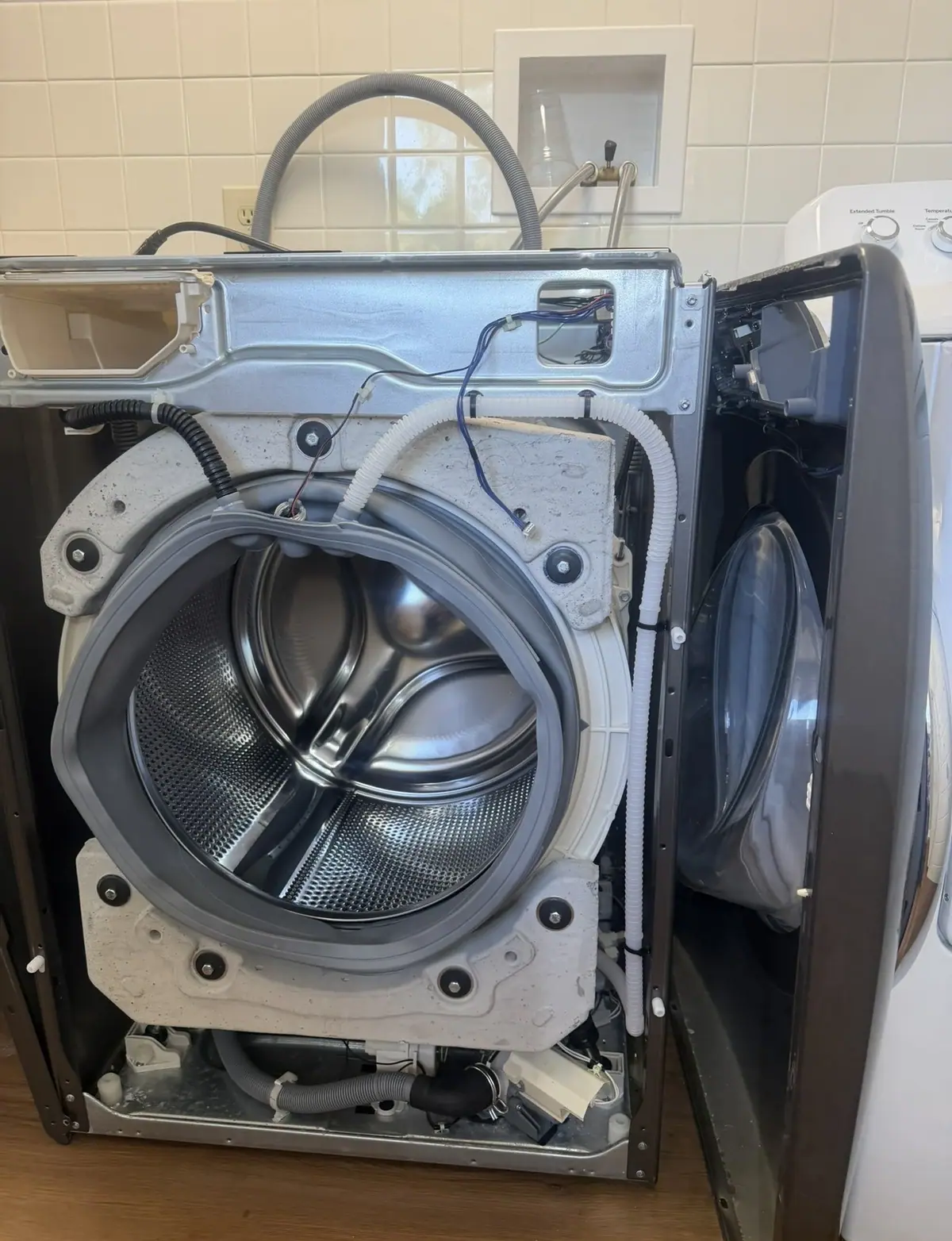
Those two hoses behind the washer are under water pressure all day, every day, even when nothing is running. If a rubber one lets go, water keeps pouring until somebody finds it.
So pull the washer out a bit and take a look once in a while. See a bulge? Cracks near the ends? Buy new ones. Rust on the fittings is another reason. Braided steel hoses last longer than plain rubber. Leave a few inches of room behind the machine so they don't get pinched against the wall.
Heading out of town for a week or more? Shut both valves off before you go.
Let it breathe between loads
A shut washer with water inside grows mildew. After your last front-loader load, wipe the rubber gasket and prop the door open a little. Get the wet laundry out quickly.
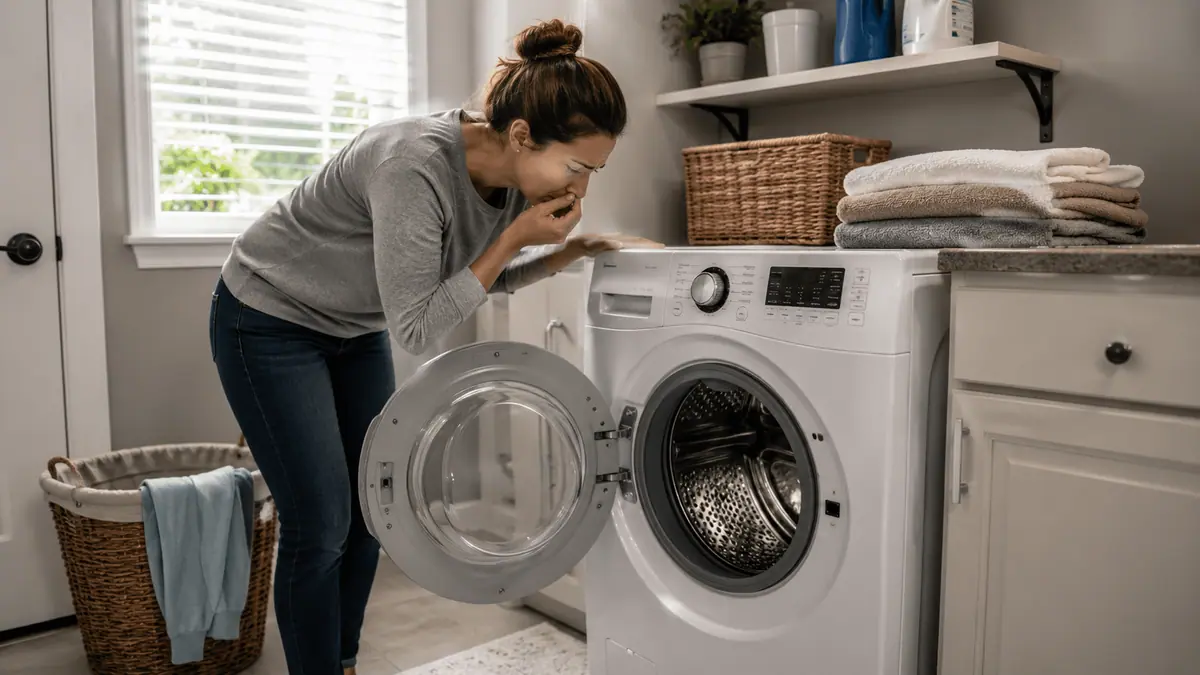
Most machines also have a cleaning cycle, something like Clean Washer or Tub Clean. Use the cleaner or bleach your manual names and stick to its schedule. Already got a musty smell? That needs more work, and our guide to a smelly washing machine walks you through it.
Make sure it sits level
A washer that rocks wears out its springs and dampers early. Put a level on the top. Check side to side, then front to back. Screw the front feet up or down until it sits flat, then lock them with the nuts so they don't creep.
Bouncy floors make all of this worse. On a wood floor or in an old basement, a solid platform under the washer can help a lot.
Little habits that add up
Check the pockets. Coins and keys bang around the drum and end up in the pump. Toss small things and underwire bras into a mesh bag so nothing slips through the drum holes.
Close the lid gently. Don't slam the door. Use the cycle that fits the load, because a heavy duty spin on three shirts is just wear for nothing. If an error code pops up, look it up before you restart the washer again and again.
Your dryer needs care too
Want your laundry appliances to last as a pair? The dryer is easy. Clean the lint screen before every load. Dryer sheets can leave a waxy film on the screen, so wash it with warm soapy water now and then and let it dry.
Check the vent duct all the way to the hood outside every so often. A good spin in the washer helps the dryer too, since it has less water to get rid of. If your dryer runs hot or takes forever, our dryer repair page has more.
When maintenance is not enough
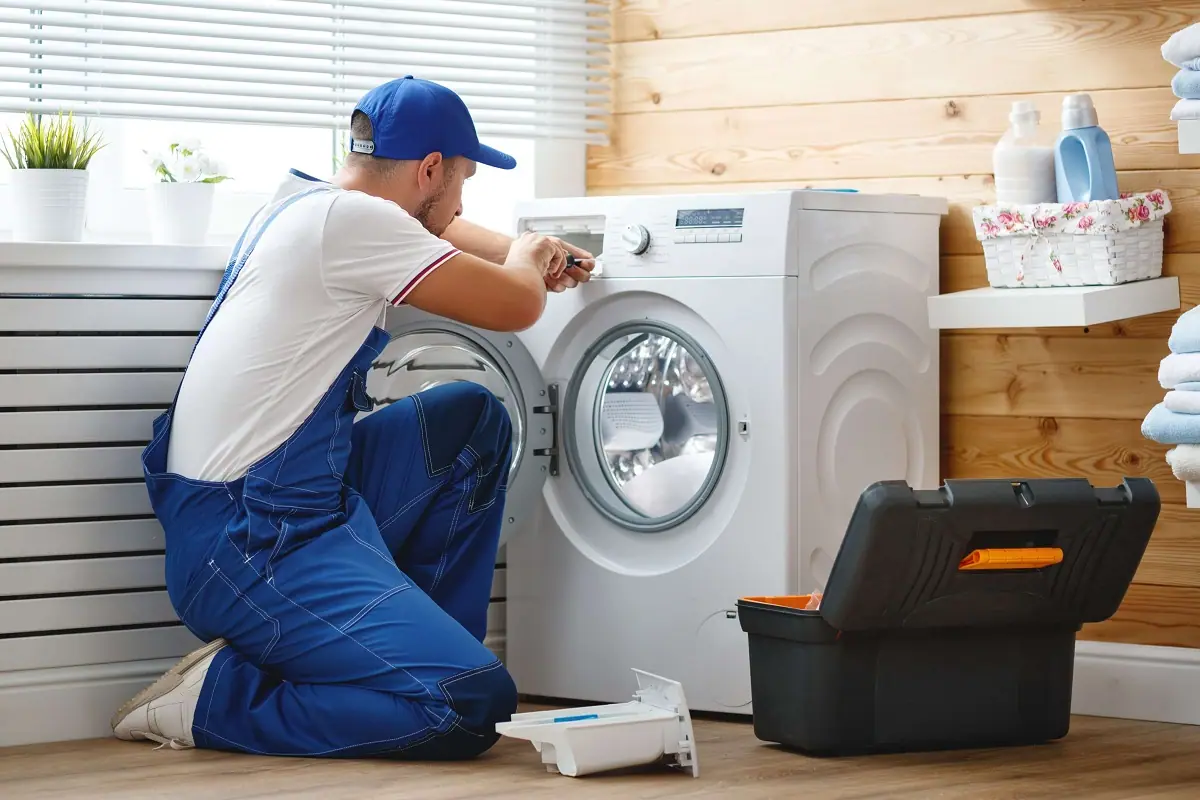
Cleaning won't bring a worn part back to life. Water under the washer or a burnt smell means it's time to call. A grinding or squealing spin is another one.
We check the parts that wear out first, the suspension and the pump. Catching a problem early is often cheaper than waiting for the machine to quit with a full load of wet towels inside.
Washer service around Parma
Top-load or front-load, we fix them in Parma and all over the Cleveland area. You hear the price before anything is taken apart. Our work carries a 90-day warranty. Give us a ring at (216) 352-3935, or send a request from the washer repair page.
Questions people ask
How do I maintain a washing machine?
Don't overload it and use HE detergent in the measured amount. Clean the drain filter and the door seal now and then, and check the fill hoses for bulges. Leave the door open after the last load so the drum dries out.
What maintenance keeps a washing machine running efficiently?
A clean drain filter lets it drain at full speed, and the right dose of detergent keeps suds from slowing the rinse. A level machine spins with less strain. Run the cleaning cycle your manual recommends to keep buildup down.
How can I extend the life of my laundry appliances?
Light loads and a level stance matter most for the washer. The dryer lasts longest with a clean lint screen every time and a clear vent to the outside. Both last longer when small problems get fixed early.
How often should I clean the washer drain filter?
Follow the schedule in your manual. Check it sooner if the washer drains slowly or you hear coins rattling in the drum.
Should I leave the washer door open after a wash?
Yes, a crack is enough. It lets the drum and the door seal dry, which keeps mildew and the musty smell away.
Do I really need HE detergent?
If your washer has the HE logo, yes. Regular detergent makes too many suds for the small amount of water an HE washer uses.
When should I replace washer hoses?
When you see a bulge or a crack. Leaky or rusty fittings are another sign. Braided stainless hoses are a good upgrade.