In this article
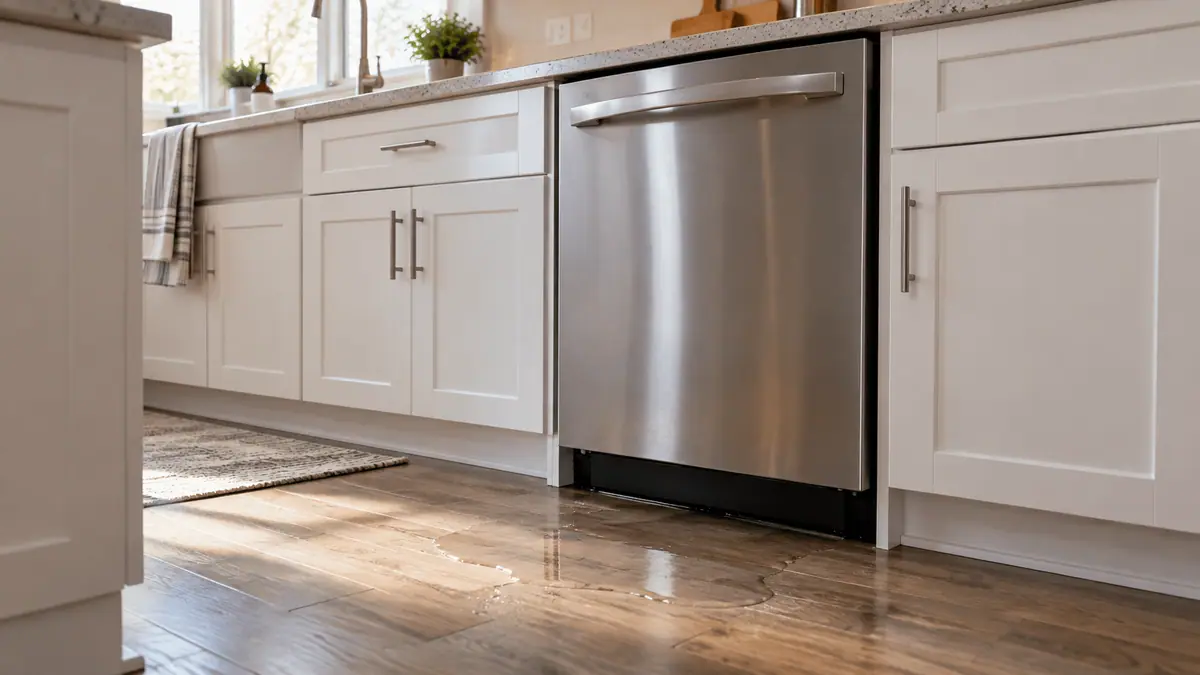
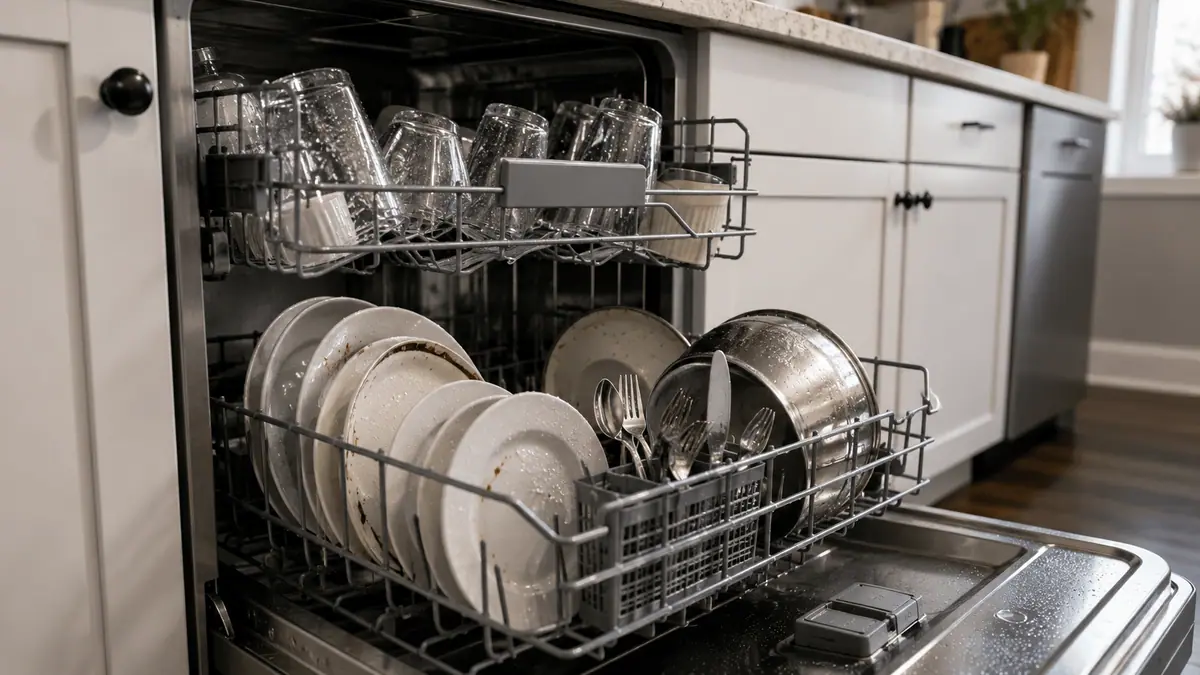
Warm plates with a few drops on them are nothing to worry about, and neither is the little pool in the upturned base of a mug. What isn't normal is a whole rack that drips on your feet when you pull it out, or glasses you towel off one by one every evening.
Usually it's a setting or a habit. Now and then a part has quit. The free checks come first.
Why plastic and cups stay wet
A dishwasher doesn't really blow dishes dry. It heats them up in the last rinse and lets that heat do the work. Glass and ceramic hang on to heat for a good while, and so does steel. Plastic cools off almost right away. That's why the food containers come out damp while the plates next to them are bone dry, and it's normal on every brand we work on.
Mugs and bowls with a rim on the bottom are the other culprits. Each one holds a spoonful of water. Pull the top rack out first and those spoonfuls tip right onto the clean plates underneath. Empty the bottom rack before the top one and you skip that.
Rinse aid does more than you think
Skip the rinse aid and water beads up on a glass and just sits. Add it and the water slips off in a thin sheet, leaving next to nothing to dry. So when a dishwasher that dried fine for months suddenly leaves everything wet, an empty rinse aid cup is the first suspect.
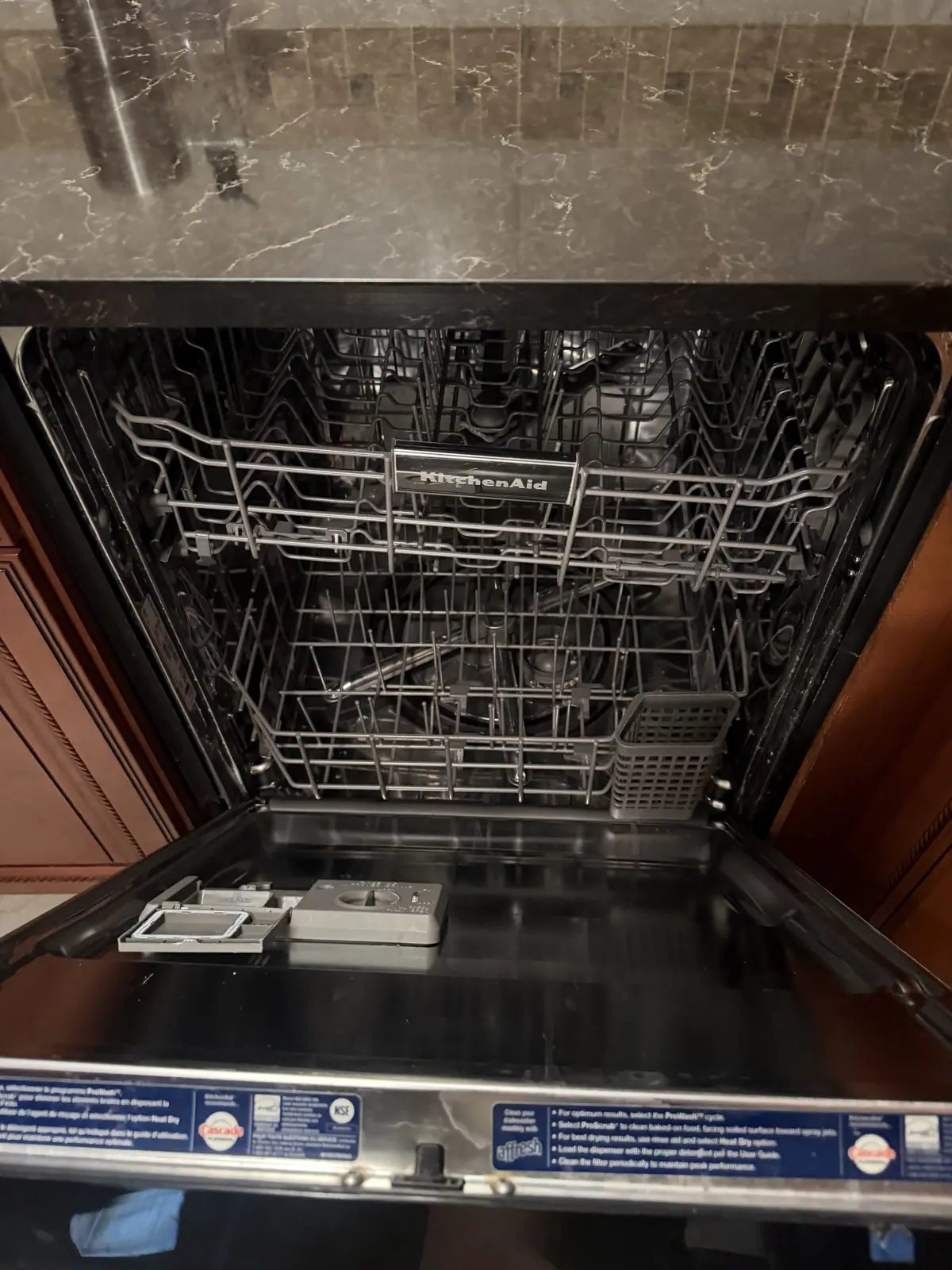
It's the small round cap next to the detergent door. Most have a little window that turns clear when the reservoir is empty. Fill it to the line and judge it after a couple of days of normal loads. Under that cap there's often a dial too. Bumping it up one notch is worth a try if your glasses also look spotty.
How your dishwasher actually dries
Dishwashers don't all dry the same way, so wet dishes mean different things on different machines.
Plenty of American models still have a heating element. It's the bent metal loop lying in the bottom of the tub, under the lower rack. It warms the wash water and then heats the air at the very end. On a lot of these the heated dry is a button you have to press, and the eco or energy saver mode turns it off without telling you.
Other machines skip the element for drying and use condensation instead. The final rinse runs very hot, and the steam settles on the cooler stainless walls of the tub rather than on your plates. Bosch builds most of its dishwashers that way. Plastics coming out damp on a Bosch is just how it works, and our Bosch repair page explains more.
Some brands add a tiny fan, or a vent that pops open near the end to let steam out. When that vent sticks shut, the steam stays put and ends up back on the dishes.
Loading that traps water
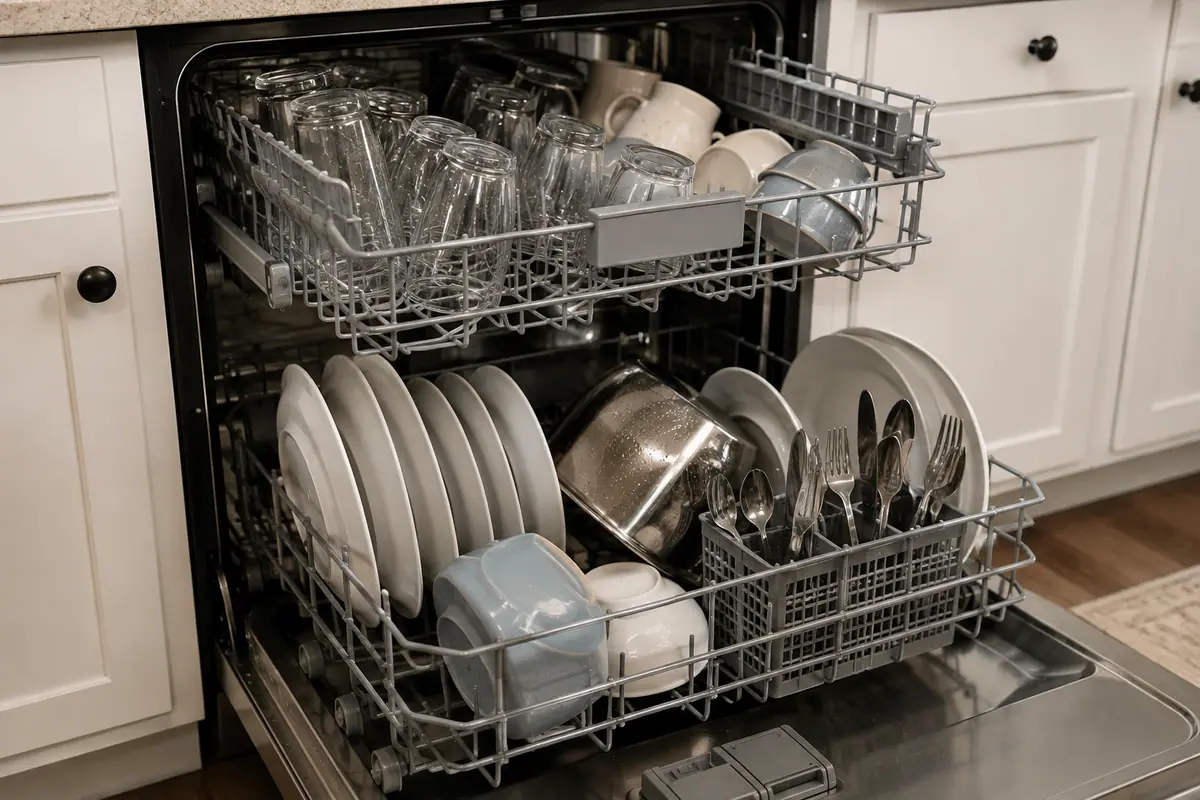
Even a perfectly healthy dishwasher dries badly when it's crammed. Bowls stacked inside each other hold a film of water between them. Plates touching face to face never see the warm air. Tip cups and bowls at an angle so water runs off. Leave a finger's width between pieces. Put the big roasting pans on the bottom so they don't drip on everything else.
When it beeps, give it a little time, or open the door a few inches and walk away. The steam escapes and the heat still in the dishes finishes the job. Dishes put away hot and damp are how you end up with wet dishes in the cabinet and that musty smell on the shelf.
Water left in the tub or on the dishes
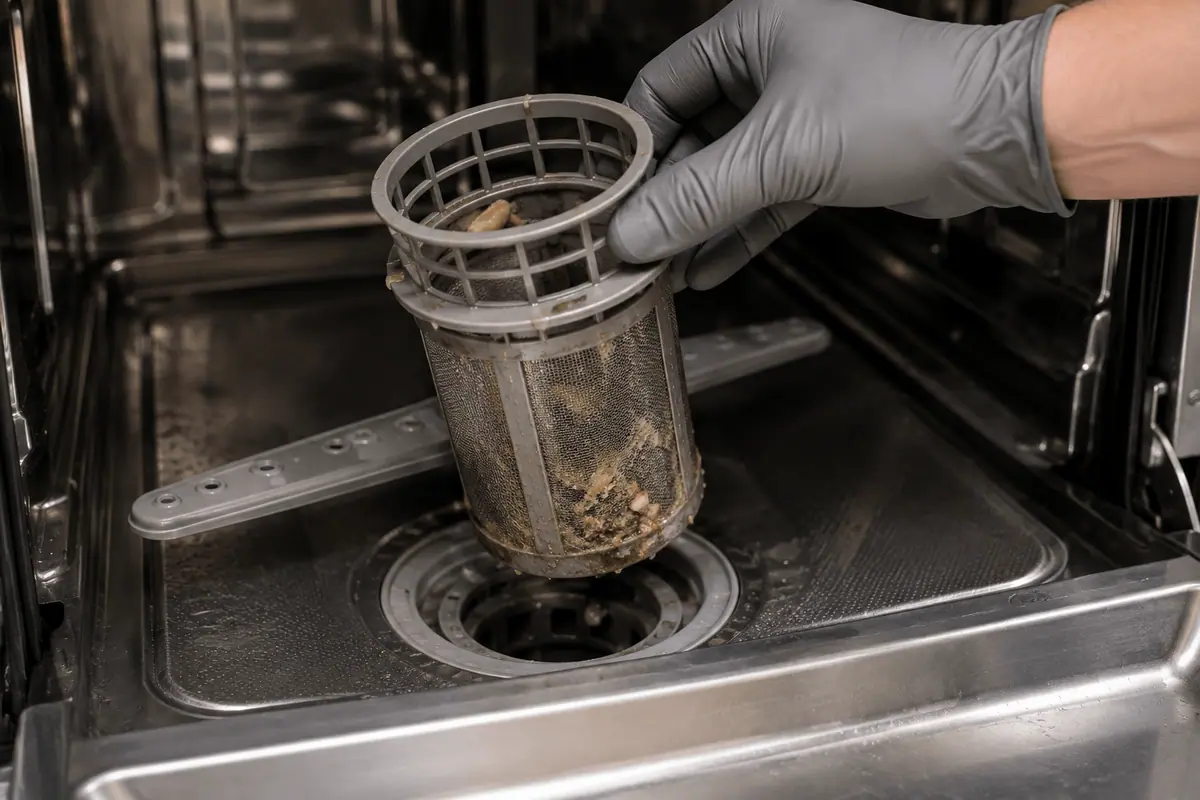
Standing water in the bottom after the cycle keeps the whole tub humid, and nothing dries in there. That's really a drain problem. Rinse the filter under the lower rack first. If water still sits there, our page on dishwasher repair in Parma explains what we check next.
Damp walls inside a dishwasher that ran a few hours ago are normal, especially on condensation models. That's where the moisture is supposed to go. A sour smell or a pool that's still there the next morning isn't.
Checks to try before calling
- Rinse aid topped up, dial one notch higher.
- Heated dry or extra dry switched on, if your machine has it.
- Hot water at the kitchen tap before you press start.
- Load with space between items and cups tilted.
- Unload the bottom rack first.
Stick with all five for a few days. Still soaking wet? Then something inside has stopped doing its job.
When a part has failed
The quickest test is your hand. Open the door the moment the cycle finishes and touch a plate and the side wall. Both should be hot enough that you pull your hand back. Lukewarm means the water and the air never got hot. On machines with an element, the element itself can burn through. The high limit thermostat that protects it can fail too, and sometimes the control just stops sending it power.
On fan and vent models, listen during the last few minutes. You should hear the fan hum or the vent click open. Silence there usually means a small part, and a short repair.
Dishes that suddenly come out wet and a bit dirty at the same time point straight at heat. Detergent needs hot water too.
Wet dish repair near Parma
We repair the heating and drying parts on dishwashers of every common brand, all around Parma and Cleveland. The quote comes first, and the work is backed for 90 days. Phone (216) 352-3935 or book online.
If the dishes come out dirty rather than wet, read why a dishwasher stops cleaning. Cloudy or chalky glasses are a different story again, covered in our hard water guide.
Questions people ask
Why are my dishes wet after the dishwasher finishes?
An empty rinse aid dispenser is the usual reason. Heated dry being switched off is another, and so is a rack loaded too tightly. If all three check out and the dishes are lukewarm at the end, the heating element or its thermostat may have failed.
Is it normal for plastic to stay wet in the dishwasher?
Yes. Plastic doesn't hold heat the way glass and ceramic do, so water on it can't evaporate as well. Damp containers alone don't mean anything is broken.
Why is the inside of my dishwasher always wet?
On dishwashers that dry by condensation, moisture collects on the tub walls on purpose. Some water on the walls after a cycle is normal. Standing water in the bottom is not, and usually points to a drain problem.
Does rinse aid really help dishes dry?
Yes. It makes water run off in a sheet instead of sitting in drops. Many dishwashers are designed to be used with it, and drying gets noticeably worse when the dispenser is empty.
Why does my Bosch dishwasher leave dishes wet?
Most Bosch models dry by condensation, so plastics often come out damp even when it's working. If glass and ceramic are wet too, check the rinse aid first. Our Bosch page lists the other common causes.
Should I open the dishwasher door after the cycle?
Cracking the door for a few minutes lets steam out and helps the last bit of water evaporate. Let the dishes cool a little before you put them away so they don't go into the cabinet wet.