Cleveland Power Outage: Prevent Refrigerator Food Loss
Published: August 31, 2026
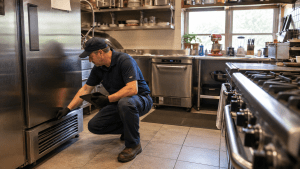
Appliance maintenance sounds like one of those tasks people know they should handle but somehow keep pushing to next week. In a private home, that procrastination might mean living with a noisy refrigerator or waiting an extra fifteen minutes for the dryer to finish. In a Cleveland restaurant, café, or rental property, the stakes are completely different. A refrigerator that stops holding temperature can put hundreds or thousands of dollars of food at risk. A dishwasher that suddenly refuses to drain can disrupt an entire dinner rush. A washing machine that leaks in a rental unit can turn a relatively small repair into damaged flooring, an unhappy tenant, and a much larger maintenance bill.
That is why appliance maintenance for Cleveland businesses and rental properties should be viewed as an operating strategy rather than a collection of random repair chores. Commercial kitchens work their equipment hard. Cafés may open early, close late, and cycle refrigeration, ice-making, dishwashing, and food-preparation appliances hundreds of times each week. Rental properties create a different challenge because landlords often do not see appliances every day. A minor vibration, weak door seal, slow drain, or unusual noise can continue for months before anyone reports it.
Cleveland itself adds another layer. Summer heat and humidity affect refrigeration and ventilation, while winter weather can place different demands on buildings and utility systems. Older commercial spaces and rental properties may also have electrical, plumbing, drainage, or ventilation systems that have been modified several times over the years.
The smart approach is not to wait until something completely stops working. Preventive appliance maintenance is about catching stress before it becomes failure, keeping equipment clean enough to operate efficiently, protecting food and property, and making repairs on your schedule rather than during the busiest hour of the week. For restaurants, cafés, landlords, and property managers, that difference can have a direct effect on revenue, operating costs, tenant satisfaction, and day-to-day sanity.
A commercial refrigerator and a refrigerator in someone’s home may perform the same basic job, but their working lives can be wildly different. At home, the refrigerator door might open a few dozen times throughout the day. In a busy Cleveland restaurant or café, refrigerated storage can be opened constantly during prep, lunch, dinner, and cleanup. Warm kitchen air enters, cold air escapes, food gets loaded in and removed, and the cooling system repeatedly works to bring the temperature back down. Now add cooking heat, humidity, grease, dust, and long operating hours, and suddenly the appliance is running a marathon while a residential unit is taking a casual walk around the block.
The same pattern appears across commercial equipment. Dishwashing appliances may run cycle after cycle for hours. Ice-making equipment continuously produces and stores ice during warm weather. Cooking appliances heat up, cool down, and heat again. Ventilation equipment pulls grease and moisture through the air every time the kitchen operates. Even appliances in rental properties can experience unusually heavy use when units have large families, frequent tenant turnover, or residents who use laundry and kitchen equipment differently from the previous occupant.
This heavier workload means small maintenance problems matter more. A slightly dirty condenser area might not cause immediate trouble in a lightly used appliance, but under commercial conditions it can make the cooling system work longer every day. A partially restricted dishwasher drain may function during quiet periods and back up during the dinner rush. A dryer vent that is somewhat clogged may still dry a residential load eventually, but repeated long cycles increase heat, energy use, and wear.
Business owners sometimes look at maintenance as though it interrupts operations. In reality, commercial appliance maintenance is what protects operations from interruption. Cleaning, inspection, adjustment, and early repairs create predictable downtime measured in minutes or scheduled service windows. Neglect tends to create unpredictable downtime measured in hours or days, usually when the equipment is needed most.
Few businesses are as dependent on appliances as restaurants. A dining room can look beautiful, the menu can be excellent, and the kitchen staff can be ready to work, but if critical equipment fails, the entire operation can slow down almost instantly. Imagine a Cleveland restaurant preparing for a busy Friday night when a primary refrigerator suddenly cannot maintain temperature. Ingredients now have to be moved, food safety decisions must be made, storage space becomes limited, and employees who should be preparing meals are instead troubleshooting equipment. One breakdown spreads into five operational problems before the first table even orders.
Cooking equipment creates similar pressure. If an oven heats unevenly, the kitchen may still function, but ticket times increase and food consistency suffers. A malfunctioning dishwasher can be even more disruptive than people expect. Restaurants burn through plates, glasses, utensils, and food-preparation tools quickly. Once clean supplies begin running low, service backs up. Employees start improvising, workflow changes, and a relatively ordinary appliance problem becomes an operational bottleneck.
Then there is the cost nobody sees on the repair invoice: lost staff productivity. During an emergency breakdown, managers make phone calls, cooks rearrange workstations, servers explain delays, and employees move products around to compensate for the failed appliance. The business is still paying labor costs while getting less useful work from those hours. That hidden expense can easily exceed the difference between routine maintenance and an emergency repair.
Regular maintenance does not guarantee that equipment will never fail. Mechanical parts eventually wear out no matter how carefully they are treated. What maintenance does is improve the odds of catching warning signs first. A technician may notice deteriorating seals, unusual motor noise, poor airflow, loose connections, drainage issues, temperature instability, or excess buildup before the appliance reaches complete failure.
For Cleveland restaurants operating on tight schedules and margins, reliability has real financial value. Maintenance buys something every restaurant needs: a better chance that today’s service will go according to plan.
Refrigeration sits near the center of almost every food-service operation. Restaurants, cafés, bakeries, catering kitchens, and many other businesses depend on cold storage not only for convenience but for food safety. If refrigeration begins drifting above safe holding temperatures, the problem is not simply that beverages are less cold or ingredients feel slightly warmer. Meat, dairy products, seafood, prepared foods, sauces, produce, and other perishables can become unusable. At that point, the repair bill may be the smallest part of the financial loss.
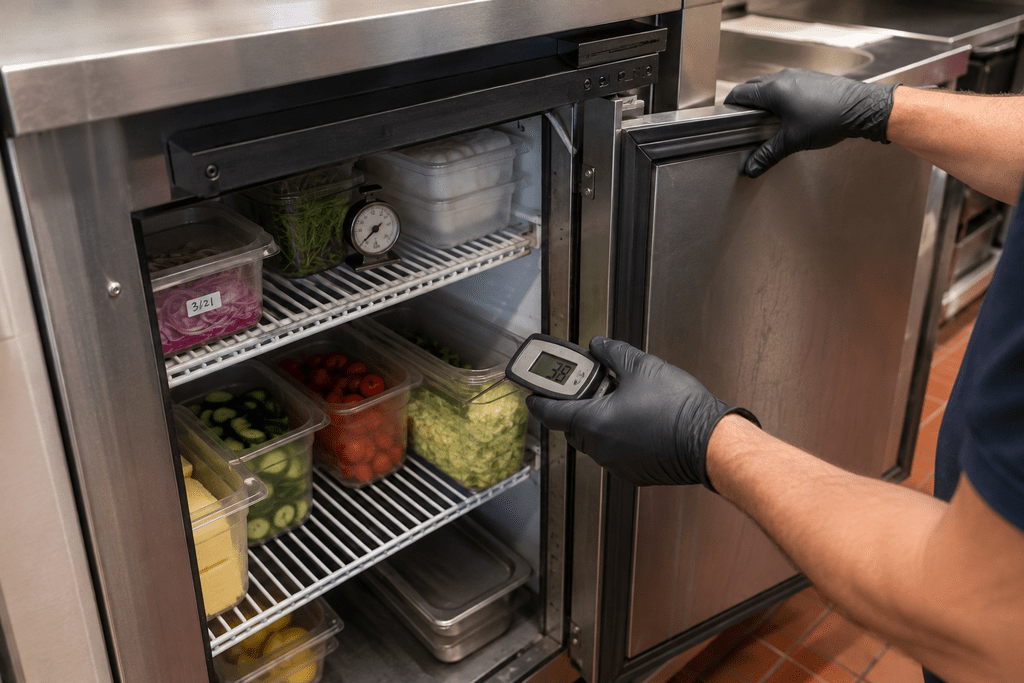
Commercial refrigeration also tends to fail gradually before it fails dramatically. A door gasket may no longer seal evenly. Dust and grease may reduce airflow around heat-exchange surfaces. A fan may become noisy or less effective. Ice may begin building in an area where it normally should not. The compressor may run longer than usual. Temperatures may recover more slowly after the door opens. None of those symptoms necessarily shuts the appliance down immediately, which is exactly why they are easy to overlook.
Think of a refrigeration system like a runner carrying a backpack. A clean, well-maintained unit is already doing constant work to move heat out of a cold cabinet. Add a dirty condenser, damaged gasket, blocked airflow, and frequent door openings, and you keep placing more weight into that backpack. The system may still run, but it has to work harder for the same result. Longer operating cycles mean more wear and potentially higher utility use.
Routine maintenance should include regular temperature monitoring, cleaning where appropriate, checking door seals and hinges, confirming that ventilation areas are not blocked, and investigating unusual operating sounds or longer-than-normal run times. Staff should also understand that repeatedly overloading refrigerated storage with warm food can make temperature recovery more difficult.
For Cleveland food businesses, refrigeration maintenance protects three things at once: inventory, customer safety, and revenue. Waiting for a refrigerator to become completely warm before taking action is like waiting for smoke before deciding whether the wiring looks questionable. Early signs are the opportunity. Maintenance is how you use that opportunity before expensive food ends up in the trash.
Cooking and warewashing appliances live in one of the harshest environments inside any commercial property. Heat, steam, grease, food debris, detergent, minerals from water, repeated temperature changes, and constant use all show up in the same space. When equipment operates in that environment every day, cleanliness and maintenance are not separate jobs. They are part of the same reliability strategy.
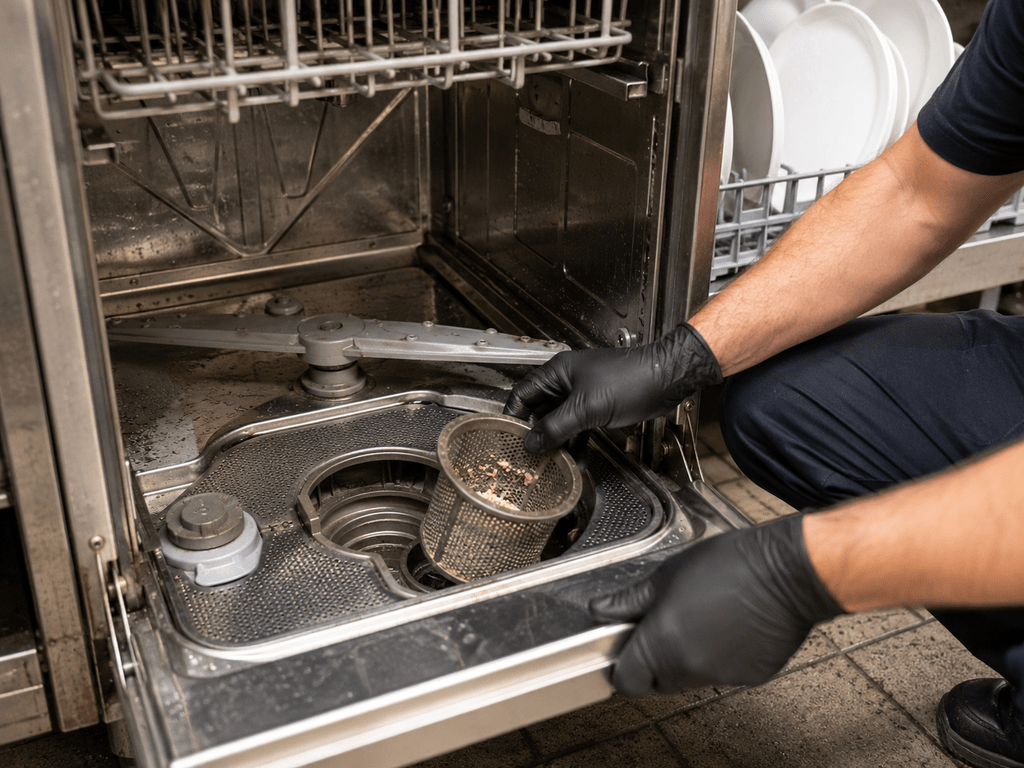
Cooking appliances often give subtle warnings before a larger failure. Heat-up times become longer. One area cooks differently from another. Controls begin responding inconsistently. Ignition or heating cycles become less predictable. Employees may adapt without reporting the issue because experienced kitchen staff are remarkably good at working around imperfect equipment. Someone learns that one side runs hotter, another person starts allowing extra preheat time, and eventually the whole team treats the abnormal behavior as normal. That is dangerous from a maintenance perspective because people can become accustomed to equipment that is slowly deteriorating.
Warewashing equipment creates a different set of concerns. Poor cleaning performance may result from blocked spray areas, dirty filters, water-supply issues, drainage restrictions, mineral buildup, or temperature problems. If dishes require repeated cycles, the business uses more water, more energy, more labor, and more time. A machine that technically still runs can therefore become expensive long before it completely fails.
Water quality and plumbing conditions also matter. Older Cleveland buildings may have supply lines or drain systems that have been modified over time. Restricted flow or slow drainage can make a healthy appliance appear defective. That is why maintenance should include the connections around the equipment, not just the machine itself.
Consistent attention is far less disruptive than crisis repair. Daily cleaning catches debris. Weekly checks reveal changes in operation. Scheduled professional inspection can identify wear that staff cannot easily see. The goal is not perfection. It is consistency. When cooking and warewashing equipment performs predictably, kitchen employees can focus on food and service instead of compensating for machines that behave differently every shift.
Cafés may look less equipment-heavy than full restaurants, but behind the counter, the workload can be intense. Morning traffic arrives fast, beverage preparation happens repeatedly, refrigeration doors open constantly, ice gets used throughout warm Cleveland afternoons, and dishwashing or glasswashing equipment may run almost nonstop during peak periods. A café can depend on several smaller appliances so completely that the failure of one modest piece of equipment creates an outsized operational headache.
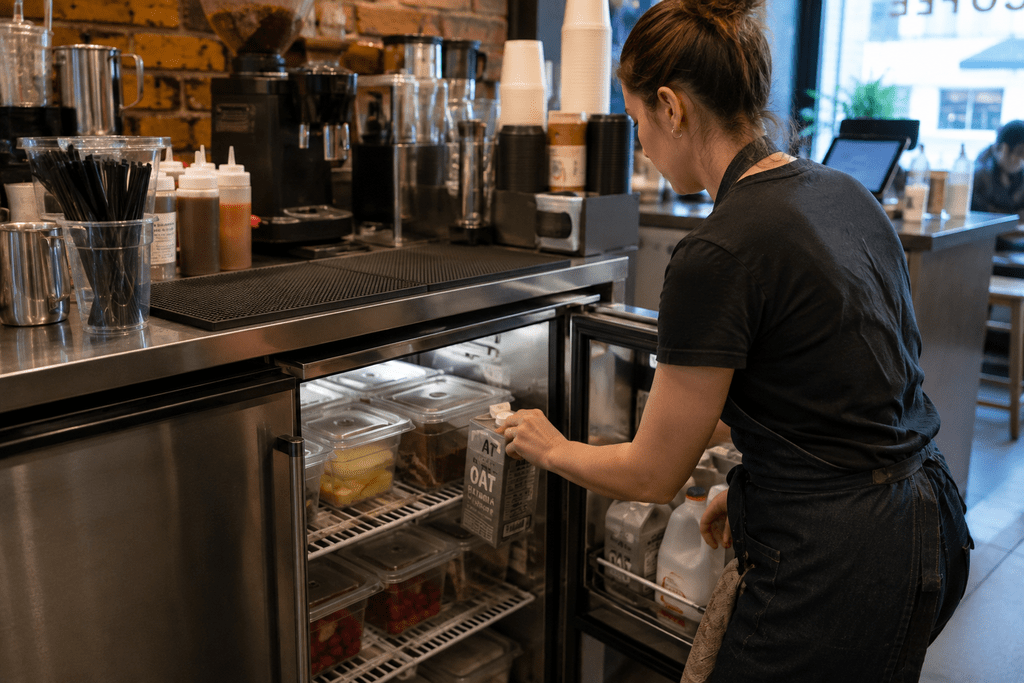
Refrigeration is a good example. Milk, cream, prepared foods, desserts, juices, and other ingredients often live close to workstations for convenience. That means doors and drawers open constantly. Every opening introduces warmer air, and every rushed employee who leaves a door slightly open creates additional work for the cooling system. Worn gaskets or misaligned doors make the problem worse because the unit may never seal completely even after the rush ends.
Ice equipment also deserves attention in cafés and beverage-focused businesses. Ice production depends on clean water flow, proper drainage, good ventilation, sanitary interior surfaces, and reliable cooling. Reduced ice production on a hot summer day can become a major problem quickly. Cleaning is especially important because equipment that handles water and food-contact material needs consistent sanitation, not merely mechanical repair when something stops working.
Then there are the quieter warning signs: equipment begins making more noise, a refrigerator runs longer, a drainage area develops an odor, or a machine needs to be reset occasionally. These symptoms often get ignored because the café is still operating. But “still operating” is not the same as “operating normally.”
For café owners, preventive maintenance should fit the rhythm of the business. Inspections can happen before opening, after closing, or during slower periods. Staff can be trained to report changes instead of adapting around them. A five-minute note about unusual noise today may prevent a five-hour interruption next week. In a business where customers expect fast service, small equipment problems deserve attention before they turn into a line of frustrated people waiting for something the café suddenly cannot make.
Rental-property appliances create a completely different maintenance challenge because the person who owns the equipment is usually not the person using it every day. A landlord or property manager may visit a unit only occasionally, while tenants interact with the refrigerator, range, dishwasher, washer, or dryer constantly. That gap means small problems can grow unnoticed unless tenants report them promptly or the property has a reliable inspection routine.
Consider a refrigerator with a door gasket beginning to fail. The tenant may simply notice that food does not feel as cold or that the appliance runs more often. They may not view it as something worth reporting until food starts freezing in one area and warming in another. Meanwhile, the refrigerator continues working harder than necessary. A washing machine with a small leak may create occasional moisture that gets wiped up without anyone realizing water is reaching flooring or cabinetry. By the time the owner hears about it, the problem may require washer repair and may involve more than the appliance itself.
Preventive maintenance gives landlords a way to reduce that uncertainty. Checking appliances between tenants is especially valuable because the units are accessible and empty. Door seals can be inspected, filters cleaned, drainage tested, hoses examined, appliance stability checked, and unusual sounds investigated without interrupting someone’s daily routine.
There is also a tenant-relations advantage. Appliances are a highly visible part of the rental experience. A tenant may never think about the roof flashing or drainage system when everything works, but they notice immediately when the refrigerator stops cooling or the dryer needs three cycles. When unusually long drying times point to an appliance problem rather than a simple maintenance issue, dryer repair may be needed.
For Cleveland landlords, rental property appliance maintenance is really property protection. Water leaks can damage floors and ceilings. Poor dryer ventilation can create heat and lint problems. Refrigeration failures can trigger complaints and food-loss disputes. Regular checks help control these risks. When a residential appliance develops a problem that requires professional diagnosis, appliance repair in Cleveland can help address the appliance issue before it creates additional disruption for the tenant.
Tenant turnover is one of the best opportunities a landlord has to inspect appliances carefully, but it is also a reminder of why routine maintenance during occupancy matters. When a unit becomes vacant, small problems suddenly become obvious because nobody is rushing to cook dinner or finish laundry. You can hear the refrigerator running continuously in a quiet kitchen. You can notice that the washer shakes during spin. You can see a slow dishwasher leak because there are no mats or storage items hiding the floor underneath it. These are often problems that developed gradually while the previous tenant simply adapted.
People are surprisingly tolerant of minor appliance issues when they do not want to deal with a maintenance appointment. A tenant may hold a refrigerator door closed for an extra second because the seal feels weak. They may run a dryer twice because clothes stay damp. They may avoid one oven rack because food cooks unevenly there. None of this means the tenant is doing anything wrong; it simply shows why maintenance cannot depend entirely on user complaints.
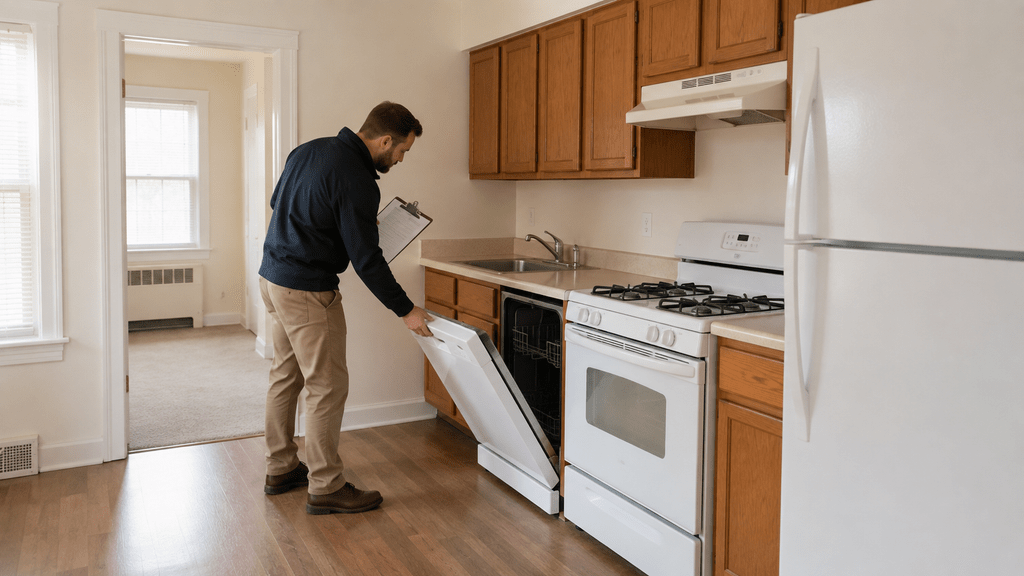
A structured turnover inspection should test appliances under normal operating conditions rather than merely checking whether they turn on. A dishwasher that lights up but does not drain correctly is not ready for the next tenant. A dryer that tumbles but has poor exhaust airflow is not fully functional. A refrigerator that feels cold after sitting empty overnight may still recover too slowly once loaded.
Documentation helps too. Record the condition of major appliances at each turnover, including visible wear, unusual sounds, temperatures where relevant, hoses, seals, and installation condition. That history makes patterns easier to spot. If the same appliance has needed several minor repairs in a short period, replacement planning becomes more rational instead of happening during an emergency.
The best landlords use turnover as a deep-check opportunity, not as the only maintenance opportunity. Appliances should not have to survive an entire lease term without inspection when warning signs appear. Combining tenant reporting, occasional routine checks, and thorough turnover service creates a much more predictable maintenance cycle—and fewer unpleasant surprises when the next resident moves in.
Cleveland’s climate matters more to appliance performance than many owners realize. Hot, humid summer weather makes refrigeration and cooling equipment work harder, especially in kitchens where cooking already raises the room temperature. Winter introduces a different set of conditions, including colder utility areas, dry indoor air, heating-system changes, and large temperature differences between occupied rooms, basements, exterior walls, and service spaces. Appliances operate inside those changing environments all year.
Humidity is especially important for refrigeration and ventilation. A refrigerator or freezer does not only deal with heat; every door opening can introduce humid air that later turns into condensation or frost. In a busy restaurant, that process happens over and over. Grease and dust can also collect faster around equipment in active kitchens, reducing airflow and making heat removal more difficult.
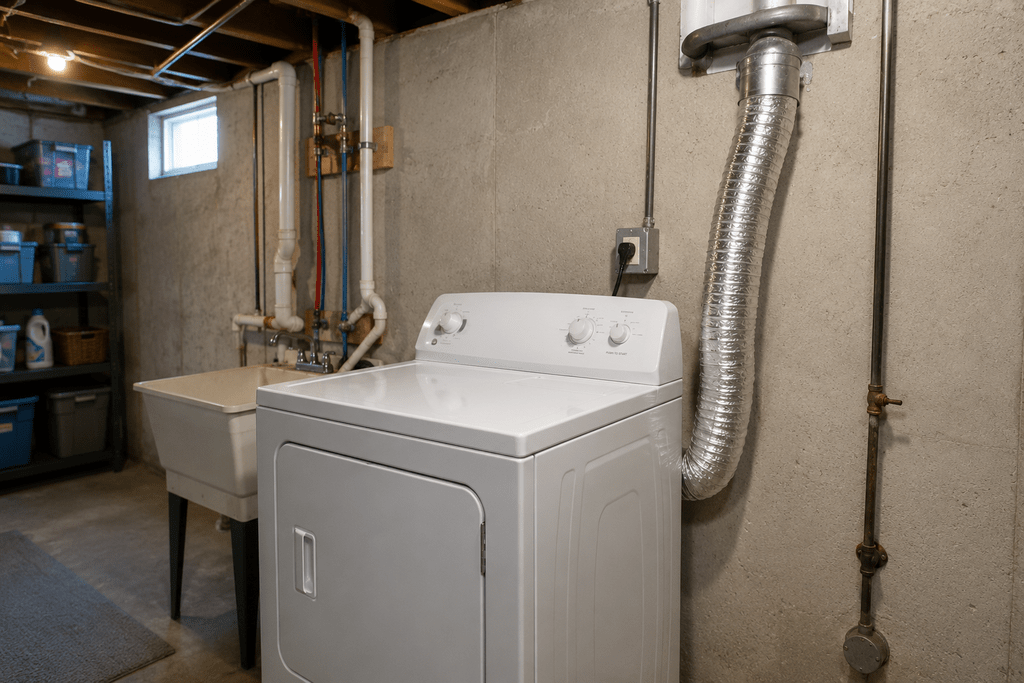
Older Cleveland buildings bring another layer of complexity. Many restaurants, cafés, and rental properties operate in structures that have been renovated multiple times. Electrical circuits may have been updated in stages. Plumbing may include sections of different ages. Floors may be uneven. Vent ducts may follow long or complicated routes because the building was never originally designed around modern equipment. None of those conditions automatically causes appliance failure, but they can influence performance.
Imagine installing a perfectly healthy dryer onto an old, partially restricted vent. The dryer itself may work correctly, yet drying times remain long because the building cannot move exhaust air efficiently. A new dishwasher connected to poor drainage can experience recurring backups. A refrigerator in a cramped cabinet may struggle because heat cannot escape properly.
That is why appliance maintenance in older Cleveland properties should include the surrounding environment. Check ventilation, electrical connections, water flow, drainage, clearances, floor stability, and room temperature along with the appliance itself. Sometimes the machine is merely the messenger. Fixing the part without fixing the environment can create a repair that looks successful for a few weeks and then produces the same complaint again.
Preventive maintenance costs money, which is why some business owners are tempted to delay it. But the useful comparison is not “maintenance versus spending nothing.” The real comparison is planned maintenance versus the cost of operating neglected equipment until it fails. Those neglected costs appear in several places: emergency service, food loss, tenant complaints, staff downtime, water damage, increased utility use, repeated repairs, and shortened appliance life.
Efficiency is a major piece of the equation. Refrigeration equipment with poor airflow or dirty heat-exchange areas may need to run longer to reach the same temperature. A dryer with restricted exhaust airflow may need two cycles instead of one. A dishwasher with weak water flow or poor cleaning performance may require dishes to be washed again. Each problem adds energy, water, labor, or all three.
Maintenance can also extend the useful life of components by reducing unnecessary stress. A motor that runs longer because airflow is blocked accumulates operating hours faster. A pump struggling against a restricted drain works under conditions it was not meant to handle. A door gasket that allows continuous cold-air loss forces refrigeration components to cycle more often. Correcting the small problem reduces the workload on the expensive parts behind it.
Emergency repairs typically carry indirect costs too. A restaurant may lose revenue while equipment is down. A property manager may need to coordinate access urgently instead of bundling repairs into a scheduled visit. Staff may be paid while waiting for an appliance to return to service.
The strongest maintenance programs focus on total operating cost, not just the price of individual service calls. Spending a modest amount to inspect, clean, adjust, or replace a wear item before failure can prevent a much larger chain of expenses. Not every preventive task produces an obvious instant return, but over months and years the pattern becomes clear: equipment that receives consistent attention tends to be more predictable, and predictable equipment is easier—and usually cheaper—to manage.
For restaurants and cafés, appliance maintenance is closely connected to food safety. A refrigerator that cannot maintain proper temperature is not merely inconvenient; it can place perishable ingredients into unsafe temperature conditions. A dishwasher that does not clean or sanitize effectively can create obvious sanitation concerns. Ice-making equipment that is neglected can develop buildup in areas that contact water and ice. These are operational problems, but they are also hygiene problems.
Cleanliness and mechanical condition often overlap. Grease accumulation around ventilation areas can restrict airflow. Food debris can interfere with drains and filters. Mineral deposits can affect water-related components. Worn seals can trap moisture and residue. If cleaning crews focus only on visible surfaces while hidden functional areas receive no attention, equipment can look clean from three feet away and still operate poorly.
Temperature monitoring is one of the simplest examples. Commercial refrigeration should not be judged by whether the interior “feels cold.” A thermometer provides a measurable standard. Staff should understand normal temperature ranges and know what to do when readings begin drifting. Waiting until food feels warm is waiting too long.
Sanitation schedules should also match equipment use. A café that produces large amounts of ice or dairy-based drinks may need different cleaning priorities than a property with a single residential refrigerator. A restaurant running warewashing equipment for twelve hours a day cannot treat filter cleaning as an occasional task.
Maintenance also reduces the temptation to create unsafe workarounds. When equipment fails during service, employees may improvise—moving food to overloaded refrigerators, washing items manually under pressure, or storing ingredients in temporary locations. Those workarounds may solve the immediate operational problem while creating new safety risks.
A well-maintained kitchen removes much of that pressure. Reliable appliances support safer habits because employees are not constantly compensating for broken equipment. Maintenance, cleaning, and food safety therefore should not live in separate checklists. They reinforce one another, and the businesses that connect them usually operate more smoothly.
Emergency repairs have terrible timing. Refrigerators do not seem to stop cooling on quiet Tuesday mornings when the kitchen is empty. Dryers do not conveniently fail between tenants when nobody needs them. Equipment has a habit of revealing its weakest point after extended use, which often means the failure arrives during a rush, a hot weekend, a busy turnover, or the moment everyone needs the machine.
Planned maintenance changes the timing relationship. Instead of allowing the appliance to choose the moment of attention, the business or property manager chooses it. A restaurant can schedule inspection outside peak service. A café can handle maintenance before opening or after closing. A landlord can combine appliance checks with other work during a planned property visit.
That difference has value even if the maintenance visit discovers a part that needs replacement. Replacing a worn component during scheduled downtime is usually easier than replacing it after complete failure. Food can remain in alternate storage, tenants can be notified in advance, and staff schedules can be adjusted.
Planned work also provides time to diagnose the real cause. Emergency service naturally focuses on restoring operation as quickly as possible. Sometimes that is exactly what the situation requires. But recurring problems often need a wider look at airflow, electrical supply, drainage, ventilation, or installation conditions. Preventive visits provide more room for that kind of evaluation.
There is a psychological benefit as well. A business with a maintenance system does not react to every unusual sound as a complete mystery. Staff know where to report the problem, managers know the service history, and owners can decide based on actual information instead of panic.
Downtime is not always avoidable, but surprise downtime often can be reduced. That is the real promise of preventive maintenance. It does not create immortal appliances. It creates fewer emergencies, better planning, and a greater chance that repairs happen when they are least disruptive rather than when the business can least afford them.
A useful maintenance routine does not need to be complicated enough to require a three-ring binder for every refrigerator. The best system is one people can actually follow. Start with daily observation. Staff or tenants should notice unusual noises, leaks, temperature changes, slow drainage, longer cycle times, damaged seals, warning indicators, or appliances that suddenly behave differently from normal. Most breakdowns provide some kind of clue before complete failure; the problem is that nobody records the clue.
Cleaning comes next. Filters, accessible ventilation areas, refrigerator door seals, dishwasher filters, dryer lint screens, and other user-serviceable areas should stay clean according to the demands of the property. Commercial environments often need more frequent cleaning because equipment operates longer and encounters more grease, dust, food debris, and moisture.
Connections deserve inspection too. Water hoses should not show bulging, cracking, rust, or seepage. Drain hoses should remain properly positioned and free of visible kinks. Electrical cords and plugs should not show heat damage. Dryer exhaust connections should remain intact and uncrushed. Refrigerators and washers should sit stable and level enough to operate properly.
Temperature monitoring is especially important for food businesses. Refrigerators and freezers should have reliable temperature checks rather than relying on touch. Any persistent change from normal performance deserves investigation.
A practical schedule can be divided into daily, weekly, monthly, seasonal, and professional-service tasks. Daily checks might take seconds. Monthly tasks may involve deeper cleaning and inspection. Seasonal work can address vents, surrounding spaces, and equipment that experiences different loads in summer and winter.
Most importantly, write down what was done. A simple maintenance log prevents the classic problem where everyone assumes someone else cleaned the filter last month. Maintenance becomes reliable when responsibility is visible. The goal is not paperwork for the sake of paperwork. The goal is to make sure small tasks happen consistently enough that appliances do not have to fail before they receive attention.
The biggest maintenance mistake is creating a schedule that looks impressive but is impossible to maintain. If a restaurant manager has to complete a fifty-item appliance checklist during the dinner rush, it will not happen. If a landlord creates a complicated inspection system that requires multiple visits every month, it will eventually be abandoned. A successful maintenance plan fits the way the business or property already operates.
Start with the equipment that would hurt the most if it failed. For a restaurant, refrigeration and warewashing may be near the top. For a café, refrigeration, ice production, beverage-related equipment, and dishwashing may deserve special attention. For a rental property, refrigerators, ranges, dishwashers, laundry appliances, and dryer ventilation often matter most. Rank them by operational impact, safety consequences, and replacement cost.
Next, separate maintenance by frequency. Daily tasks should be extremely short: check temperatures, clean obvious debris, watch for leaks, and report unusual operation. Weekly or monthly tasks can involve filters, seals, ventilation areas, drainage, and more detailed inspection. Seasonal service is useful before periods of heavier demand, particularly before Cleveland’s hotter months for refrigeration and cooling-related equipment.
Assign responsibility by role rather than by vague instruction. “Someone should check the refrigerator temperatures” is not a maintenance system. “Opening manager records refrigeration temperatures before service” is. In rental properties, the equivalent may be a documented appliance inspection during each turnover plus scheduled checks when other maintenance work is already planned.
Keep records simple. Date, appliance, issue, action, and follow-up are often enough. Over time, that history becomes valuable. You may discover that one machine needs repairs every few months while another has remained dependable for years. That information helps with replacement planning and budgeting.
The best schedule also includes an escalation rule. Staff should know which symptoms can wait and which require immediate attention. Water leaks, electrical burning smells, repeated breaker trips, significant temperature loss, overheating, and serious ventilation problems should never sit on a routine maintenance list for next month. A practical system combines everyday observation with clear rules for when ordinary maintenance becomes urgent service.
For Cleveland restaurants, cafés, landlords, and property managers, appliance maintenance is not really about keeping machines shiny. It is about controlling risk. Every refrigerator, dishwasher, range, freezer, washer, dryer, or other heavily used appliance connects directly to something the operation values: food, revenue, labor, property condition, tenant satisfaction, sanitation, or customer experience. When the equipment becomes unreliable, those problems rarely stay contained inside the appliance.
Restaurants can lose inventory and service capacity. Cafés can struggle through a morning rush without essential equipment. Rental properties can turn a small water leak into flooring damage and a tenant complaint. Older Cleveland buildings may add challenges through ventilation, drainage, electrical connections, or uneven installation conditions, while summer heat and humidity can push cooling equipment harder.
The smartest strategy is to catch problems while they are still small. Listen for changes in sound. Watch temperatures. Clean filters and ventilation areas. Inspect hoses and seals. Pay attention to longer cycle times, weak drainage, extra heat, or repeated resets. Record recurring issues instead of treating each one as an isolated event.
Preventive appliance maintenance creates predictability, and predictability is valuable in any business. It allows owners to plan service around operations, budget for replacement before emergencies, reduce wasted energy and labor, and keep equipment working closer to the way it was designed to work.
No maintenance program can prevent every breakdown. Motors wear out. Heating elements fail. Pumps stop working. Electronic controls eventually develop problems. The goal is not to eliminate mechanical reality. The goal is to prevent avoidable failures, identify inevitable failures earlier, and reduce the damage when something does go wrong.
For Cleveland businesses and rental properties, that makes maintenance less of an expense and more of an operating discipline. A little attention today can save a lot of scrambling tomorrow—and in a restaurant kitchen or occupied rental, avoiding that scramble is often worth far more than the maintenance itself.
We repair a wide range of household appliances including refrigerators, washers, dryers, ovens, dishwashers, and more. No matter the brand or model, our experienced technicians are ready to help. We repair commercial appliances as well: commercial washers dryers, commercial refrigerators & freezer & more.
We service a wide range of household appliances, including refrigerators, dryers, washers, ranges, cooktops, dishwashers, freezers, ice makers, ovens, and double ovens. Our technicians operate across many locations in Ohio, covering major cities like Cleveland, Akron, and Parma. We also serve surrounding areas including Lakewood, Westlake, Strongsville, and Brooklyn. Our service area extends to Rocky River, Euclid, Solon, Beachwood, and Cleveland Heights, as well as counties such as Cuyahoga, Lorain, Lake, and Medina. Additional cities we cover include North-Olmsted, North Ridgeville, Valley-City, Lorain, Avon Lake, Richfield, Brecksville, Garfield Heights, Seven Hills, Brunswick, Oakwood, Mentor, and Willoughby.