In this article
- 1. The food feels warmer than it used to
- 2. The motor hardly ever rests
- 3. A noise you never heard before
- 4. Puddles, or frost that keeps coming back
- 5. Sweat on the outside, or a door that doesn't seal
- Signs of a freon leak
- How to diagnose refrigerator problems at home
- When the signs point to a new fridge
- Refrigerator repair in Parma and Cleveland
- Questions people ask
Fridges almost never quit without warning. They drop hints for days, sometimes weeks. Catch them early and it's usually a cheaper part and no ruined groceries. Here are the signs worth paying attention to, and what you can check before you call anybody.
1. The food feels warmer than it used to
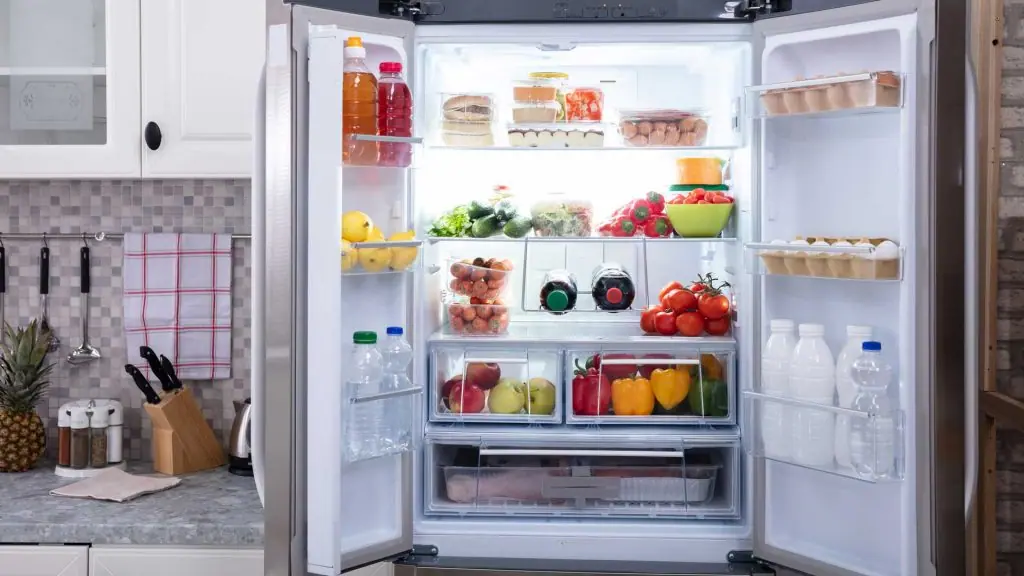
Don't go by feel, your hand lies. Drop a cheap thermometer into a glass of water, park it on the middle shelf and check it in the morning. Per the FDA, the fresh food side belongs at 40°F or colder, the freezer side at 0°F. Three or four degrees over, every morning for a week? That counts, even if the milk tastes fine to you.
Glance at the dial too. Kids grabbing juice off the back shelf knock it all the time. And the vents inside need room. One bag of salad parked in front of a vent can leave the whole shelf lukewarm.
Freezer rock hard, fridge side warm? That nearly always comes down to how air moves from the freezer into the fridge, and our article on a warm fridge with a cold freezer goes through it.
2. The motor hardly ever rests
Normal is on for a while, off for a while. Newer models run long and quiet on purpose, so a long stretch of humming isn't a reason to panic by itself.
It's the mix that should bother you. Nonstop running plus a thermometer that keeps climbing. Dust on the condenser coils is the usual reason, so pop off the kick plate or roll the fridge out and vacuum them. Wait a few hours. No better? Then we'd look at the fans and the door seal.
3. A noise you never heard before
Humming and the odd gurgle are normal. Squealing or chirping isn't. That's usually a fan motor bearing going. Grinding inside the freezer tends to be the fan blade scraping ice.
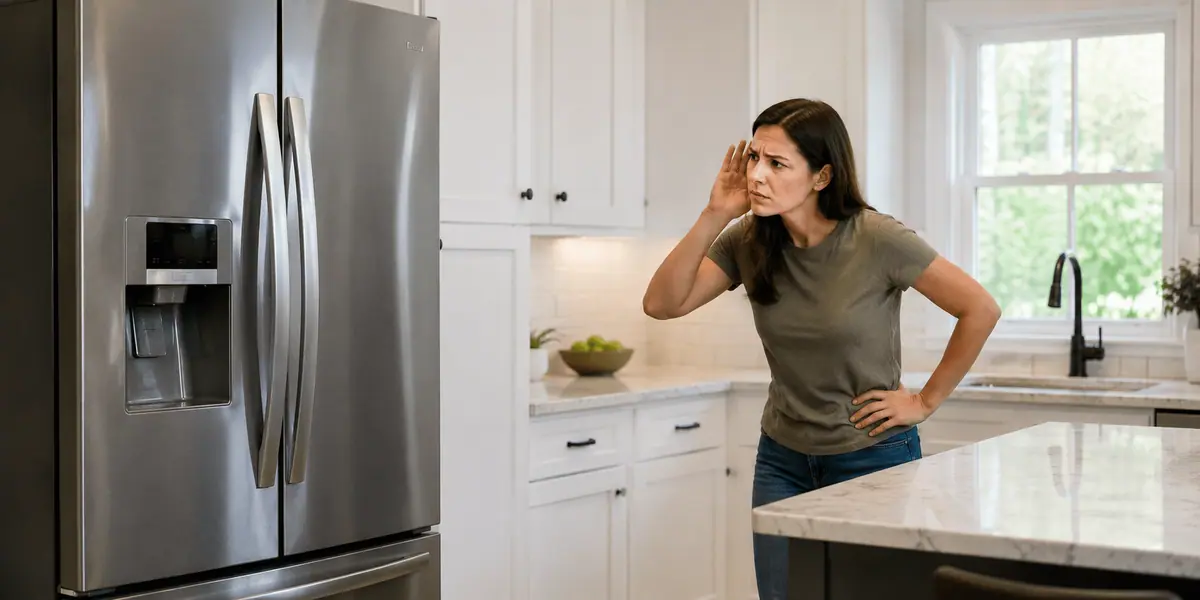
The one we don't like hearing about starts with a click at the back. A few seconds of buzzing follow, then it goes quiet. A few minutes later it all happens again. The compressor is trying to start and can't. We sorted the harmless sounds from the bad ones in our guide to refrigerator noises.
4. Puddles, or frost that keeps coming back
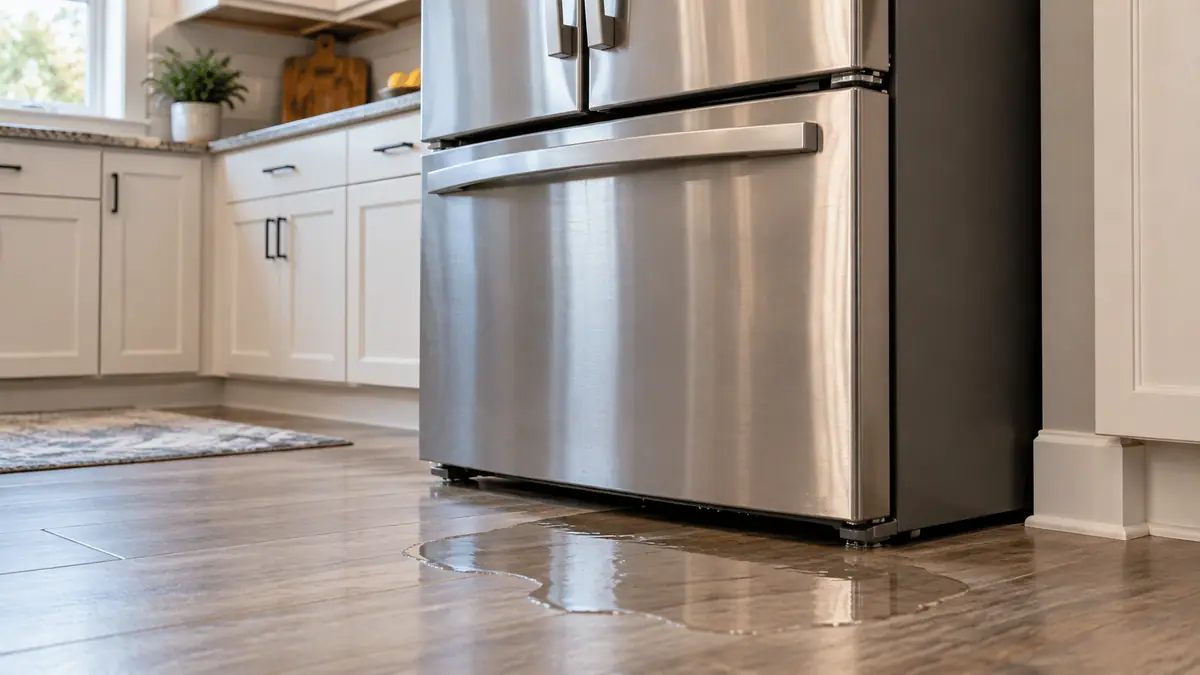
Find water under the crisper drawers and the defrost drain is the first suspect, either frozen solid or clogged with gunk. A puddle out front can come from that same drain. It can also be the pan underneath, or the line that feeds the ice maker.
Frost is a clue too. An older manual defrost freezer is supposed to build a thin layer. A frost-free freezer isn't. See a thick white crust on its back wall? Defrost has stopped. Give that ice a week or two to swallow the coil and the fridge side goes warm next.
5. Sweat on the outside, or a door that doesn't seal
Little beads of water on the door edge mean humid kitchen air is slipping in. Try the dollar bill trick. Shut the door on a bill in a few spots and pull it out. If it slides out with no drag at all, the gasket isn't sealing there.
A worn gasket keeps the compressor working overtime. New gaskets are cheap compared to what that extra wear eventually breaks.
Signs of a freon leak
Refrigerant leaks are rarer than fan or defrost trouble. Still, it's the one people ask about most. The fridge runs and runs but never gets properly cold. Both sides lose a degree here and a degree there over a week or two.
Sometimes you'll hear a faint hiss near the back. Or you spot an oily smudge on the copper lines or the floor under the compressor. The oil rides around the system with the refrigerant, so where it shows up, gas got out. Inside the freezer the frost may stop halfway across the coil.
Don't expect a smell. There's also nothing safe to try at home with this one. A sealed system repair takes a technician with the right equipment, and on an older fridge it can cost close to a new one. You get the price before we touch it.
How to diagnose refrigerator problems at home
Go in this order. Setting and thermometer first. Then the vents and the door gasket. After that, pull the fridge out and vacuum the coils.
Then just listen, doors closed. You should hear the compressor hum, and on most models a small fan near the floor. Then open the freezer door. A fan should be whirring behind its rear wall. Dead silence where a fan should be spinning tells us a lot.
That's where home checks stop. Leave the inside panels screwed on. Never pry ice loose with anything sharp, since a punctured line turns a cheap fix into a sealed system job.
When the signs point to a new fridge
On a fridge bought in the last several years, a new fan or defrost part nearly always pays off. A gasket too. A refrigerant leak or a dead compressor on an older model is a different story. Our repair or replace guide helps you weigh that one.
Refrigerator repair in Parma and Cleveland
Noticed two of these signs or more? Get it looked at before it quits on a full load of groceries. We test parts right in your kitchen and give you the price first. Homes in Parma, Cleveland and the nearby towns are all on our route. Repairs carry a 90-day warranty. Call (216) 352-3935 or book through our refrigerator repair page.
Questions people ask
What are the signs a refrigerator needs repair?
The big ones are food sitting above 40°F and a motor that hardly rests. New squealing or clicking counts too. So do water under the drawers, frost on the freezer wall and sweat along the door. One sign is worth watching, two or more usually mean a part is failing.
What are the signs of a freon leak in a refrigerator?
The fridge runs a lot but never gets fully cold, and both sides warm up slowly. Frost may cover only part of the coil in the freezer. Sometimes there's an oily spot on the tubing or a faint hiss. A leak needs a technician, not a home fix.
How do I diagnose refrigerator problems myself?
Check the setting and a thermometer reading first. Then clear the vents and test the gasket with a dollar bill. Vacuum the condenser coils and listen for the compressor and the fans. A silent fan, or a fridge still warm a few hours later, means it's time to call.
What are the signs I need a new fridge instead?
A failed compressor or a refrigerant leak on an older fridge can cost close to a new one. That's usually the point to compare prices. Our repair or replace guide covers how to decide.
Can I keep using a fridge that shows warning signs?
Usually for a short time, as long as it holds 40°F. Keep the doors closed as much as you can. If the temperature climbs, move the most perishable food to a cooler and book a visit.
Do you repair refrigerators near me?
Yes. We cover Parma and Cleveland plus towns within about 50 miles. Send a request any day. If you reach us in the morning, we can often come that afternoon.