What to Check Before Calling for Appliance Repair in Cleveland
Published: August 19, 2026
Cleveland homeowners know that winter weather does not politely remain outside. Cold air sneaks under garage doors. Snow melts beside foundation walls. Basement humidity rises after a thaw. Temperatures bounce from freezing to strangely mild and then back again before the week is over. Those shifts may be annoying when you are deciding which coat to wear, but they can be much harder on appliances stored or operated in garages and basements.
A refrigerator in an attached garage, a chest freezer against a cold exterior wall, or a washer sitting near a damp basement floor may appear perfectly protected because it is technically indoors. The problem is that these spaces rarely provide the stable conditions found in a finished kitchen or laundry room. Garages can become extremely cold in winter and hot in summer. Basements may remain cool but experience moisture, condensation, minor seepage, and poor airflow. Appliances are designed to work within certain environmental limits, and lake-effect weather can push those limits in ways homeowners do not always notice.
The damage is not always dramatic. You may not walk downstairs and discover a freezer split in half by the cold. Instead, the appliance may cycle incorrectly, develop rust around a connection, struggle to drain, take longer to dry clothes, or experience intermittent control-board problems. A machine can continue operating while its components slowly deteriorate. Then, months later, it fails during a storm, a holiday weekend, or the exact moment the freezer is packed with food.
The smartest approach is to stop thinking about the appliance as an isolated box. Its performance depends on the room around it: temperature, moisture, ventilation, drainage, electrical stability, and placement. When those conditions are controlled, appliances usually last longer and operate more reliably. When they are ignored, even a relatively new machine can develop preventable problems.
This guide explains how Cleveland’s lake-effect conditions can affect garage and basement appliances, what warning signs deserve attention, and which practical steps can reduce the risk of costly repairs.
Lake-effect weather creates trouble because it combines several stresses instead of delivering only one. Appliances may face deep cold, blowing snow, high moisture, sudden thaws, freezing rain, and rapid temperature swings within a short period. A detached garage can remain below freezing for days, then warm quickly when sunlight, a temporary heater, or milder air arrives. A basement wall may feel cold while the indoor air becomes warmer and more humid. That contrast creates condensation, and condensation has a way of finding metal surfaces, electrical connections, and hidden corners.
Household appliances generally perform best in stable environments. Their seals, lubricants, electronics, pumps, valves, hoses, and motors are selected with normal indoor conditions in mind. A garage or unfinished basement operates more like a buffer zone between the house and the outdoors. It may be sheltered from direct precipitation, but it still experiences environmental changes that stress mechanical and electrical parts.
Cold can thicken lubricants, stiffen rubber, reduce battery performance in connected controls, affect pressure inside sealed systems, and cause water trapped in valves or hoses to freeze. Moisture can corrode terminals, promote rust, swell nearby wood, and encourage mold around seals or drainage areas. Heat can dry out gaskets, weaken plastic components, and force refrigerators or freezers to work harder. Repeatedly moving between cold and warm conditions creates expansion and contraction, which may loosen connections or worsen tiny cracks.
The danger increases when homeowners use appliances in spaces that were never prepared for them. A freezer may be plugged into a questionable extension cord. A dryer may vent through a long, cold duct. A washer may sit directly on a damp floor beside an exterior wall. Each setup may work during calm weather, but lake-effect conditions expose its weaknesses.
Think of weather as a stress test. It does not always create the original flaw, but it reveals poor installation, weak ventilation, aging hoses, bad drainage, or inadequate electrical protection much faster than a stable indoor environment would.
A garage may feel like a convenient location for an extra refrigerator, freezer, or laundry appliance. It provides storage space, keeps noise away from living areas, and seems protected from snow and rain. Yet most garages are not true conditioned rooms. Their temperature can closely follow outdoor weather, especially when the garage is detached, poorly insulated, or frequently opened.
During a Cleveland cold snap, an unheated garage may become cold enough to interfere with normal refrigerator operation. The appliance’s internal controls may sense that the surrounding air is already cool and reduce compressor activity. That can create an odd situation: the refrigerator section seems cold enough, but the freezer section begins warming because the compressor is not running as often as expected. Homeowners may not realize anything is wrong until food softens or ice begins melting.
Garages also collect moisture. Cars bring in snow, slush, and road salt. That mixture falls onto the floor, melts, and raises humidity. Salt-laden moisture is especially aggressive around metal. Appliance feet, lower cabinets, exposed fasteners, electrical boxes, and hose fittings may corrode faster in this environment. A machine sitting only a few inches from a wet floor can spend winter surrounded by damp air.
Airflow is another issue. Homeowners often push appliances tightly against walls to save space, then stack boxes, tools, and seasonal items around them. Refrigerators and freezers need room to release heat. Dryers need unobstructed ventilation. Blocking airflow can increase operating temperature even when the garage itself is cold.
Garages also tend to have more vulnerable electrical setups. A circuit may already serve power tools, a door opener, lighting, or portable heaters. Adding a refrigerator, freezer, or washer can overload the circuit or create voltage drops when another device starts. Extension cords and adapters make the risk worse.
A garage appliance is not automatically a bad idea, but the space must be treated as part of the installation. Temperature, moisture, power supply, airflow, and floor conditions all need attention.
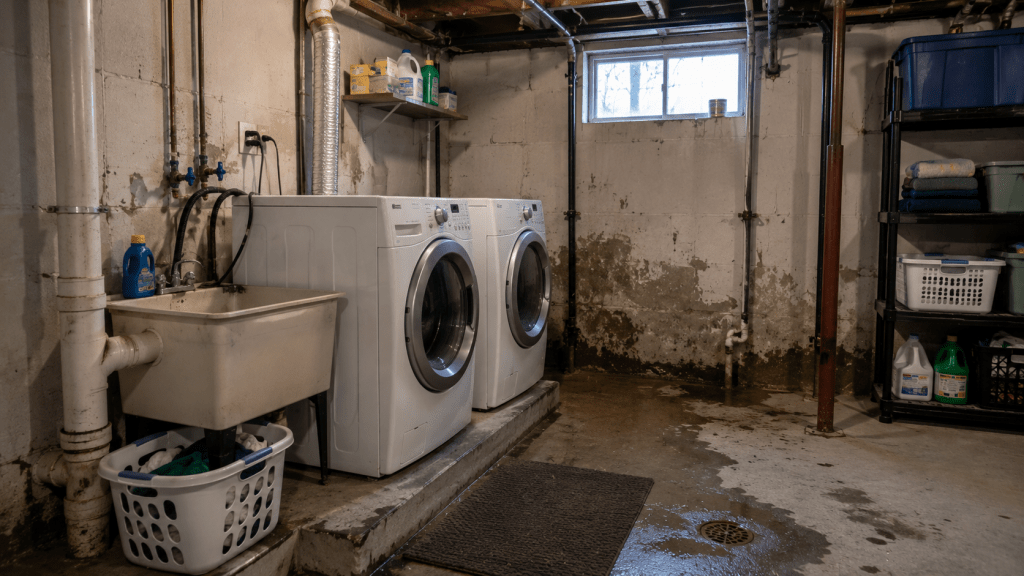
Basements are usually warmer than garages in winter, but that does not make them trouble-free. Their biggest enemy is often moisture rather than extreme cold. Cleveland basements may experience damp foundation walls, condensation on cold pipes, minor seepage after snowmelt, floor drain backups, or higher humidity during seasonal transitions. An appliance can look dry from the front while moisture collects behind it, beneath it, or inside nearby wall cavities.
Washers are especially vulnerable because they already use water. A small hose leak or slow valve seep can go unnoticed when the basement floor is naturally damp. Over time, water may corrode the appliance base, damage the floor beneath it, or create mold around the wall. If leaks, drainage problems, or other washer malfunctions develop, professional washer repair may be needed to identify the appliance-related cause. Dryers face a different challenge. If the basement air is humid and the vent path is long or cold, drying performance can decline. Moisture may condense inside the duct, encouraging lint to stick and creating a heavier blockage.
Basements also tend to have limited airflow. Appliances are often placed in corners, utility rooms, or narrow spaces near furnaces, water heaters, storage shelves, and plumbing. Homeowners may add doors or partitions during remodeling without considering how much air the equipment needs. A crowded utility area can trap heat and humidity, causing both performance and safety concerns.
Uneven floors create another common problem. Washers must sit level and stable. On an uneven concrete floor, a machine may shake, walk, or place excessive stress on internal suspension parts. The homeowner may assume the washer is mechanically failing when the real problem is poor leveling or a weak floor surface.
Basement electrical systems deserve attention too, particularly in older homes. Outlets may be ungrounded, improperly located, exposed to dampness, or shared with several high-demand devices. A basement appliance should not be treated like a lamp that can be plugged in anywhere.
The basement offers protection from the worst outdoor cold, but it introduces moisture, drainage, airflow, flooring, and electrical concerns. A successful setup controls all five.
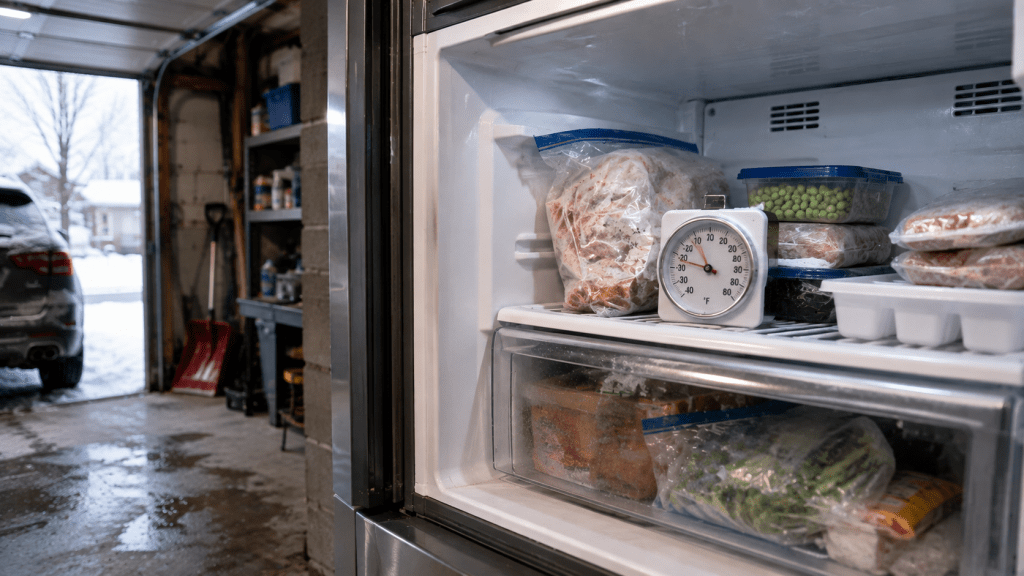
It seems logical that a refrigerator or freezer should perform well in a cold garage. After all, the appliance’s job is to keep things cold. The problem is that refrigeration systems are designed to move heat under a predictable range of surrounding temperatures. When the room becomes too cold, thermostats, sensors, compressor oil, and pressure conditions may behave differently than they do in a normal kitchen.
A refrigerator with a freezer compartment can be particularly vulnerable. Many units use one cooling system for both sections. The refrigerator thermostat determines when the compressor runs. If the garage air is already close to refrigerator temperature, the thermostat may not request much cooling. The freezer, however, still needs much colder conditions. Without enough compressor run time, frozen food may begin to thaw even though the refrigerator section appears normal.
Freezers may also struggle in extreme environments, depending on their design and temperature range. Very cold air can affect controls, door seals, lubrication, and start-up behavior. When the weather warms suddenly, the appliance must adjust quickly. Repeated cycling between cold nights and milder afternoons adds stress.
Condensation becomes a problem when a very cold appliance surface meets warmer, wetter air. Moisture can form around doors, hinges, wiring areas, or the exterior cabinet. If that moisture reaches damaged insulation, rusty seams, or electrical connections, the effects may continue long after the weather changes.
Homeowners should monitor actual internal temperature with an appliance thermometer rather than trusting how the food feels. A freezer can drift into an unsafe range before obvious thawing appears. Check door seals, listen for unusual starting noises, and watch for changes in run time. If the appliance continues having trouble maintaining temperature after environmental conditions are addressed, refrigerator repair or freezer repair may be appropriate, depending on the appliance.
Avoid using temporary heat carelessly. Placing a space heater beside an appliance can create fire risk, uneven temperature changes, and circuit overload. A better solution may involve improving garage insulation, using an appliance designed for the environment, or relocating the unit to a more stable space.
Cold does not simply make refrigeration easier. Under the wrong conditions, it can confuse the system and shorten component life.
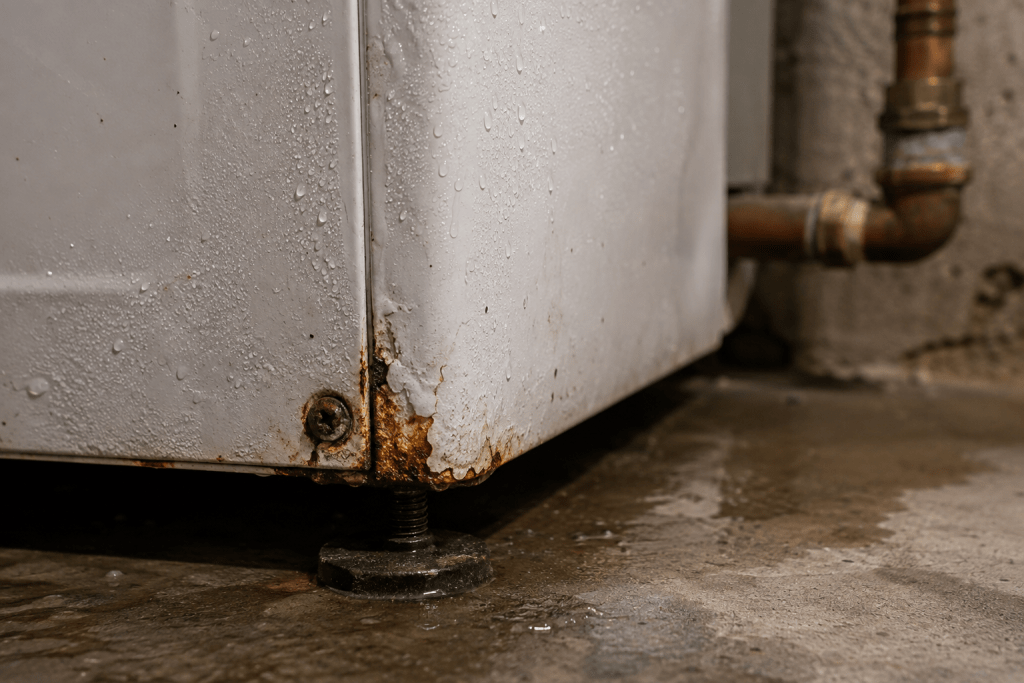
Condensation is one of the quietest threats in a Cleveland garage or basement. It forms when warm, moist air touches a colder surface. You see the same effect on a cold drink during summer. In an appliance space, that moisture may appear on metal cabinets, copper lines, control housings, motor surfaces, pipes, valves, and electrical boxes.
A small amount of moisture may evaporate without causing obvious trouble. Repeated condensation is different. It can begin breaking down protective finishes and create small rust spots around seams, screws, feet, hinges, or lower panels. Once rust damages the surface coating, the exposed metal becomes even more vulnerable. Road salt carried into garages speeds up this process because salty moisture conducts electricity and promotes corrosion.
Electrical corrosion can be harder to spot. Moisture may reach terminals, connectors, relay contacts, sensors, or wiring plugs. The appliance might continue working normally most of the time, then fail intermittently during damp weather. Controls may reset, lights may flicker, motors may hesitate, or error codes may appear and disappear. Because the symptoms are inconsistent, homeowners often blame the main control system when a corroded connection is the true cause.
Condensation also affects insulation and nearby materials. Water can collect behind a refrigerator, beneath a washer, or around a dryer vent connection. Wood shelving may swell, drywall may soften, and mold can develop in areas with poor airflow. The appliance damage is only one part of the problem.
Reducing condensation starts with environmental control. Improve airflow, repair water entry, manage humidity, insulate cold pipes where appropriate, and avoid placing appliances directly against cold exterior walls. Leave enough clearance for air to circulate. Use a humidity monitor in the basement and inspect the area after sudden weather changes.
Do not cover an appliance tightly with plastic while it remains plugged in or while moisture is present. Trapping damp air can make corrosion worse. The goal is not to seal the appliance inside a bubble. The goal is to keep the surrounding space reasonably dry and stable.
High humidity makes laundry appliances work in an environment that is already loaded with moisture. A washer adds water to the room through normal use, small spills, open doors, damp laundry, and occasional leaks. A dryer removes water from clothing, but that moisture must travel safely outdoors. If the basement air is already damp or the vent system is weak, the entire laundry process becomes less efficient.
Washers may develop odor, mildew, and residue when moisture remains trapped between cycles. Door seals, dispensers, drain areas, and the underside of lids can stay damp for hours. In a humid basement, those surfaces dry even more slowly. Detergent residue and fabric soil create a food source for odor-producing growth. Homeowners may respond by using more cleaning products, but excess detergent often leaves additional residue and makes the cycle worse.
Dryers face a different problem. They rely on moving large amounts of air. If the exhaust duct is restricted, crushed, too long, poorly routed, or collecting condensation, drying time increases. The machine runs longer, uses more energy, and exposes internal components to additional heat. Lint also sticks more easily to damp duct surfaces, gradually narrowing the airflow path. If drying problems continue after the vent and surrounding conditions have been checked, dryer repair can help determine whether the appliance itself has a malfunction.
Humidity can corrode hose fittings, valves, screws, cabinet bottoms, and electrical contacts. It may also make concrete floors feel wet even when no active leak is present. Appliances sitting directly on that surface remain close to the dampest air in the room.
A basement dehumidifier can help, but it is not a substitute for fixing leaks or ventilation problems. Keep the laundry area open enough for airflow. Leave the washer door or lid slightly open between cycles when the design allows it safely. Clean dispensers, seals, and filters regularly. Inspect dryer airflow at the exterior vent and make sure the flap opens freely.
Watch for longer drying times, musty odors, rust near the base, damp walls, or water droplets on pipes. Those signs mean the room—not just the appliance—needs attention.
Modern appliances depend heavily on electronic controls. Even machines with simple-looking knobs may contain sensors, relays, control boards, digital switches, and safety circuits. These components prefer stable temperatures. Repeated transitions from very cold to warm, or from damp to dry, can create stress that is less visible than a broken hose but just as real.
Materials expand when they warm and contract when they cool. The amount of movement is tiny, but electronic connections are also tiny. Over many cycles, temperature changes can worsen weak solder joints, loosen marginal connectors, or expose cracks in protective coatings. A control board may work perfectly during mild weather and fail only after a freezing night or rapid warm-up.
Condensation adds another layer. A cold appliance brought into warm, humid air may collect moisture on internal components. The same thing can happen in a garage during a sudden thaw. If power is applied while moisture is present, electrical paths may form where they should not. That can lead to short circuits, corrosion, blown components, or unpredictable operation.
Displays may flicker, buttons may stop responding, cycles may restart, or error messages may appear. A refrigerator may click repeatedly without starting. A washer may pause during filling. A dryer may shut down unexpectedly. These symptoms do not prove the control board is defective, but weather-related stress should be considered when the appliance is located in an unstable environment.
Avoid rapidly heating a freezing appliance with a portable heater. Sudden warming can increase condensation. When an unused appliance has been exposed to very cold conditions, allow it to warm gradually and dry fully before reconnecting power. Do not open electrical panels unless qualified.
Electrical controls are expensive enough that prevention matters. Maintain a more stable room temperature where practical, keep the appliance dry, provide proper clearance, and address drafts around doors or foundation openings. A small improvement in the surrounding space may protect components that would cost far more to replace.
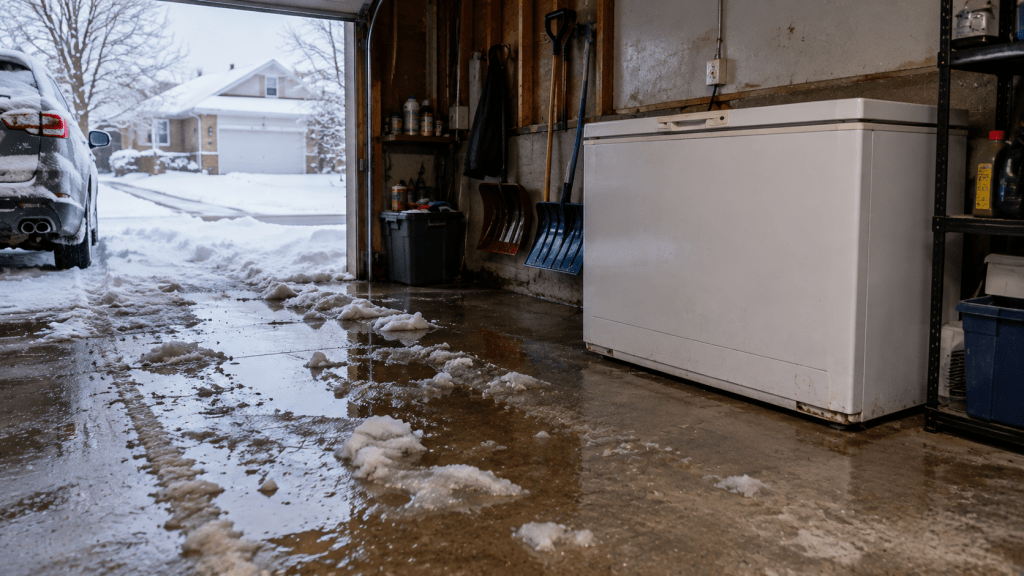
Snowmelt causes appliance problems in places homeowners do not immediately connect with winter weather. A car enters the garage carrying snow beneath its wheel wells. The snow melts, flows across the floor, and collects near a freezer or refrigerator. Outside, melting snow saturates soil beside the foundation. Water finds a crack, enters the basement, and spreads toward the washer, dryer, or utility area.
An appliance does not need to be submerged for damage to occur. Water reaching the feet or lower cabinet can start corrosion. Moisture may wick into insulation, collect around wiring, or weaken nearby flooring. A small basement seepage problem can also affect electrical outlets positioned too close to the floor.
Washers add their own water risks. Supply hoses, valves, drain hoses, and pumps can leak. When the surrounding floor is already damp from snowmelt, a slow appliance leak may remain hidden. The homeowner sees “normal basement moisture” and misses the growing stain behind the machine.
Poor floor slope can direct water toward appliances instead of a drain. Blocked or overwhelmed drains make the problem worse. Storage boxes, rugs, and debris may prevent homeowners from noticing where water travels. In garages, floor mats can hold salty water beside appliance feet for days.
Start with the exterior. Keep snow from piling against foundation walls, doors, vents, and utility penetrations. Make sure gutters and downspouts move water away from the house. Inside, inspect floors after heavy snow, rain, or a rapid thaw. Look behind and beneath appliances with a flashlight.
Raise vulnerable appliances when the installation allows it, using stable, purpose-appropriate platforms rather than makeshift blocks. Never create an unstable setup for a washer that spins at high speed. Keep electrical cords and connections away from wet areas.
Test floor drains and keep pathways clear. Replace questionable washer hoses and repair leaking valves early. If the washer itself is leaking or having drainage problems, washer repair can help identify the appliance-related source. Water damage grows quietly. By the time the appliance stops working, the floor, wall, or electrical system may already need repair.
Lake-effect storms can produce outages, flickering lights, and brief voltage interruptions. Homeowners often worry about the moment power disappears, but the return of electricity can be just as stressful for appliances. Refrigerators, freezers, washers, dryers, and other motor-driven machines may all attempt to restart when power is restored. If voltage is unstable, components can overheat or fail.
Compressors are particularly sensitive to rapid restarting. If power cuts out and returns immediately, pressure inside the refrigeration system may not have equalized. The compressor may struggle to start, click repeatedly, or draw excessive current. Protective devices usually help, but repeated short interruptions can still add wear.
Electronic controls can lose settings, freeze, display errors, or become damaged by voltage spikes. A washer may stop mid-cycle with water inside. A dryer may reset before the clothes are dry. A freezer may appear powered because the light works even though the compressor did not restart correctly.
After an outage, check appliances rather than assuming everything returned to normal. Listen for normal compressor operation. Confirm refrigerator and freezer temperatures. Inspect washers for standing water and dryers for interrupted cycles. Look for burning smells, repeated clicking, unusual humming, or a tripped breaker.
Avoid plugging major appliances into basic extension cords or cheap outlet strips. Large appliances need properly rated, grounded circuits and secure connections. In damp basements and garages, electrical protection and outlet condition are especially important.
Whole-home electrical protection and professionally evaluated circuits may reduce certain risks, but no device replaces correct wiring. If lights dim dramatically when an appliance starts, breakers trip repeatedly, or outlets feel warm, the electrical system needs attention.
During a prolonged outage, keep refrigerator and freezer doors closed as much as possible. Once power returns, monitor temperature before trusting that stored food remained safely cold. If a refrigerator or freezer does not return to normal operation after stable power is restored, refrigerator repair or freezer repair may be needed to diagnose the appliance. Weather-related electrical problems can damage the appliance, but they can also create a food-safety issue long before a repair is scheduled.
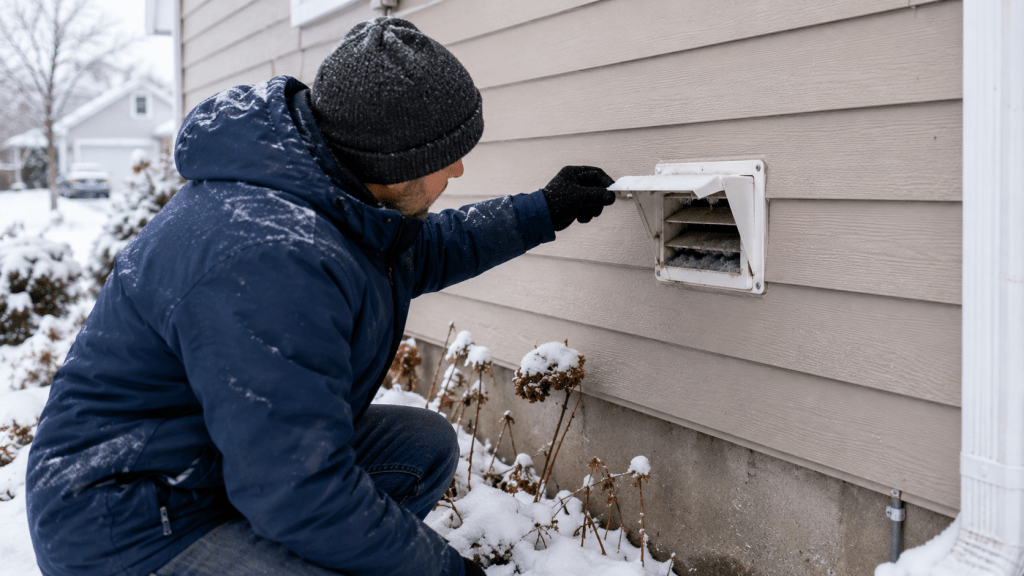
A dryer is not simply a heated drum. It is an airflow machine. It pulls air in, warms it, moves that air through wet clothing, and sends moisture outdoors. When the basement or garage has poor ventilation, or when the exhaust path is restricted, the dryer runs longer and hotter than it should.
Cold weather can affect the exterior vent. Snow, ice, lint, or debris may block the outlet. The flap can freeze shut or become stuck. When exhaust cannot escape, moisture and heat remain inside the duct and dryer. Clothes take longer to dry, the machine may overheat, and lint buildup accelerates.
Long ducts running through cold spaces may develop condensation. Warm, moist exhaust air cools as it travels. Water forms inside the duct, and lint sticks to the wet surface. Over time, the opening becomes narrower. The homeowner may clean the lint screen faithfully yet still experience long drying times because the restriction is farther down the line.
The surrounding room also needs adequate air. A tightly enclosed utility closet can starve the dryer of makeup air. This may reduce performance and affect other fuel-burning equipment in the area. Utility-room ventilation should be considered as part of the home’s overall mechanical system.
Check the exterior vent while the dryer is running. Airflow should feel strong, and the flap should open freely. Weak airflow may indicate a blockage, crushed duct, excessive length, or internal problem. Inspect accessible connections for looseness and lint escape.
Never vent a dryer into the basement or garage. That releases moisture and lint into the space, increasing humidity, mold risk, and fire hazards. Use appropriate duct materials and avoid flimsy sections that can crush behind the machine.
When drying time gradually increases, do not assume the dryer is simply getting old. Airflow restrictions are common, dangerous, and often less expensive to correct than the mechanical damage they eventually cause. If proper airflow has been confirmed but the dryer still takes too long to dry clothes, dryer repair may be appropriate to diagnose an appliance malfunction.
Where an appliance sits can affect its life almost as much as how often it runs. In garages and basements, placement determines exposure to cold walls, floor moisture, vehicle spray, leaking pipes, blocked vents, and poor airflow. Moving a machine even a few inches can sometimes reduce several risks at once.
Avoid placing appliances directly against exterior masonry when possible. Foundation walls and garage walls can become very cold, encouraging condensation behind the cabinet. That area is difficult to inspect and may remain damp long after the front of the appliance looks dry.
Leave the manufacturer-required clearance around refrigerators, freezers, dryers, and other heat-producing equipment. These spaces allow air to move and heat to escape. Packing storage boxes around an appliance may seem harmless during winter, but it can cause overheating and make routine inspection nearly impossible.
Keep appliances away from locations where roof leaks, plumbing drips, snowmelt, or floor drainage may reach them. Do not position a freezer beside the path where a car drops snow and salt. Avoid placing laundry equipment beneath questionable pipes or shutoff valves.
The floor must be level and stable. Washers are especially sensitive because high-speed spinning creates significant movement. A weak platform or improvised stack of boards can become dangerous. Any raised base should be designed to support the appliance’s weight and motion.
Protect hoses and cords from sharp edges, heat sources, vehicle traffic, pests, and storage items. A refrigerator cord should not be crushed behind the cabinet. A washer hose should not rub against rough concrete. A dryer duct should not be flattened to gain an extra inch of space.
Think about service access too. Technicians need room to inspect, disconnect, and move the appliance safely. A machine buried behind shelving creates extra labor and may prevent early detection of leaks or corrosion.
Good placement is not decorative. It creates a healthier operating environment, improves airflow, simplifies maintenance, and gives weather-related moisture fewer opportunities to cause damage.
Seasonal maintenance works best when it follows Cleveland’s weather cycle. Instead of waiting for an appliance to fail, inspect the room and equipment before each major change in temperature. The goal is not to disassemble machines. It is to catch moisture, airflow, drainage, and electrical problems while they are still inexpensive.
In early fall, prepare garage appliances for cold weather. Check door seals, internal temperatures, electrical cords, outlet condition, and clearance around the cabinet. Remove storage that blocks airflow. Inspect the garage door seal and look for drafts or locations where snow may blow inside.
Before winter, check basement humidity, floor drains, washer hoses, dryer ducts, shutoff valves, and any pipes above appliances. Make sure exterior dryer vents are clear and able to close properly. Confirm that downspouts and exterior drainage direct water away from the foundation.
During deep cold, monitor refrigerators and freezers in unheated spaces. Use thermometers inside the compartments. Listen for unusual compressor behavior and inspect for condensation during thaws. After heavy snow, check the garage floor and basement walls for water entry.
Spring is the time to look for snowmelt damage. Inspect appliance bases, feet, nearby outlets, and hidden spaces behind machines. Clean salt residue from garage floors and metal surfaces. Check for rust that may have started during winter.
Summer brings heat and humidity. Make sure refrigeration appliances have enough ventilation and clean accessible dust from airflow areas. Control basement humidity and watch for condensation on pipes or walls. Inspect dryer airflow, because humid air can make a partial restriction more noticeable.
Keep a simple record of what you checked and what changed. Note unusual sounds, temperatures, rust spots, slow drying, or minor leaks. Photographs can help you compare conditions across seasons.
A maintenance plan should feel realistic, not overwhelming. Four focused inspections each year can reveal patterns that a single annual walkthrough misses.
Some weather conditions make continued operation a bad idea. An appliance should be shut down when there is active water near electrical components, a burning smell, visible sparking, repeated breaker trips, severe overheating, a damaged cord, or unusual mechanical noise. Continuing to run it “just one more time” can turn a repairable problem into a safety emergency.
Relocation may be appropriate when the environment repeatedly falls outside the appliance’s operating needs. A refrigerator that cannot maintain freezer temperature in an unheated garage should not remain there simply because it has always been there. A washer exposed to regular basement seepage may need a safer platform or a different location.
When moving an appliance, protect hoses, doors, cords, and internal components. Refrigeration equipment requires special care because tipping or transporting it improperly can affect the sealed system. After relocation, allow it to settle as appropriate before reconnecting power.
Unused appliances in garages and basements should not remain plugged in without a reason. A second refrigerator holding only a few drinks may consume electricity while facing extreme conditions. If it is shut down, clean and dry the interior thoroughly. Leave the door safely secured in a slightly open position to prevent odor and mold, while ensuring children or pets cannot become trapped.
Before unplugging a washer, remove standing water and protect supply lines from freezing. A closed valve does not always mean the hose is empty. Dryers should be disconnected safely and the vent opening protected from pests and weather without trapping moisture.
Do not unplug an appliance while standing in water or touching a wet cord. Shut off power at a safe location and call a professional when conditions are uncertain.
The decision to stop using an appliance is not a failure. Sometimes the most economical repair is removing the machine from an environment that keeps damaging it.
Lake-effect weather affects more than roads, roofs, and driveways. It changes the temperature, humidity, airflow, drainage, and electrical conditions inside Cleveland garages and basements. Appliances placed in those spaces experience the consequences every day, even when they never touch snow directly.
Cold can interfere with refrigerator and freezer controls. Sudden warming can create condensation. Basement humidity can encourage rust and odor. Snowmelt can reach appliance bases and electrical connections. Blocked dryer vents can trap heat and moisture. Storm-related outages can stress compressors and electronic controls.
The common thread is environmental instability. Appliances last longer when the room around them remains dry, ventilated, electrically safe, and reasonably stable. That does not mean every garage needs to become a finished living room or every basement needs a complete renovation. Small improvements often make a meaningful difference.
Move appliances away from cold, wet walls. Leave proper clearance. Keep floor drains open. Repair foundation leaks. Monitor humidity. Inspect cords, hoses, vents, and seals. Use thermometers in garage refrigerators and freezers. Check the property after heavy snow, rapid thaws, and power outages.
Pay attention to patterns. A dryer that slows down every winter may have a cold, restricted vent. A garage freezer that warms during deep cold may be operating outside its intended range. A washer that smells musty each summer may need better humidity control and cleaning.
Do not wait for complete failure. Rust spots, condensation, unusual noises, longer cycles, repeated error messages, and changing temperatures are early warnings. If these symptoms continue after environmental problems have been addressed, homeowners in the Cleveland area can schedule appliance repair in Cleveland to have the appliance itself diagnosed.
The appliance is only half the system. The room, weather, power supply, plumbing, and ventilation form the other half. Protect that environment, and you protect the machine.
We repair a wide range of household appliances including refrigerators, washers, dryers, ovens, dishwashers, and more. No matter the brand or model, our experienced technicians are ready to help. We repair commercial appliances as well: commercial washers dryers, commercial refrigerators & freezer & more.
We service a wide range of household appliances, including refrigerators, dryers, washers, ranges, cooktops, dishwashers, freezers, ice makers, ovens, and double ovens. Our technicians operate across many locations in Ohio, covering major cities like Cleveland, Akron, and Parma. We also serve surrounding areas including Lakewood, Westlake, Strongsville, and Brooklyn. Our service area extends to Rocky River, Euclid, Solon, Beachwood, and Cleveland Heights, as well as counties such as Cuyahoga, Lorain, Lake, and Medina. Additional cities we cover include North-Olmsted, North Ridgeville, Valley-City, Lorain, Avon Lake, Richfield, Brecksville, Garfield Heights, Seven Hills, Brunswick, Oakwood, Mentor, and Willoughby.