Appliance Maintenance and Energy Bills in Cleveland
Published: September 9, 2026
You walk into the kitchen late at night, the house is quiet, and there it is again—that familiar humming sound coming from the refrigerator. Twenty minutes later, it is still humming. An hour passes, and you start wondering whether the thing ever shuts off at all. For Cleveland homeowners, a refrigerator running constantly can be nothing more than a temporary response to warm weather, a recently loaded grocery haul, or frequent door openings, but it can also be the first warning sign of an appliance problem that deserves attention. Refrigerators are designed to cycle on and off as they maintain a stable internal temperature, so when yours seems to be working like a marathon runner who refuses to leave the track, something is usually forcing the cooling system to work harder than normal.
The tricky part is that constant operation does not automatically mean the compressor is failing. Sometimes the cause is surprisingly simple. Dust-covered condenser coils, a loose door gasket, blocked interior vents, incorrect temperature settings, or even the location of the refrigerator can dramatically increase how long it needs to run. Cleveland’s changing seasons add another variable. A refrigerator sitting in a hot kitchen during a humid Lake Erie summer may behave very differently from the same appliance during a cold January week, especially if the kitchen receives afternoon sunlight or sits close to a range, radiator, or heating vent. These conditions are also discussed in more detail in our guide to common refrigerator problems during Cleveland summers.
Paying attention early can save you from more than an annoying sound. A refrigerator that works continuously may consume more electricity, wear out components faster, and eventually struggle to keep food at a safe temperature. The good news is that homeowners can check several common causes without dismantling the appliance. Understanding why your refrigerator runs constantly helps you separate normal behavior from a genuine repair issue and gives you a much better idea of when a simple cleaning will solve the problem—and when it is time to consider professional refrigerator repair.
A refrigerator does not follow a rigid schedule where it runs for exactly ten minutes and then rests for ten minutes. Cooling cycles change throughout the day depending on room temperature, how often the doors are opened, how much food is inside, and even whether the refrigerator recently completed an automatic defrost cycle. Newer high-efficiency refrigerators can also operate differently from older models. Many use variable-speed compressors that run at lower power for longer periods instead of repeatedly turning completely on and off. Because of that, hearing your refrigerator frequently does not necessarily mean something is wrong. What matters is whether the appliance is maintaining the correct temperature and whether its behavior has noticeably changed.
The situation becomes more concerning when the refrigerator seems to run nearly 24 hours a day and you notice other symptoms at the same time. Maybe the fresh-food compartment feels warmer than it used to, milk is spoiling faster, frozen food feels soft around the edges, or frost is building up on the freezer’s back wall. You might notice the sides of the cabinet getting unusually warm or hear clicking, rattling, grinding, or squealing sounds that were not there before. An unexpected increase in electricity consumption can be another clue because a struggling cooling system may need considerably more operating time to maintain the same internal temperature. If cooling performance is also declining, these symptoms may overlap with other signs your refrigerator needs repair.
Think of the refrigerator like your home’s furnace. A furnace running frequently during a bitter Cleveland cold snap may be perfectly normal. A furnace running continuously on a mild day while the house remains chilly suggests a problem. Your refrigerator follows the same basic logic. Long operation during unusual conditions can be expected; endless operation combined with poor cooling deserves investigation. Before assuming you need a new appliance, however, look at the whole picture. A refrigerator that remains properly cold and has recently been filled with warm groceries may simply need time. A refrigerator that runs constantly for days while temperatures rise inside the cabinet is telling you something very different.
Understanding the basic cooling process makes troubleshooting much easier, and you do not need an engineering degree to follow it. Your refrigerator does not actually “create cold.” Instead, it removes heat from inside the cabinet and releases that heat into the surrounding room. Refrigerant travels through a sealed network of tubing while the compressor changes its pressure and moves it through the system. Inside the refrigerator, the refrigerant absorbs heat around the evaporator coil. That captured heat eventually travels to the condenser side of the system, where it is released into the kitchen. Fans help move air across those components and distribute cold air throughout the refrigerator and freezer.
Once sensors or the thermostat determine that the interior has reached the target temperature, the compressor can slow down or shut off, depending on the refrigerator’s design. As heat gradually enters through the walls or whenever someone opens the door, the internal temperature begins creeping upward again. The refrigerator responds by starting another cooling cycle. That basic rhythm repeats day and night. A well-functioning refrigerator therefore spends part of its life cooling and part maintaining temperature, although modern variable-speed systems may run for long stretches at relatively low output rather than making obvious starts and stops.
Problems begin when heat enters the refrigerator faster than the system can remove it or when one of the components responsible for moving heat becomes less effective. Imagine trying to cool your house while leaving a window cracked open. The air conditioner might still reach the desired temperature, but it has to work much harder to get there. A damaged refrigerator gasket creates a similar problem. Dirty condenser coils are like placing a heavy blanket over the outdoor portion of an air-conditioning system; heat cannot escape efficiently, so the system keeps working. Once you understand that constant refrigerator operation is usually a symptom of excess heat, poor airflow, or inefficient heat transfer, the most common causes start making a lot more sense.
When homeowners hear a refrigerator running continuously, the compressor often gets blamed immediately. That is understandable because the compressor is the heart of the refrigeration system, but replacing one is expensive, and thankfully it is far from the only explanation. In day-to-day appliance repair, many constant-running problems originate from conditions that force a perfectly capable compressor to work overtime. Dirty coils cannot release heat efficiently. A door that does not seal allows warm, humid room air to sneak inside. A freezer packed tightly against its air vents prevents cold air from circulating properly. Even a temperature control set unnecessarily low can keep the appliance chasing a target it barely has time to reach.
The symptoms can overlap, which is why diagnosing the problem involves looking for patterns rather than guessing based on one clue. If the refrigerator runs constantly but everything stays extremely cold, the temperature setting or sensor deserves attention. If it runs constantly and the freezer develops a sheet of frost, the automatic defrost system becomes more suspicious. If the refrigerator is warm while the freezer remains reasonably cold, airflow between the compartments may be restricted. When both sections gradually warm even though the compressor appears to run almost continuously, technicians begin considering condenser problems, fan failures, refrigerant issues, or compressor performance.
Age matters too. A refrigerator that has worked reliably for many years can develop multiple small efficiency losses at once. The gasket may be less flexible than it once was, coils may have accumulated years of dust, and fan motors may no longer move air as effectively. None of those problems alone necessarily kills the refrigerator, but together they can dramatically increase operating time. That is why it makes sense to start with simple, inexpensive causes before jumping to the worst-case scenario. For Cleveland homeowners, the following issues account for many situations where a refrigerator suddenly seems like it has forgotten how to turn itself off.
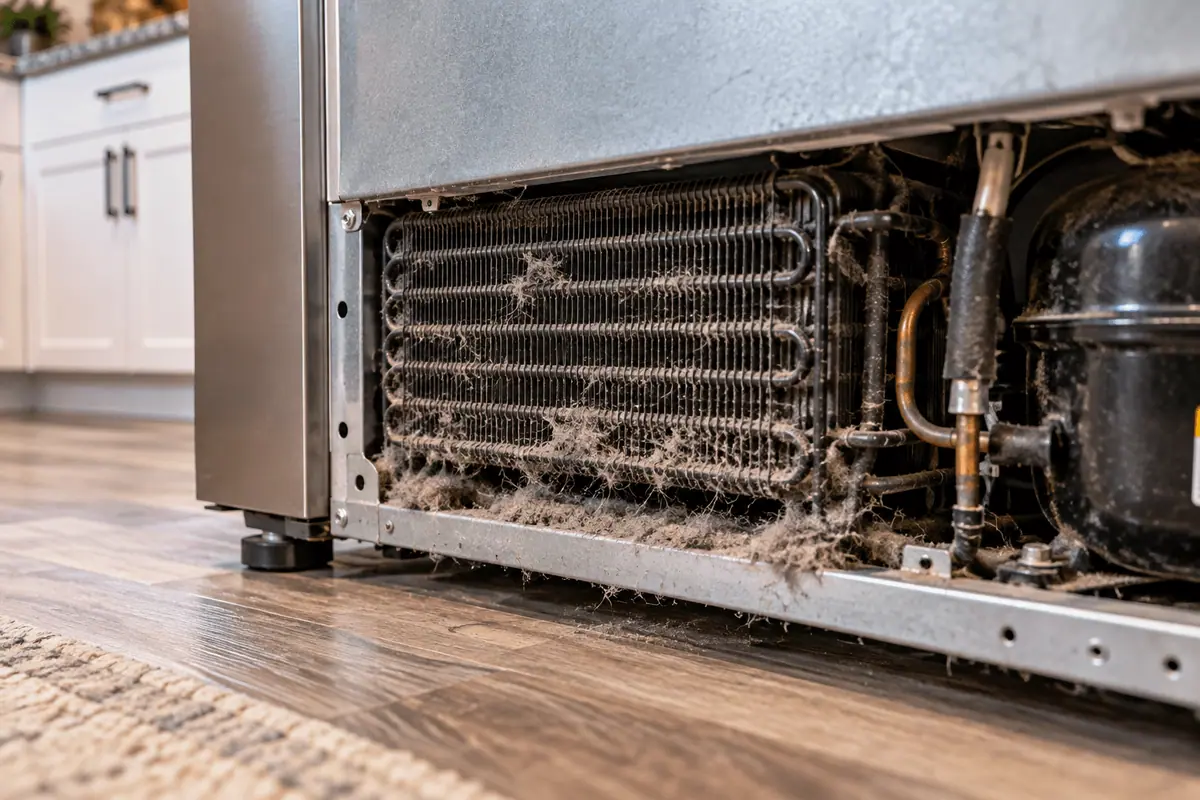
Condenser coils are among the first things worth checking when a refrigerator starts running longer than usual. Depending on your model, the coils may be underneath the refrigerator behind a lower front grille, mounted across the back, or located near the compressor compartment. Their job is straightforward: release the heat that the refrigeration system removed from inside the appliance. Unfortunately, their location also makes them natural magnets for household dust, pet hair, cooking grease, lint, and all the mysterious debris that somehow finds its way underneath kitchen appliances. Once enough material coats those surfaces, heat transfer becomes less efficient.

Picture wearing a thick winter coat while trying to cool down after running around Edgewater Park in July. Your body would struggle to release heat because the insulation traps it. Dirty condenser coils create a similar situation for your refrigerator. The refrigerant returns to the cooling cycle warmer than intended, which forces the compressor to run longer to achieve the same result. The refrigerator may still keep food cold for quite a while, so the homeowner hears extra operating noise long before noticing a dramatic temperature problem.
Cleaning accessible coils is often one of the simplest maintenance tasks homeowners can perform, but safety matters. Disconnect power to the refrigerator before cleaning around electrical or mechanical components, then follow the manufacturer’s instructions for accessing the condenser area. A soft coil brush and vacuum can usually remove loose dust without damaging delicate tubing. Avoid bending or puncturing refrigerant lines, and do not disassemble panels that your owner’s manual does not identify as homeowner-serviceable.
If the coils were heavily coated, you may notice the refrigerator gradually return to more normal cycling after cleaning. You may also notice that the cabinet produces less excess heat. Cleaning coils periodically is especially helpful in homes with shedding pets or kitchens where airborne grease is common. It is a small maintenance habit, but it can reduce unnecessary compressor workload and may help extend the life of the refrigerator.
The rubber seal running around the refrigerator and freezer doors looks simple, yet it plays a huge role in efficiency. Known as the door gasket, this flexible strip forms a barrier between the cool interior and the warmer, more humid air in your kitchen. When that seal becomes torn, brittle, warped, dirty, or partially detached, outside air enters the refrigerator every minute the gap remains open. The cooling system responds exactly as you would expect: it runs longer in an attempt to remove the extra heat. Humidity entering through the gap can make matters worse by contributing to condensation and frost buildup.

Door-seal problems can be subtle. You may not see a dramatic opening when standing in front of the refrigerator. Sometimes a food container, crisper drawer, or shelf is positioned just far enough forward to keep the door from closing completely. Other times sticky residue prevents the gasket from making full contact with the cabinet. A refrigerator that is not properly leveled can also allow the door to rest slightly open instead of naturally swinging shut. Even a small gap matters because refrigerators are designed around a tightly controlled interior environment.
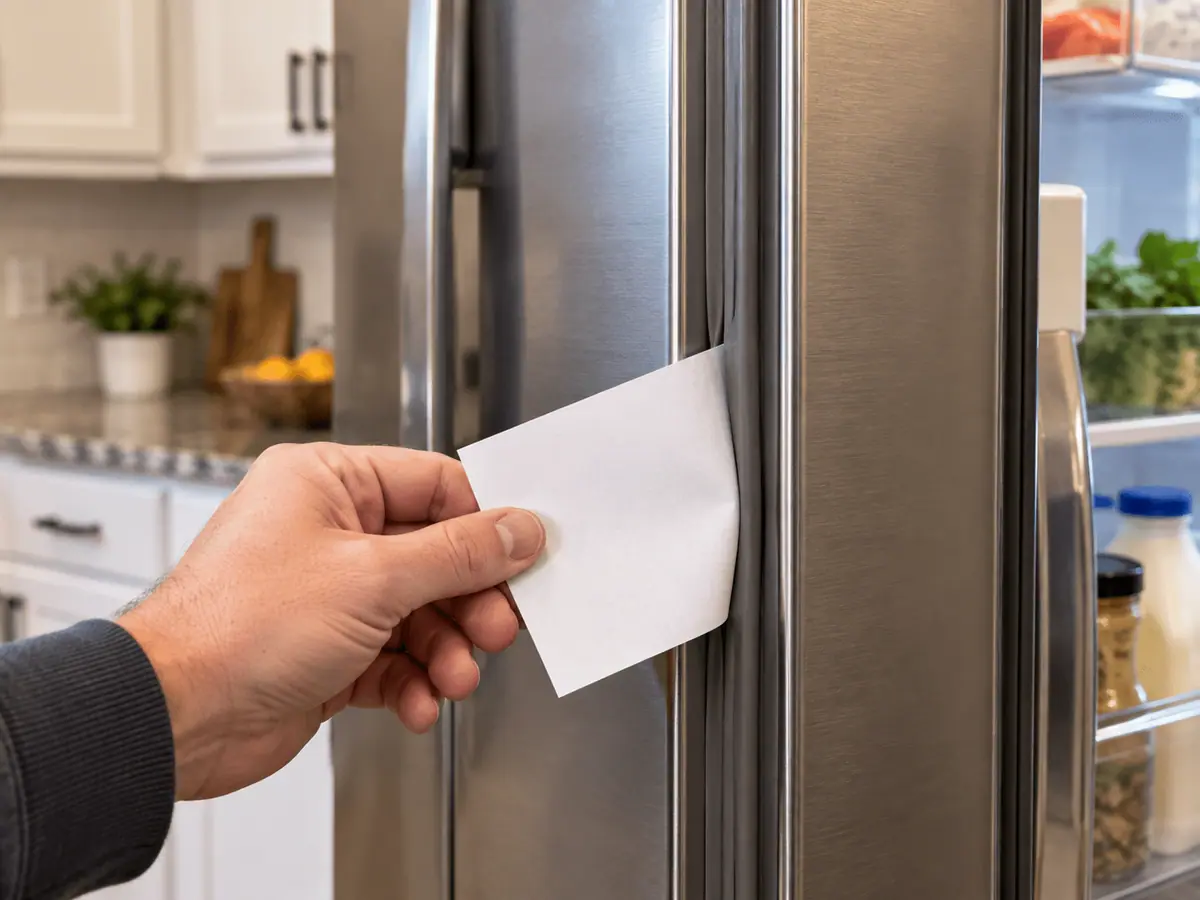
You can perform a simple inspection by looking closely around the entire gasket and cleaning it gently with warm water and mild soap if necessary. Some homeowners also use a sheet of paper as a basic seal check. Close the door on the paper at several points around the perimeter. If it pulls out with almost no resistance in one particular area, that section of the gasket may not be sealing well. The test is not a substitute for professional diagnosis, but it can reveal an obvious weak spot.
Cleveland’s humid summer weather can make gasket leaks particularly noticeable because every opening introduces moisture as well as heat. If you see condensation near the door, persistent frost, or a refrigerator that suddenly runs much longer than before, inspect the gasket before assuming a major mechanical failure. Sometimes the refrigerator is simply cooling your kitchen one tiny leak at a time.
It is easy to assume that setting a refrigerator colder makes it safer, but unnecessarily low settings can force the appliance to operate much longer than necessary. For food safety, the refrigerator compartment should generally remain at 40°F (4°C) or below, while a freezer is commonly kept around 0°F (-18°C). Many households aim for roughly 37°F in the refrigerator to provide a comfortable safety margin. If someone accidentally changes the controls to the coldest possible setting, however, the refrigerator may spend much more time running as it tries to reach and maintain an unnecessarily aggressive target.

Food placement matters just as much as the control setting. Cold air has to circulate through the cabinet, usually entering and returning through vents located along the rear or side walls. When containers, grocery bags, pizza boxes, or tightly packed frozen foods cover those vents, air cannot move the way the appliance was designed to move it. One sensor may detect a warm area even while another part of the refrigerator is freezing cold. The compressor continues running because the system never receives a consistent signal that the target temperature has been reached.
A nearly empty refrigerator can also experience bigger temperature swings because there is less thermal mass inside to hold the cold. On the other hand, stuffing every available inch with groceries restricts circulation. The sweet spot is simple: keep the refrigerator reasonably stocked while leaving enough room for air to travel around the contents. After a large grocery trip, expect longer operating cycles because dozens of room-temperature items must be cooled.
Use a separate refrigerator thermometer if you are unsure what temperature the appliance is actually maintaining. Control-panel numbers are not always literal temperature readings. If the refrigerator is consistently far colder than necessary and rarely stops running, slightly adjusting the set point may restore normal behavior. If the actual temperature remains wrong regardless of the control setting, a thermostat, temperature sensor, damper, or control-board problem may need professional attention.
Cleveland homeowners get a little bit of everything from the weather. Summer brings warm, humid stretches influenced by Lake Erie, while winter can deliver freezing temperatures, dry heated indoor air, and rapid temperature swings. Your refrigerator lives indoors, of course, but the climate surrounding the appliance still matters. Every refrigerator is designed to operate within a specific ambient temperature range. When the room becomes unusually hot, the appliance has a harder time releasing heat, so the compressor naturally runs longer. A refrigerator sitting in a sunny kitchen or squeezed beside an oven can experience much more heat than the thermostat across the room suggests.
Placement is often overlooked. Refrigerators need clearance for ventilation, and models vary in how much space manufacturers recommend around the back, sides, or top. Pushing an appliance tightly into a cabinet opening can trap warm air around the condenser area. Put that same refrigerator next to a range where dinner is cooking for two hours, and the cooling system has an even tougher job. During hot weather, this can produce much longer cycles without any component actually being defective.
Cold spaces create a different challenge. Some Cleveland homeowners keep a second refrigerator in an attached garage, enclosed porch, or unconditioned basement area. Standard refrigerators are not necessarily designed for extreme garage temperatures. In winter, unusually cold ambient conditions can confuse temperature controls or prevent the freezer section from operating the way owners expect. In summer, a hot garage may push the compressor toward near-continuous operation. These seasonal conditions can affect more than refrigerators, as explained in our guide to how Cleveland weather affects garage and basement appliances.
Before assuming a refrigerator has developed a serious defect, look at what changed around it. Did you move it closer to a wall? Is a heating vent blowing directly toward the cabinet? Has the kitchen been unusually warm? Did renovation work reduce ventilation around the appliance? Environmental factors usually do not produce dramatic failures overnight, but they can turn a marginally efficient refrigerator into one that runs almost constantly. Giving the appliance enough breathing room is one of the simplest ways to help it do its job.
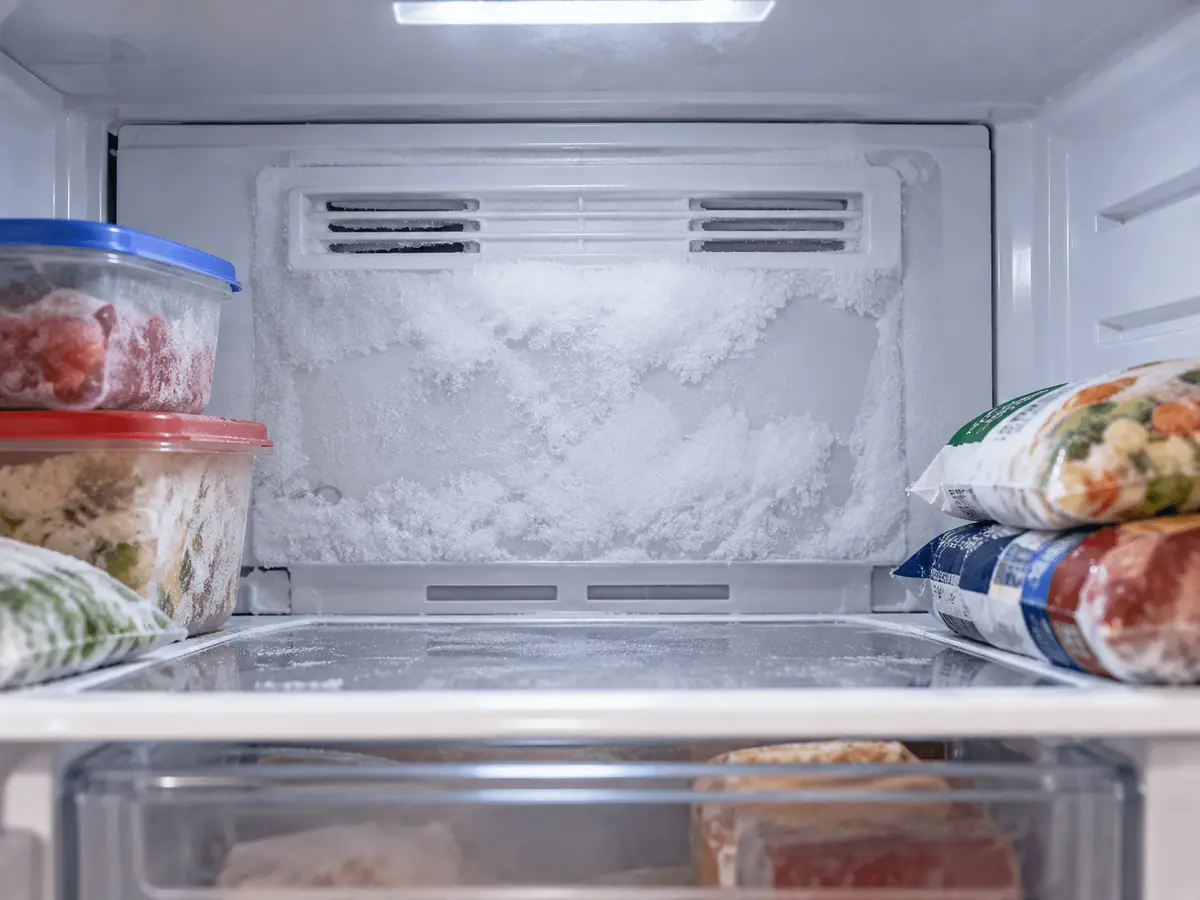
A thin layer of frost occasionally appearing on a package is one thing. A thick snowy coating across the freezer’s interior wall is another. Modern frost-free refrigerators use an automatic defrost system to prevent ice from burying the evaporator coil. At scheduled intervals, the appliance temporarily stops normal cooling and uses a heater to melt frost that accumulated on the coil. Water drains away, the cooling cycle resumes, and you usually never notice the process. When part of that defrost system fails, however, frost can slowly build into a solid layer of insulation.

That ice creates an ironic situation. The evaporator itself may be extremely cold, but air cannot move effectively through the ice-covered coil. The refrigerator therefore struggles to transfer that cold air into the compartments. The temperature begins rising, the controls call for more cooling, and the compressor runs longer. Eventually you may end up with a refrigerator that seems to operate constantly while the fresh-food section gets warmer. Some models may also develop noticeable frost on the freezer’s rear panel.
Several components can cause this behavior, including the defrost heater, temperature sensor, defrost thermostat, wiring, or electronic control. A blocked drain can also contribute to ice problems, although its symptoms may differ. Because electrical testing and freezer disassembly are often required to identify the failed component, this is usually the point where professional diagnosis becomes worthwhile.
Avoid attacking heavy ice with knives, screwdrivers, or other sharp tools. Refrigerant tubing can be hidden close to the surfaces you are working near, and puncturing it can turn a repairable defrost problem into a much more serious sealed-system failure. If you suspect abnormal ice buildup, unplugging the refrigerator and allowing it to defrost according to manufacturer guidance can temporarily restore airflow, but it will not fix a failed component. If the frost returns, the refrigerator is giving you valuable diagnostic information: something in the automatic defrost process is probably not doing its job.
Most modern refrigerators rely on one or more fans to move heat efficiently. The evaporator fan circulates cold air across the evaporator coil and distributes that air through the freezer and refrigerator compartments. The condenser fan, on models that use one, helps move room air across the condenser and compressor area so heat can escape. When either fan slows down, becomes obstructed, or stops completely, the refrigeration system may continue running even though heat is not moving where it needs to go. This is a little like leaving your furnace on while shutting half the vents in the house—the equipment is operating, but the energy is not reaching the right places.
Fan trouble often creates clues you can hear. A failing motor may squeal, chirp, buzz, or produce an intermittent rattling sound. Ice around the evaporator can sometimes strike the fan blades and create a rhythmic clicking or scraping noise. A completely failed evaporator fan may leave the freezer colder than the refrigerator because chilled air is no longer circulating properly into the fresh-food compartment. A condenser fan problem can make the compressor area unusually hot and cause the refrigerator to operate for extended periods. If you are hearing unfamiliar sounds along with the constant operation, our guide to why your refrigerator is making strange noises explains several other sounds and what they may indicate.
Homeowners can safely listen for unusual sounds and make sure visible exterior ventilation areas are not blocked, but internal fan diagnosis usually requires more care. Some refrigerator fans stop automatically when a door is opened, which can make them difficult to evaluate casually. Access may also require removing panels near electrical wiring or delicate components. Disconnecting power before any permitted inspection is essential.
If your refrigerator is running constantly and you notice a new fan-related noise, weak airflow from interior vents, or significant temperature differences between compartments, do not ignore those clues. Fans are relatively small components, but they have an outsized effect on cooling efficiency. A compressor cannot compensate indefinitely for air that simply is not moving.
The compressor is the component most homeowners fear hearing about, partly because compressor and sealed-system repairs can be among the more expensive refrigerator repairs. The compressor pressurizes and circulates refrigerant through the system, making the entire cooling process possible. When it becomes weak or when the sealed refrigerant system develops another problem, the refrigerator may run for extremely long periods without reaching the intended temperature. Unlike dirty coils or a poorly sealing door, these failures usually cannot be fixed with routine homeowner maintenance.
A sealed-system problem does not always mean refrigerant is visibly leaking onto the floor. Refrigerant is contained inside closed tubing, and leaks can occur in places that are difficult to see. Restrictions inside the system can create similar symptoms. A technician may need temperature measurements, pressure readings, electrical tests, and experience with the model’s normal operating behavior to distinguish among a weak compressor, refrigerant loss, restriction, sensor problem, and airflow issue. That is why replacing a compressor based solely on “the refrigerator runs constantly” would be premature.
One important clue is the relationship between operating time and temperature. If the compressor appears to run almost continuously but both compartments become progressively warmer, a serious cooling problem becomes more likely. Clicking followed by repeated attempts to start can point toward compressor-start components or the compressor itself. A compressor that becomes extremely hot may also signal trouble, although compressors naturally become warm during operation, so temperature alone is not a diagnosis.
For an older refrigerator, repair economics matter. A technically possible sealed-system repair may not make financial sense if the appliance is already near the end of its expected service life and has other worn components. A newer premium refrigerator, by contrast, may justify a substantial repair. The right decision depends on age, model, repair cost, condition, and warranty coverage rather than one universal rule. If you are weighing those factors, this appliance repair or replacement guide can help you evaluate the decision without assuming that replacement is always the better option.
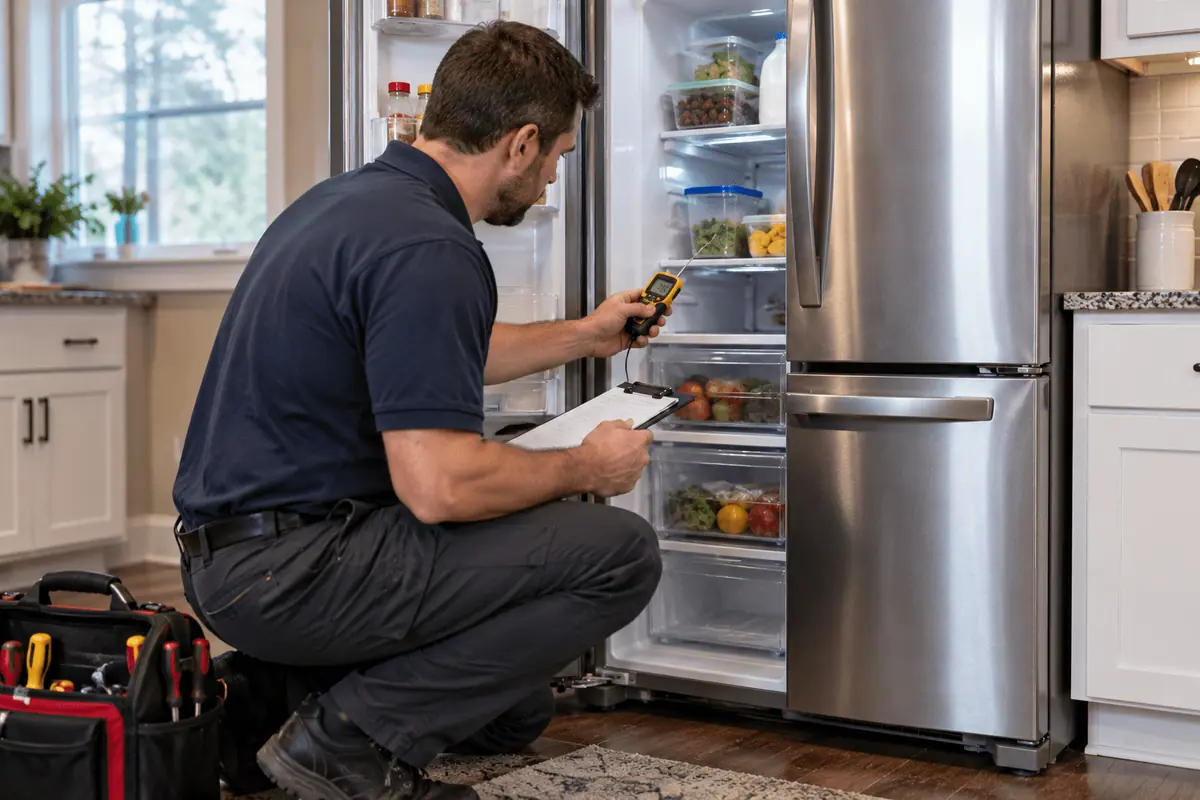
Before scheduling a refrigerator repair appointment, you can perform a short, sensible inspection that may either solve the problem or give the technician better information. Start with the simplest question: Is the refrigerator actually maintaining the correct temperature? Place an appliance thermometer inside if you do not already have a reliable digital display. Check both the refrigerator and freezer after temperatures have had enough time to stabilize. If the refrigerator is safely cold and the freezer is around its normal target, the long run time may be related to environmental conditions, recent food loading, or the operating style of a newer variable-speed compressor.
Next, inspect the doors. Make sure no container or drawer prevents them from closing completely. Look around the gaskets for dirt, cracks, loose sections, or visible gaps. Then examine food placement inside. Pull large packages away from air vents and make sure the cabinet is not packed so tightly that cold air has nowhere to circulate. Verify that the temperature controls have not accidentally been changed. If someone turned the refrigerator to its coldest setting because “colder must be better,” returning it to the manufacturer’s recommended setting may reduce excessive runtime.
Check the condenser area if your model allows homeowner access. Disconnect power first, then remove accumulated dust using the method recommended in the owner’s manual. Also look around the refrigerator itself. Make sure it has adequate ventilation and is not sitting directly beside a major heat source. Listen for unusual sounds after restoring power.
Finally, note what you observe instead of repeatedly changing settings. Write down refrigerator temperature, freezer temperature, unusual noises, frost locations, and when the problem started. Did it begin after a power outage? After moving the refrigerator? After a huge grocery delivery? Those details can shorten the diagnostic process. For additional homeowner-safe steps, see what to check before calling for appliance repair in Cleveland. Avoid repeatedly unplugging the appliance or taking internal components apart. Basic observation is useful; guesswork around refrigerant, electrical systems, and compressor circuits is not.
Some refrigerator problems are maintenance issues. Others require specialized testing, replacement parts, or access to components that homeowners should not attempt to service themselves. If you have cleaned accessible condenser coils, checked the door seal, confirmed that vents are open, and verified normal control settings but the refrigerator continues running constantly for an extended period, professional diagnosis becomes reasonable. The same applies if temperatures are moving in the wrong direction. A refrigerator that runs nonstop but cannot consistently stay at 40°F or below is no longer merely annoying; it may no longer be keeping food safely chilled.

Certain symptoms should move a service call higher on your priority list. Heavy frost repeatedly forming on an interior freezer panel can indicate a defrost-system failure. Grinding or squealing sounds may point toward a fan motor. Repeated clicking with little or no cooling can indicate a compressor-start problem or another electrical issue. If the freezer remains cold but the refrigerator section becomes warm, airflow components or dampers may be involved. If both sections are warm while the compressor appears to run continuously, the technician may need to evaluate the sealed refrigeration system.
Electrical warning signs deserve even more caution. A burning smell, scorched outlet, visibly damaged power cord, repeated circuit trips, or abnormal sparking should not be treated as ordinary appliance behavior. Disconnect the appliance safely when appropriate and avoid continued operation until the source is identified. Never bypass safety devices or install a larger circuit breaker simply to keep an appliance running.
When contacting a Cleveland-area refrigerator repair company, provide the model number, approximate age, temperatures you measured, and the symptoms you observed. That information helps the technician arrive with a clearer diagnostic picture. Ask for an estimate before approving a major repair, particularly for compressors and sealed-system work. A good diagnosis should explain not only which part failed but why that failure accounts for the refrigerator’s behavior.
A refrigerator that runs for long stretches is not automatically headed for the scrap heap. Sometimes it is simply responding to a hot kitchen, a large grocery load, frequent door openings, or the operating pattern built into a modern high-efficiency compressor. What matters is whether the appliance eventually reaches the proper temperature and whether its current behavior is dramatically different from what you normally hear. When constant running appears alongside warming food, heavy frost, unusual noises, condensation, or rising energy use, it becomes much more important to find the cause.
For many Cleveland homeowners, the smartest troubleshooting path starts with basic maintenance. Check the condenser coils. Look closely at the door gaskets. Make sure food is not blocking vents. Confirm that the temperature settings are reasonable and that the refrigerator has sufficient space to release heat. Consider the room itself, especially during periods of summer heat or when an appliance sits near a stove, radiator, or sunny window. Those simple observations can eliminate several common causes without replacing a single part.
If those checks do not explain the problem, avoid turning the repair into a guessing game. Defrost controls, fan motors, temperature sensors, electronic boards, compressors, and sealed refrigerant systems require more precise diagnosis. Replacing random components can quickly cost more than hiring someone who can determine exactly what is failing.
Your refrigerator is one of the few appliances in the house expected to work every hour of every day, so changes in its behavior deserve attention. Listen to what it is doing, check what you can safely inspect, and pay close attention to actual temperatures. Catching a small efficiency problem early can prevent wasted electricity, spoiled groceries, and unnecessary strain on expensive components. When a refrigerator seems to be running a never-ending shift, the goal is not simply to make it quieter. The goal is to understand what is making it work so hard.
We repair a wide range of household appliances including refrigerators, washers, dryers, ovens, dishwashers, and more. No matter the brand or model, our experienced technicians are ready to help. We repair commercial appliances as well: commercial washers dryers, commercial refrigerators & freezer & more.
We service a wide range of household appliances, including refrigerators, dryers, washers, ranges, cooktops, dishwashers, freezers, ice makers, ovens, and double ovens.
Our technicians operate across many locations in Ohio, covering major cities like Cleveland, Akron, and Parma. We also serve surrounding areas including Lakewood, Westlake, Strongsville, and Brooklyn.
Our service area extends to Rocky River, Euclid, Solon, Beachwood, and Cleveland Heights, as well as counties such as Cuyahoga, Lorain, Lake, and Medina.
Additional cities we cover include North Olmsted, North Ridgeville, Valley City, Lorain, Avon Lake, Richfield, Brecksville, Garfield Heights, Seven Hills, Brunswick, Oakwood, Mentor, and Willoughby.