How to Prepare Your Home Appliances for a Cleveland Winter
Published: August 10, 2026
Your refrigerator has never been completely silent. Even the quietest modern model hums, clicks, circulates air, moves refrigerant, drains water, and occasionally drops a handful of ice with enough drama to make someone look toward the kitchen. Most of the time, those sounds are simply the appliance doing its job. The trouble begins when a familiar refrigerator suddenly develops a new noise, becomes much louder than usual, or starts making a sound that arrives with weak cooling, frost, leaking water, or unusually long operating cycles.
That is when Cleveland homeowners often face a frustrating question: Is this sound normal, or is the refrigerator warning me that something is about to fail? The answer depends on the type of noise, where it comes from, when it occurs, and what the appliance is doing at the same time. A short buzz before the ice maker fills can be completely normal. A repeated click every few minutes while the refrigerator grows warmer may point toward a compressor-start problem. A soft fan sound from the freezer is expected. A scraping fan that becomes louder when the freezer door opens deserves attention.
The home around the refrigerator matters too. Many Cleveland kitchens have uneven floors, narrow appliance openings, older receptacles, radiators, remodeled cabinets, or walls that transmit vibration. A refrigerator may sound defective when it is simply touching a cabinet or sitting slightly out of level. Seasonal heat and humidity can also make the machine run longer, which means you hear motors and fans more often than you do during cooler weather.
A good diagnosis begins with listening carefully instead of assuming the worst. Ask yourself whether the noise is new, constant, rhythmic, metallic, electrical, or connected to a specific action. Does it start when the compressor turns on? Does it stop when you open the freezer door? Does it happen only after someone uses the water dispenser? Those details tell a technician far more than saying, “My refrigerator sounds weird.”
This guide explains the most common refrigerator noises, what they usually mean, which checks you can safely perform, and when it is time to call a qualified Cleveland refrigerator repair technician before a small issue becomes a larger and more expensive failure.
A refrigerator contains more moving parts than most homeowners realize. Depending on the design, it may have a compressor, condenser fan, evaporator fan, ice-maker motor, water valves, air damper, drain system, and several electronically controlled components. Each part creates its own sound. When the refrigerator is new, those sounds may be soft and consistent. As the appliance ages, dust, wear, vibration, frost, uneven flooring, and loose panels can change the way those sounds travel through the cabinet and into the room.
Modern refrigerators can also sound different from older models even when they are operating perfectly. Variable-speed compressors and fans do not simply turn on at one fixed level. They may speed up or slow down depending on the cooling demand. That can create rising and falling hums that seem unusual to someone accustomed to an older refrigerator with a basic on-and-off compressor. Electronic dampers may click or buzz as they regulate airflow between compartments. Automatic defrost systems can create cracking, sizzling, and dripping sounds that occur only at certain times.
Changes in household use matter as well. Loading several bags of warm groceries forces the refrigerator to run longer. Leaving a door open introduces warm, humid air, which increases fan and compressor operation. A busy family may use the ice maker and water dispenser repeatedly during summer, making valves and ice-harvesting components much more noticeable. The refrigerator is not necessarily becoming noisier; it may simply be doing more work.
A genuine problem often changes the pattern rather than just the volume. A fan may begin chirping once during every rotation. A compressor may click, hum briefly, stop, and repeat. A loose drain pan may vibrate only when the compressor reaches a certain speed. These repeated patterns are valuable clues.
The best way to judge a new sound is to compare it with the refrigerator’s normal behavior. Listen to when the noise begins, how long it lasts, and whether cooling performance changes. A normal operating sound usually appears as part of a successful cycle. A warning sound often arrives with interrupted operation, excessive heat, temperature problems, or visible ice and water.
A normal refrigerator sound is usually brief, predictable, and connected to a known function. You may hear the compressor start with a soft click followed by a steady hum. A fan may produce a smooth rushing sound as cold air moves through the freezer. Refrigerant may gurgle through tubing after the compressor stops. The defrost system may drip water onto a warm drain pan, creating a faint hiss. These noises may be unfamiliar, but they do not usually indicate a defect.
Warning signs have a different personality. They are often new, harsh, repetitive, or accompanied by poor performance. A metallic scraping sound suggests that a fan blade may be touching frost, wiring, or a damaged housing. A loud squeal may indicate a worn fan motor. Repeated clicking near the back can mean a compressor is trying and failing to start. A deep knocking sound may come from a compressor with internal wear, although loose tubing or cabinet vibration can produce a similar effect.
The refrigerator’s temperature is one of the most important clues. A strange noise with stable temperatures may be annoying but not urgent. The same noise with warming food, soft frozen items, heavy frost, or continuous operation deserves faster attention. Use an appliance thermometer rather than judging temperature by touch. A cold shelf or frozen package does not prove the entire compartment is maintaining a consistent temperature.
Smell also matters. Any burning-plastic, hot-electrical, or scorched odor changes the situation immediately. Unplug the refrigerator when the plug can be reached safely, or switch off the correct breaker if moving the appliance would be dangerous. Do not reconnect it repeatedly to see whether the smell returns.
The sound’s location provides another clue. A noise from the freezer that stops when the door opens often involves the evaporator fan because many models stop that fan when the door switch is released. A noise from the lower rear may involve the compressor, condenser fan, tubing, or drain pan. A click near the water line may be the inlet valve.
Normal sounds tend to complete a job. Warning sounds suggest struggle, impact, overheating, or repeated failed attempts. That distinction is not perfect, but it is a reliable place to begin.
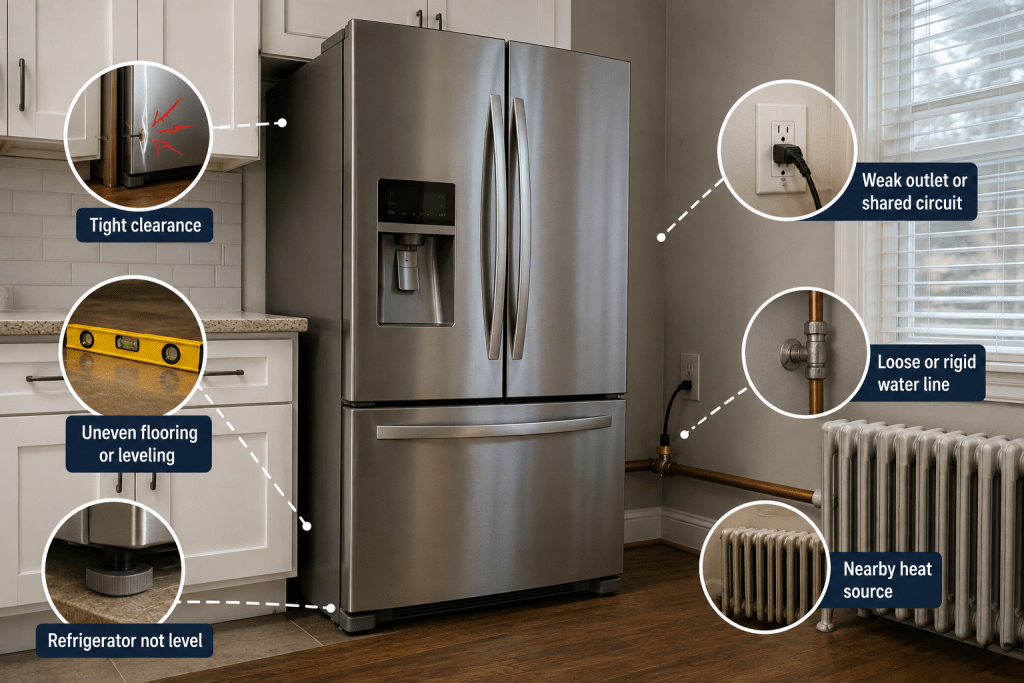
The refrigerator does not operate in a laboratory. It sits inside a real Cleveland home with floors that may slope, cabinets that may have been modified, outlets that may share circuits, and seasonal temperature changes that affect how often the machine runs. Sometimes the home amplifies a normal refrigerator sound until it seems like a mechanical failure.
Uneven flooring is a common example. A refrigerator that rocks slightly can vibrate against the floor, wall, cabinet, or water line. The compressor’s normal movement then becomes a loud rattle or low-frequency hum. Older hardwood floors can act like the body of a guitar, carrying vibration across the room. Basement refrigerators and freezers may sit on sloped concrete, which can create cabinet movement and door-alignment problems.
Tight kitchen openings create similar trouble. A refrigerator may technically fit between the cabinets while one side touches wood trim or the rear tubing rests against the wall. Every compressor cycle sends vibration into those surfaces. The refrigerator sounds louder, but the component producing the vibration may be healthy. Pulling the machine forward slightly or correcting its level can sometimes make the noise disappear.
Cleveland’s humid summers also increase refrigerator workload. Warm, moisture-heavy air enters whenever the door opens. The compressor and fans run longer to restore temperature and remove humidity. Homeowners hear more humming, rushing air, and defrost activity simply because the appliance is operating more often. During winter, a refrigerator near a radiator or heating vent can face a similar problem despite cold outdoor weather.
Older electrical systems can add another layer. A weak receptacle, shared circuit, or voltage drop may cause controls to reset or a compressor to struggle during startup. The homeowner hears clicking and assumes an internal failure, while the electrical supply may be contributing. Appliance technicians can identify suspicious supply conditions, but household wiring problems should be handled by a licensed electrician.
Water lines can transmit sound too. A refrigerator connected through a rigid or poorly secured line may produce a loud bang when the inlet valve closes. This is similar to water hammer elsewhere in the plumbing system. The refrigerator valve may be operating normally while the household pipe movement amplifies the event.
Before condemning the appliance, look at its installation. A quiet refrigerator can become surprisingly loud when the floor, wall, water line, or cabinet turns ordinary vibration into a household soundtrack.
Refrigerators make a collection of sounds that can seem alarming when you notice them for the first time. The key is recognizing whether the sound fits a normal operating event. A refrigerator that cools correctly, cycles normally, and produces only brief or consistent noises may be working exactly as intended.
The owner’s manual often includes a list of expected sounds for the specific model. That list is worth reviewing because refrigerator designs vary. A noise that is normal for an inverter-driven French-door model may not occur in a simpler top-freezer refrigerator. Some models use multiple fans, motorized dampers, dual evaporators, and elaborate ice systems. More features generally mean more possible sounds.
Normal noises also become easier to hear in a quiet house. At night, a soft compressor hum can seem much louder than it did during the afternoon. Open-concept kitchens carry appliance noise into living areas, while hard floors and bare walls reflect sound. A machine that appears “suddenly loud” may have been making the same sound for years.
One useful question is whether the sound begins and ends cleanly. A normal compressor may hum steadily for a cooling cycle and then stop. A normal ice maker may buzz briefly, fill with water, and go quiet. A normal defrost cycle may produce a series of pops and drips before ending. Problems often create irregular repetition, grinding contact, or failed-start cycles.
Do not ignore a sound simply because it appears on a list of normal noises. Volume and context still matter. A mild hum is expected; a harsh electrical buzz with a hot outlet is not. Occasional cracking from thermal expansion is normal; continuous snapping from a damaged fan or panel is not.
The following sounds are common in healthy refrigerators, especially during heavy summer use, after a grocery load, or following a long door opening. Understanding them can save you from unnecessary worry while helping you notice when the pattern truly changes.
A steady hum is usually the compressor or one of the refrigerator’s fans. The compressor circulates refrigerant through the sealed cooling system, while fans move air across the condenser and evaporator. These components may run for extended periods after warm groceries are loaded, during hot weather, or when the doors have been opened frequently.
Variable-speed compressors can produce a changing hum rather than one fixed tone. The pitch may rise when the cooling demand increases and soften as the refrigerator approaches its target temperature. This can sound strange if you expect the classic refrigerator pattern of a loud start followed by complete silence. The changing sound is often a sign that the appliance is adjusting its output efficiently.
Soft whirring from the freezer is usually the evaporator fan moving cold air. On many models, the fan stops when the freezer door opens. If the sound disappears immediately after you open the door and returns when you press the door switch, the fan is probably the source. A smooth fan sound is normal. A scraping, chirping, or pulsing noise suggests that the blade may be contacting frost or the motor may be wearing.
A brief buzz can come from the water inlet valve when the ice maker or dispenser requests water. The valve opens electrically, allowing water to flow through the supply line. A short buzz followed by water movement is generally normal. A loud buzz with no water entering may indicate a closed shutoff, frozen fill tube, clogged filter, low pressure, or failing valve.
The condenser fan near the bottom rear can also create a steady airflow sound. Dust, pet hair, or a loose object near the fan may make it louder. Cleaning accessible areas according to the manual can reduce noise and improve cooling efficiency.
The important difference is consistency. A normal hum remains smooth. A normal buzz lasts only as long as the related function. When the sound becomes much louder, starts and stops every few seconds, or arrives with poor cooling, the refrigerator may be struggling rather than simply operating.
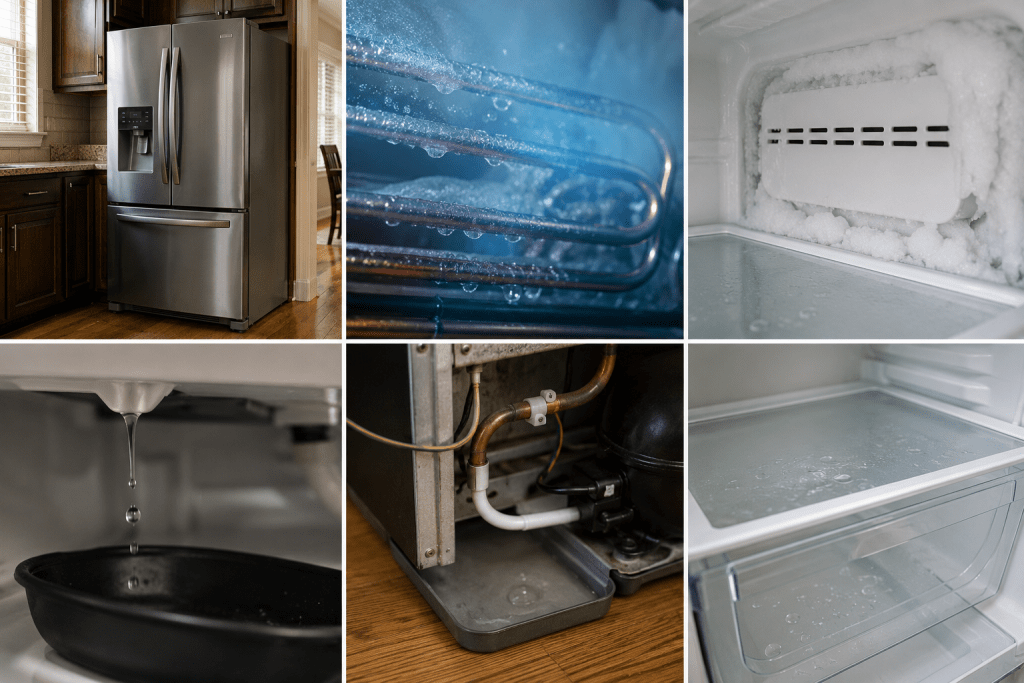
Gurgling is one of the most misunderstood refrigerator sounds. Refrigerant moves through tubing as both liquid and vapor, and that movement can create bubbling or gurgling noises. You may hear it shortly after the compressor starts or stops. The sound can resemble water running through a pipe even though no leak exists.
Dripping is also common during automatic defrost. Frost that forms on the evaporator melts periodically and flows through a drain into a pan near the compressor. The water then evaporates from the pan. You may hear drops landing, water moving through the drain tube, or a faint hiss when moisture reaches a warm surface. These sounds are usually part of normal frost-free operation.
Popping and cracking often come from plastic and metal expanding or contracting as temperatures change. Refrigerator compartments regularly move between slightly different temperatures during cooling and defrost cycles. Interior liners, shelves, ducts, and tubing respond to those changes. A sudden pop can be startling in a quiet kitchen, but occasional thermal movement is not usually a defect.
Ice buildup can create a different kind of cracking. If the freezer door was left open or a gasket is leaking, moisture may freeze heavily around the evaporator cover. That ice can crack as temperatures shift. The sound alone may seem normal, but visible frost or warming refrigerator temperatures suggest a defrost or door-seal problem.
Dripping becomes concerning when it creates visible water beneath drawers, on the floor, or around electrical components. A clogged defrost drain can cause meltwater to overflow into the refrigerator compartment. A leaking water line or valve may drip continuously even when the appliance is not defrosting. Location and timing are the key differences.
Normal gurgling, popping, and dripping are occasional and do not affect performance. They are the sounds of refrigerant changing state, materials responding to temperature, and defrost water moving through the system. When those noises become constant, extremely loud, or connected to leaks and frost, they deserve a closer look.
The ice maker may be the loudest normal system in the refrigerator. It contains a motor, gears, a fill valve, ejector components, sensors, and an ice bin that acts like a hollow drum when cubes fall into it. A healthy ice maker can click, buzz, hum, and suddenly drop ice with enough force to sound like something broke.
A normal cycle often begins when the freezer reaches the correct temperature and the ice maker senses that the bin has room. The motor rotates the ejector, releasing cubes from the mold. You may hear a soft grinding or clicking as the mechanism moves. The cubes then fall into the bin with a loud clatter. Shortly afterward, the water valve buzzes and fresh water enters the mold.
The exact sequence varies by design. Some door-mounted systems transfer ice through chutes, fans, and storage compartments. French-door refrigerators may have more than one ice maker. These systems produce additional clicks and motor sounds as they move ice between sections.
Problems usually appear as repetition without results. A valve may buzz repeatedly while no water enters. The ice maker may click continuously without ejecting cubes. A motor may grind because frozen cubes are blocking the mechanism. A dispenser auger may turn loudly while compacted ice prevents movement.
Check the ice bin before assuming the motor has failed. Cubes can melt slightly, refreeze into a solid mass, and jam the auger. The bin may also be installed incorrectly after cleaning. Avoid reaching into the mechanism while it is powered. Turn off the ice maker and follow the manual before removing a jam.
Water pressure and filters affect noise too. A restricted filter can make the valve sound louder or cause a longer fill. Air in a newly connected water line may produce sputtering. A rigid supply line can transmit valve vibration into the wall.
A few dramatic sounds every few hours are normal for an operating ice maker. Continuous clicking, grinding, leaking, or buzzing without ice production is not. The difference is whether the sound completes a successful harvest-and-fill cycle.
Some refrigerator noises deserve more attention because they suggest that a component is struggling, touching another part, overheating, or repeatedly failing to start. The sound itself may not identify the exact failure, but it can tell you that ordinary operation has changed.
The first step is to check cooling performance. Place a thermometer in both compartments, limit door openings, and note whether temperatures remain stable. A loud refrigerator that still cools may have a fan, vibration, or installation problem. A noisy refrigerator that is warming could have an airflow, compressor, start-device, or sealed-system issue.
Pay attention to rhythm. A click every few minutes followed by a short hum and silence often points toward a failed-start pattern. A scraping sound that matches fan speed suggests physical contact. A rattle that appears only when the compressor runs may come from tubing, a loose panel, or the drain pan. A heavy knock during startup or shutdown may involve compressor movement or cabinet vibration.
New sounds matter more than familiar ones. Refrigerators develop their own normal soundtrack. When a noise appears suddenly, becomes louder over several days, or changes after a power outage or move, document it. A smartphone recording can help because intermittent noises often disappear before the technician arrives.
Do not attempt to diagnose sealed-system or electrical components by removing energized panels. The lower rear area can contain hot compressor surfaces, moving fan blades, capacitors, wiring terminals, and refrigerant tubing. The freezer interior may hide sharp evaporator fins and active heaters behind the panel.
The safest homeowner role is observation. Note the source, timing, temperature, and other symptoms. Check for obvious installation issues, frost, leaks, and blocked airflow. Then stop when access requires disassembly or live testing.
The following warning sounds do not always mean the refrigerator is beyond repair. Many involve replaceable fans, start components, mounts, or valves. Early attention can prevent secondary damage and protect the food inside.
A single click when the compressor starts or stops can be normal. Repeated clicking every few minutes is different. It may indicate that the start relay or overload protector is attempting to energize the compressor, but the compressor cannot continue running. You may hear a click, a brief hum, another click, and several minutes of silence before the pattern repeats.
This failure can come from several causes. A start device may be defective. The compressor may be mechanically locked or electrically damaged. Incoming voltage may be too low. A loose outlet or burned connection may prevent the compressor from receiving the power it needs. The control board or inverter system on a modern refrigerator may also fail to drive the compressor correctly.
Cooling performance usually declines because the compressor is not circulating refrigerant. The interior light and display may still work, which can confuse homeowners. Those components use very little power. A functioning light does not prove that the compressor circuit is healthy.
Repeated startup attempts generate heat. The overload protector opens to prevent immediate damage, then resets after cooling. Continuing to cycle the refrigerator can stress the compressor and electrical components. If the pattern continues and temperatures rise, protect the food and schedule service promptly.
Do not use an extension cord or move the refrigerator to a random outlet as an improvised test. Refrigerators should be supplied according to manufacturer requirements. A weak extension connection can create additional voltage drop and heat.
Check whether the outlet, plug, or wall plate feels unusually warm or shows discoloration. Do not touch or test visibly damaged electrical parts. Switch off the circuit and call an electrician when the household connection appears involved.
A technician should verify the supply voltage, inspect the start components, measure compressor behavior, and evaluate the control system before recommending a major repair. Replacing the start relay may solve the problem when the compressor itself remains healthy. When the compressor is mechanically locked, the repair decision becomes more substantial.
Repeated clicking is one of the refrigerator sounds that should not be ignored for days. It is often the sound of the cooling system trying—and failing—to begin its most important job.
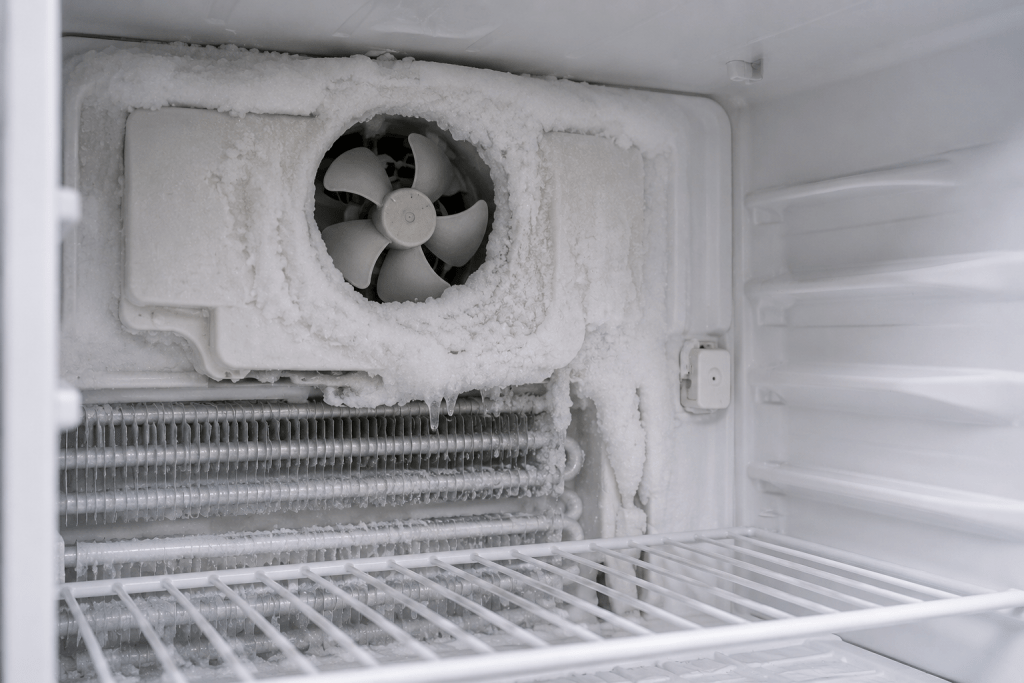
Grinding and scraping sounds usually involve moving parts. The most common suspects are the evaporator fan in the freezer, the condenser fan near the compressor, or an ice-maker and dispenser mechanism. The exact location and timing help narrow the source.
A freezer fan may scrape when frost builds around the blade. This often happens after a door was left open, a gasket stopped sealing, or the automatic defrost system failed. The sound may begin softly and grow louder as the ice expands. Opening the freezer door may stop the fan, causing the noise to disappear immediately.
Do not chip ice away with a knife or screwdriver. Evaporator tubing sits behind many freezer panels, and one puncture can release refrigerant and turn a fan problem into a major sealed-system repair. A full manual defrost may temporarily restore airflow, but it will not repair a failed defrost heater, sensor, or control.
The condenser fan can grind when dust, pet hair, cardboard, insulation, or a loose wire contacts the blade. A worn fan motor may chirp or squeal as its bearings deteriorate. Because this fan helps cool the compressor and condenser, ignoring the noise can increase operating temperatures and reduce refrigerator performance.
Ice dispensers can grind when cubes are fused together or the auger is jammed. A motor may continue turning against resistance, producing a harsh mechanical sound. Turn off the ice system before removing the bin or clearing compacted ice.
Squealing is less common in a healthy refrigerator. A brief high-pitched tone from an electronic component may be normal on some models, but a persistent mechanical squeal usually deserves inspection. Fan bearings can worsen quickly once they begin making noise.
Grinding and scraping indicate contact or wear. Even when the refrigerator still cools, the affected component may fail completely and interrupt airflow. Early service is usually simpler than waiting for the fan to stop, the compressor to overheat, or frost to block the entire evaporator.
Rattling is often less serious than clicking or grinding, but it can still become loud enough to disrupt the house. The source may be a loose drain pan, tubing touching the cabinet, an unlevel refrigerator, items stored on top, or the appliance vibrating against a wall or cabinet.
Begin by removing objects from the top and sides. A metal tray, glass jar, or decorative item can amplify normal compressor vibration. Check whether the refrigerator touches nearby cabinets. A small gap may reduce the noise dramatically.
Confirm that the appliance stands firmly on all support points. Many refrigerators use adjustable front feet or rollers. If the cabinet rocks when you press gently on a corner, leveling may be necessary. Proper leveling also supports door closure and drainage. Follow the manual because some models should tilt slightly backward.
The lower drain pan can rattle if it is loose, warped, or installed incorrectly. Access varies, so do not reach near the fan or compressor while the refrigerator is energized. A technician can secure or replace the pan when it is not safely accessible.
Banging from the water line may be related to water hammer. The inlet valve closes quickly, creating a pressure wave that moves through household plumbing. Poorly secured pipes can strike framing or cabinets. The refrigerator may trigger the event without being defective. A plumber may need to evaluate excessive household pressure, pipe supports, or water-hammer control.
Knocking from the compressor area can be harder to interpret. Some movement during startup or shutdown is normal because the compressor is mounted on vibration-isolating supports. If those mounts wear or the compressor develops internal damage, the knocking can become more pronounced.
A loud rattle that starts after the refrigerator was moved may come from tubing shifted against a panel. Do not bend refrigerant lines aggressively. These tubes can crack or kink.
Vibration is often a conversation between the refrigerator and the room around it. The machine creates ordinary movement, and the floor, wall, pipe, or loose part turns it into noise. A careful installation check can solve many rattles, while deep knocking from the compressor deserves professional diagnosis.
Locating the sound is one of the most useful things a homeowner can do. You do not need to identify the exact component. Simply determining whether the noise comes from the freezer, fresh-food section, lower rear, water connection, or ice dispenser can cut the diagnostic possibilities dramatically.
Stand a few feet away and listen through a complete cycle. Refrigerators often make several sounds within a short period. The compressor may start, followed by the condenser fan and then the evaporator fan. An ice maker may operate independently. Avoid pressing buttons or opening doors immediately because you may interrupt the event you are trying to understand.
Move closer carefully without pulling the appliance from the wall. Listen near the freezer door, lower grille, and rear side. Open the freezer and refrigerator doors separately. Does the sound stop when one door opens? Many fan systems react to door switches, making this a useful clue.
Use your hand to feel for cabinet vibration, but do not reach into mechanical areas. A vibrating side panel may indicate tubing or an internal line touching the cabinet. A vibrating water line may point toward valve operation or pipe movement. A rattling object on top may reveal itself instantly.
Sound can travel through the cabinet, so the loudest location is not always the true source. A fan in the freezer can make the rear wall vibrate. Compressor noise can travel through the floor. Water hammer may seem to come from inside the refrigerator even though the pipe is striking a wall stud several feet away.
A recording made from several locations can help a technician. Include the full startup or shutdown sequence rather than only a few seconds of the loudest noise. Note whether the doors were open, whether ice had just dispensed, and whether the compressor was running.
Location is not a complete diagnosis, but it organizes the possibilities. Back and bottom noises usually involve the compressor, condenser system, drain pan, tubing, or installation. Interior noises more often involve fans, dampers, frost, ice components, or air movement.
The lower rear of the refrigerator contains several components capable of producing noise. The compressor is the largest source. It normally creates a steady hum and may produce a soft click when starting or stopping. A variable-speed compressor can change pitch throughout the cycle.
Next to the compressor, many refrigerators have a condenser fan. It pulls air across the condenser and compressor area. Dust, hair, packaging, or loose wiring near the blade can create scraping or rattling. A worn motor may chirp, squeal, or hum without spinning properly.
The drain pan sits near this area on many models. Defrost water collects there and evaporates using heat from the compressor and condenser. The pan can rattle if it is loose or warped. It can also produce dripping and sizzling sounds during defrost, which are usually normal.
Refrigerant tubing may vibrate against the cabinet, wall, or another tube. The noise often appears only during compressor operation. Do not bend the tubing forcefully. A technician can reposition or cushion it without damaging the sealed system.
The power cord and water line can also touch the rear panel. When the compressor starts, these lines may tap the wall. Pulling the refrigerator forward slightly may reduce contact, but move it carefully to avoid damaging flooring or water connections.
Repeated clicking from the rear deserves prompt attention, particularly when cooling is weak. A hot compressor that repeatedly tries to start may involve the relay, inverter, voltage supply, or compressor itself. Avoid touching the compressor because it can become extremely hot.
A loud electrical buzz, burning smell, smoke, or sparking requires immediate shutdown. These are not ordinary refrigerator sounds. Disconnect power safely and contact the appropriate professional.
Rear and bottom noises range from harmless vibration to major cooling-system trouble. The pattern provides the distinction. Smooth, steady operation is usually normal. Repeated failed starts, harsh mechanical contact, overheating, and worsening temperatures are warning signs.
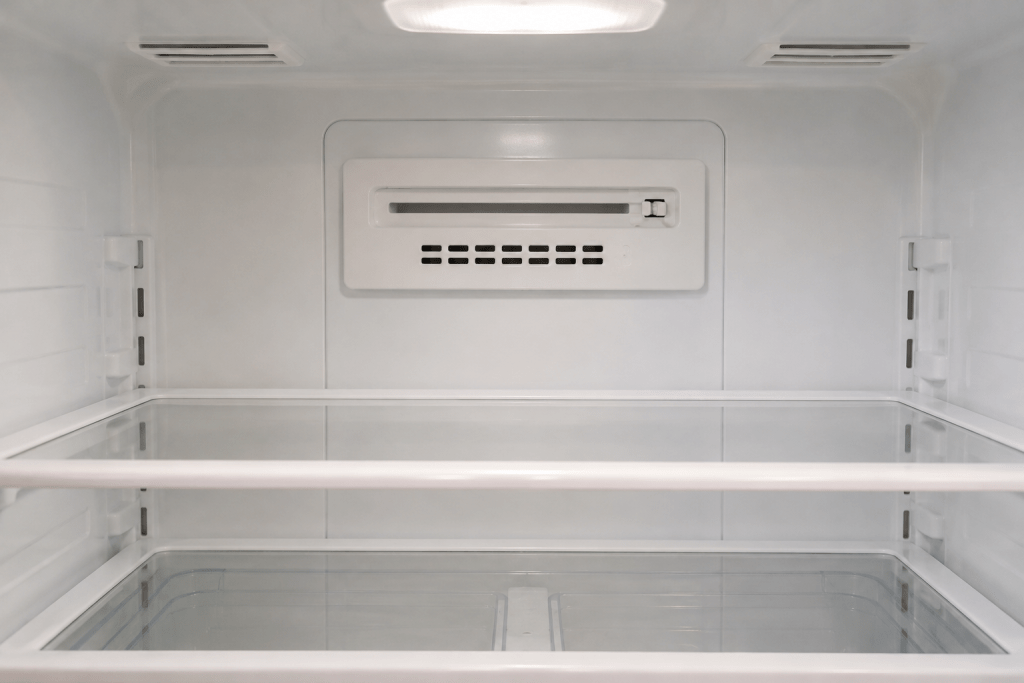
Noises inside the freezer often involve the evaporator fan, airflow damper, ice maker, or frost buildup. The fan pushes cold air through the freezer and into the refrigerator compartment. A healthy fan produces a smooth rushing sound. A blade touching frost creates scraping, ticking, or buzzing.
Open the freezer door and listen. If the noise stops immediately, the door switch may have shut off the fan. Pressing the switch can sometimes confirm the source, but keep fingers and objects away from vents and moving parts. Do not remove the rear freezer panel while the appliance is energized.
Heavy frost on the interior rear wall suggests that the fan may be surrounded by ice. This can result from a door-seal leak, blocked vent, failed defrost heater, bad sensor, or control problem. The refrigerator section may warm because cold air can no longer move through the channels.
The fresh-food compartment may contain a motorized damper that controls airflow. It can click, hum, or chatter when opening and closing. Occasional movement is normal. Continuous clicking may indicate a jammed damper or failed motor.
Water dripping inside the refrigerator may point toward a clogged defrost drain. You may also hear water moving through an internal tube during normal defrost. Visible pooling beneath drawers makes the sound more concerning.
Ice makers and dispensers create sounds from the freezer door or upper compartment. Grinding during dispensing may come from fused cubes or a blocked auger. Repeated valve buzzing without water suggests a supply problem.
Rattling shelves, bins, bottles, and containers can imitate internal mechanical noise. A glass bottle touching another bottle may vibrate whenever the compressor runs. Reorganizing the contents is a simple but surprisingly effective test.
Interior sounds are often related to airflow and ice. When the noise appears with frost, warming temperatures, weak airflow, or a fan that no longer runs, service should not be delayed. A small fan or defrost problem can eventually affect the entire refrigerator’s cooling performance.
Homeowners can gather useful information without taking apart the refrigerator.
Your job is not to prove which part failed. Your job is to describe the pattern accurately. A technician who knows the temperature, noise location, timing, and related symptoms can diagnose the refrigerator much more efficiently.
Begin with the easiest possibility: vibration. Remove anything stored on top of the refrigerator. Pull nearby furniture or trash cans away from the cabinet. Check that the water line and power cord are not tapping the wall.
Gently press different exterior panels while the noise occurs. If the rattle changes, a panel or object may be resonating. Do not remove screws or reach behind the unit while it is operating.
Check leveling by pressing lightly on opposite corners. A refrigerator should not rock. Adjusting the feet may require tools and model-specific instructions, so follow the manual. Protect hardwood or tile flooring before moving the appliance.
Inspect the door gaskets. Clean sticky residue with mild soap and warm water. Look for gaps, tears, and hardened sections. A leaking gasket allows warm air inside, creating frost and longer fan operation.
Reorganize the contents. Move bottles apart, keep containers away from interior vents, and make sure shelves and drawers are fully seated. A loose bin can vibrate loudly enough to sound mechanical.
Turn off the ice maker temporarily. If the noise stops, check for jammed ice, an empty water supply, or an incorrectly installed bin. Do not force the ejector or auger.
Clean accessible condenser areas according to the owner’s manual. Disconnect power first when cleaning near mechanical parts. Use a vacuum and soft brush rather than sharp tools or high-pressure air.
Check the exterior water shutoff and filter condition when buzzing occurs during ice making. A clogged filter can reduce flow, while a closed valve can make the inlet valve buzz without filling.
Record the sound. Capture when it begins, how long it lasts, and what the refrigerator is doing. Include the model number and any error code.
These checks solve many simple noise complaints and provide valuable evidence when they do not. They also help prevent unnecessary part replacement. A technician should not have to guess whether the rattle came from a bottle on the top shelf or a worn condenser fan. A few careful observations can answer that question before the service visit.
Call a technician when the noise is new, persistent, and accompanied by poor cooling, frost, water leakage, or repeated electrical symptoms. Repeated clicking from the compressor area, a fan scraping against ice, a loud squeal, or grinding from the dispenser should not be allowed to continue indefinitely.
Temperature problems increase urgency. Move perishable food when the refrigerator cannot maintain safe conditions. Do not assume the machine will recover simply because the light works. Cooling components can fail while displays and interior lights remain normal.
A burning smell, hot plug, melted outlet, smoke, or repeated breaker trip requires immediate shutdown. The household electrical system may also need a licensed electrician. Appliance repair and building wiring overlap diagnostically, but permanent electrical repairs belong to the correct trade.
Call promptly when water reaches the floor or electrical components. A small water-line leak can damage cabinets and flooring, while a clogged defrost drain may continue overflowing during every cycle. Shut off the water supply when it can be done safely.
Professional service is also appropriate when the refrigerator has heavy frost behind an interior panel. The technician can test the defrost heater, sensors, fan, wiring, and controls rather than simply melting the ice. Temporary defrosting may restore cooling, but the problem will return if a component has failed.
Choose a Cleveland technician who asks about the noise location, temperature, error codes, model number, and recent events such as a power outage or appliance move. Good diagnosis is evidence-based. The technician should explain what failed, how it was tested, and whether an installation or household condition contributed.
Ask about repair cost, part availability, warranty, and the overall condition of the refrigerator. A fan replacement may be an excellent repair on an otherwise healthy appliance. A compressor problem in an older refrigerator with several additional issues may require a repair-versus-replacement discussion.
The right time to call is before the noise becomes silence. A failing fan, start device, or compressor often gives warning first. Listening early can save food, reduce secondary damage, and make the repair simpler.
A strange refrigerator noise is not automatically a sign that the appliance is dying. Humming, flowing refrigerant, cracking plastic, dripping defrost water, and loud ice drops can all be part of normal operation. The real question is whether the sound matches a successful function or suggests that a component is struggling.
Normal sounds tend to be smooth, brief, and predictable. Warning sounds are often new, harsh, repetitive, or accompanied by warming temperatures, frost, leaking water, electrical odors, and unusually long operating cycles. The combination matters more than the noise alone.
Location provides valuable clues. Sounds from the lower rear often involve the compressor, condenser fan, tubing, drain pan, or installation. Freezer noises commonly involve the evaporator fan, frost, or ice system. Fresh-food compartment clicks may come from airflow dampers, while water-line noises can travel through cabinets and walls.
Cleveland home conditions can amplify ordinary vibration. Uneven floors, narrow kitchen openings, rigid water lines, older electrical circuits, radiators, and seasonal humidity all affect how the refrigerator sounds and performs. Correcting the installation may solve a noise that initially seemed mechanical.
Homeowners can safely check temperature, door seals, leveling, cabinet clearance, ice-bin condition, visible frost, accessible condenser dust, and contact with nearby surfaces. A recording of the sound can be extremely useful. Stop when diagnosis requires panel removal, electrical testing, compressor access, or sealed-system work.
Call a Cleveland refrigerator technician when clicking repeats, fans scrape or squeal, cooling declines, water leaks, frost spreads, or electrical warning signs appear. Early service protects food and prevents one failed component from stressing the rest of the system.
Your refrigerator is allowed to have a voice. The trick is learning when it is simply working and when it is asking for help.
We repair a wide range of household appliances including refrigerators, washers, dryers, ovens, dishwashers, and more. No matter the brand or model, our experienced technicians are ready to help. We repair commercial appliances as well: commercial washers dryers, commercial refrigerators & freezer & more.
We service a wide range of household appliances, including refrigerators, dryers, washers, ranges, cooktops, dishwashers, freezers, ice makers, ovens, and double ovens. Our technicians operate across many locations in Ohio, covering major cities like Cleveland, Akron, and Parma. We also serve surrounding areas including Lakewood, Westlake, Strongsville, and Brooklyn. Our service area extends to Rocky River, Euclid, Solon, Beachwood, and Cleveland Heights, as well as counties such as Cuyahoga, Lorain, Lake, and Medina. Additional cities we cover include North-Olmsted, North Ridgeville, Valley-City, Lorain, Avon Lake, Richfield, Brecksville, Garfield Heights, Seven Hills, Brunswick, Oakwood, Mentor, and Willoughby.