Why Your Dryer Is Overheating
Published: September 19, 2026
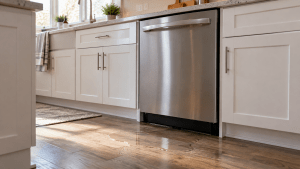
Few kitchen problems grab your attention faster than water showing up where it absolutely does not belong. You start the dishwasher after dinner, walk away, and come back to find a puddle spreading across the floor. Maybe it is only a few drops near the front corner. Maybe there is enough water underneath the machine to make you reach for every towel in the house. Either way, a leaking dishwasher is not something you want to ignore, because even a relatively small leak can damage flooring, cabinets, subflooring, electrical components, and the appliance itself if it keeps happening.
The interesting part is that dishwasher leaks do not all come from the same place. Water might escape through a worn door gasket, but it could just as easily originate from a cracked hose, loose connection, damaged spray arm, faulty inlet valve, failed pump seal, clogged drain system, or an overfilling problem. Sometimes the dishwasher is mechanically fine and the real culprit is too much detergent creating a mountain of suds. In other situations, a tall pan or cutting board has been loaded in a way that redirects water toward the door. What looks like a serious equipment failure can occasionally have a surprisingly simple explanation.
Location and timing give you valuable clues. Water appearing near the front during washing points in a different direction than water collecting underneath the machine during filling. A dishwasher that stays dry until the drain stage may have a problem with the drain hose, pump, or household plumbing. A leak that starts immediately after pressing Start can suggest the water-supply side of the system.
The important thing is to avoid treating every dishwasher leak as the same problem. Rather than replacing parts randomly, look at when the leak occurs, where the water appears, and what the dishwasher is doing at that moment. Those three pieces of information can narrow the possibilities dramatically and help you decide whether you are dealing with a simple maintenance issue or need professional dishwasher repair.
A dishwasher is designed to handle quite a bit of water without letting any of it escape into your kitchen. During a normal cycle, water enters through the inlet valve, collects in the lower portion of the tub, gets forced through spray arms by a circulation pump, drains away, and may repeat that sequence several times. Throughout that process, seals, hoses, clamps, valves, pumps, and the door assembly all work together to keep water inside a controlled path. When you see a puddle on the floor, something has interrupted that path.
The first question to ask is not simply, “Why is my dishwasher leaking?” A better question is, “At what point in the cycle does it leak?” If water appears during the initial fill, the inlet valve, supply line, float system, or a connection may be involved. If the leak begins only after the wash motor starts, look more closely at spray patterns, door seals, pump components, and the lower tub area. If the dishwasher remains dry until it begins draining, the drain hose, drain pump, garbage disposal connection, or household drain may be responsible.
Volume matters too. A slow drip underneath the appliance can indicate a seal or hose connection that has just begun to fail. A sudden large amount of water may suggest a hose has split, a clamp has come loose, or the dishwasher is overfilling. Foam creeping out around the door usually looks different again and often points toward detergent trouble.
You should also remember that water travels. The spot where you see it on the floor is not always directly below the failed part. A leak near the rear of the machine can run along the metal base and emerge at the front. Water can follow hoses, wiring, insulation, and cabinet edges before finally becoming visible.
That is why diagnosis requires patience. Wiping up the puddle tells you where the water ended its journey, not necessarily where it started. A good repair technician follows the path backward, watches different stages of the cycle, and looks for the first place moisture appears. Doing the same kind of observation—without reaching into a powered appliance—can help homeowners identify useful clues before scheduling service.
Dishwasher leaks tend to fall into a handful of predictable categories. Some involve the door and tub, where water is supposed to stay contained. Others happen underneath the appliance in the maze of hoses, pumps, valves, and fittings that move water in and out. Then there are operational problems, such as excessive suds or bad loading, which can make a perfectly functional dishwasher leak even though no major component has failed.
Age often plays a role. Rubber seals become hard and less flexible after years of exposure to heat and detergent. Plastic hoses can become brittle. Pump seals wear. Spray arms crack around seams or nozzles. Metal tubs generally hold up well, but corrosion or physical damage can eventually create weak points. None of these problems necessarily appears overnight. A leak may begin as a few drops and gradually get worse as a seal continues deteriorating.
Installation problems can create leaks too. A water line may have been tightened incorrectly, a drain hose may rub against a cabinet edge, or the machine may sit slightly tilted. Sometimes a dishwasher has worked for years and begins leaking only after being removed for flooring work or cabinet renovation. Moving the appliance can disturb connections that were previously sealed.
There is also a difference between water leakage and suds leakage. A dishwasher filled with excessive foam may force bubbles and water past the door even when the gasket is healthy. This is especially common if someone accidentally uses regular hand dishwashing liquid instead of detergent formulated for automatic dishwashers.
The best approach is to start with causes that match the symptom. If water is coming from the front, look first at the door, gasket, spray direction, and suds. If it is clearly underneath, hoses, valves, pumps, and seals move higher on the list. If the tub looks unusually full before the leak begins, investigate the water-level controls. The six causes below account for many of the leaks homeowners encounter.
The dishwasher door seems like a simple barrier, but it has to contain water while spray arms blast the interior from multiple directions. A flexible door gasket creates the seal around most of the opening. Depending on the design, there may also be a lower door seal or splash guards near the bottom corners. When those components wear out, water can find a path onto the kitchen floor.
Gaskets fail gradually. Years of hot water, detergent, food residue, and repeated compression can make the material hard, cracked, flattened, or distorted. Small pieces of debris can also prevent the gasket from sitting properly against the door. Sometimes dried food or detergent buildup is enough to create a tiny gap. You may notice water dripping from one specific corner rather than across the entire front.
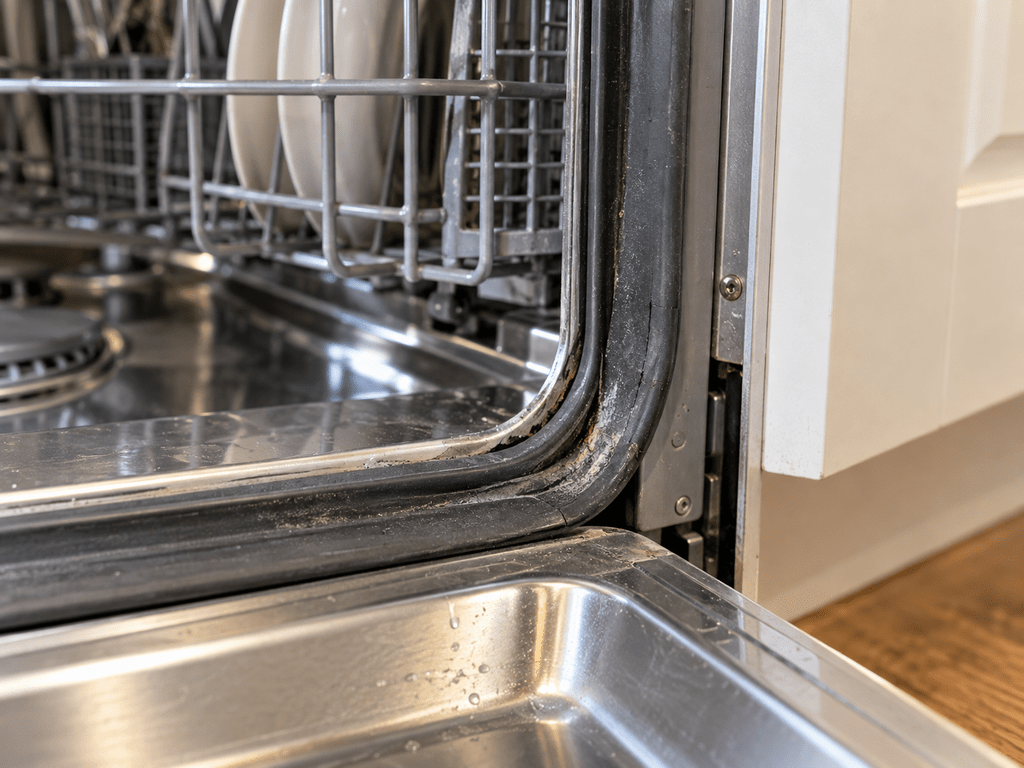
Before assuming the gasket needs replacement, inspect it when the dishwasher is cool and turned off. Look for obvious tears, loose sections, hardened areas, or food residue. Gentle cleaning may improve the seal if dirt is the only issue. Avoid aggressive chemicals or sharp tools that could damage the material.
Door alignment matters just as much. If the dishwasher is not level or the mounting brackets have shifted, the door may not close squarely against the gasket. Worn hinges or a damaged latch can create similar trouble. A door that feels unusually loose, requires lifting to close, or sits farther out on one side deserves attention.
Loading can even imitate a door-seal failure. A utensil, pan handle, or oversized cutting board may prevent the door from closing fully. The latch engages, so you assume everything is fine, but the seal is not evenly compressed.
If the gasket appears damaged or the door does not sit properly, repair is usually straightforward compared with major pump or tub work. The important thing is confirming the actual source. Replacing a gasket will not solve a leak caused by a cracked spray arm shooting water directly at the lower corner of the door.
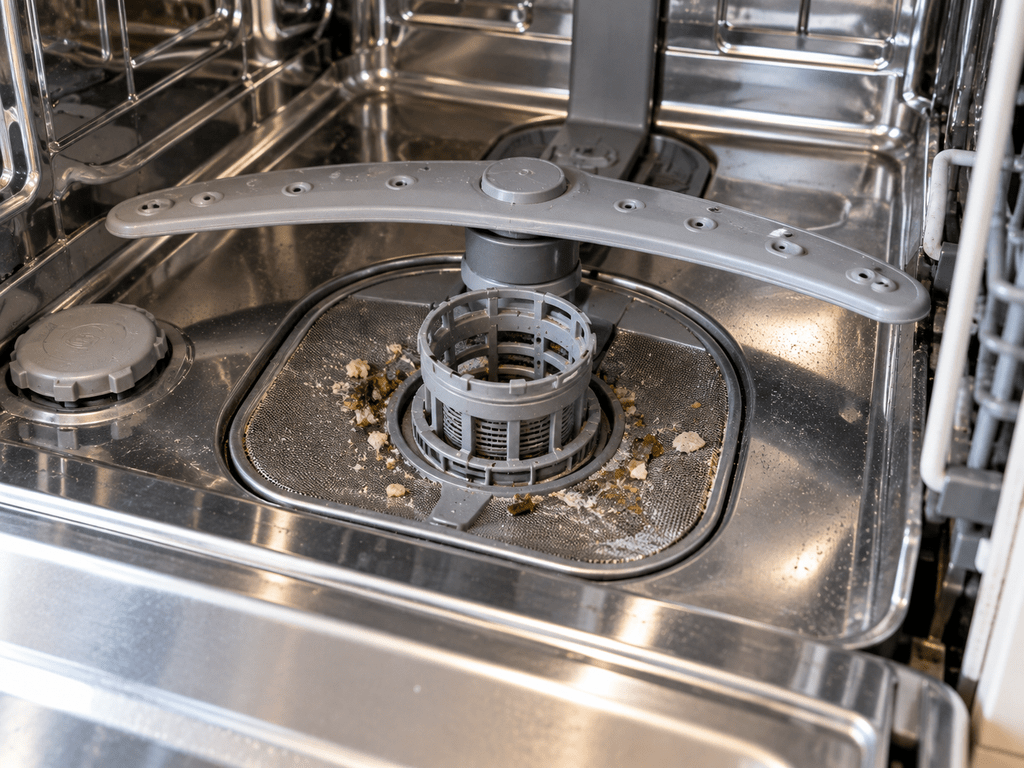
Dishwashers constantly move dirty water through filters and drains, so food debris eventually becomes part of the maintenance equation. Modern machines often include removable filters near the bottom of the tub. These filters catch particles before they circulate back onto dishes or reach sensitive pump components. When the filter becomes heavily clogged, water movement through the system can become less efficient.
A dirty filter alone does not always cause water to pour onto the floor, but it can contribute to high water levels, poor drainage, standing water, and unusual circulation patterns. Those conditions may expose weak door seals or cause water to reach areas it normally would not. If the dishwasher already has a marginal gasket, drainage problems can make the leak suddenly noticeable.
The drain hose is another common trouble spot. It carries wastewater from the dishwasher to the garbage disposal, sink drain, or other approved drain connection. A kinked hose can slow discharge. Food residue, grease, or debris can create internal restrictions. If your dishwasher connects to a garbage disposal and the disposal was recently installed, an improperly prepared connection can prevent drainage altogether.
Household plumbing matters too. A dishwasher may pump correctly, but a clogged sink drain can cause wastewater to back up. In some configurations, water can return through the dishwasher hose if the drain system or installation is incorrect. That can leave standing water inside the tub and create overflow-related symptoms.
Homeowners can safely clean a user-accessible filter according to the owner’s manual. Turn the machine off and remove food debris carefully. If the water does not drain, avoid repeatedly starting new wash cycles because you may simply add more water to a system that is already struggling.
A leak that occurs mainly during or after draining deserves particular attention. If you can see water appearing under the sink at the dishwasher connection, the problem may be outside the appliance itself. If the leak is underneath the dishwasher during drain operation, the drain hose or pump area may need professional inspection.
Some of the hardest dishwasher leaks to spot begin underneath the appliance. The exterior floor may stay completely dry during washing, while water slowly accumulates on the base pan or subfloor below. By the time you notice moisture near the cabinets, the leak may have been happening for quite a while.
Water-supply components are common suspects. The water inlet valve controls how much fresh water enters the dishwasher. A household supply line connects to that valve, and several internal hoses move water through the machine. Any threaded connection, clamp, gasket, or plastic fitting can eventually loosen, crack, or deteriorate.
The timing of the leak can be extremely helpful. If water appears immediately after the dishwasher begins filling, the supply line and inlet valve deserve attention. A valve body can crack or leak around its seals. The connection between the home’s water line and the appliance can drip under pressure. If the leak continues even when the dishwasher is not running, the pressurized water-supply side becomes an especially important suspect.
Internal hoses can fail during other parts of the cycle. A hose may look fine from the outside but develop a small split that opens only when water pressure increases. Clamps can weaken or shift. On older machines, rubber hoses may become stiff and brittle.
This is one area where quickly shutting off the dishwasher’s water supply can prevent significant damage if an active leak is discovered. Know where your dishwasher’s shutoff valve is located—usually under the kitchen sink—and make sure it operates properly before an emergency happens.
Inspecting deeper water connections generally requires removing the lower access panel or pulling the dishwasher from the cabinet. Because electrical wiring and pressurized water are both involved, that level of diagnosis is better handled with the appliance powered down and by someone comfortable with appliance repair.
A tiny supply-side leak should not be dismissed just because the dishwasher still works. Constant dripping can soak flooring and cabinetry long before the appliance develops a noticeable performance problem.
Dishwasher spray arms spin because pressurized water shoots through carefully positioned openings along their length. When everything works correctly, those jets are aimed to wash dishes while keeping water movement inside the tub. A cracked or damaged spray arm can completely change that pattern.
Imagine putting your thumb over the end of a garden hose. Change the opening, and suddenly water travels in a much different direction. A crack along a dishwasher spray arm can do the same thing. Instead of producing several controlled jets, it may send one strong stream directly toward the door seam. The gasket may be in perfectly reasonable condition, but it was not designed to withstand a concentrated jet hitting the same spot over and over.
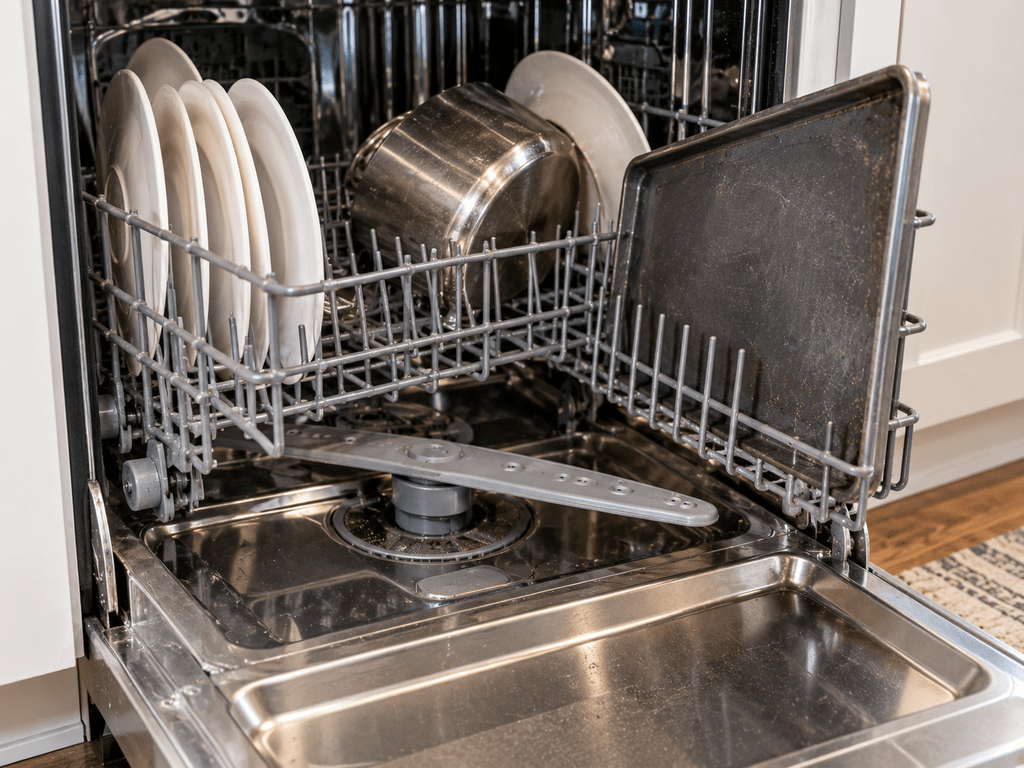
Damage can occur from normal aging or from dishes blocking the spray arm during operation. A tall utensil or pan handle may stop the arm from rotating. Repeated contact can weaken plastic components. Mineral buildup can also obstruct individual nozzles and distort the spray pattern.
Before starting a cycle, rotate the spray arms by hand while the dishwasher is off and empty. They should generally move freely without striking racks, utensils, or other components. Look for visible cracks, separated seams, or clogged openings. Do not enlarge spray holes with sharp metal tools because changing their size can alter water pressure and spray direction.
Loading practices matter here. Large cutting boards or baking sheets placed across the front of the lower rack can deflect water toward the door. That can produce a leak even when the spray arm itself is fine. Try running a normal load with oversized items repositioned and see whether the leak changes.
If water consistently escapes from one front corner only during active washing—not during filling or draining—a spray-pattern problem becomes more plausible. A technician can inspect spray arms, circulation pressure, door seals, and machine leveling together, rather than assuming the gasket alone is responsible.
Dishwashers need a way to prevent themselves from endlessly filling with water, and many models use a float and float switch as part of that protection. The float usually sits inside the bottom of the tub and rises as the water level increases. Once it reaches a certain point, the switch tells the control system that enough water has entered.
If the float becomes stuck in the down position, covered with debris, or unable to move correctly, the dishwasher may not recognize that the tub is filling too high. A failed float switch or related wiring problem can create similar symptoms. Excess water may then reach the lower edge of the door and leak onto the floor.
You can sometimes identify overfilling visually. When the leak occurs, open the dishwasher carefully according to the manufacturer’s instructions and look at the water level. The exact normal level varies by model, so avoid relying on a universal measurement. What matters is whether the tub seems unusually full compared with previous cycles.
The float should generally move freely when the dishwasher is off. Food particles, broken glass, detergent residue, or other debris can interfere with its movement. However, not every dishwasher uses the same float design, and some rely heavily on electronic water-level sensing, so your owner’s manual is the best reference for identifying accessible components.
A malfunctioning inlet valve can mimic a float problem. If the valve mechanically sticks open, water may continue entering even after the control tells it to stop. That is why replacing the float switch without testing the valve can be an expensive guess.
Overfilling is one reason you should not ignore a leak that suddenly becomes much larger. If the dishwasher is taking in more water than designed, the problem can escalate quickly.
Professional technicians can test whether the float switch changes state properly, verify water-level sensing, and confirm whether the inlet valve shuts off when commanded. The dishwasher’s ability to control water level is fundamental. When that system becomes unreliable, the machine should be repaired before routine operation continues.
Some leaks originate from the very bottom of the dishwasher, around the circulation pump, drain pump, motor assembly, sump, or tub itself. These leaks are often harder for homeowners to diagnose because the components are hidden below the wash chamber. Water may collect underneath the machine long before it becomes visible at the front.
The circulation pump handles water every time the dishwasher actively washes. Seals around the pump prevent pressurized water from escaping where rotating components or housings meet. Over time, those seals can wear, harden, or develop small leaks. You may see moisture only while the circulation pump is running, making the leak disappear during filling and draining.
Drain-pump seals can behave similarly but leak mainly during the drain phase. That timing is valuable information. If the underside remains dry throughout washing and suddenly starts dripping when the dishwasher empties, the drain system becomes more suspicious.
Tub damage is less common but potentially more serious. Stainless-steel tubs are durable, while plastic tubs can sometimes crack around seams, mounting areas, or impact points. Corrosion or manufacturing defects can also cause leaks, although the exact likelihood depends heavily on the model and age.
A small crack can be deceptive because it may leak only when water reaches a certain level or when the tub expands slightly with heat. That is why a dishwasher can remain dry during a short test but leak during a full hot cycle.
These repairs generally require removing access panels or pulling the dishwasher from the cabinet. On some machines, replacing a pump seal is straightforward. On others, the pump and sump are sold as a larger assembly, which changes the repair cost significantly.
If water is clearly coming from the center underside of the dishwasher, particularly around the motor or pump area, professional diagnosis is usually the most efficient path. Catching the leak early can prevent water from damaging electrical connectors, insulation, flooring, and adjacent cabinetry.
Not every puddle means a mechanical part has failed. Sometimes the dishwasher leaks because of what went into it before the cycle started. Detergent is one of the most overlooked causes. Automatic dishwashers are designed for low-sudsing dishwasher detergent, not regular liquid soap used for hand washing. Put ordinary dish soap into the dispenser and you may create enough foam to fill the entire tub and push suds through the door opening.
Even the correct detergent can create trouble if you use too much. Water conditions, detergent concentration, and soil level all influence how much product is appropriate. Modern detergents can be highly concentrated, and filling a dispenser to the top out of habit may not be necessary. Excessive foam can interfere with pump performance and make water behave differently inside the machine.
Loading causes another surprisingly common leak. A large baking sheet leaning near the door can redirect spray water toward a gasket. Tall utensils can prevent spray arms from turning. A pot handle may keep the door from closing completely even though the latch seems engaged. Lightweight plastic containers can flip over during washing and collect water, changing how spray bounces around the tub.
Overloading also prevents proper circulation. When dishes are packed together, water does not follow the path engineers expected. It ricochets off large surfaces, pools in unusual areas, and can hit the door more aggressively.
Before assuming the dishwasher needs repair, try a carefully loaded cycle. Make sure spray arms rotate freely, keep oversized items away from the front and sides, and use the detergent type and amount recommended for your machine. If the leak disappears, you may have found an operational rather than mechanical problem.
If the dishwasher still leaks with a normal load and appropriate detergent, the experiment is still useful. You have ruled out two easy causes and can focus on seals, hoses, pumps, valves, or water-level controls instead. Good troubleshooting is often about eliminating possibilities one by one rather than immediately identifying the perfect answer.
The location of a leak is one of the best diagnostic clues you can collect without taking the dishwasher apart. Start by drying the floor completely, then observe where the first moisture appears during a cycle. Do this only from a safe distance; do not remove protective panels while the dishwasher is operating.
Water near the front center or lower corners often points toward the door area. A worn gasket, bad lower seal, misaligned door, excessive suds, improper loading, or spray arm problem could all be involved. If it leaks only while the spray pump is active, that timing makes door and circulation-related causes more likely.
Water underneath the front left or right side can sometimes correspond with a water inlet valve or connection, depending on the model’s internal layout. If dripping begins during initial filling, the supply system moves higher on the list.
A leak appearing toward the center underneath can suggest the sump, pump, or tub. Again, timing matters. Circulation-pump leaks happen during washing, while drain-pump leaks may appear only when the machine empties.
Water under the sink cabinet instead of beneath the dishwasher may involve the drain hose, air gap, garbage disposal connection, or household plumbing. Sometimes homeowners call for dishwasher service only to discover that the sink plumbing is the actual source.
Watch for leaks after the cycle ends too. A supply-line connection under continuous household water pressure can drip even when the dishwasher is off. If the floor becomes wet overnight without anyone running the appliance, shutting off the dishwasher’s water supply and arranging inspection becomes important.
Also look beyond obvious puddles. Swollen cabinet edges, discolored flooring, peeling laminate, musty odors, or dampness near the dishwasher can indicate a slow hidden leak. Water damage often begins before homeowners see free-standing water.
Think like a detective: location tells you where the water finished, timing tells you when it escaped, and the stage of the cycle tells you which components were active. Put those three clues together and the list of possible causes becomes much shorter.
A leaking dishwasher does not always require immediate disassembly. There are several useful checks homeowners can make safely before scheduling service. First, stop the cycle and wipe up any standing water so you can tell whether fresh water appears again. If the leak is significant or continues when the machine is off, shut off the dishwasher’s water supply if you can do so safely.
Inspect the door gasket with the dishwasher cool and powered off. Look for cracks, hardened areas, food debris, or sections that have pulled out of position. Make sure nothing in the racks prevents the door from closing completely.
Remove and clean the dishwasher filter if your model has a homeowner-serviceable filter. Follow the manufacturer’s instructions rather than forcing parts loose. Check for broken glass and sharp food debris before reaching into the filter area.
Spin the spray arms by hand and confirm that they move freely. Look for cracks or clogged openings and verify that loaded dishes do not block rotation. Check whether large pans or boards are positioned in a way that could redirect water toward the front.
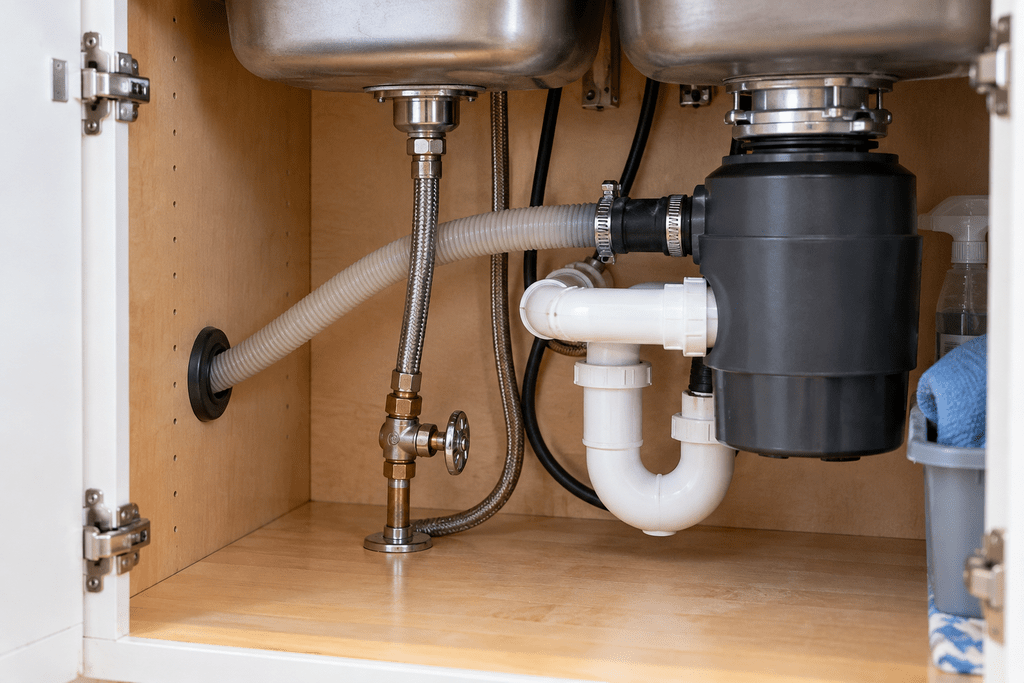
Under the sink, look at the visible dishwasher drain hose and water connection. Signs of moisture around those fittings are important. Do not tighten plumbing connections aggressively without understanding the fitting type; overtightening can damage plastic components and create a worse leak.
Pay attention to detergent. If the tub is filled with foam, especially after someone used regular dish soap, suds may be part of the problem.
What you should avoid is equally important. Do not reach beneath an operating dishwasher, bypass door switches, test live wiring, or pull the appliance out while electrical and water connections are under stress. Water and electricity share the same cramped space underneath most dishwashers.
Write down what you observe: when the leak begins, where it appears, whether the tub looks overfilled, whether there are suds, and whether drainage seems normal. Those details can save diagnostic time and help a technician focus immediately on the right part of the system.
Professional repair is a good idea when the source of the leak is not obvious or when it involves components underneath the appliance. Water inlet valves, internal hoses, pumps, sump assemblies, electrical controls, and tub connections usually require access that goes beyond normal homeowner maintenance.
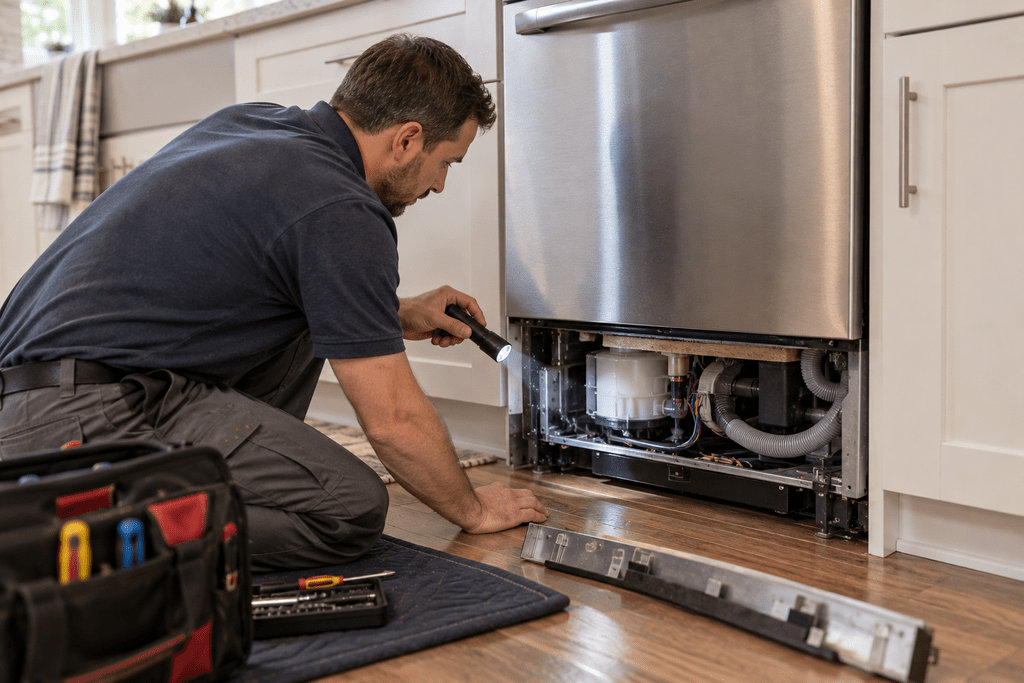
A dishwasher should also be inspected promptly if the leak is large, recurring, or damaging surrounding materials. Water can move beneath finished flooring and cabinets where it remains hidden. What looks like a minor puddle on top may represent much more moisture underneath.
Electrical symptoms raise the stakes. If the dishwasher trips a breaker, displays electrical faults, produces a burning smell, or has visible water near wiring or junction-box areas, stop using it until it has been evaluated. Do not keep resetting a breaker and restarting the cycle.
Leaks that continue while the dishwasher is off can indicate a pressurized supply-side problem. A damaged inlet valve or supply connection may keep dripping as long as household water pressure is present. Shutting off the appliance’s water supply can limit damage until repair is completed.
Repeated overfilling also deserves professional attention. If the dishwasher consistently takes in too much water, the float, water-level sensor, inlet valve, or control system may not be functioning correctly.
When contacting an appliance technician, provide the dishwasher’s brand, model number, approximate age, and exact leak pattern. Explain whether water appears during filling, washing, or draining and where you first see it. Mention unusual noises, drainage problems, error codes, or excessive suds.
A good technician should diagnose the source before recommending expensive parts. Simply replacing the door gasket because water is visible at the front can miss a spray-arm problem or overfilling issue.
The faster a genuine leak is identified, the better. Dishwasher repairs are usually cheaper than replacing water-damaged flooring or cabinet panels. The appliance is only one part of the equation; protecting the kitchen around it is just as important.
A few drops of water near the dishwasher can seem harmless, especially if the machine still washes dishes normally. But leaks have a habit of getting worse, and water has an impressive ability to travel into places you cannot see. Under flooring, along cabinet bases, and around electrical components, even a slow leak can create expensive damage over time.
The good news is that a leaking dishwasher usually leaves clues. If the water appears at the front, check the gasket, door alignment, spray pattern, detergent, and loading. If it begins during filling, think about the water supply, inlet valve, and overfill controls. A leak during draining points toward the drain hose or pump. Water underneath the center of the machine can indicate a pump seal, sump, or tub problem.
Homeowners can handle several basic checks safely. Clean the filter, inspect the gasket, make sure spray arms move freely, verify that dishes are loaded correctly, and look for visible moisture around connections under the sink. Those steps often reveal simple problems without removing the dishwasher from the cabinet.
When the source remains hidden, however, guessing is rarely productive. Replacing random parts can quickly become more expensive than proper diagnosis. Internal dishwasher components operate around both electricity and water, which makes professional service the sensible choice when pumps, wiring, valves, or hidden connections are involved.
Most importantly, treat the first leak as useful warning information rather than a quirky appliance habit. Your dishwasher is designed to keep every gallon of wash water inside a controlled system. If some of that water reaches the floor, something changed.
Finding that change early can mean the difference between a straightforward gasket, hose, or pump repair and a much larger kitchen restoration project. Dry the area, note when the leak happens, check what you can safely inspect, and address the source before the next little puddle becomes a big one.
We repair a wide range of household appliances including refrigerators, washers, dryers, ovens, dishwashers, and more. No matter the brand or model, our experienced technicians are ready to help. We repair commercial appliances as well: commercial washers dryers, commercial refrigerators & freezer & more.
We service a wide range of household appliances, including refrigerators, dryers, washers, ranges, cooktops, dishwashers, freezers, ice makers, ovens, and double ovens.
Our technicians operate across many locations in Ohio, covering major cities like Cleveland, Akron, and Parma. We also serve surrounding areas including Lakewood, Westlake, Strongsville, and Brooklyn.
Our service area extends to Rocky River, Euclid, Solon, Beachwood, and Cleveland Heights, as well as counties such as Cuyahoga, Lorain, Lake, and Medina.
Additional cities we cover include North Olmsted, North Ridgeville, Valley City, Lorain, Avon Lake, Richfield, Brecksville, Garfield Heights, Seven Hills, Brunswick, Oakwood, Mentor, and Willoughby.