In this article
- Start with the filter
- Spray arms that are plugged or stuck
- How loading gets in the way
- Detergent that has gone stale
- Water that never gets hot enough
- A white film is a different problem
- A quick order of checks
- Parts that stop a dishwasher from cleaning
- Dishwasher cleaning problems we fix near Parma
- Questions people ask
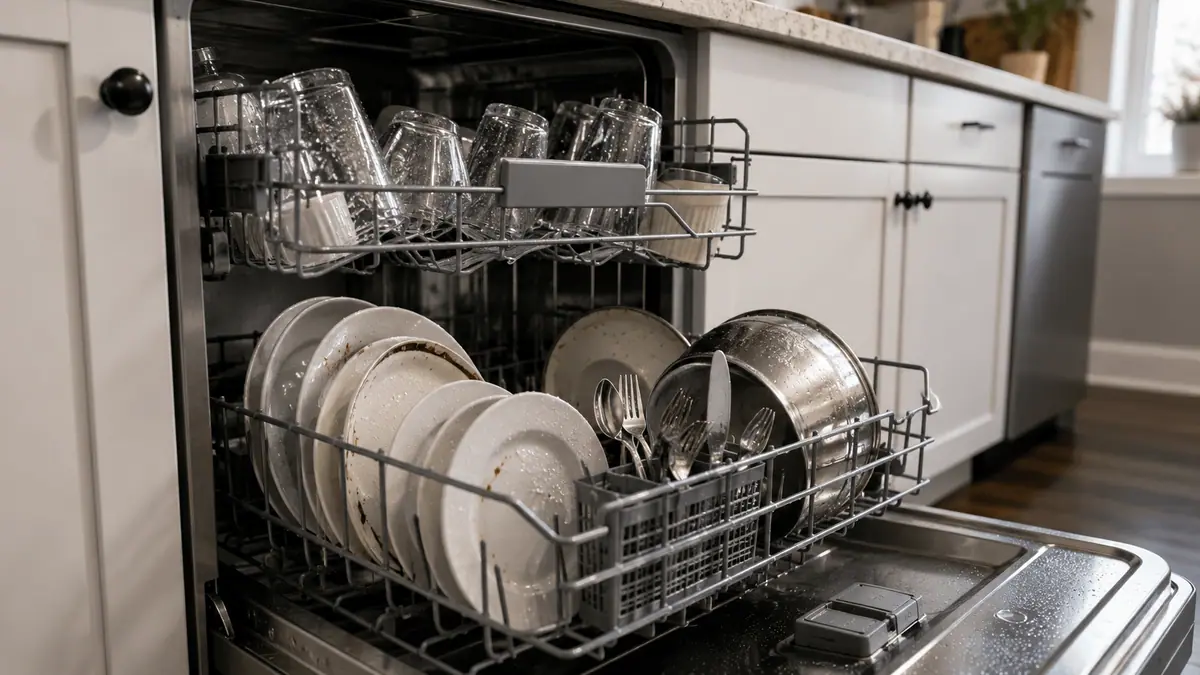
First, take a good look at what's actually left on the plates. Dried egg or rice stuck where it was is one problem. A sandy grit you can feel when you run a finger over a glass is another. A milky white haze that won't wipe off is a third, and that one is almost always the water, not the machine.
For the first two, the fix is usually cheap. Your dishwasher still runs, it just isn't getting enough hot water onto the dishes hard enough. So we start with the parts you can reach without a screwdriver.
Start with the filter
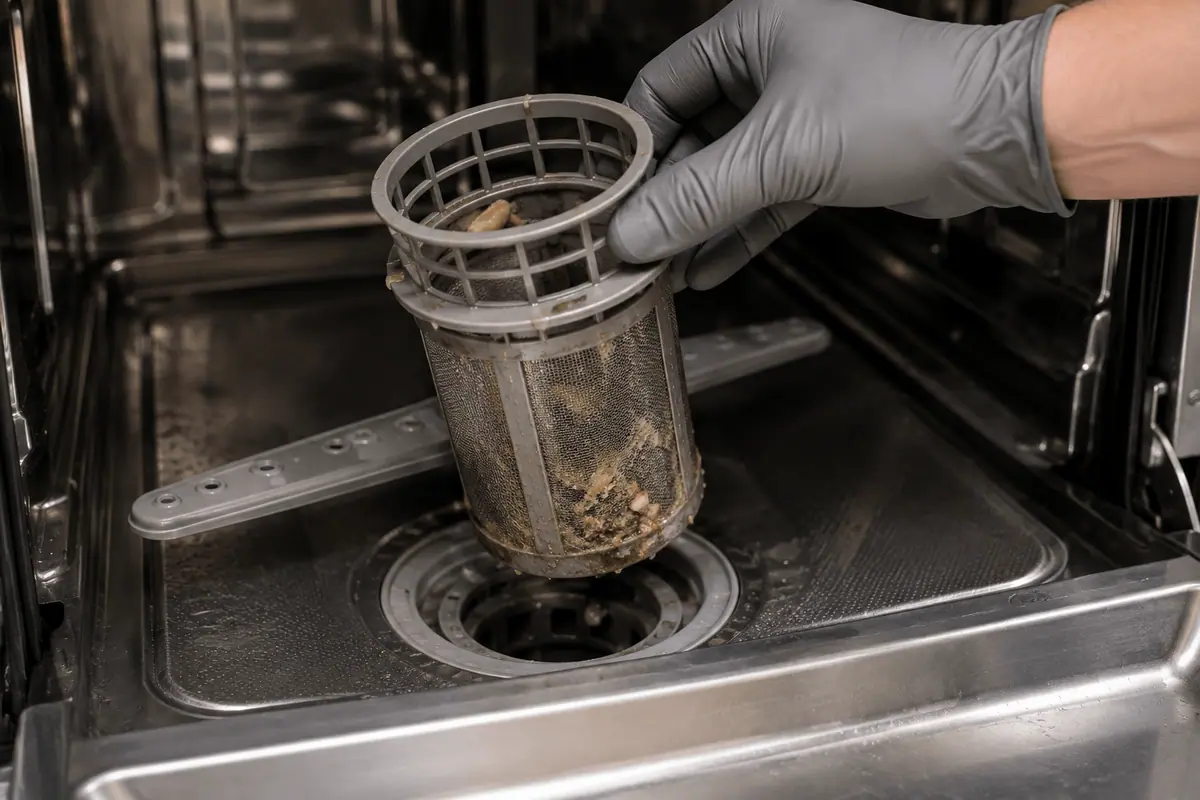
Most dishwashers sold in the last several years are the quiet kind with a filter you clean yourself. Older machines had a little chopper that ground food up and sent it down the drain. The new ones just catch it. Nobody tells you that when you buy one, and a clogged filter is the first thing we pull on a not cleaning call.
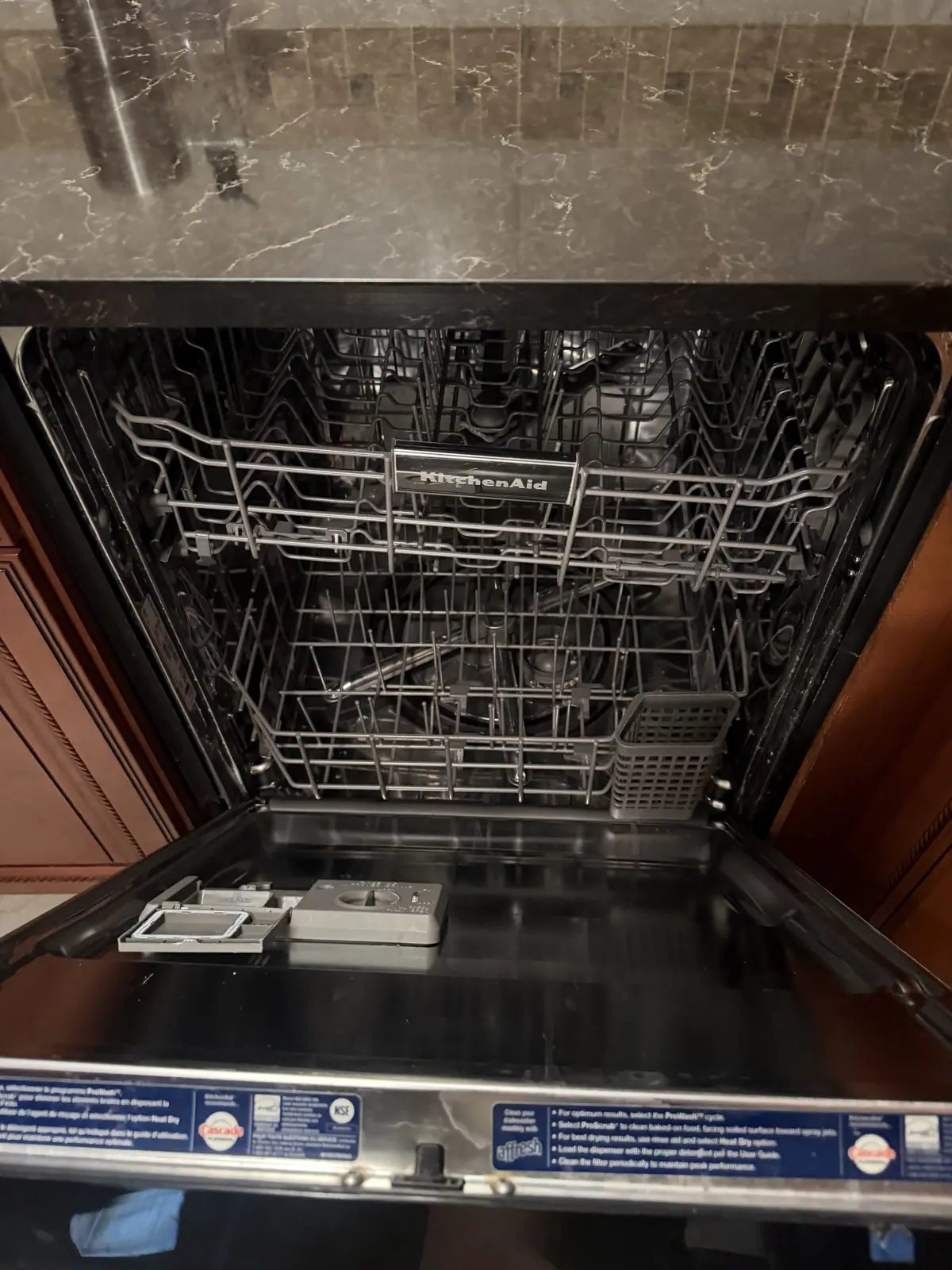
It sits on the floor of the tub, below the bottom rack. Usually a plastic cylinder that unlocks with a quarter twist, sitting in a flat screen. Take both out and hold them under the faucet. A soft toothbrush gets the greasy film off the mesh. Soggy paper labels off jars end up here. So do cherry pits, and now and then a chip of broken glass. When it goes back in, turn it until it clicks.
Spray arms that are plugged or stuck
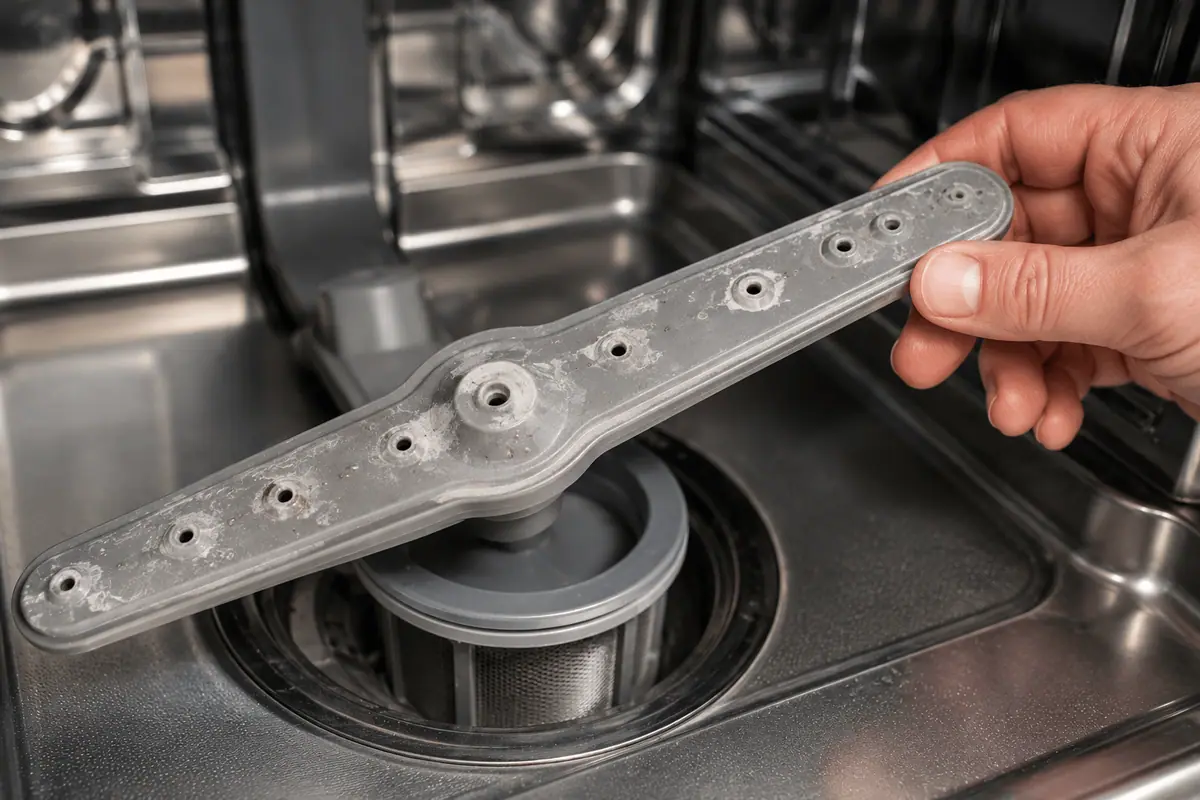
The arms spin because water jets out of their holes at a slant, kind of like a lawn sprinkler. Plug a few holes with seeds or scale and the arm slows down. Plug enough of them and it barely moves, so one stripe of dishes gets washed and the rest just get wet.
Pop the arms off. Most twist or unclip. Hold each one up to a window and you'll see which holes are dark. A toothpick or a straightened paper clip pushes the junk out. Shake it out in the sink before it goes back on.
Top rack dirty and the bottom fine? Then check the upper arm and the little pipe on the back wall that feeds it. One big cookie sheet standing on the bottom rack is enough to cut that pipe off.
How loading gets in the way
Water comes up from underneath and out from the middle. A plate facing the wrong way catches spray on its back. Bowls stacked inside each other protect each other perfectly, which is exactly what you don't want. Face the dirty side toward the center and give things a little room.
Then look at the detergent door. A tall cutting board or a pot handle parked in front of it keeps it from flipping open. You'll open the machine afterwards to a perfectly dry tablet still sitting in the cup. Before closing the door, spin both arms with your hand. If they bump into anything, move it.
Detergent that has gone stale
Detergent hates damp. Keep the box under the sink, right beside the drain trap, and the powder cakes up and the pods get sticky. They stop dissolving the way they should. If the trouble started with a new box, buy a small fresh one and store it in a dry cupboard for a week as a test.
Put pods in the cup and close it. A pod thrown loose on the floor of the tub melts in the prewash and gets pumped out before the real wash even starts. And go easy on the amount if your water is soft. Too much leaves a gritty coating on glasses that looks a lot like dirt.
Water that never gets hot enough
Grease only comes off with hot water. Most dishwashers are hooked to the hot line under the sink, so their first fill is whatever has been sitting in that pipe. In an older house where the water heater is in the far corner of the basement, that can be pretty cool water.
Run the kitchen faucet until it's properly hot, then press start. That one habit fixes more greasy glasses than you'd think. If your machine has a hi temp or sani option, it's worth using for pots and pans.
A white film is a different problem
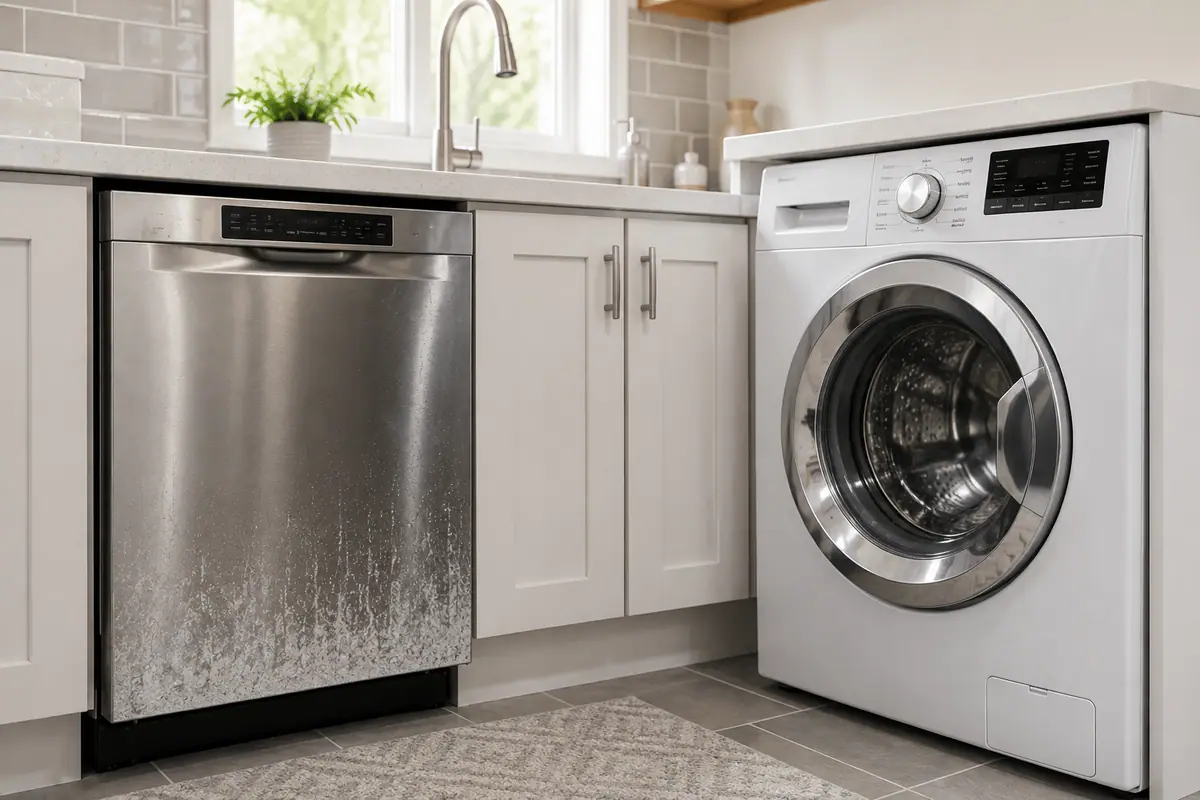
Cloudy glasses with a chalky layer usually aren't a washing problem at all. That's minerals from the water drying on the surface. Rinse aid helps, so does a monthly cleaning cycle. Our hard water guide goes into what that film is and how to keep it down.
A quick order of checks
- Clean the filter and the mesh plate under it.
- Take off the spray arms and clear the holes.
- Run the kitchen tap hot, then start a cycle.
- Use fresh detergent in the cup.
- Load with the dirty sides facing the middle.
Run two or three normal loads like that. Still finding food on the plates? Then the trouble is inside the machine.
Parts that stop a dishwasher from cleaning
Stand next to it during the wash and listen. You want a steady swish of water hitting the door. A weak dribble, or a fill followed by a lot of quiet, tells us the wash motor or the pump isn't pushing like it should.
Peek in right after it fills. On most models the water reaches up around the filter. If there's only a shallow puddle, the inlet valve is probably clogged or failing and the machine is washing with too little water.
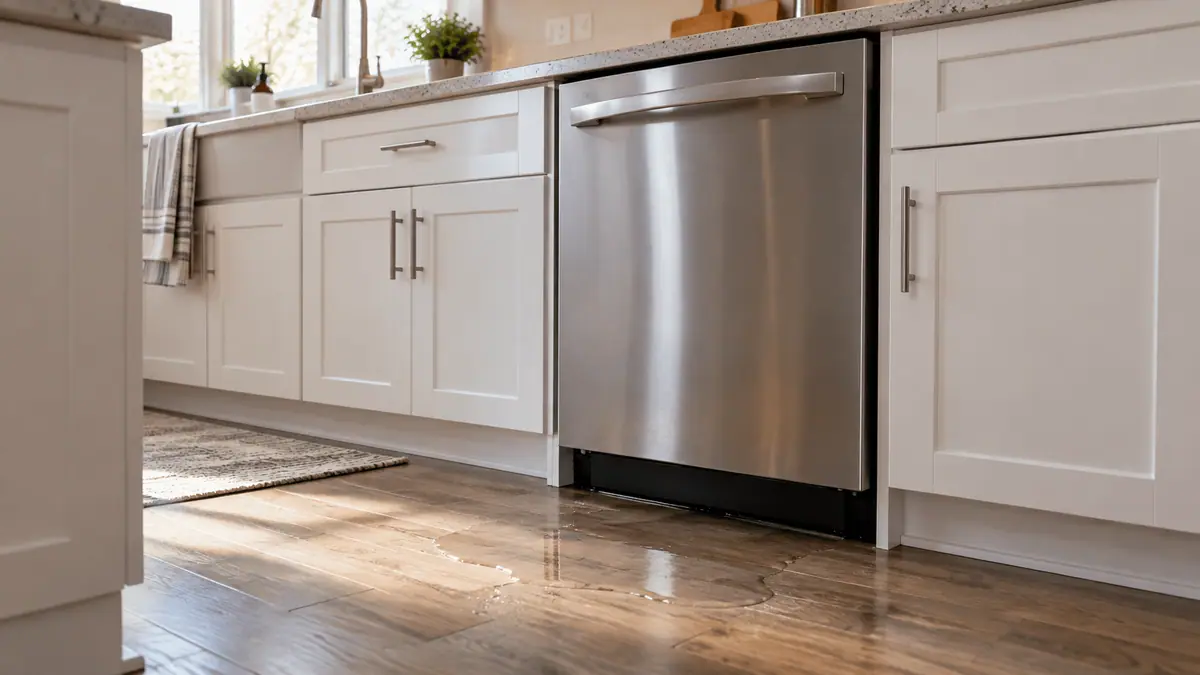
Murky water still sitting in the tub when the cycle's over means the drain can't keep up. That same dirty water gets sprayed around again, which is where the grit on your glasses comes from. And dishes that feel lukewarm at the end point to the heater, which hurts the drying too.
Dishwasher cleaning problems we fix near Parma
Our technician tests the pump and the inlet valve right in your kitchen. The heater gets a check too. Nothing is replaced until you've heard the cost and said yes. Repairs carry our 90-day warranty. Give us a call at (216) 352-3935, or see what a visit includes on our dishwasher service page.
Clean dishes that come out wet instead? That's a drying problem, covered in why a dishwasher leaves dishes wet.
Questions people ask
Why is my dishwasher not cleaning dishes all of a sudden?
A clogged filter or blocked spray arm is the most common reason, followed by detergent that has clumped. If those are fine, check that the water gets hot and that the arms can spin.
Why are my dishes still dirty after the dishwasher?
Food left in place usually means the spray isn't reaching it. Blocked holes or a stuck arm do that, and so does tight loading. Grit spread over everything usually means dirty water is being reused because the filter or the drain is clogged.
Why is only the top rack coming out dirty?
Look at the upper spray arm and the tube that feeds it. A tall item on the bottom rack can block the tube or stop the arm from turning.
How often should I clean the dishwasher filter?
Check it every few weeks and rinse it whenever you see food or grease on it. Homes that scrape plates lightly before loading need to clean it more often.
Can the wrong detergent stop a dishwasher from cleaning?
Yes. Old detergent that has absorbed moisture dissolves poorly, and a pod thrown loose in the tub is gone before the main wash. Use fresh detergent in the cup.
When should I call a technician?
When the simple checks are done and the dishes are still dirty. A weak wash sound points to the pump or motor. A low water fill points to the inlet valve, and dirty water left at the end points to the drain.