In this article
An oven that takes forever to preheat is almost always short on heat. Electric ovens usually have a dead element, or a breaker that only half tripped. Gas ovens usually have a worn out igniter that lets the gas in late.
What normal preheating looks like
There isn't one magic number. A big convection oven is slower than the little one your parents had. Your manual knows your model, so check it if you're curious.
What really counts is change. Used to be ready by the time you chopped the onions? Now you've finished the salad and it's still beeping away? That's real. Time it once with your phone. Now you've got a number.
Electric ovens that heat too slowly
Lots of electric ovens run both elements while they preheat. Broil on top, bake on the bottom. Lose one and the other one does all the work. So you wait.
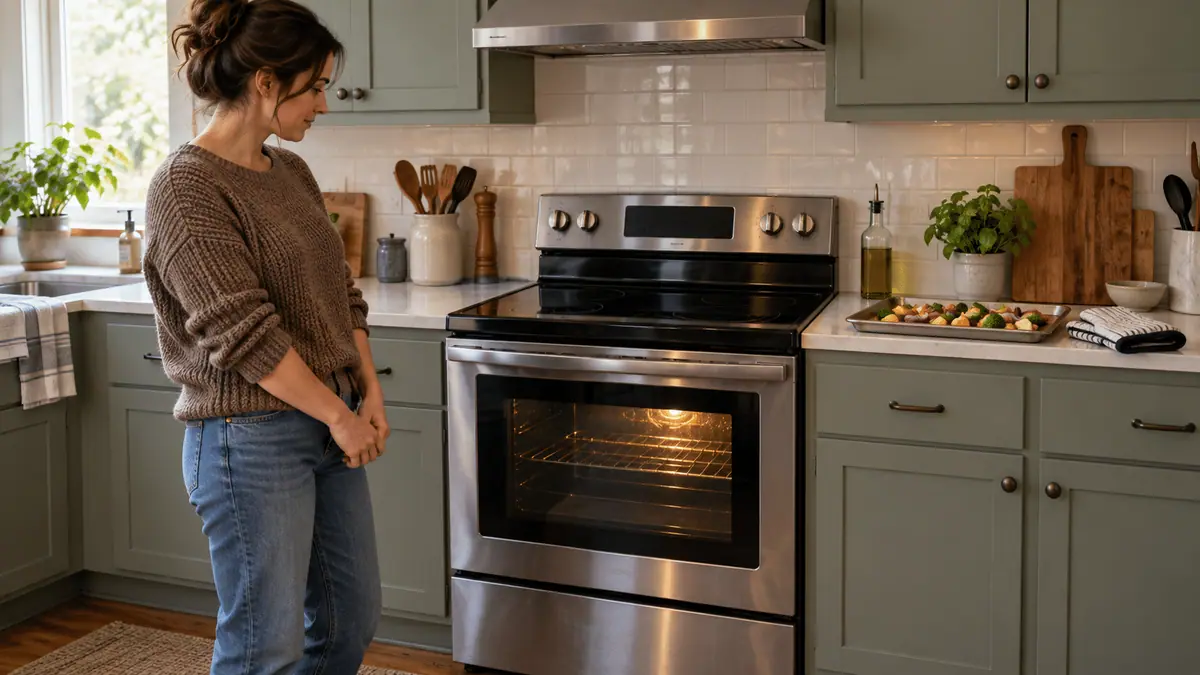
Easy check. Turn the oven on and peek in after a minute or two. A good element glows orange end to end. A dead one stays black. Sometimes there's a bubbled spot or a split you can see from the door.
Newer ovens hide the bake element under the floor panel. You can't see that one. Hold your hand over the floor instead. Nothing warm coming up is a clue.
Then the breaker. An electric range sits on a double breaker. One half can trip while the other stays on. The clock still works. Meanwhile the elements limp along on a fraction of their power, and preheat crawls. Flip that breaker all the way off. Then flip it back on.
Gas ovens and a tired igniter
Most gas ovens here light with a glow bar igniter. It gets red hot and pulls current through the gas valve. The valve stays shut until that current is strong enough.
Old igniters are sneaky. They still glow bright. But the current drops, so the valve opens late. You watch the glow through the window for what feels like forever. Then finally the whoosh. Or no whoosh.
A new igniter normally fixes it. We meter it first anyway. A bad valve or a loose wire looks exactly the same from the outside.
Sensor and door problems
On the back wall there's a skinny metal probe. That's the temperature sensor, and the control believes whatever it says. Bad reading, wrong decisions. The heat shuts off early and preheat drags. A probe bent against the wall can do it. So can a nicked wire behind it.
Then the door. A worn gasket leaks heat the whole time. Run your hand slowly along the closed door while the oven's on. You'll feel a leak right away. A sagging door from a bent hinge leaks too.
Using an oven thermometer at home
Every homeowner should own an oven thermometer. They're cheap at the hardware store. And they don't fib like the display sometimes does.
Clip it to the middle rack. Set the oven to your usual baking temperature. Start a timer. Read the thermometer at the beep, then read it once more after a while.
Got to temperature, just slowly? Look at the heat side. Beeped early and the thermometer is way under? Now the sensor or the calibration is more likely.
Leave it in for a few days of normal cooking. Write the readings on a sticky note. Honestly, that note helps our technician more than any description on the phone. One corner hotter than the rest is a different problem, and our article about an oven that heats unevenly handles that one.
Convection ovens and the fan
Convection ovens have a fan behind the back wall. Some models run it during preheat too. If the fan dies, the oven still gets hot eventually. Just slower. And your cookies brown funny.
Switch to convection and listen for a soft whir. Look through the glass for the blades turning. Humming but no spinning means the fan motor. Grinding back there means the same.
What to have ready before you call
Find the model number first. It's on a sticker inside the door frame on most ranges. Sometimes it's behind the bottom drawer.
Say whether it runs on gas or electricity, and how long preheat takes now. Read us the thermometer notes and say whether an element glowed. Then the technician shows up already knowing where to look.
Habits that slow preheating down
Opening the door to peek lets the heat roll out. The oven has to catch up again. A pizza stone left inside soaks up heat first. So does a cast iron pan. Foil on the oven floor blocks heat, and it can melt into the enamel for good.
None of these make a healthy oven slow. They just stack on top of a problem you already have.
When to book an oven repair
Element stays dark, or the igniter glows for ages before the burner lights? Give us a call. A gas smell is different. That's not a repair call. Turn the oven off, get everybody outside and phone the gas company.
Slow ovens are a regular job for us in Parma kitchens and across Greater Cleveland. The suspect part gets tested first, and the price is settled before a single screw comes out. A 90-day warranty covers the repair. Phone (216) 352-3935 or request a visit on our oven repair page.
Questions people ask
Why is my oven taking forever to preheat?
On electric ovens, a burned out bake or broil element or a half tripped breaker. On gas ovens, a weak igniter that opens the gas valve late. A bad sensor or a leaking door gasket can slow it down too.
How long should an oven take to preheat?
It depends on the model, so check your manual. The useful test is change. If it takes much longer than it used to at the same setting, something is wrong.
Do I need an oven thermometer?
It's one of the cheapest tools a homeowner can own. It shows whether the oven really reaches the temperature on the display, and it helps a technician narrow down the cause.
Where should I put an oven thermometer?
In the middle of the center rack, away from the walls. Read it after the oven has had time to settle, not only at the beep.
Can a bad igniter make a gas oven slow to heat?
Yes. An aging igniter keeps glowing but draws too little current, so the gas valve opens late. The burner then lights slowly and the oven takes longer to heat.
Do you repair slow ovens near me?
Yes, gas and electric. We come out from Parma to homes all over the Cleveland area, and a request can be left on any day.