In this article
Humid weather does slow a dryer down, but not by as much as most people think. Towels that took about 50 minutes in April and now need an hour and a half in July? Weather alone doesn't do that.
Why humid air slows a dryer
Think of what the dryer actually moves. It's air. Room air gets sucked in through the back, the heater warms it, and on its way out through the vent it carries the water from your clothes. In January a Cleveland basement is dry and that air soaks moisture up easily. July air shows up already damp. It can't hold much more, so the dryer needs extra passes to get the same water out of a load of jeans. Nothing changed in the heater. Nothing changed in the timer. The air did.
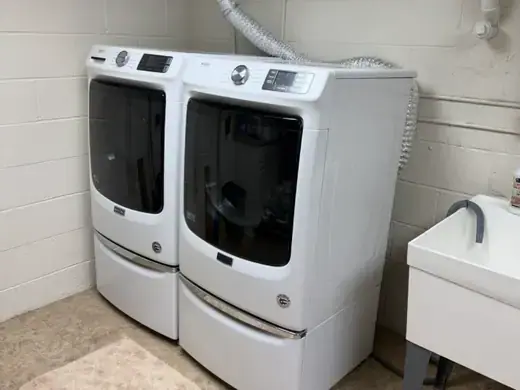
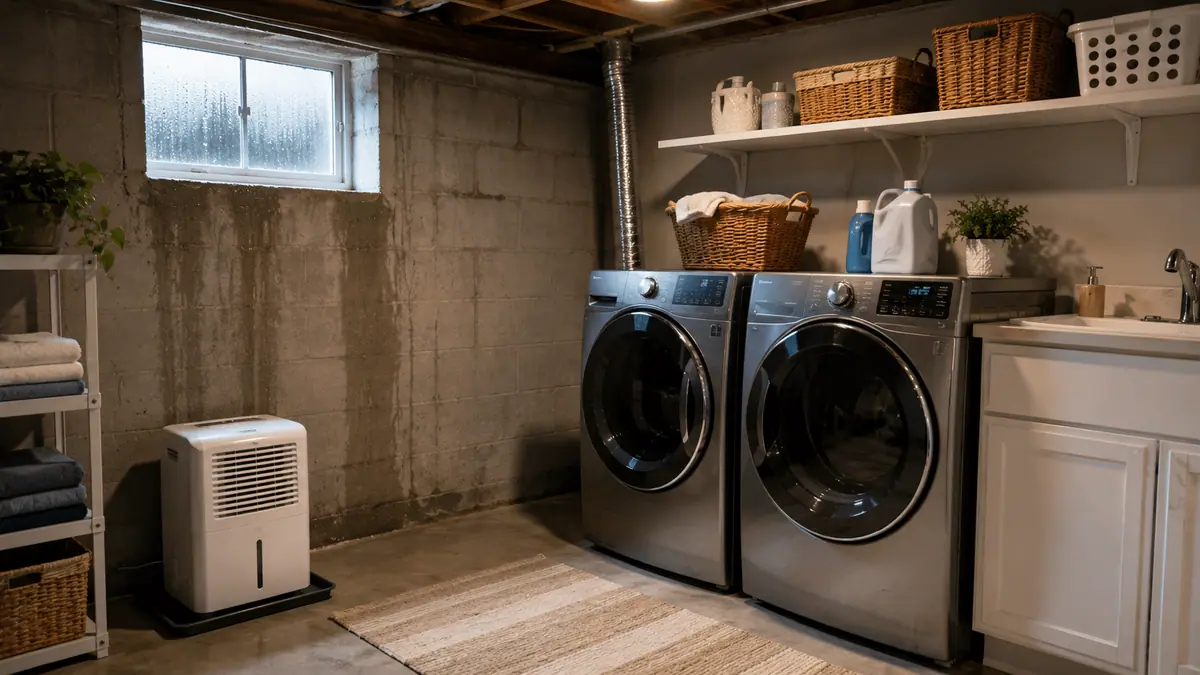
Basement laundry rooms get hit the worst. Concrete never really dries out, the washer sits right next to the dryer, plenty of houses have the sump pit in that same corner, and the door is usually shut. Your dryer ends up breathing the dampest air in the house. Propping the door open helps a bit, a dehumidifier helps a bit more. Neither will fix a vent that's half plugged, and when drying time nearly doubles, the vent is the more likely culprit.
Check the lint screen and the vent first
Start with the lint screen because it's free. Clean it every load. Every couple of months, take it to the sink and scrub it with dish soap, since dryer sheets leave a waxy coating you won't see. Then run tap water over it. Water beading on top means the coating is still there.
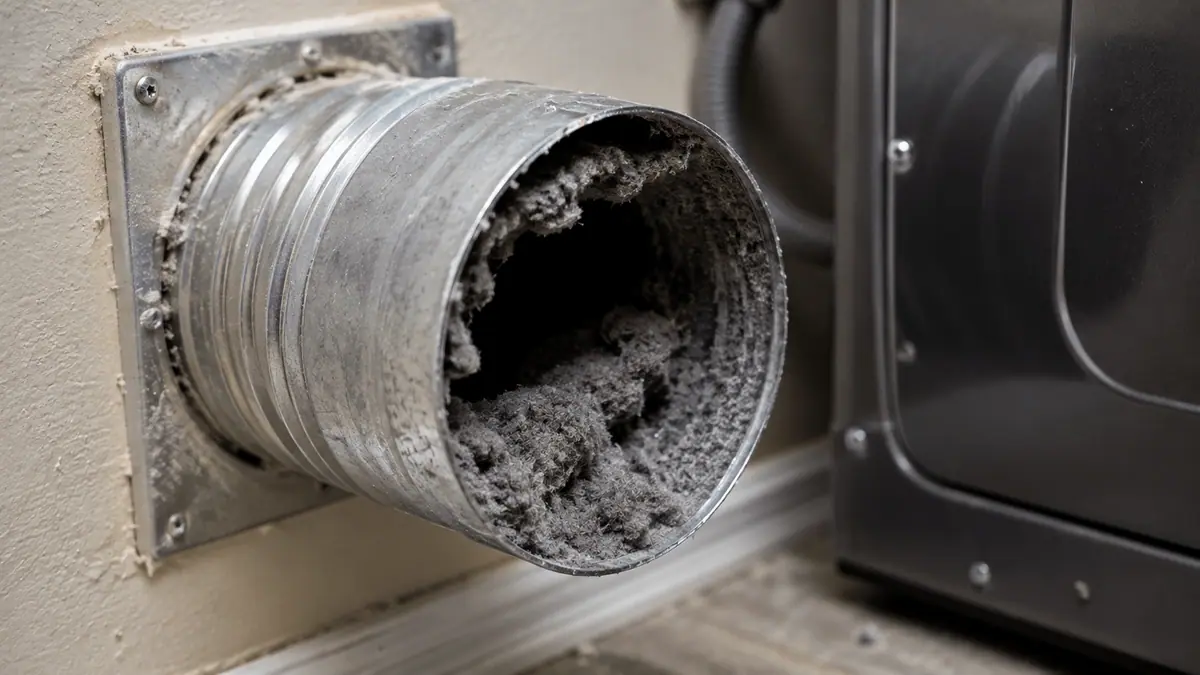
The vent check takes a minute outside. Turn the dryer on and hold your hand in front of the hood on the outside wall. You should feel warm air pushing hard. A weak little puff tells you lint is collecting somewhere in the run. The flexible foil section behind the machine is the usual spot. Elbows are next. Sometimes it's just the hood flap that no longer opens all the way. Long runs with three or four turns clog faster than short straight ones, which is why install manuals list a maximum length. The U.S. Fire Administration names failure to clean as the leading cause of home dryer fires, so do this one today.
Loading the dryer when the air is damp
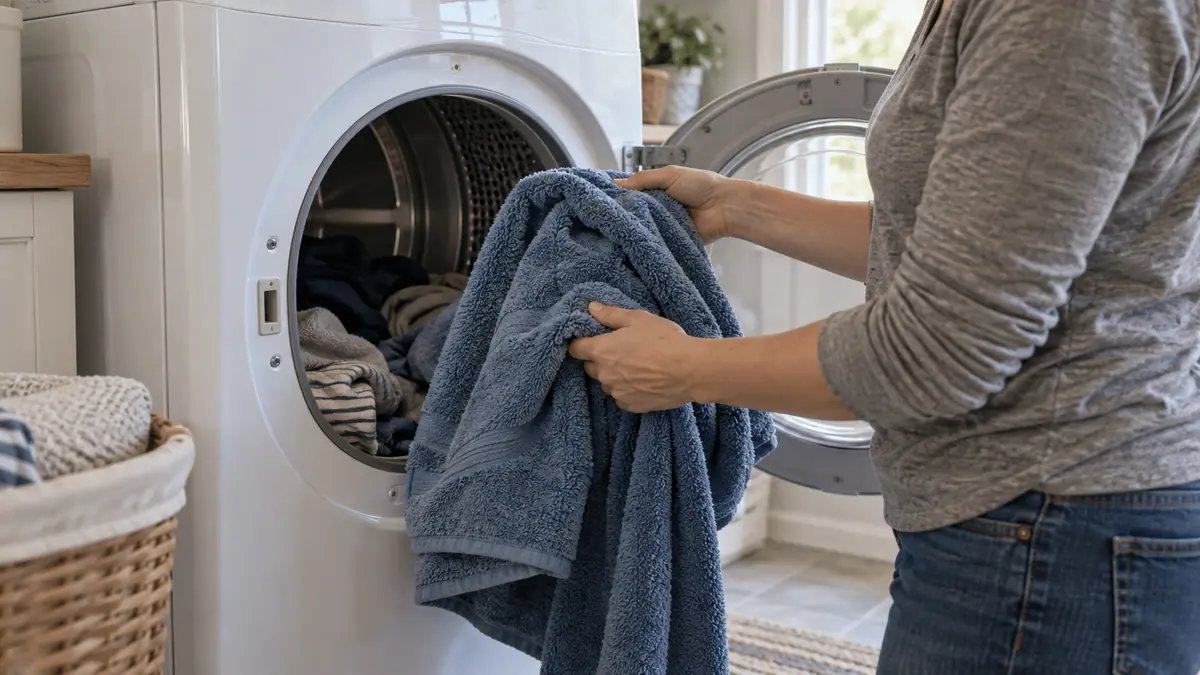
Overloading hurts more when the air is wet. Clothes jammed in tight don't tumble. Air slips around the pile instead of through it and the middle stays damp. Two medium loads usually finish sooner than one huge one. It also helps to use the highest spin on the washer so the dryer starts with less water.
Moisture sensors and auto dry
Newer dryers with sensor dry shut off when two metal bars inside the drum decide the clothes are dry. Softener and dryer sheets put a film on those bars. Once that happens the reading is off and the dryer quits too early or runs way too long. Wipe the bars with a little rubbing alcohol on a soft cloth.
What a normal summer slowdown looks like
It helps to know your own numbers. Time one regular load of towels in winter, on the setting you always use, and jot it down somewhere. When July comes, run the same kind of load the same way.
Ten or fifteen extra minutes is the weather. We see that in a lot of basements and it's nothing to fix. Half an hour more, or clothes that are still damp at the seams after a full cycle, isn't humidity anymore. Something is restricting the air or the heat has dropped off.
Gas and electric dryers react to damp air about the same way. The difference shows up when parts fail. A gas dryer with a weak igniter may light late and then shut off early, so you get warm bursts with cool gaps between them. An electric dryer with a half burned element just runs lukewarm the whole time.
When the problem is inside the dryer
Clean screen, strong air at the hood, a normal sized load, and the clothes still come out wet? Then something inside the dryer is failing. On electric models we often find a heating element that only partly works or a worn cycling thermostat. Gas models tend to have a weak igniter or tired valve coils. If the cabinet runs hotter than it used to or you smell burning, stop using it until it's checked.
We repair gas and electric dryers in Parma, Cleveland and the nearby towns. You hear the price before we start, and the repair carries a 90-day warranty. Call (216) 352-3935 or book online.
Questions people ask
How often should a dryer vent be cleaned?
Clean the lint screen every load. Have the duct itself cleaned about once a year, sooner if the run is long or the outside flap barely lifts when the dryer is on.
Does a dehumidifier help a basement dryer?
A little. Drier room air lets the dryer carry off water faster, and the whole basement benefits. It won't make up for a clogged vent, so check that first.
Does humid weather really make a dryer take longer?
A little. Damp air can't carry off as much water, so a load may need ten or fifteen extra minutes in summer. If drying time has nearly doubled, look at the vent before you blame the weather.
Why does my dryer take two or three cycles to dry clothes?
Most of the time it's airflow. A packed lint screen keeps the moist air in. So does a crushed foil hose behind the dryer, and so does a clogged hood outside. Overloading does the same thing. When all of that checks out, the heating side needs a technician.
Is a clogged dryer vent dangerous?
Yes. Lint burns easily and a blocked vent makes the dryer run hotter. The U.S. Fire Administration lists failure to clean as the leading cause of home dryer fires.
Why is my dryer hot but the clothes are still wet?
Heat with damp clothes usually means the hot, wet air can't get out. Feel for a strong stream at the outside hood. If it's weak, the vent is the problem, not the heater.
Should I repair or replace a dryer that dries slowly?
Slow drying is rarely a reason to replace. A vent cleaning costs little. An element or igniter is a modest repair too. We give you the price first so you can decide.