In this article
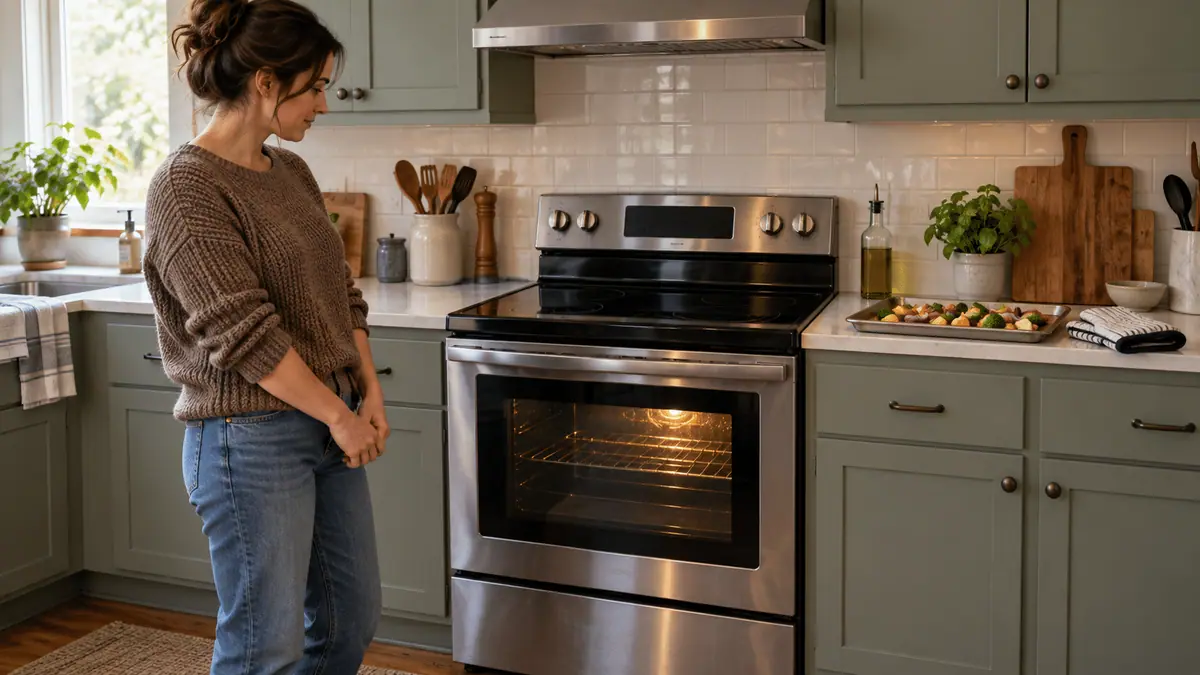
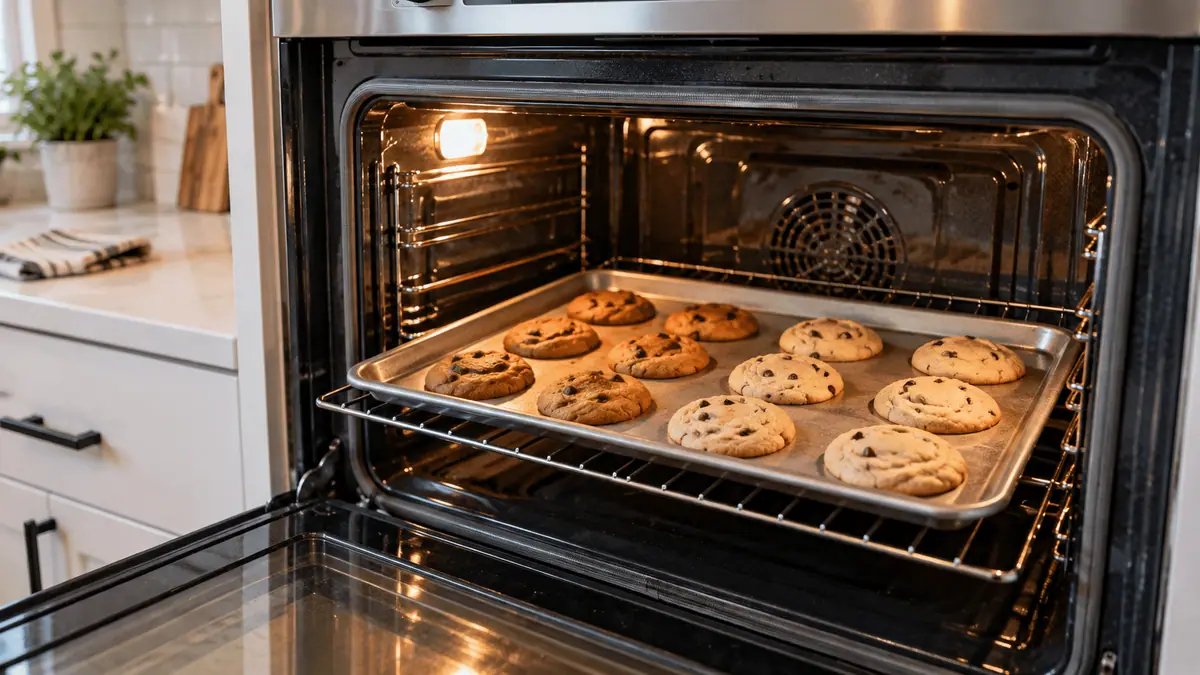
You pull out a tray of cookies and the back row is scorched while the front is still doughy. One odd batch is nothing. When it keeps happening with a recipe you've baked for years, the oven is heating unevenly. Sometimes it's just the pan or the rack. Sometimes a part is wearing out, and you can figure out which one without taking anything apart.
What uneven heating looks like
Folks describe it to us in all kinds of ways. The cake comes out with a hill on the left side. Lasagna is bubbling at one end and cool at the other. Or the pizza crust is black underneath and the cheese hasn't even melted.
One bad batch means nothing. We all have those. It's the same lopsided result week after week that points at the oven.
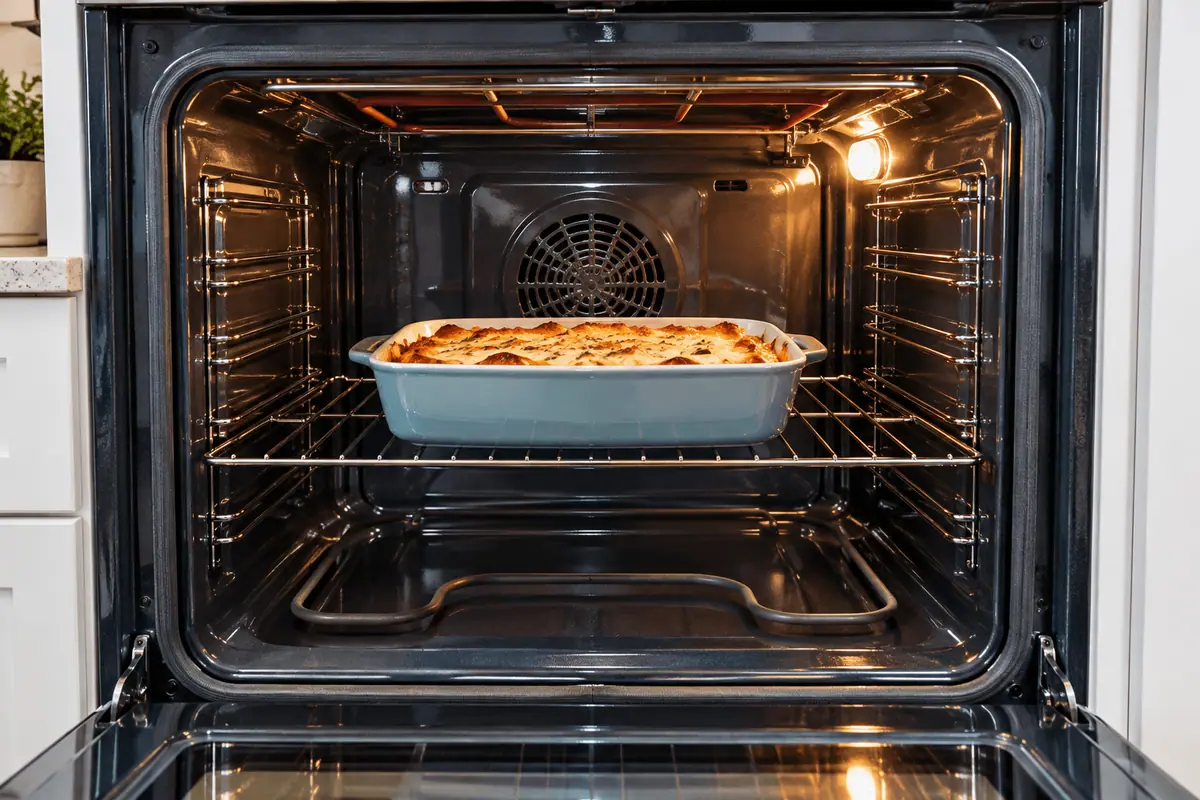
Rule out the setup first
Rack first. Recipes are written for the middle rack, and your pan wants a couple of inches of air around it. A big sheet pan jammed wall to wall blocks that. Two pans side by side on one rack do it too.
Your pans play a part too. Dark nonstick browns quicker than a shiny aluminum sheet does, and glass is its own thing.
Got foil lining the oven floor to catch drips? Take it out. Plenty of owner manuals say not to do that, since the foil throws heat back up unevenly and can fuse to the enamel.
Then preheat properly. On plenty of ovens the beep comes before the walls are actually hot, so the first tray in pays for it.
Two tests you can do tonight
Grab an inexpensive oven thermometer and set it on the center rack. Heat the oven to a normal baking temperature and leave it a good while after the beep. Read it. Read it again a bit later. A healthy oven drifts a little above and below the setting as the element cycles, and that's expected.
The second test finds hot spots. Lay slices of plain white bread across one rack and bake them for a few minutes. Afterwards the toast is basically a map of your oven. Say the slices in the back left corner come out darkest every time. That's the oven talking, not your recipe.
Usual suspects in an electric oven
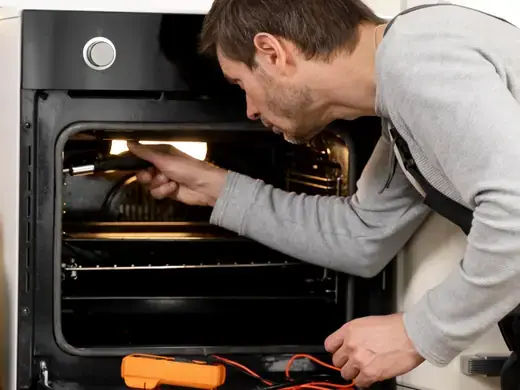
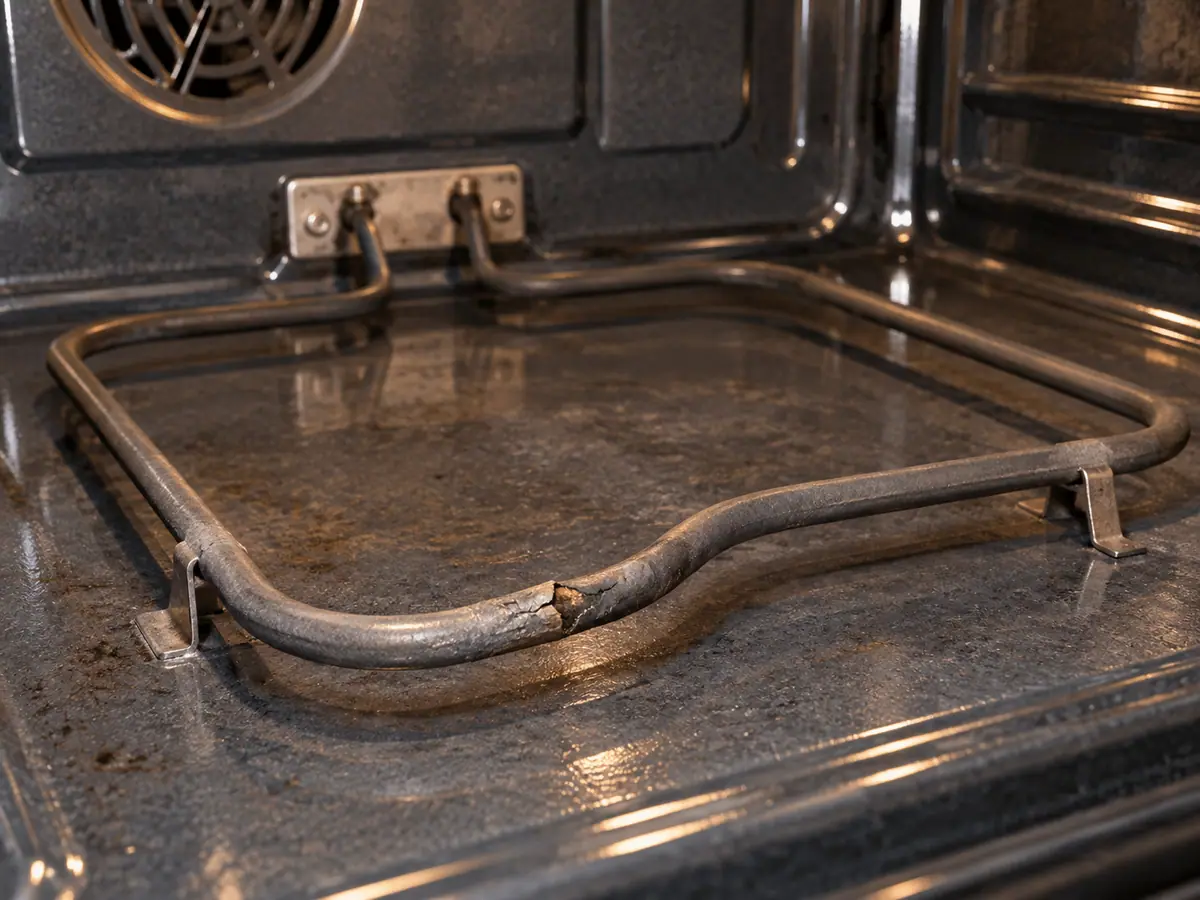
Most of the heat comes from the bake element, that loop of metal tube on the oven floor. Part of it can burn out while the rest keeps working. You still get heat, only less of it and in the wrong places. Once the oven's cold, take a close look. Watch for a bubble on the surface or a crack. On a hot oven, a section that stays dark while the rest glows orange tells you the same thing.
On many models the broil element up top kicks in during bake too. If it's weak, the tops of breads and casseroles come out pale even though the bottoms are fine.
Then there's the temperature sensor, a thin metal rod sticking out of the back wall. It tells the control board how hot the oven is. Once it starts reading wrong, the oven bakes hotter or cooler than the number on the display.
Usual suspects in a gas oven
On a gas oven the burner sits under the floor panel where you can't see it. What we replace most there is the igniter. An old one still glows red, it just takes its sweet time opening the gas valve. The burner lights late every cycle, and the oven keeps falling behind.
Some models let you see the flame through a slot. Steady and mostly blue is good. Floppy and yellow is not, and neither is a flame along only half the burner. Leave that one to a technician. Smell gas at any point? Get everyone outside first, then call the gas company.
The convection fan and the door seal
With convection there's a fan in the back wall stirring the hot air. Switch convect on and listen for it. If you hear nothing, the motor has likely quit. Food right in front of the fan cooking way faster than the rest points the same way, or to the ring element around the fan.
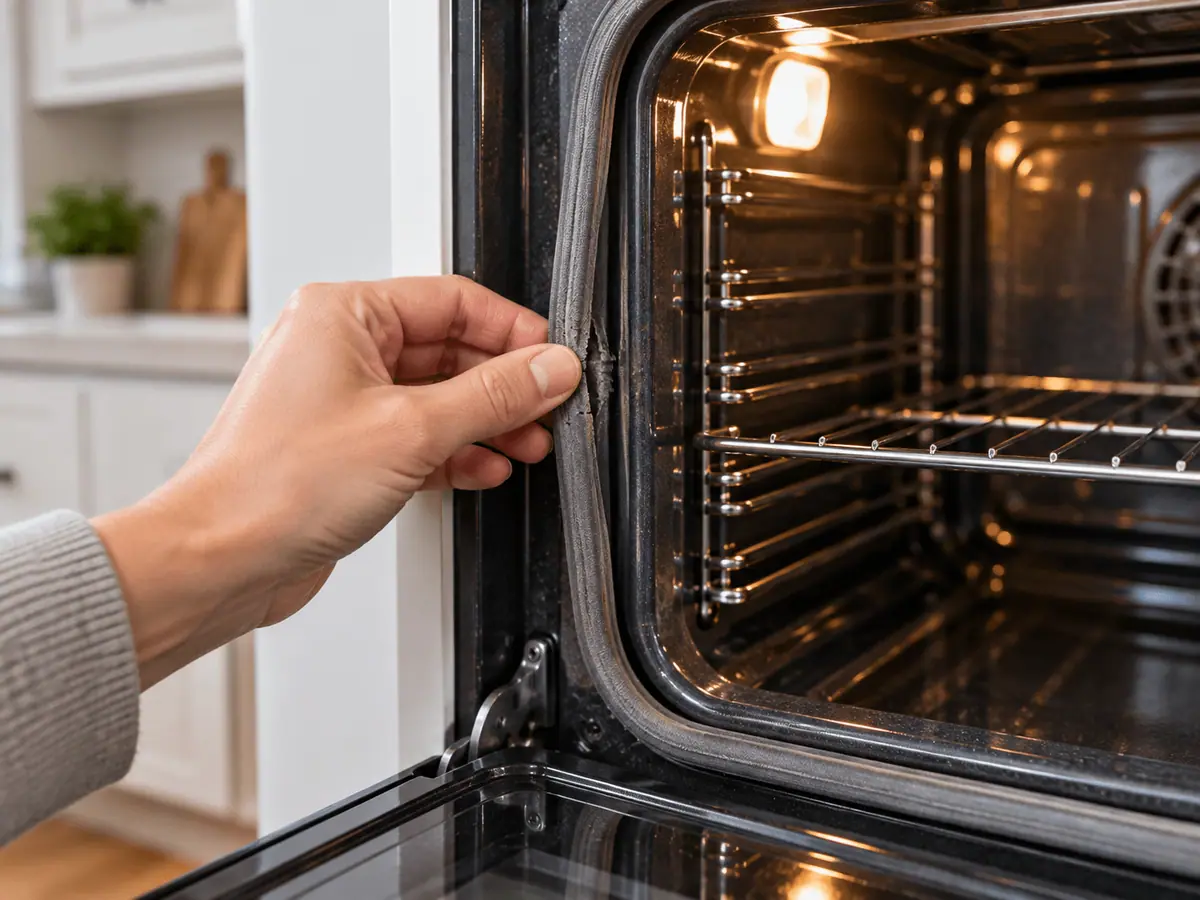
Now feel the door gasket with the oven cold. You're looking for flat spots, gaps or tears. Heat leaks out there, so whatever sits closest to the door comes out underdone. Swapping a gasket is one of the easier oven repairs.
When the whole oven runs off
Now and then the thermometer shows the whole oven running hot or cold by the same margin, front to back. That's not a hot spot, it's calibration. Lots of ovens let you dial in an offset through the control panel. Check your manual for the button combination. A huge gap is different, and so is one that changes from Monday to Friday. Then we'd test the sensor and the board instead.
When it's time to call us
Say you've sorted out the rack and the pans and pulled the foil. The bread still toasts darkest in one corner. Then a part is failing. Same goes for an element with visible damage or an oven that can't hold temperature. We test the elements and the sensor before quoting, plus the igniter on gas models. Most of these jobs get done in one trip, with our 90-day warranty on the work.
Book through our oven repair page or call (216) 352-3935. If it's also slow to heat up, read our guide on an oven that takes forever to preheat.
Questions people ask
Why is my oven cooking unevenly?
Check the setup before anything else. Bake on the middle rack with room around the pan, and take foil off the oven floor. If one side still browns faster, a worn bake element is the most likely cause. A weak broil element or a bad temperature sensor can do it too.
How can I tell if my oven is not heating evenly?
Spread slices of white bread across one rack and bake them for a few minutes. If the same corner toasts darkest every time, you've found a hot spot. An oven thermometer on the center rack shows whether the overall temperature is right.
Can a bad bake element cause uneven heating?
Yes. When part of the element burns out, the oven still warms up but slowly and lopsided. Look for a blister or a crack with the oven off and cool. It's a common repair.
Why does my gas oven heat unevenly?
Usually the igniter has gotten weak and the burner lights late. Sometimes the flame only burns on part of the burner. Both need a technician. If you smell gas, leave the house and call the gas utility first.
Should I recalibrate my oven?
Only if it's off by the same amount everywhere. Many ovens let you set an offset from the control. A big error or one that keeps changing means the sensor needs testing instead.
Do convection ovens heat more evenly?
When the fan works, they do. A convection oven with a dead fan can actually bake less evenly than a regular one, especially near the back wall.