Why Is My Refrigerator Leaking Water?
Published: September 22, 2026
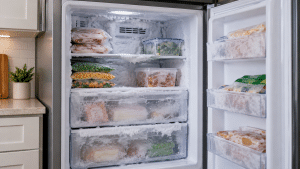
You open the freezer to grab something for dinner and suddenly realize the inside looks more like a tiny winter cave than a kitchen appliance. There is frost on the walls, a layer of ice around the drawers, frozen buildup near the vents, or maybe enough ice around the back panel that you can barely tell what the interior is supposed to look like. A little frost can happen occasionally, especially after the door has been left open, but heavy or constantly returning ice usually means something inside the freezer is not working the way it should.
The important thing to understand is that freezer ice does not simply appear because the compartment is cold. Ice buildup in a freezer requires moisture. Somewhere along the line, water vapor is entering the compartment, failing to drain correctly, or freezing in an area where it should not remain. Once you start thinking about the problem in terms of moisture rather than just cold temperature, troubleshooting becomes much easier. You are essentially trying to answer one question: where is all this water coming from?
In many cases, the cause is surprisingly simple. A dirty door seal, an overloaded shelf, a food package stopping the door from closing, or the habit of standing in front of an open freezer while deciding what to eat can create a lot more frost than most people expect. Other situations involve the drainage or automatic defrost system and may require a little more investigation.
The good news is that many common causes can be checked with your own hands without taking the appliance apart. You do not need to start replacing parts randomly or attacking the ice with tools. A logical inspection usually tells you far more.
Below, we will walk through the major reasons a freezer builds up too much ice, what each symptom can tell you, what you can safely check yourself, and how to keep the frost from coming right back.
Before trying to remove the ice, it helps to understand why it formed. Think of your freezer as a cold, controlled environment that is constantly trying to keep warm, moisture-filled household air outside. Every time humid air enters, some of that moisture can condense and freeze. When everything works properly, the appliance either limits that moisture through a tightly sealed door or periodically removes frost through its automatic defrost cycle.
That is why excessive freezer frost is usually a symptom rather than the actual problem. Scraping away the ice without finding the cause is similar to drying the floor without fixing the dripping pipe above it. Everything may look fine for several days, but the underlying condition is still there.
The location of the frost can offer useful clues. Light, fluffy frost around the door opening often points toward warm air leaking through the seal or entering because the door is opened frequently. A heavy sheet of ice on the freezer floor may suggest water is not draining correctly during the defrost cycle. Thick frost concentrated on an interior rear panel can indicate restricted airflow or a possible problem with the automatic defrost process. Frost covering food packages throughout the compartment may simply mean humid air is entering repeatedly.
Texture matters too. Soft, snowy frost usually forms when airborne moisture freezes gradually. Solid, clear ice often comes from liquid water that collected before freezing. If you see a frozen puddle at the bottom rather than fluffy frost on the walls, you are probably dealing with water movement rather than only an air leak.
Pay attention to changes in freezer performance as well. Are foods staying properly frozen? Is the freezer running almost constantly? Has airflow become weak? Are you hearing a fan rubbing against ice? Those details help separate a simple door-sealing problem from something deeper.
Instead of asking only, “How do I get rid of this ice?” ask, “Why is moisture getting here in the first place?” That small shift in thinking turns random guessing into practical troubleshooting.
Warm household air is one of the biggest contributors to frost buildup inside a freezer. The reason is basic physics. Warmer air can carry considerably more moisture than the cold air inside your freezer. When that warmer air enters the compartment, it cools rapidly. The moisture it was carrying has nowhere to go, so it condenses on cold surfaces and freezes.
Imagine opening your freezer on a humid summer afternoon. The room may feel comfortable to you, but the freezer experiences that incoming air almost like a cloud drifting into an icebox. Open the door once for a few seconds and the appliance can usually handle it without trouble. Leave the door open for several minutes, though, and a surprisingly large amount of moisture enters.
This is why frost often becomes worse during humid weather. You may not have changed anything about the freezer itself, yet suddenly you notice more ice along the drawers or walls. The room simply contains more moisture.
Warm air can enter even when nobody is intentionally opening the door. A small gap around the door seal may allow a slow but continuous stream of humid air inside. That tiny leak can create much more frost over several days than one long door opening.
You can sometimes identify this problem by looking at the frost pattern. If the heaviest frost appears near the door, particularly around one corner or edge, check whether the seal is making complete contact in that area. Moisture entering through a gap usually freezes fairly close to where it enters.
Another clue is condensation around the exterior edge of the compartment. If one section feels unusually damp or develops droplets, a sealing problem may be allowing temperature differences to create condensation.
Before assuming that a mechanical component has failed, pay attention to the simplest possibility: outside air is getting inside. Check the door, seal, food placement, and your household habits first. These causes are common, easy to overlook, and usually much easier to correct than an internal component problem.
The flexible seal running around the freezer door may not look important, but it performs one of the most critical jobs in the entire appliance. This door gasket creates the barrier between the cold, dry freezer interior and the warm, moisture-filled air in your home. When the gasket cannot seal tightly, frost buildup can become almost constant.
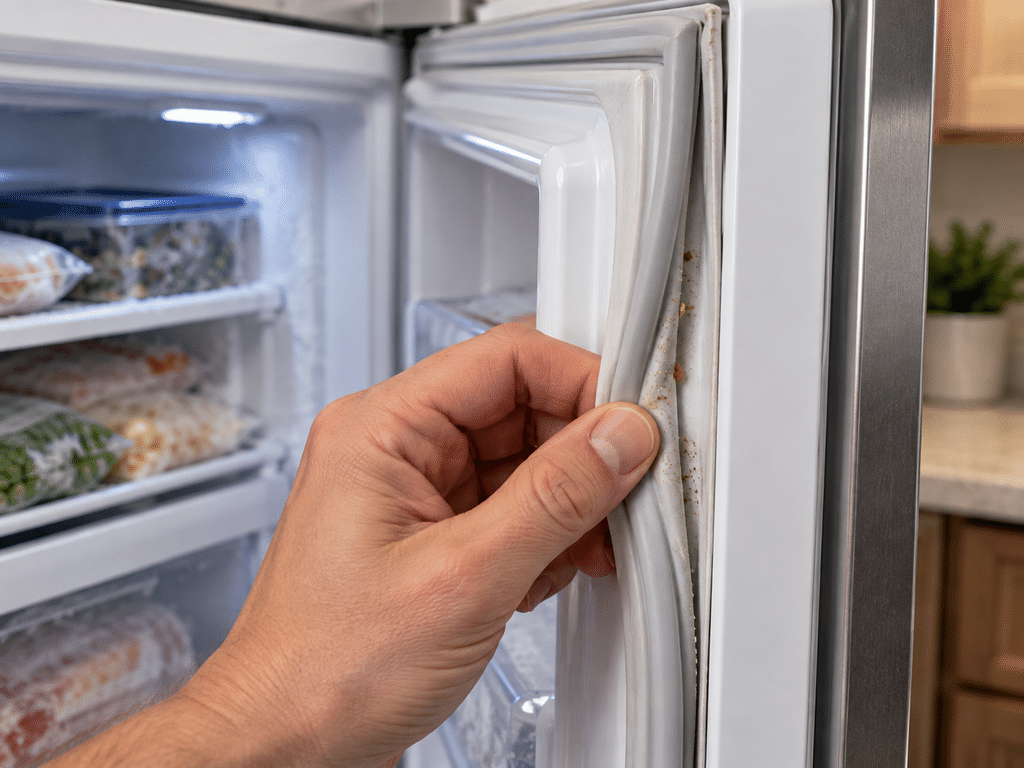
Start by inspecting the gasket carefully. Look for food residue, sticky spills, crumbs, grease, or anything else preventing the rubber from sitting flat against the cabinet. Even a surprisingly small piece of debris can create a narrow air channel. Remember, the leak does not need to be large. Moist air entering slowly for twenty-four hours a day can produce significant frost.
Clean the seal gently with warm water and mild dish soap. Use a soft cloth or sponge rather than an abrasive pad. Pay particular attention to folds and corners where residue tends to collect. Dry everything afterward and close the door again.
Next, inspect the gasket for physical damage. Cracks, hard sections, flattened areas, tears, or badly warped corners can prevent a proper seal. Run your fingers around the entire perimeter while looking for sections that feel noticeably different.
A simple paper test can help. Close the freezer door on a thin piece of paper so that half remains outside. Pull gently. You should feel noticeable resistance. Repeat the test around several areas of the door. If the paper slips out almost effortlessly in one location while holding firmly elsewhere, that area deserves closer inspection.
Do not assume the gasket itself is always the culprit. Sometimes the seal is fine but the door is slightly misaligned or something inside is pushing it open.
After cleaning and inspecting the gasket, wipe away existing moisture and monitor the compartment. If frost begins accumulating again specifically near one edge of the door, that pattern strongly suggests outside air is still entering there.
A good seal does not merely save energy. It controls moisture, which is exactly what you need when you are fighting excess ice in the freezer.
Sometimes the door gasket is perfectly usable, yet the freezer still develops heavy frost because the door simply is not reaching the fully closed position. This can be frustrating because the door may look closed from across the kitchen. A gap of only a few millimeters can allow enough humid air inside to create a serious icing problem.
Start with the obvious suspects: food packages, storage bins, and drawers. A frozen pizza box sticking out slightly, an overfilled bag, or a drawer that is not pushed completely back can interfere with the door. This is especially common after a large grocery trip when everything gets packed inside wherever it fits.
Take a few minutes to reorganize the compartment. Push drawers all the way into position and make sure no package extends beyond the front edge of the shelves. Then close the door slowly while watching how it meets the cabinet.
You should also inspect the hinges. A heavily loaded door can sometimes sag over time, particularly if items are routinely stored in door bins. Look at the gap around the closed door. Ideally, it should appear reasonably even from top to bottom. If one corner appears farther away from the cabinet, door alignment may be contributing to the problem.
The freezer’s position matters as well. If the appliance is significantly tilted in the wrong direction, gravity may not help the door close properly. Check that the unit is stable and not rocking. Depending on the appliance design, a slight backward tilt may help the door swing closed, but you should follow the installation requirements for your particular unit.
Another surprisingly common situation occurs when the door is closed too gently. After opening another compartment or pushing a drawer inside, air pressure can occasionally cause the freezer door to move slightly outward. Make it a habit to confirm that the door has actually sealed.
If you have children in the house, frequent incomplete closing can explain seemingly mysterious frost buildup too.
When troubleshooting a freezer that keeps icing up, watch the door rather than assuming it is closing. A door that looks closed and a door that is actually sealed are not always the same thing.
Not every frost problem means something is broken. Sometimes the freezer is simply dealing with more moisture than it was designed to handle during normal operation. Everyday habits can quietly introduce enough humidity to create layers of frost.
One common habit is leaving the door open while searching for food. We have all done it. You stare into the freezer hoping dinner will somehow announce itself while cold air spills onto the floor. Meanwhile, warm household air moves into the compartment. The longer the door stays open, the more moisture enters.
A better habit is to decide what you need before opening the door. Keeping food organized also helps because you spend less time digging through stacked packages.
Another source of moisture is warm food. Putting a steaming or recently cooked container directly into the freezer releases water vapor inside the compartment. The freezer can handle normal food storage, but repeatedly loading it with hot, moisture-rich food makes frost formation more likely. Allow cooked foods to cool appropriately before freezing them while still following safe food-handling practices.
Uncovered food is another culprit. Water naturally leaves exposed foods through evaporation and eventually freezes somewhere else inside the compartment. Use properly sealed containers or freezer-safe wrapping whenever possible. This not only limits frost but also protects food quality and reduces freezer burn.
Large amounts of fresh food can temporarily increase moisture too. If you load the freezer with several unfrozen items at once, the compressor may run longer while the compartment pulls everything down to freezing temperature. During that period, additional moisture may appear.
Household traffic matters. A freezer opened twenty times during a family gathering is dealing with very different conditions from one opened twice in an evening.
The key is not to become obsessive about opening the door. Freezers are built to be used. The goal is simply to reduce unnecessary exposure to warm, humid air. If your appliance seems mechanically fine but frost keeps appearing everywhere, look at how moisture might be entering through everyday use before assuming an internal failure.
A freezer does more than create cold air. It also needs to move that cold air around the compartment. When airflow becomes restricted, you can end up with uneven temperatures, unusually cold spots, warmer areas, and frost collecting where it normally would not.
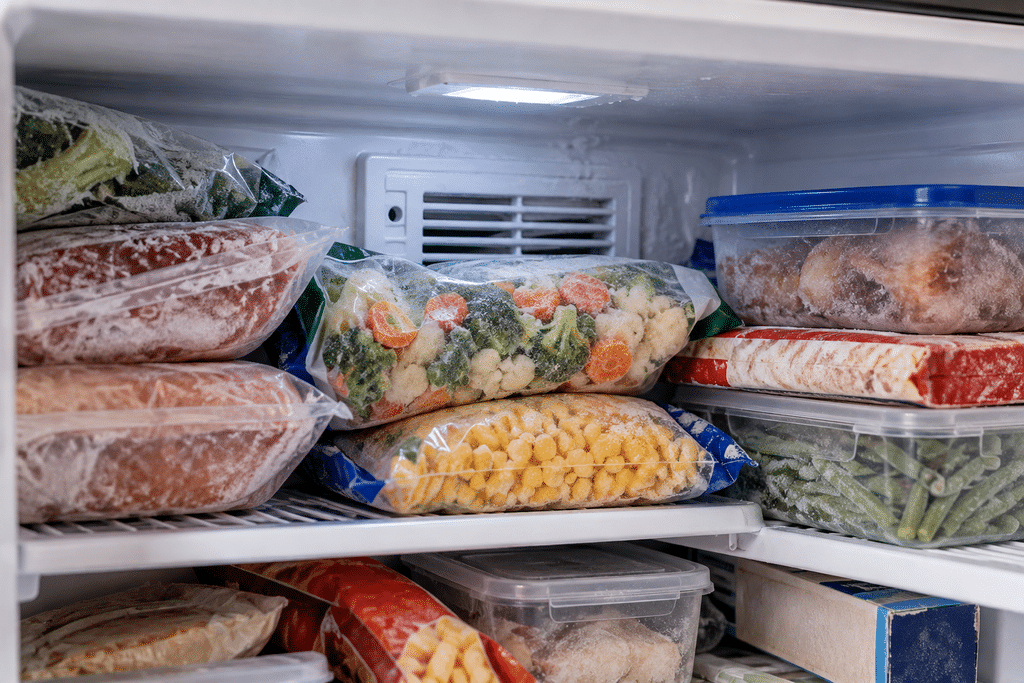
It is tempting to pack a freezer completely full because a well-stocked freezer can hold temperature efficiently. The problem comes when packages are crammed directly against vents, walls, or air passages. Cold air needs a path to circulate. If a bag of vegetables or large container blocks a vent, the surrounding area may become excessively cold while other sections struggle to stay at the correct temperature.
Look inside for vent openings, especially near the rear wall. Do not force food tightly against these areas. Leave enough space for air to move around packages.
A blocked vent can also create a strange cycle. Cold air becomes trapped near the outlet, moisture freezes nearby, and the growing frost then blocks even more airflow. Eventually you may see substantial ice around the back of the compartment.
Overpacking can cause another problem: something may prevent a drawer or door from closing correctly. That means restricted airflow and outside moisture can occur at the same time.
On the other hand, an almost empty freezer can experience larger temperature swings whenever the door is opened. You do not need to fill empty space artificially, but keeping a reasonable amount of frozen food inside can help stabilize temperatures.
While checking airflow, listen for the internal fan if your freezer uses one. Depending on the design, the fan may stop when the door is open, so you might need to listen immediately after closing it. Scraping, clicking, or buzzing sounds can sometimes occur when fan blades are contacting accumulated ice.
If ice has already blocked airflow, simply reorganizing the food may not solve the problem immediately. A full defrost may be necessary before you can accurately judge whether airflow has returned to normal.
Good organization is not only about finding your food. In a freezer, space between items is part of the cooling system.
If you are seeing a solid sheet of ice across the bottom of the freezer, especially one that returns after being removed, the defrost drain deserves attention. This problem looks different from the light, snowy frost typically caused by humid air entering through the door.
Many freezers periodically melt frost that develops on cold internal surfaces. That water needs somewhere to go. It normally travels through a drain opening and a small drainage path to an area where it can safely evaporate. If that opening becomes clogged with debris or frozen shut, the water cannot leave.
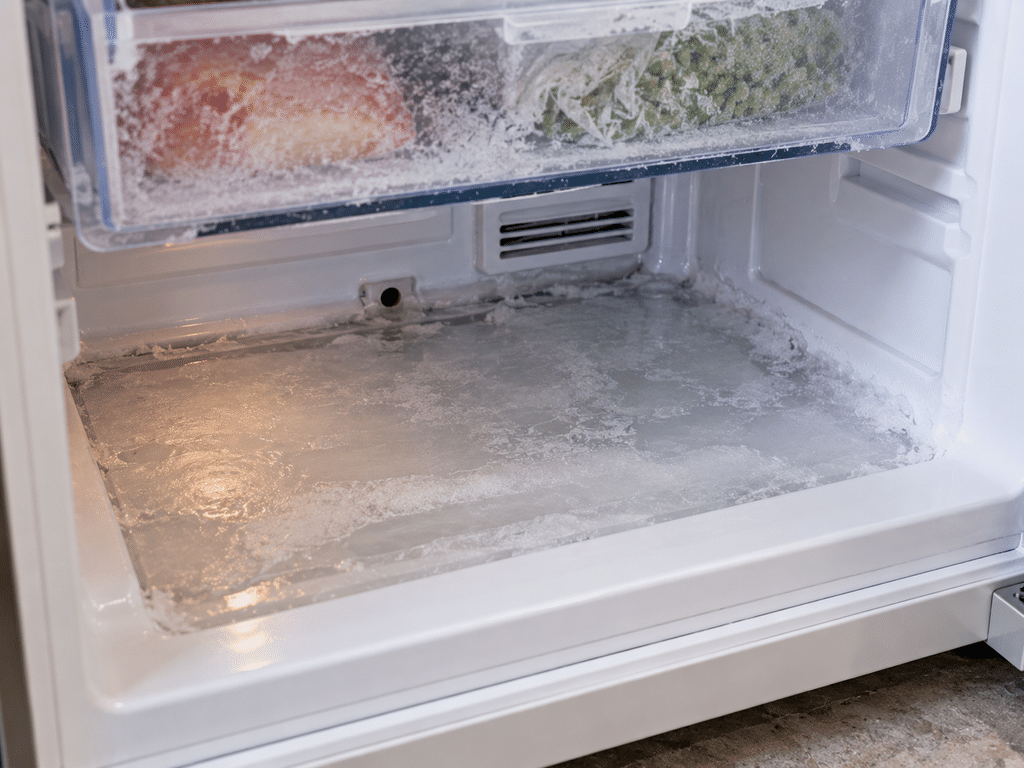
Instead, it flows where gravity takes it. That may be under a bottom drawer or across the freezer floor. Since the compartment is still below freezing, the water turns into a solid slab of ice. During the next defrost cycle, more water arrives and adds another layer.
One clue is recurring ice in exactly the same lower area. You may remove it completely and discover another frozen puddle several days later. That repeating pattern suggests liquid water is reaching the area.
Before investigating a drain, disconnect power to the appliance. If the drain opening is accessible without disassembling electrical components, you may be able to inspect it visually after the freezer has thawed. Food particles or ice can sometimes block the entrance.
Warm water can help melt ice in an accessible drain, but use controlled amounts. Do not pour boiling water onto plastic parts or cold glass because sudden temperature changes can cause damage.
Avoid forcing wire, screwdrivers, or sharp objects into the drain. The drainage tubing may be easier to puncture than it looks.
Also remember that a frozen drain can sometimes be a symptom rather than the entire cause. If the drain repeatedly freezes after being cleared, another condition may be causing abnormal ice formation around it.
A freezer with ice on the bottom is giving you a different clue than one covered in fluffy frost. Recognizing that difference can save you a lot of unnecessary troubleshooting.
Many modern freezers are designed to control frost automatically. That does not mean frost never forms. A small amount naturally develops on very cold internal surfaces during normal operation. The automatic defrost system periodically warms specific areas just enough to melt that frost, then allows the resulting water to drain away.
When part of that process stops working, frost can build layer after layer until it becomes thick enough to restrict airflow. This is one of the situations where heavy frost on an internal rear panel can be particularly significant.
The defrost process generally depends on several components working together. There is a heating element responsible for melting frost, a temperature-sensing device that controls when heating should stop, and some form of timer or electronic control that determines when the defrost cycle takes place. Exact designs vary.
If any part of that chain fails, the evaporator area can become buried in ice. At first, the freezer may still seem cold. In fact, you might wonder why an appliance that is obviously producing plenty of cold could possibly have a problem.
The trouble comes from airflow. Once the internal coil area becomes covered with thick ice, the fan cannot move air efficiently through it. Temperatures then become uneven, cooling performance may decline, and the freezer may run for unusually long periods.
You may also hear fan blades touching ice.
A complete manual defrost can temporarily restore normal cooling because it removes the physical ice blockage. If everything works beautifully for several days or weeks and then the same heavy frost gradually returns, an automatic defrost problem becomes more plausible.
Electrical testing of heaters, sensors, wiring, or control circuits requires appropriate knowledge and equipment. You can safely identify the pattern yourself, but there is no benefit in replacing components randomly.
Start with the simpler causes covered earlier: door sealing, airflow, food placement, and drainage. If those check out and thick internal frost repeatedly returns after a complete thaw, the defrost system deserves closer technical diagnosis, and professional freezer repair may be appropriate.
Many people respond to a frost problem by turning the freezer colder. It feels logical: frozen food belongs in a cold freezer, so colder must be better. In reality, an unnecessarily low temperature can increase operating time and sometimes contribute to icing symptoms without solving the actual cause.
For normal food storage, a freezer is generally intended to stay around 0°F (-18°C). You do not need to turn the control to its maximum setting unless there is a specific reason and the appliance instructions call for it.
Keep in mind that the number printed on a control dial does not always represent an exact temperature. A setting marked “5,” for example, might simply be a relative cooling level. A basic freezer thermometer can give you a much clearer picture of what is actually happening.
Temperature measurement also helps diagnose other conditions. Suppose the control is set normally but the freezer is far colder than expected and runs almost continuously. A temperature-control or sensing problem could be involved.
The opposite can happen as well. A freezer may develop ice around one location while the overall compartment becomes too warm because frost has blocked airflow. That is why you should not diagnose the appliance based only on seeing ice. Lots of ice does not automatically mean the freezer is cooling correctly.
Give temperature changes time to stabilize. Adjusting the control every few hours makes troubleshooting difficult because the appliance never reaches a steady condition. After a reasonable adjustment, keep the door closed as much as possible and monitor the temperature.
Food placement can affect readings too. Do not place your thermometer directly against an extremely cold wall if you are trying to understand the general compartment temperature.
If the actual temperature behaves normally but frost appears primarily near the door, focus on moisture infiltration instead. If temperature swings are large or the freezer seems unable to regulate itself even after a complete defrost, the control or sensing system becomes more relevant.
Temperature is one piece of the puzzle, not the entire puzzle. Use it as diagnostic evidence, rather than automatically turning the dial colder whenever something looks wrong.
We tend to think of a freezer as an isolated box, but the room around it has a major influence on how hard it needs to work. High humidity, extreme heat, poor ventilation, and unsuitable installation locations can all contribute to conditions that make frost problems worse.
Humidity is especially important. If the freezer is in a humid basement, garage, or utility area, every door opening introduces more water vapor than it would in a climate-controlled room. A tiny door-seal leak also becomes much more noticeable because the surrounding air contains more moisture.
High room temperatures create another challenge. The refrigeration system must remove more heat to keep the interior cold. If ventilation around the appliance is poor, that job becomes even harder.
Make sure required ventilation areas are not blocked by boxes, furniture, dust, or stored household items. Different freezer designs release heat in different ways, so follow the clearance requirements intended for the appliance.
Garages deserve special attention. In some climates, garage temperatures swing from extremely hot in summer to very cold in winter. Not every freezer is designed to operate across that entire range. Unusual ambient temperatures can interfere with normal cycling and temperature control.
Direct sunlight can also increase heat load. A freezer sitting beside a sunny window may spend hours absorbing additional heat every afternoon. Likewise, positioning it close to an oven, heating vent, radiator, or other heat-producing appliance can make the cooling system work unnecessarily hard.
Check that the freezer is sitting firmly and correctly. An unstable appliance can contribute to door-alignment problems, and a poorly closing door brings us right back to moisture infiltration.
Placement is rarely the only explanation for enormous ice buildup, but it can magnify other issues. A slightly imperfect gasket may cause modest frost in a dry, air-conditioned kitchen and severe frost in a humid garage.
When diagnosing recurring frost, do not look only inside the freezer. Take a few steps backward and inspect the environment around it. Sometimes the appliance is reacting exactly as you would expect to difficult conditions outside.
When ice has become thick enough to block vents, jam drawers, or cover interior panels, you may need to remove it before you can accurately diagnose anything else. A complete defrost gives you a clean starting point and allows airflow and drainage paths to return to normal.
Begin by moving food to another freezer or an insulated cooler with enough cold material to keep it safely frozen. Work efficiently, particularly with meat, seafood, dairy products, and other temperature-sensitive foods.
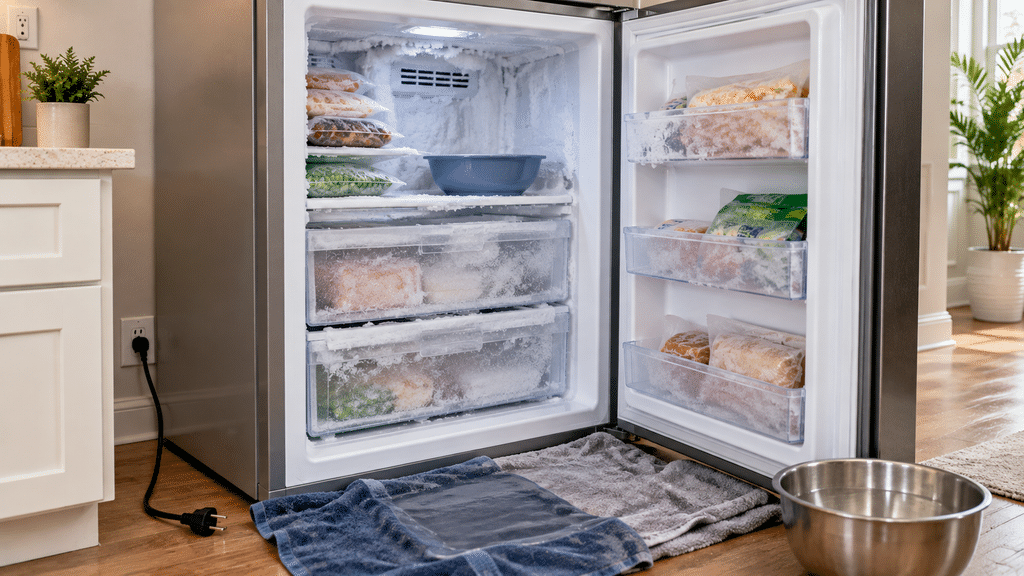
Next, disconnect electrical power to the freezer. Do not simply turn the temperature control warmer and assume the appliance is safe to work around. Unplugging it removes the possibility of fans, heaters, or compressors operating while you are cleaning.
Open the door and place absorbent towels around the lower area. Melting a surprising amount of frost can produce a surprising amount of water. Check the towels regularly so the floor does not become soaked.
The safest defrosting tool is time. Leave the door open and allow the ice to melt naturally. You can place containers of warm—not violently boiling—water inside to speed the process. Replace the water as it cools.
Never attack the ice with knives, screwdrivers, chisels, or other sharp objects. This is one of the most important DIY rules. A puncture in a refrigerant line or interior panel can turn a simple frost problem into a major repair instantly.
Avoid using uncontrolled high heat too. Extremely hot devices can deform plastic liners, damage wiring, or expose electrical equipment to moisture.
As the ice softens and releases naturally, remove loose pieces by hand. Wipe the interior dry once everything has melted. If an accessible drain opening is present, inspect it for obvious blockage while the freezer is thawed.
Before restoring power, make sure water is not pooled around electrical areas. Then restart the freezer, allow it to reach the proper temperature, and reload the food.
Most importantly, treat defrosting as a diagnostic reset, not automatically as the final repair. If heavy ice returns quickly, you now know there is an underlying condition still waiting to be found.
The easiest way to troubleshoot a freezer is to move from simple, common causes toward more complicated ones. Randomly replacing parts wastes time and can easily leave the real problem untouched.
Start by identifying where the ice appears. Frost near the door suggests air leakage. A frozen sheet across the bottom suggests water may not be draining correctly. Thick frost behind or across the back interior panel can point toward airflow or automatic defrost issues. Frost scattered throughout the compartment may indicate repeated humidity exposure.
Next, check the door. Remove anything that could interfere with closing and inspect the gasket all the way around. Clean it, check for damage, and use the paper test in several places.
Then examine how the freezer is loaded. Pull packages away from air vents and make sure drawers slide completely into position. If the freezer is packed tightly enough that air cannot circulate, reorganize it.
Think about recent household behavior. Was the door accidentally left open? Did someone load a large amount of warm food? Has the weather recently become extremely humid? Sometimes one unusual event explains the entire episode.
If frost is already severe, perform a complete safe defrost before continuing. This matters because existing ice can create new symptoms of its own. A fan blocked by ice, for example, cannot tell you whether the airflow system will work normally once the ice is gone.
After restarting the freezer, monitor both temperature and frost development. Take a photo of the clean interior if helpful. Then compare it several days later. Where the new frost appears first can provide an important clue.
If ice begins returning around the door, investigate sealing. If water freezes on the bottom, investigate drainage. If a thick layer gradually returns behind the interior rear wall despite good door sealing and normal use, the automatic defrost system becomes more suspicious.
Stop DIY troubleshooting when you reach sealed refrigerant components, inaccessible electrical circuits, damaged wiring, or testing procedures you are not trained to perform.
A good repair process is less about guessing the right part and more about following the evidence the freezer is giving you.
Once your freezer is clean and operating normally again, preventing another frozen mess is much easier than dealing with thick ice later. Most prevention comes down to controlling moisture, protecting airflow, and catching small problems before they become large ones.
Start with the door gasket. Wipe it periodically so crumbs and sticky residue do not prevent a tight seal. You do not need an aggressive cleaner. Mild soapy water and a soft cloth are usually enough for routine cleaning.
Make a habit of checking that the door closes completely. This matters particularly after reorganizing groceries or filling the freezer. Large boxes have an impressive talent for moving just far enough forward to interfere with the door.
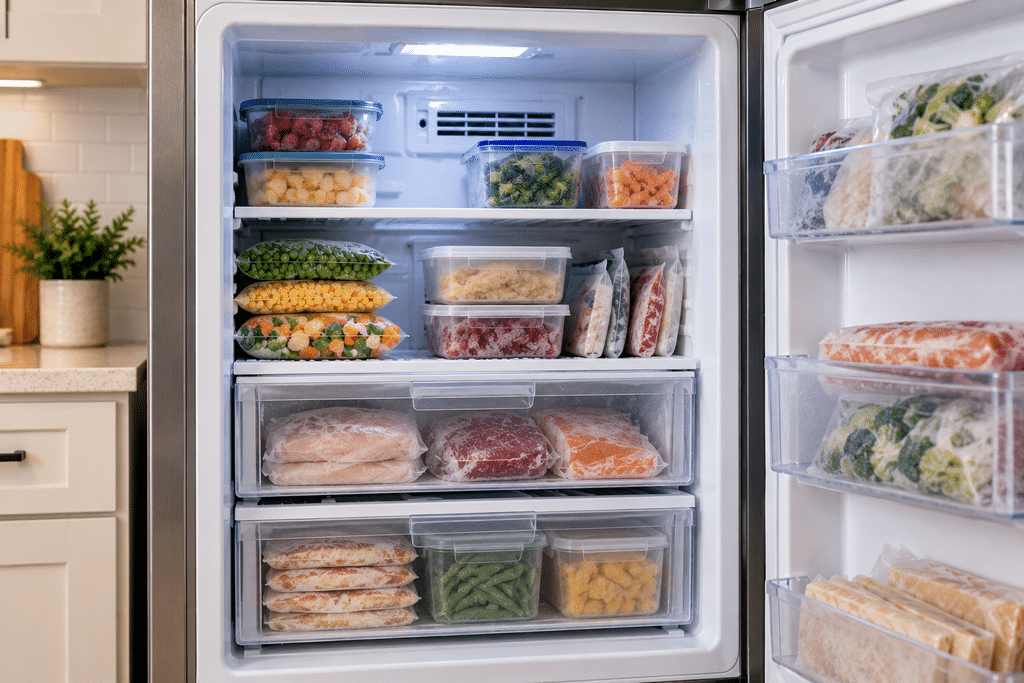
Keep air vents clear. You can store plenty of food without pressing every package tightly against the rear wall. A little breathing room allows cold air to circulate and keeps the freezer temperature more even.
Cover or seal food before freezing it. This keeps moisture in the food where it belongs rather than allowing water vapor to circulate through the compartment. Proper packaging also reduces freezer burn.
Avoid placing steaming containers directly in the freezer. Once food has been cooled safely, package it and freeze it.
Try not to leave the door open while deciding what to cook. Organizing similar foods together helps. If frozen vegetables are in one section and meat in another, you can grab what you need without conducting an archaeological expedition every evening.
Check the freezer temperature occasionally with a thermometer. A stable reading around the intended storage temperature can reveal problems before food quality suffers.
Watch for the first signs of unusual frost. A thin patch near one corner of the door is much easier to investigate than an entire wall covered in ice three months later.
And if you ever perform a full defrost because of unexplained heavy ice, note when you did it. If the frost returns on a predictable schedule, that information can be useful for diagnosing an automatic defrost problem.
The goal is not to maintain a perfectly frost-free museum display. The goal is to notice unusual or rapidly increasing ice buildup and correct the moisture source early.
When a freezer starts building up too much ice and frost, the cold temperature itself is rarely the mystery. The real issue is usually moisture: where it is entering, where it is collecting, and why the freezer is not getting rid of it normally.
Start with the simplest explanations. Make sure the door closes completely. Clean and inspect the gasket. Check that food packages and drawers are not interfering with the door. Give air vents room to breathe and think about whether frequent door openings, warm food, uncovered containers, or humid weather could be adding unusual amounts of moisture.
The shape and location of the ice can point you in the right direction. Fluffy frost around the door usually tells a different story from solid ice on the freezer floor. A frozen puddle may indicate a drainage issue, while recurring heavy frost behind an interior rear panel may suggest that the automatic defrost process is not doing its job.
A complete manual defrost can be extremely useful because it resets the situation and removes ice that may be blocking airflow. Just remember that thawing the freezer does not necessarily repair whatever created the ice. Watch what happens afterward.
Most importantly, work safely. Unplug the freezer before defrosting or investigating accessible internal areas, and never use knives or sharp tools to break ice away. Puncturing something behind the liner can create far more trouble than the original frost.
There is a lot you can learn simply by inspecting, cleaning, reorganizing, monitoring temperature, and watching where the ice returns. Those DIY freezer checks can solve many ordinary frost problems without replacing anything at all.
And when the evidence points toward internal electrical components, sealed refrigeration parts, or a repeatedly failing defrost system, you will at least have narrowed down the symptoms instead of guessing blindly. Understanding why the ice forms is what turns a frustrating frozen mess into a manageable appliance problem.
We repair a wide range of household appliances including refrigerators, washers, dryers, ovens, dishwashers, and more. No matter the brand or model, our experienced technicians are ready to help. We repair commercial appliances as well: commercial washers dryers, commercial refrigerators & freezer & more.
We service a wide range of household appliances, including refrigerators, dryers, washers, ranges, cooktops, dishwashers, freezers, ice makers, ovens, and double ovens.
Our technicians operate across many locations in Ohio, covering major cities like Cleveland, Akron, and Parma. We also serve surrounding areas including Lakewood, Westlake, Strongsville, and Brooklyn.
Our service area extends to Rocky River, Euclid, Solon, Beachwood, and Cleveland Heights, as well as counties such as Cuyahoga, Lorain, Lake, and Medina.
Additional cities we cover include North Olmsted, North Ridgeville, Valley City, Lorain, Avon Lake, Richfield, Brecksville, Garfield Heights, Seven Hills, Brunswick, Oakwood, Mentor, and Willoughby.