Why Your Refrigerator Runs Constantly in Cleveland
Published: September 11, 2026
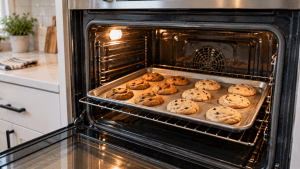
You set the oven to 375°F, slide in a tray of cookies, and expect a dozen evenly browned results. Instead, six cookies look perfect, three are pale, and the rest are getting dangerously close to charcoal. If that sounds familiar, your cooking skills probably are not the problem. Uneven oven heating is one of the most common appliance complaints homeowners deal with, and it can turn even a reliable recipe into a guessing game.
An oven should maintain a reasonably consistent temperature throughout the cooking cavity, but several components have to work together for that to happen. Heating elements need to produce the correct amount of heat, fans have to circulate hot air properly, sensors must accurately measure temperature, and the door needs to keep that heat inside. When one part begins to weaken, the oven may still technically “work,” which is why the problem can be so frustrating. It turns on, it gets hot, and food cooks—but not evenly.
The first sign is often subtle. Maybe casseroles need an extra 15 minutes. Perhaps frozen pizza burns at the back while the front remains pale. You might find yourself rotating baking sheets halfway through every recipe because one side consistently cooks faster. At first, these little adjustments feel manageable. Eventually, though, they become clues that the oven is compensating for an underlying mechanical or electrical issue.
Some causes are simple enough to correct at home. Rack placement, overcrowding, dirty surfaces, and incorrect cookware can all affect heat distribution. Other problems involve damaged heating elements, failing temperature sensors, control boards, igniters, or electrical connections. When those problems are suspected, professional oven repair becomes the smarter and safer choice.
Understanding the difference matters. You do not want to pay for a service call because a baking sheet was blocking airflow, but you also do not want to keep operating an oven with an electrical component that is visibly damaged. The goal is to recognize what your oven is telling you before uneven cooking becomes complete heating failure.
Uneven heating does not always mean one side of the oven is dramatically hotter than the other. Sometimes the symptoms appear as inconsistent cooking times. A recipe you have made dozens of times suddenly takes 20 minutes longer. Other times, food browns normally on top but remains undercooked in the center. You may also notice that everything placed toward the back of the oven cooks faster than food near the door.
Baking makes these problems especially easy to spot. Cakes can rise unevenly, leaving one side noticeably taller. Bread may develop a dark crust in one area while staying pale elsewhere. Cookies on the same sheet may range from barely baked to overdone. Roasted vegetables might caramelize beautifully on one corner of the pan while remaining soft and watery on the opposite side. These patterns often reveal how heat is—or is not—moving through the oven.
The confusing part is that some temperature variation inside an oven is normal. Residential ovens do not maintain one perfectly fixed temperature every second. The heating system cycles on and off, allowing the temperature to rise slightly above the set point and then fall below it before heating again. What matters is the average temperature and how evenly that heat reaches different areas of the cavity.
A serious problem is more likely when cooking results repeatedly show the same pattern. If the left side always burns, that consistency matters. If the bottom of every dish overcooks while the top stays pale, something may be wrong with heat balance. If the oven claims to be preheated but food consistently takes far longer than expected, a temperature sensor or heating component may not be performing correctly.
Pay attention to changes rather than chasing perfection. Your oven may always have had one slightly warmer corner, and experienced cooks often learn to work around that. But if an appliance that used to bake evenly suddenly develops obvious hot and cold zones, that change deserves attention.
Modern ovens look simple from the outside, but the heating process involves more coordination than most people realize. In a standard electric oven, the bake element usually provides most of the heat during normal baking, while the broil element may cycle occasionally to help maintain temperature. In a convection model, a fan moves heated air around the cavity to improve temperature consistency and speed up cooking.
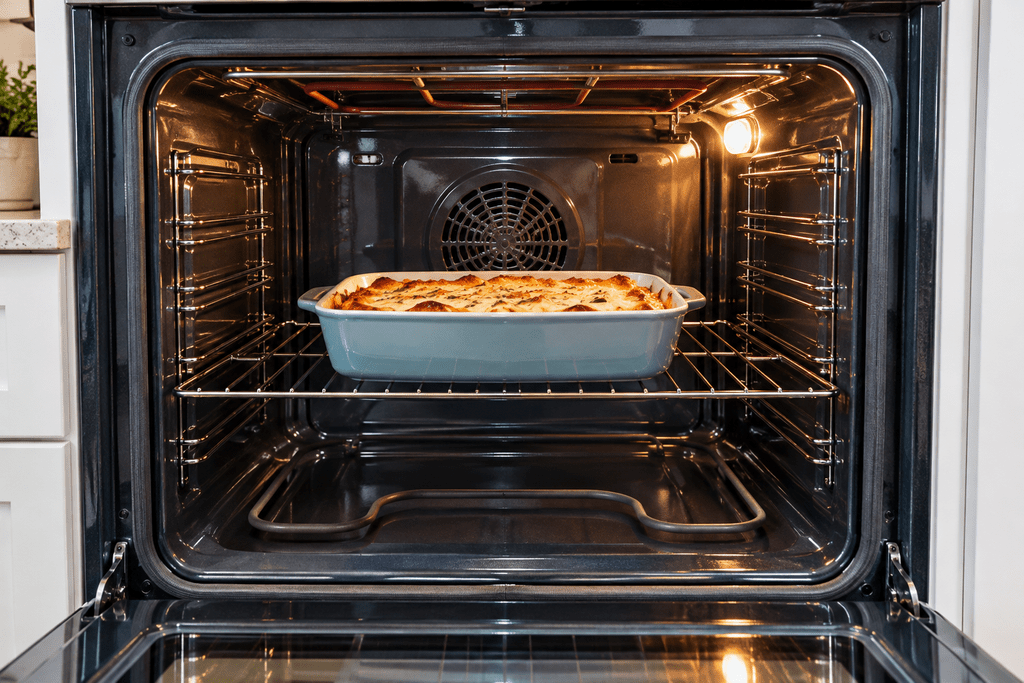
Gas ovens operate differently, but the basic goal is the same. A burner located beneath the oven floor produces heat after the igniter opens the gas valve and lights the burner. That heat rises and circulates through the cavity. Sensors monitor temperature and tell the control system when to turn heating on or off. If every component behaves correctly, the oven settles into a predictable heating cycle.
Think of it like climate control in a house. A furnace may produce plenty of heat, but if one room’s vent is blocked, that room stays cold. Similarly, an oven can reach 400°F in one area while airflow problems leave another area significantly cooler. The appliance’s ability to distribute heat matters just as much as its ability to generate it.
The oven door also plays a major role. Heat must remain inside the cavity long enough for the thermostat or electronic sensor to regulate it accurately. A damaged gasket or door that does not close completely allows hot air to escape. The appliance responds by running the heating system more frequently, but that extra effort may not produce even cooking.
Control systems tie everything together. Modern ovens rely on sensors, relays, electronic boards, and sometimes multiple heating elements that cycle in carefully timed sequences. A failure in one component can disrupt the entire pattern without stopping the oven completely.
That explains why uneven heating can be difficult to diagnose from cooking results alone. The oven may be generating heat perfectly well but failing to circulate it. Or airflow may be fine while a sensor sends inaccurate information to the control board. Finding the actual cause means looking at the system rather than assuming the hottest or coldest area tells the whole story.
When an oven starts cooking unevenly, homeowners often assume the thermostat is automatically to blame. Sometimes it is, but several other components are more common suspects. Heating elements weaken. Fans stop spinning at the correct speed. Door seals become brittle. Sensors drift out of calibration. Even something as simple as cookware placement can create a noticeable hot spot.
The easiest way to troubleshoot is to look at patterns. Food that consistently burns on the bottom may suggest excessive lower heat or poor rack placement. Pale bottoms and overly browned tops may indicate a weak bake element. Uneven browning in a convection oven could point toward a fan problem. Large differences between the displayed temperature and an independent oven thermometer can suggest sensor or calibration issues.
Another clue is how quickly the oven preheats. If preheating suddenly takes much longer than it used to, one of the primary heat sources may no longer be operating at full capacity. In electric ovens, a bake element can sometimes fail partially instead of breaking completely. In gas ovens, a weak igniter may still light the burner but take far too long to do it, leading to irregular temperature cycles.
Age can also play a role. Older ovens may accumulate several small problems at once. A slightly inaccurate sensor, a worn gasket, and a weakening element might not seem serious individually, but together they can produce inconsistent cooking.
The important thing is not to replace parts based on a guess. Many oven components produce similar symptoms when they fail. Good troubleshooting narrows the possibilities by combining visual inspection, temperature behavior, cooking patterns, and electrical or gas-system testing when necessary.
In most electric ovens, the bake element does the heavy lifting during ordinary baking. It usually sits at the bottom of the cavity or beneath a removable oven floor. When working properly, it heats evenly along its entire length and helps maintain the temperature selected on the control panel. When it begins to fail, the oven may still get hot, but the heat distribution can become wildly inconsistent.
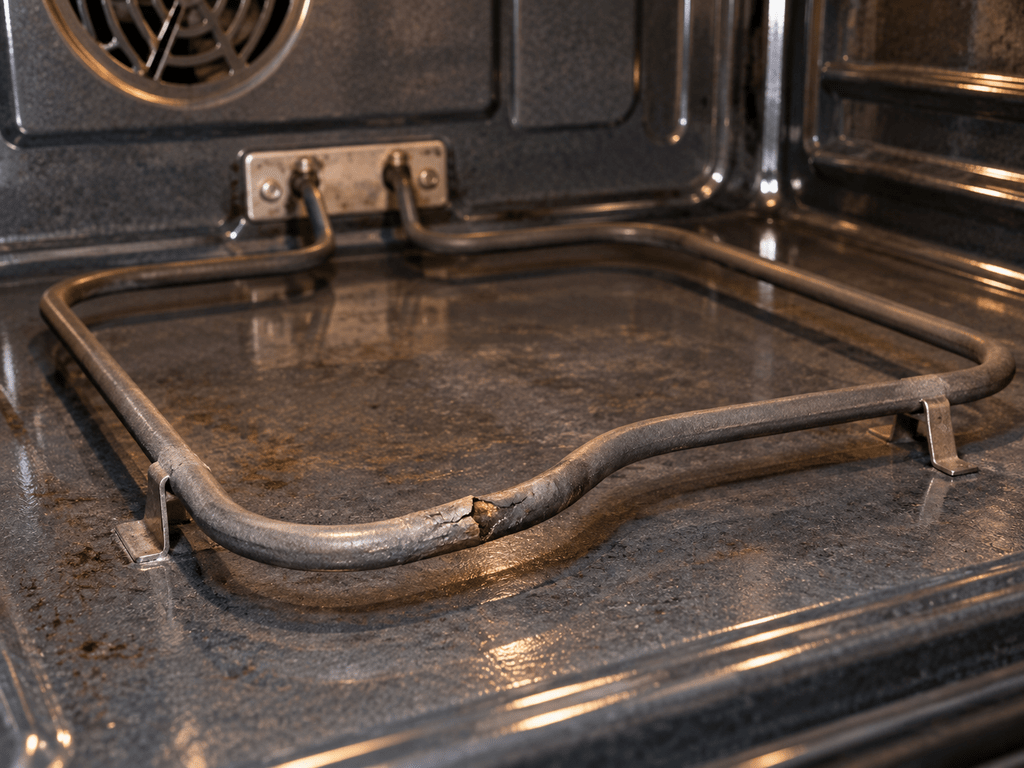
A completely broken element is usually obvious because the oven struggles to heat at all. Partial failure is trickier. One section of the element may produce less heat while another section continues working normally. The oven control responds by leaving the heat on longer, and the broil element may cycle more frequently to compensate. That can create a situation where food browns too quickly on top while remaining undercooked underneath.
Visual inspection sometimes reveals the problem. After disconnecting power and allowing the oven to cool completely, you may notice blistering, cracking, burned areas, or an obvious break along the element. During operation, a healthy exposed electric element often glows relatively evenly. A section that remains dark while the rest glows red can indicate damage.
Do not touch or attempt to reposition a heating element while the oven is connected to power. Electric ovens operate on high-voltage circuits, and a seemingly simple element replacement still involves electrical connections.
If the element appears normal but performance remains poor, electrical testing may be needed. A technician can check continuity, resistance, wiring, relays, and voltage supply. That matters because the element itself may be perfectly good while the control system fails to deliver power correctly.
When an oven suddenly develops poor bottom heat, longer baking times, or excessive top browning, the bake element is one of the first components worth investigating.
The broil element sits at the top of most electric ovens and produces intense direct heat. You probably associate it with broiling steaks, melting cheese, or finishing a casserole, but many ovens also use the upper element during ordinary baking. It may cycle briefly during preheating or temperature maintenance to help stabilize heat throughout the cavity.
If that element weakens or fails, the oven may technically reach the selected temperature but take longer to get there. Food can appear pale on top, especially baked goods that normally develop a golden surface near the end of cooking. You may also notice that broiling takes much longer than expected or does not produce the intense heat it once did.
Like bake elements, broil elements can fail visibly or electrically. Cracks, blistered sections, burned spots, or a complete physical break are obvious warning signs. Other failures are hidden. An element may look perfectly normal but have an internal break that prevents it from heating.
Uneven top heat becomes especially noticeable when cooking larger dishes. A casserole may brown on one side while remaining pale on the other. Pizza toppings may melt inconsistently. Bread may develop color near the back but stay light toward the front. Because heat naturally rises, people sometimes assume the upper part of an oven will always be hot enough. In reality, a failed broil element can significantly change overall cooking performance.
Testing electrical elements involves high-voltage appliance circuits, so this is another area where professional diagnosis can be worthwhile. The technician can determine whether the element itself has failed or whether a relay, wire, connector, or electronic control is responsible.
A broil element is not just an optional extra used occasionally. In many modern ovens, it is part of the normal heat-balancing system. When it stops contributing, the entire cavity can become less consistent.
Your oven needs to know how hot it is before it can regulate temperature, and that job usually belongs to a temperature sensor. In many modern electric ovens, the sensor looks like a thin metal probe extending from the rear wall of the cavity. It continuously measures heat and sends that information to the electronic control board.
If the sensor begins reporting incorrect readings, the oven can make bad decisions while believing everything is normal. Imagine a thermostat in your house claiming the living room is 72°F when it is actually 62°F. The heating system would behave incorrectly because the information controlling it is wrong. An oven sensor failure creates the same kind of confusion.
A sensor that reads too hot may cause the heating elements to shut off too early. Food takes longer to cook, and the oven may struggle to maintain the selected temperature. A sensor that reads too cold can cause excessive heating, leading to burnt edges, over-browning, or temperatures significantly above the setting.
Sensor problems can also produce inconsistent cycling. The oven may overshoot the target temperature, cool too far, and then heat aggressively again. That repeated swing creates unpredictable cooking results, especially with delicate foods such as cakes, soufflés, custards, or pastries.
Sometimes the sensor itself is not defective. If it touches the oven wall, its readings can be distorted because the metal surface may be hotter than the surrounding air. Loose wiring or damaged connectors can also affect the signal.
Professional technicians can test the sensor’s resistance and compare it with expected values at known temperatures. They can also determine whether the problem is actually in the control board rather than the probe. Because a faulty sensor and a faulty control system can produce nearly identical symptoms, accurate testing can prevent unnecessary part replacement.
A convection oven relies on moving air to distribute heat more evenly. The fan usually sits behind a cover on the rear wall and circulates hot air throughout the cavity. When everything works correctly, this movement reduces hot and cold spots and can help food cook faster. When the fan slows down, stops, or becomes obstructed, one of the oven’s biggest advantages disappears.
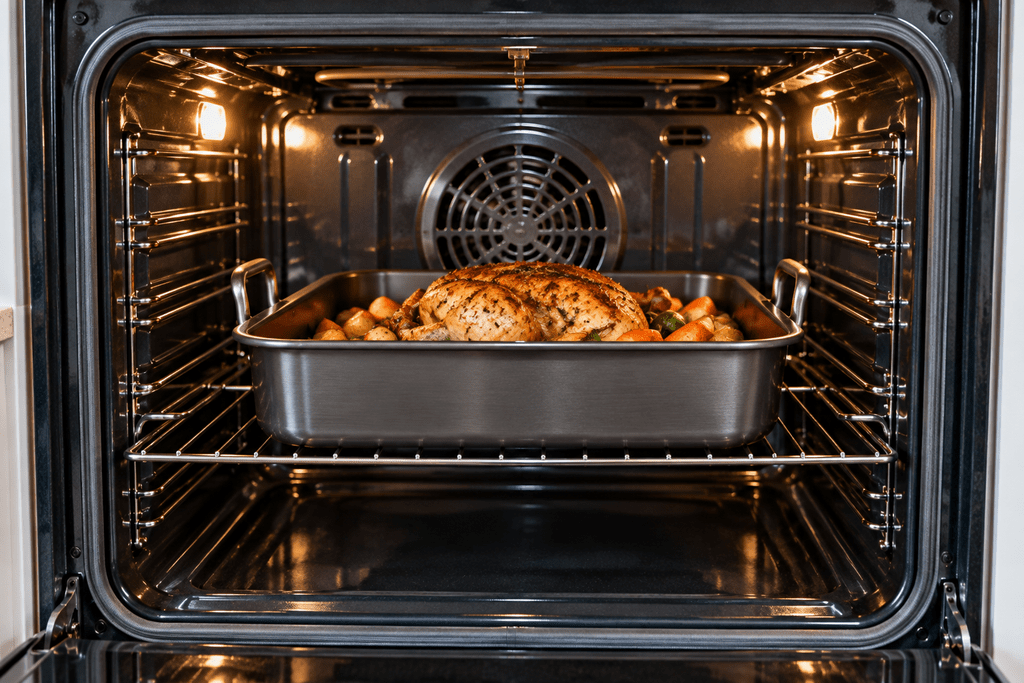
The most obvious sign is a fan that does not spin during a convection setting. Depending on the model, however, the fan may cycle on and off rather than running continuously, so silence does not automatically mean failure. Some ovens also stop the fan when the door opens, making casual observation misleading.
Noise can be an equally important clue. A fan motor that is wearing out may squeal, hum, grind, or rattle. Grease buildup or a slightly bent blade can create vibration. A loose fan blade may turn but fail to move air effectively.
Cooking patterns often reveal the problem before the sound does. Food near the rear fan may brown faster while items toward the front remain pale. Multiple trays that once baked evenly may suddenly require rotation. The oven still reaches temperature, but the benefit of forced-air circulation has disappeared.
Before blaming the fan motor, make sure cookware is not blocking airflow. Large roasting pans, oversized baking sheets, or foil placed improperly across racks can prevent hot air from circulating. Convection systems need space to move air around the food.
If airflow remains weak or the fan produces abnormal noises, repair is usually appropriate. Accessing the motor requires removing panels and dealing with electrical components, which makes it more than a basic cleaning task. A properly functioning convection fan should make the oven more predictable, not force you to constantly rotate pans to compensate for hot spots.
Not every uneven-heating problem comes from a failed part. Sometimes the oven is working exactly as designed, but the way food is arranged prevents heat from circulating properly. Rack position can have a surprisingly large effect on cooking results, especially in smaller ovens where dishes sit close to the heating elements.
Most baking works best near the center of the oven because that position provides a balanced distance from the upper and lower heat sources. Move a baking sheet too close to the bottom element, and the underside may burn before the top browns. Place a casserole too high, and the surface may cook faster than the center.
Overcrowding creates another problem. Hot air needs room to move around cookware. If you place several large pans side by side with almost no space between them, they effectively form walls that block circulation. The food closest to the heating source may cook normally while dishes in sheltered areas lag behind.
The same principle applies to oversized baking sheets. A pan that nearly covers the entire rack can restrict air movement between the lower and upper sections of the cavity. In a convection oven, it can interfere with the carefully designed airflow pattern created by the rear fan.
Before calling for repair, experiment with a simpler setup. Bake one tray on the center rack and leave several inches of space around it. Avoid opening the door repeatedly, because every opening releases a large amount of heat. Use cookware sizes recommended by the manufacturer and avoid lining the entire oven bottom with foil.
If the oven suddenly cooks evenly under those conditions, you may be dealing with an airflow issue rather than a mechanical failure. If one side still consistently burns or remains undercooked even with proper placement, the pattern becomes stronger evidence that a heating component, sensor, fan, or control system needs attention.
The oven door is more important to temperature control than it looks. A flexible gasket runs around the cavity and helps keep hot air inside. Over years of heating and cooling, that gasket can harden, crack, flatten, tear, or pull away from its mounting points.
Even a small leak changes how the oven behaves. Hot air escapes through the gap while cooler room air enters. The temperature sensor detects the loss and signals for more heat. The oven may then run its elements or burner longer than normal, creating temperature differences between the area near the leak and the rest of the cavity.
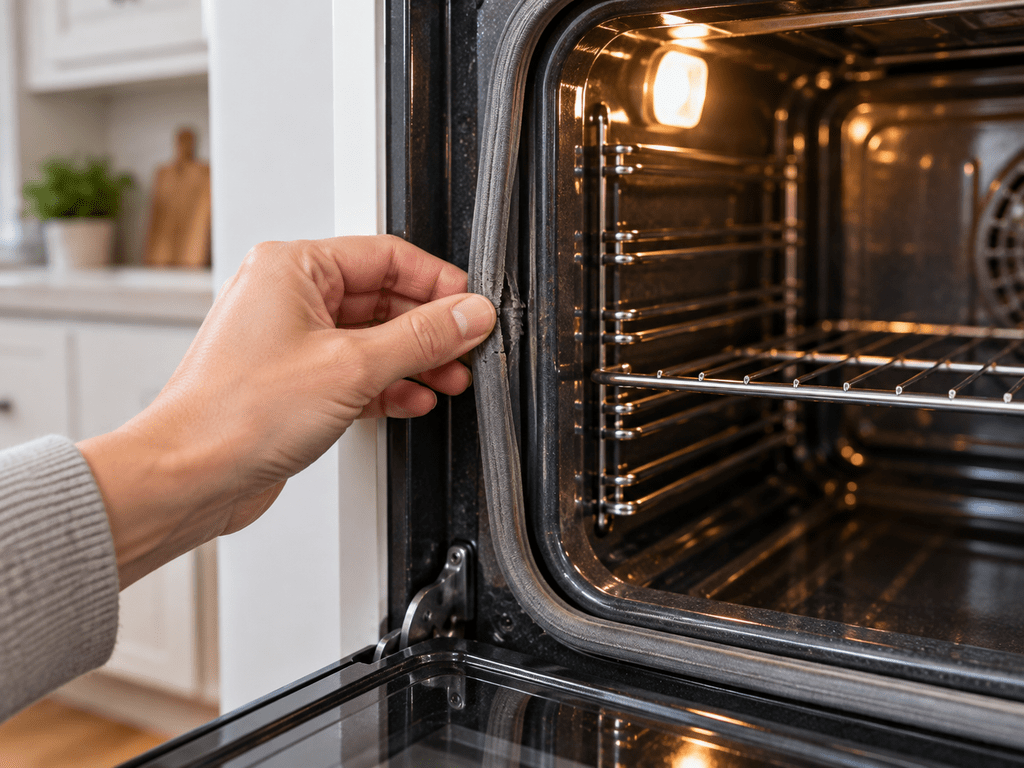
Door alignment can cause similar problems. Hinges wear, springs weaken, or the door gets slightly bent after being leaned on or forced. A door that appears closed may still leave a narrow gap along one edge.
You may notice visible signs such as heat escaping near the door, unusually warm cabinet surfaces, or condensation around the opening. Cooking can become inconsistent, particularly near the front of the oven. Preheating may also take longer because the appliance keeps losing part of the heat it generates.
Inspect the gasket when the oven is completely cool. Look for torn sections, hardened rubber, missing clips, or areas that no longer sit flat against the frame. Do not use aggressive cleaners on the gasket because some chemicals can damage the material.
Replacing a simple gasket can be straightforward on certain models, but door alignment and hinge repair are more involved. Oven doors are heavy, and hinge mechanisms can snap closed with significant force when unloaded. If the door does not sit squarely or requires force to close, professional service is usually safer.
A proper seal helps the oven maintain both temperature and efficiency. When hot air escapes constantly, the appliance has to work harder just to achieve ordinary cooking results.
Sometimes the oven heats evenly but at the wrong temperature. You set it to 350°F, but the actual average temperature may be closer to 325°F or 385°F. That difference can make recipes fail even though there are no obvious hot spots.
Small calibration differences are not unusual, and many modern ovens allow minor temperature adjustments through the control panel. The owner’s manual may provide instructions for adding or subtracting a few degrees from the displayed setting. This is useful when the oven consistently runs slightly hot or cold but otherwise cycles normally.
A larger difference suggests a deeper problem. Older ovens may use a mechanical thermostat that can wear out or lose accuracy. Newer models typically rely on an electronic temperature sensor and control board. A defective relay can also keep a heating element on too long or prevent it from turning on when needed.
Testing oven temperature requires patience. A single thermometer reading immediately after preheating can be misleading because ovens naturally cycle above and below the target. A better evaluation looks at several readings over time and calculates the average.
If the oven consistently misses the set temperature by a large margin, calibration alone may not solve it. The sensor may need testing, or the thermostat or electronic control may be failing.
Do not assume that turning the dial higher is a permanent solution. If you routinely set the oven to 400°F just to get an actual 350°F, something deserves diagnosis. Compensation might keep dinner moving for a while, but it does not address the underlying problem. Professional testing is especially useful when temperature errors change unpredictably rather than staying consistently high or low.
Gas ovens share many symptoms with electric models, but some of the causes are different. Instead of relying primarily on electric heating elements, a gas oven uses a burner and ignition system. In many modern models, an electric igniter heats until it draws enough current to open the gas valve, allowing fuel to flow and ignite.
A weak igniter is one of the most common causes of poor gas-oven heating. Here is the confusing part: the igniter may still glow. Homeowners see an orange glow and assume the component must be working. But an igniter can become weak enough that it takes too long to open the gas valve. The burner may eventually light, but the delayed ignition creates long temperature drops and uneven cooking.
You might notice the oven taking much longer to preheat or hearing the burner cycle less frequently than it once did. Recipes may need extra time because the oven spends too long below the target temperature between heating cycles.
Burner problems can also affect heat distribution. Grease, debris, corrosion, or damage may interfere with the flame pattern. A properly operating burner should produce an even flame rather than concentrating heat in isolated areas.
Because gas appliances involve both electricity and combustible fuel, repairs require particular caution. If you smell gas, stop using the appliance and follow appropriate gas-safety procedures for your home and utility service. Do not repeatedly attempt ignition or disassemble gas valves and burner components without proper training.
Professional technicians can test igniter current draw, inspect burner operation, verify gas pressure where appropriate, and determine whether the valve or electronic controls are functioning correctly. Gas ovens can be extremely reliable, but irregular ignition is not a problem to ignore. Uneven cooking may be the first visible symptom of a heating cycle that is becoming progressively less dependable.
Before scheduling service, a few practical checks can help rule out simple causes. Start by looking at rack position. Place a single baking rack in the center of the oven and remove unnecessary cookware. Make sure nothing blocks vents or the convection fan.
Next, consider your cookware. Dark metal pans absorb heat differently from light aluminum pans, while glass and ceramic dishes retain heat longer. If one recipe consistently over-browns when you use a particular pan, the cookware may be contributing to the result.
Use a reliable oven-safe thermometer to observe temperature behavior. Let the oven preheat fully, then give it additional time to stabilize. Record several temperature readings over the course of normal heating cycles rather than relying on a single number. Remember that some fluctuation is normal.
Inspect exposed heating elements after the oven is cool and power is disconnected. Look for visible cracking, blistering, or breaks. Check the door gasket for damage and confirm that the door closes evenly on all sides.
If you have a convection oven, listen to the fan during the appropriate setting. A new grinding or squealing sound is useful diagnostic information. Check whether airflow seems significantly weaker than before.
Also think about what changed. Did the problem appear after a power outage? Did you recently use the oven’s self-cleaning cycle? Was the appliance moved? Did someone change the temperature calibration settings? Those details can help narrow the cause.
If the uneven heating started after an outage, it may also be useful to review appliance problems after a Cleveland power outage when that situation applies to your home.
What you should not do is begin removing electrical panels, testing live voltage, bypassing switches, adjusting gas valves, or replacing parts based solely on internet guesses. Ovens combine high heat with high-voltage electricity or combustible gas. Basic observation is useful. Advanced diagnosis requires the right equipment and safety procedures.
There is a point where troubleshooting should stop and professional diagnosis should begin. One of the clearest signs is persistent uneven cooking after you have ruled out rack position, overcrowding, cookware, and basic temperature settings. If the same side or area repeatedly burns food, an internal heating or airflow problem becomes more likely.
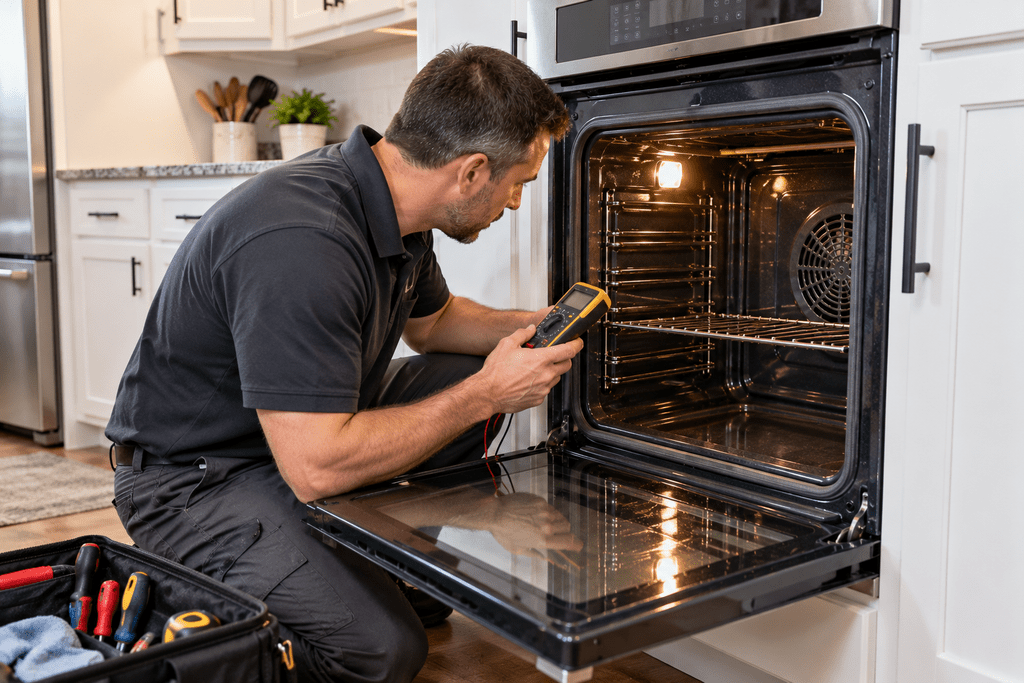
A major difference between the set temperature and actual average temperature is another reason to schedule oven repair. Minor calibration may be normal, but dramatic or unpredictable swings can indicate a sensor, thermostat, relay, or control-board failure.
Visible damage to heating elements deserves attention as well. Cracks, burned sections, sparking, or arcing are not normal. Stop using the appliance if an element shows obvious electrical damage.
Unusual noises can be equally important. Grinding or squealing from a convection fan suggests mechanical wear. Repeated clicking without proper ignition in a gas oven may signal an ignition problem. Buzzing from electrical controls can indicate a failing relay or connection.
Any smell of gas requires immediate caution. Likewise, burning electrical odors, smoke coming from an area unrelated to food residue, repeated breaker trips, or a visibly damaged power connection should not be treated as routine appliance behavior.
Professional repair is also appropriate when the oven will not maintain temperature long enough to cook food safely or predictably. A technician can test components individually rather than replacing parts based on symptoms alone.
When scheduling service, provide the model number and describe exactly what you observe. Mention whether the oven is electric or gas, how long preheating takes, whether one side cooks faster, whether the fan operates, and how far the measured temperature differs from the set point.
Good diagnosis should explain the relationship between the failed component and your symptoms. That is far more useful than simply replacing the first part that seems suspicious.
An oven that heats unevenly can make you question every recipe in your kitchen, but cooking inconsistency is usually a symptom rather than the root problem. Something is interfering with how the oven creates, measures, contains, or circulates heat.
Sometimes the cause is surprisingly simple. A rack may be positioned too close to an element. An oversized roasting pan may block airflow. The oven may be packed with too many dishes at once. A temperature setting may need minor calibration.
Mechanical and electrical issues create similar symptoms, which is why patterns matter. A weak bake element can leave bottoms pale. A failed broil element can reduce top browning. A damaged door gasket allows heat to escape. A faulty sensor can make the entire oven cycle incorrectly. Convection fan problems create hot and cold zones even when the oven reaches the right overall temperature.
The smartest approach is to begin with safe, simple checks and then watch what happens. Confirm rack placement, leave room for airflow, inspect visible components, check the door seal, and compare the oven’s temperature with a reliable thermometer.
If the problem continues, professional oven repair can save you from replacing unnecessary parts or working around a problem that keeps getting worse. Modern ovens are complex appliances combining high temperatures with electrical controls and, in gas models, fuel systems. Accurate testing matters.
You should be able to trust that 375°F actually means something close to 375°F and that a tray placed in the center of the oven will cook reasonably evenly from one side to the other. When that predictability disappears, the oven is telling you that something has changed. Finding that change early can mean fewer ruined meals, safer operation, and a much more reliable kitchen.
We repair a wide range of household appliances including refrigerators, washers, dryers, ovens, dishwashers, and more. No matter the brand or model, our experienced technicians are ready to help. We repair commercial appliances as well: commercial washers dryers, commercial refrigerators & freezer & more.
We service a wide range of household appliances, including refrigerators, dryers, washers, ranges, cooktops, dishwashers, freezers, ice makers, ovens, and double ovens.
Our technicians operate across many locations in Ohio, covering major cities like Cleveland, Akron, and Parma. We also serve surrounding areas including Lakewood, Westlake, Strongsville, and Brooklyn.
Our service area extends to Rocky River, Euclid, Solon, Beachwood, and Cleveland Heights, as well as counties such as Cuyahoga, Lorain, Lake, and Medina.
Additional cities we cover include North Olmsted, North Ridgeville, Valley City, Lorain, Avon Lake, Richfield, Brecksville, Garfield Heights, Seven Hills, Brunswick, Oakwood, Mentor, and Willoughby.