Common Refrigerator Problems During Cleveland Summers
Published: July 31, 2026
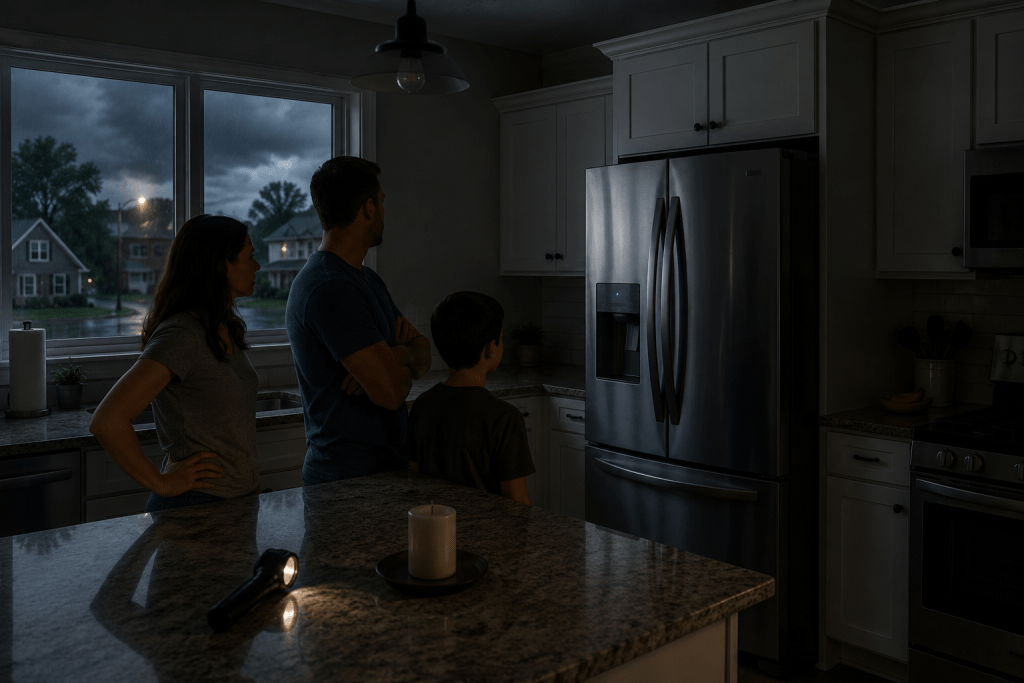
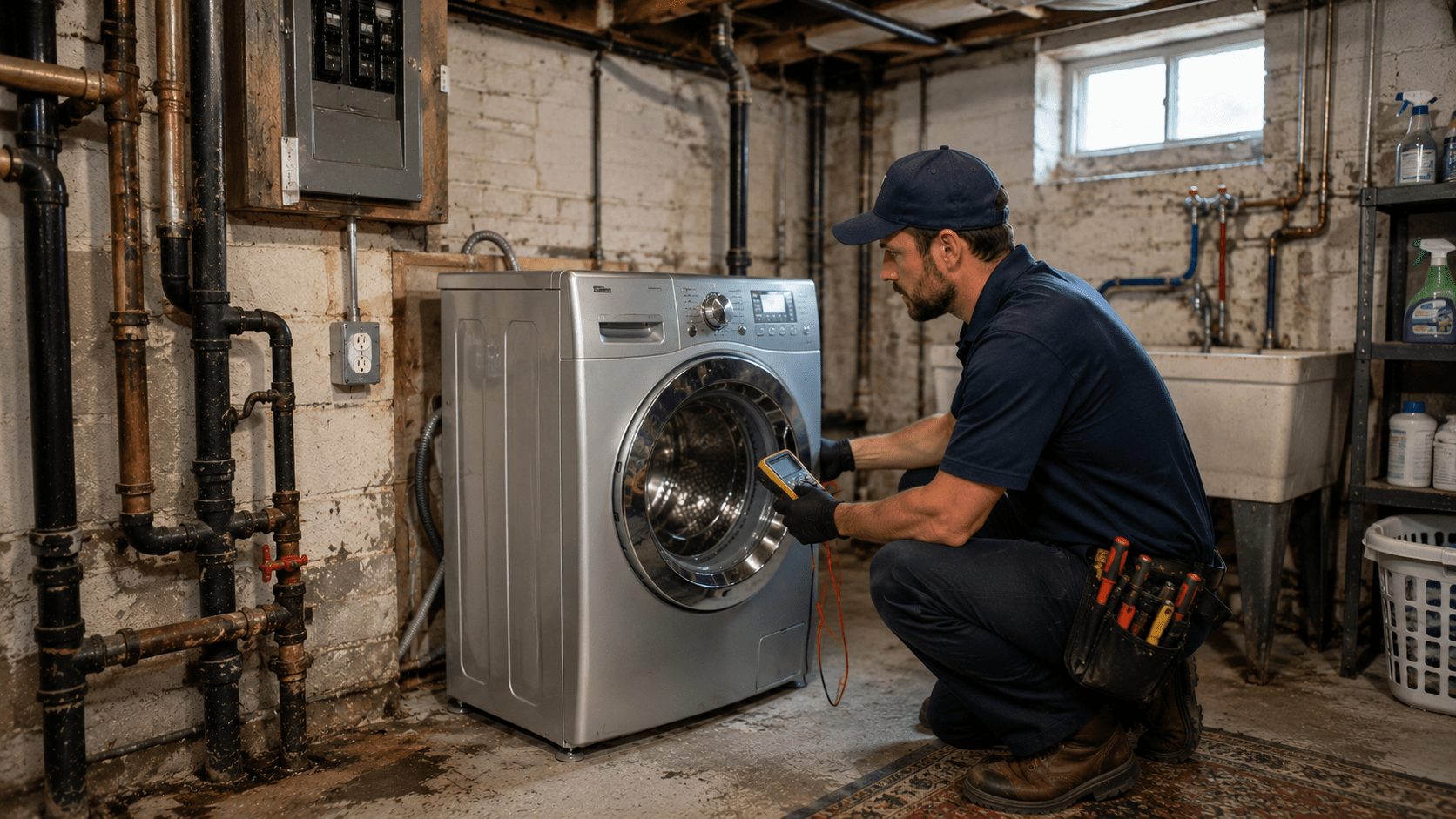
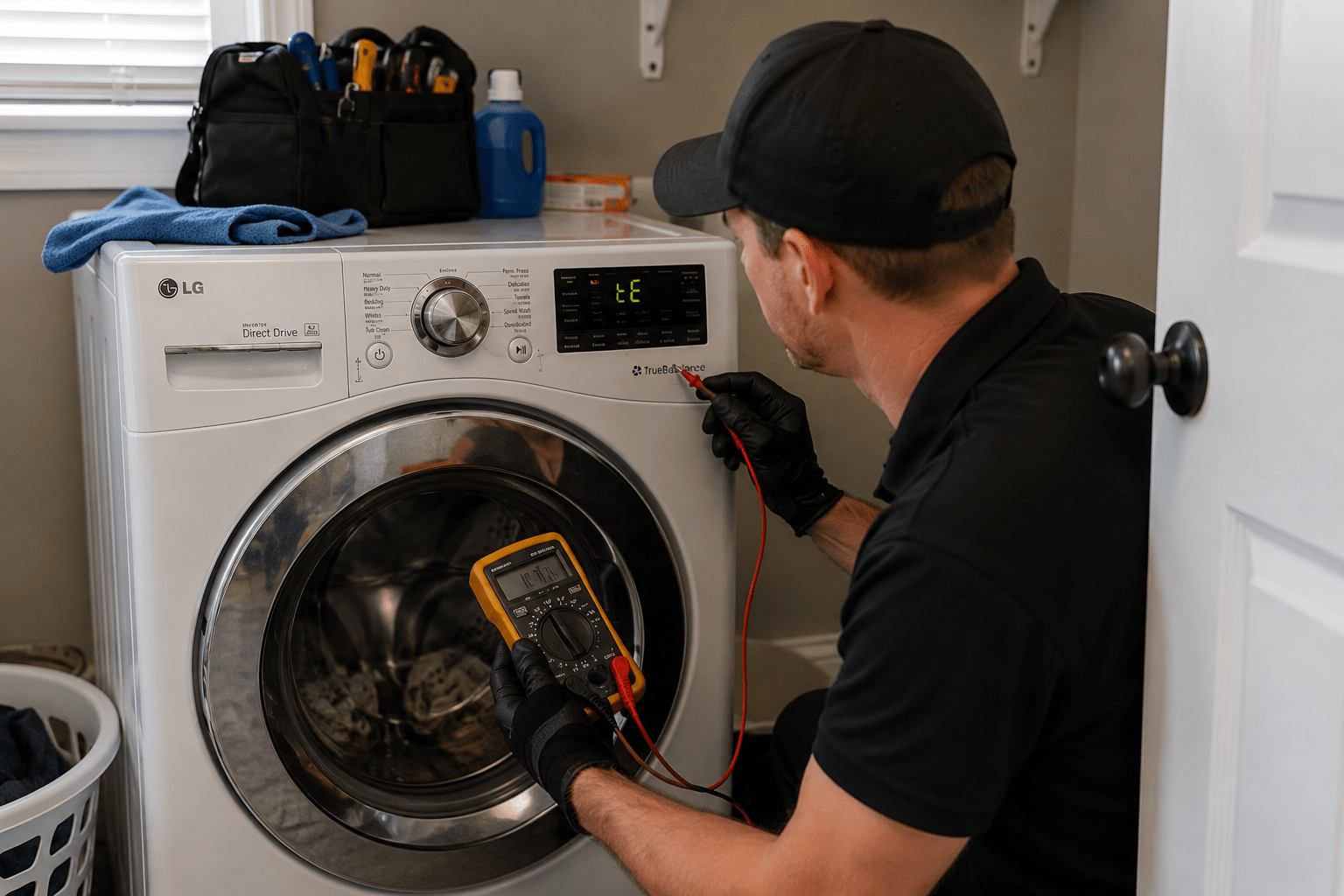
A Cleveland power outage has a way of turning an ordinary evening into a small household mystery. One minute, the dishwasher is humming, the refrigerator is making ice, and the dryer is finishing a load of towels. The next minute, the lights blink, every appliance falls silent, and somebody asks the question nobody can answer yet: “Did the appliance break, or is this just the outage?” That uncertainty gets even more stressful when electricity comes back but one machine stays dark, flashes an unfamiliar code, clicks repeatedly, or refuses to continue the cycle it was running.
The first thing to understand is that an appliance stopping during an outage does not automatically mean it has failed. Most appliances shut down simply because their power supply disappeared. The more important moment may occur when electricity is restored. Power can return unevenly, household circuits may trip, electronic controls may need time to reboot, and high-demand appliances can struggle if everything restarts at once. Modern refrigerators, washers, ranges, and dishwashers contain sensitive circuit boards that behave more like computers than the purely mechanical machines many of us grew up with.
That does not mean you should panic every time the lights flicker. It means you should respond in the right order. Randomly pressing buttons, flipping breakers repeatedly, or plugging everything back in at the same moment can make diagnosis harder and, in some cases, increase the stress on your electrical system. A calm, methodical approach protects the appliance and gives you useful clues about what actually happened.
This guide explains what Cleveland homeowners should do before, during, and after a power outage. You will learn how to protect refrigerated food, restart appliances safely, recognize surge-related symptoms, and decide whether you need an appliance repair technician, an electrician, or simply a few patient minutes while the machine resets itself.
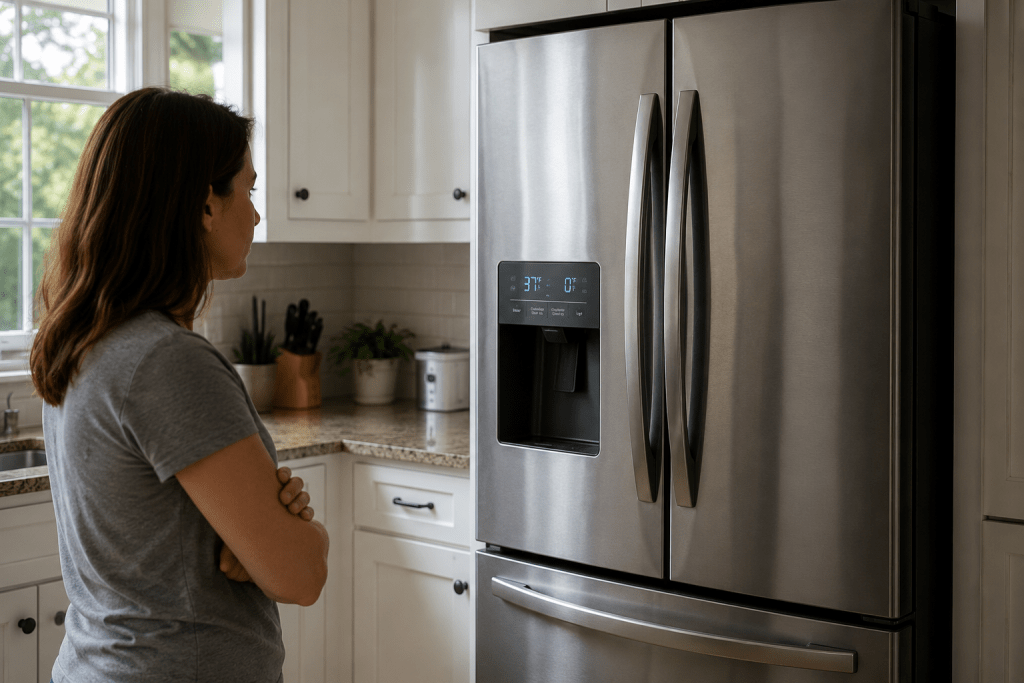
When the electricity goes out, most people focus on the obvious problem: there is no power. Yet appliances often face their greatest stress during the transition into and out of an outage. Electricity may cut off instantly, flicker several times, return briefly, disappear again, and finally stabilize. Each change can interrupt motors, heating elements, compressors, pumps, and electronic controls at a different point in their operating cycles.
Imagine a washing machine that loses power halfway through draining. Water remains in the tub, the door may stay locked, and the control board loses track of the cycle. When power returns, the washer may pause while it checks the water level and door-lock status. A homeowner who expects it to start spinning immediately may assume the machine is broken, even though it is performing a safety check.
Refrigerators face a different challenge. Their compressors operate under pressure. If electricity disappears while the compressor is running and returns almost immediately, the compressor may not restart until internal pressure equalizes. That delay can produce clicking or several minutes of silence. Many models include built-in protection that intentionally delays restart. The refrigerator is not ignoring you; it may be protecting its most expensive component.
Electronic controls add another layer. A brief outage may clear the clock without damaging anything, while a rough restoration can freeze a control panel, produce an error code, or trip a household breaker. Appliances connected to shared circuits may also compete for power when everything restarts at once.
The key idea is simple: power restoration is a process, not always a single clean moment. Give appliances time, reconnect them thoughtfully, and observe what they do before declaring them dead. A machine that remains unresponsive after stable power, a proper reset, and basic electrical checks may need repair. Until then, patience is part of the diagnostic process.
The easiest way to separate a power problem from an appliance problem is to start outside the appliance. Look around the room. Are the lights off? Are nearby outlets working? Did the microwave display go blank at the same time? If several devices lost power together, the appliance is probably reacting to a household or neighborhood electrical interruption rather than experiencing an isolated failure.
Next, check whether the entire house is affected. Look through a window to see whether nearby streetlights or neighboring homes have power. Check the utility company’s outage information on a charged phone when service is available. If the rest of the neighborhood is dark, there is little value in taking apart an appliance. You already know the machine cannot operate until the supply returns.
A partial outage can be more confusing. Some lights may work while a dryer, electric range, or central air conditioner does not. Many large appliances depend on a 240-volt supply created by two electrical legs. If one side is interrupted, certain lights and small appliances may continue working while high-power equipment stops or behaves strangely. That situation can involve the utility supply, the main electrical service, or the home’s panel and should be evaluated cautiously.
When power returns, test the outlet indirectly before blaming the machine. For a standard receptacle, you might plug in a small lamp that you already know works. Do not use this approach on a specialized range or dryer outlet. Check for a tripped breaker or GFCI outlet, but avoid repeatedly resetting anything that trips again.
A real appliance failure becomes more likely when power is stable, the circuit is working, the appliance is correctly connected, and the machine remains unresponsive or behaves abnormally. Burning smells, visible damage, repeated clicking, smoke, sparks, or a breaker that immediately trips are stronger warning signs. At that point, stop testing. The goal is to identify the problem—not to prove how many times the circuit can fail.
Modern appliances are smarter than older machines, but that intelligence comes with a tradeoff. Their control boards depend on clean, predictable electricity. A refrigerator may use multiple sensors, variable-speed fans, electronic dampers, and inverter-driven components. A washer may continuously monitor motor speed, water level, balance, temperature, and door position. These systems are efficient and precise, but unstable voltage can confuse or damage them.
A power surge is a brief increase in electrical voltage. It can happen when utility power is restored, when large equipment switches on, or when lightning affects nearby lines. Not every outage includes a damaging surge, and not every surge destroys an appliance. Still, sensitive electronics can fail immediately or develop weakened components that act up later. That is why an appliance may appear normal for several hours after an outage and then begin resetting, displaying errors, or refusing to start.
Low voltage can be troublesome too. Motors and compressors may struggle to start when they do not receive the supply they expect. A refrigerator compressor can hum, click off on overload, and try again. A washer motor may stop mid-cycle. An electronic range may reboot repeatedly. Continuing to operate equipment during unstable power can create unnecessary heat and stress.
This is one reason you should not rush to restart every major appliance the second the lights return. Give the electrical supply a few minutes to stabilize, especially after a storm or a series of flickers. Turn appliances on gradually rather than making the household system handle several starting loads at once.
Surge protectors can help with some electronics, but an ordinary power strip is not automatically suitable for a refrigerator, washer, dryer, or range. Major appliances have specific voltage and current requirements. Any protective device must be properly rated and installed according to the manufacturer’s instructions. For broader protection, homeowners may ask a licensed electrician about a whole-home surge protective device and the condition of the electrical grounding system.
When the power disappears, your first job is not to restart anything. Your first job is to reduce risk and preserve what you can. Confirm that nobody is in immediate danger, especially if the outage occurred during severe weather, flooding, a fallen tree event, or visible electrical damage. Keep clear of downed power lines and report them to the appropriate utility or emergency service.
Inside the house, turn off or unplug equipment that could create a problem when power returns. You do not need to race through the home in the dark pulling every cord. Focus on sensitive electronics and major heat-producing or motor-driven appliances that were operating at the time of the outage. Leave one lamp switched on so you will know when electricity returns.
Avoid opening the refrigerator and freezer simply to check whether the light is off. You already know the power is out. Every door opening releases cold air and replaces it with warm, humid air. Gather information about the outage first, then decide whether you need to move food or add ice based on how long the interruption lasts.
If a washer stopped with water inside, leave it alone unless there is an active leak. Do not force the door open. Front-loading washers commonly keep the door locked when the tub contains water. A dishwasher may also contain hot water, so opening it immediately can release steam or spill water depending on where the cycle stopped.
Write down which appliances were running. That detail may seem unimportant, but it becomes useful when power returns. A dryer that was heating, a refrigerator compressor that was running, and an oven that was baking all respond differently to an abrupt shutdown. Knowing the sequence helps you recognize whether each appliance restarted normally.
Most of all, resist the temptation to troubleshoot an unpowered machine. There is nothing meaningful to test until you know the electrical supply is stable. Use the outage period to protect food, avoid hazards, and prepare for an orderly restart.
Unplugging selected appliances during an outage can help protect them from a rough power restoration. Start with sensitive electronics such as televisions, desktop computers, gaming systems, countertop appliances with digital controls, and charging equipment. For major appliances, the decision depends on accessibility, safety, and manufacturer guidance.
A refrigerator can usually remain plugged in during a short outage, especially when reaching the plug requires pulling the heavy appliance away from the wall. Moving a refrigerator in the dark can damage flooring, kink the water line, or create a tipping hazard. Some homeowners instead switch off the refrigerator circuit at the breaker panel and restore it after utility power has stabilized. That approach should be used only when the breaker is clearly labeled and the panel is dry, accessible, and free of damage.
Electric ranges, dryers, and built-in appliances are often difficult or unsafe to unplug. Do not reach behind them blindly. If the electrical panel is safe to access and circuits are accurately labeled, you may switch off affected breakers until power stabilizes. Never remove panel covers or touch service wiring.
Small countertop appliances are easier. Unplug coffee makers, air fryers, toaster ovens, microwaves with accessible plugs, and other devices that could heat unexpectedly when power returns. Also switch off portable space heaters, window air conditioners, and fans that were operating.
Leave one simple light turned on. When it illuminates, you will know service has returned without repeatedly checking appliances. Wait several minutes before reconnecting sensitive equipment, particularly if the power has been flickering or the neighborhood supply appears unstable.
Do not plug or unplug equipment while standing in water. Cleveland storms can bring basement seepage, and appliances located near floor drains, utility sinks, or sump systems require extra caution. If water has reached an outlet, cord, or appliance base, keep away and have the electrical condition evaluated before restoring power.
The principle is not “unplug everything at any cost.” It is reduce unnecessary load without creating a physical or electrical hazard.
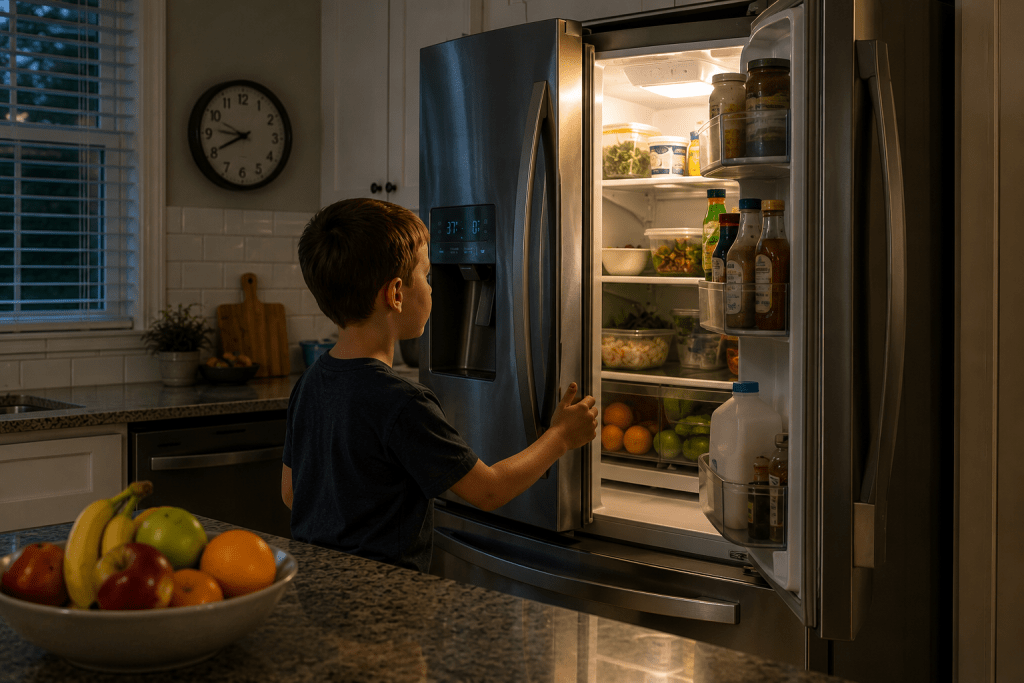
During an outage, the closed door is your refrigerator’s best defense. Cold food and frozen packages act like thermal storage, while the insulated cabinet slows heat from entering. Every time the door opens, that stored cold spills into the kitchen and humid summer air takes its place.
According to the U.S. Department of Agriculture, an unopened refrigerator generally keeps food cold for about four hours. A full freezer can maintain a safe temperature for roughly 48 hours, while a half-full freezer may hold it for about 24 hours, provided the door stays closed. These are practical guidelines, not guarantees, because room temperature, appliance condition, food quantity, and door openings all matter. USDA food-safety guidance
Before an expected storm, group freezer items together so they help keep one another cold. Freeze containers of water, leaving room for expansion, and place them around food. During an unplanned outage, avoid rearranging the freezer unless you already have a cooler and ice ready. Opening the door for a long organizing session may do more harm than good.
Use a refrigerator and freezer thermometer. When electricity returns, the temperature reading gives you better information than touching packages. Perishable food that has remained above 40°F for more than two hours generally should be discarded. Food may smell and look normal while still being unsafe, so the “sniff test” is not reliable.
If the outage is likely to last, move essential items to an ice-filled cooler. Place raw meat where it cannot drip onto ready-to-eat food. Keep the cooler closed and check its temperature. Dry ice can extend freezer storage, but it requires gloves, ventilation, and careful handling because it can cause severe cold burns and release carbon dioxide.
Protecting food is not about saving every jar at any cost. Prioritize safety, document losses for insurance when appropriate, and remember: when serious doubt remains, throwing food away is cheaper than treating foodborne illness.
Not every “power outage” is a neighborhood outage. Sometimes one circuit trips while the rest of the home continues working. Other times, half the electrical service is lost, creating a strange pattern where certain rooms have power and others do not. Identifying the scope helps you decide what to do next.
Start with a simple visual survey. Are clocks blank throughout the house, or only in the kitchen? Do ceiling lights work? Is the furnace display on? Does the garage door opener respond? Avoid plugging devices into multiple outlets just to experiment. You are looking for a pattern, not stress-testing the system.
Check the electrical panel only if the area is dry, well lit, and free of burning smells, buzzing, heat, or visible damage. A tripped breaker may sit between the fully on and off positions. To reset it, move it completely off and then back on once. If it trips again, leave it off. Repeated resetting can energize a damaged circuit and create heat.
Kitchens, bathrooms, garages, basements, and outdoor areas often contain GFCI-protected outlets. One GFCI device may protect several downstream outlets, so an appliance can lose power even though its own receptacle has no visible reset buttons. Press the reset button on the relevant GFCI only when the area is dry and no obvious damage exists. If it will not reset or immediately trips again, stop.
A partial-power condition deserves special attention. If lights are unusually bright in one area and dim in another, large appliances do not work, or electronics behave erratically, switch off sensitive equipment and contact the utility or an electrician. A lost neutral or service-leg problem can create damaging voltage conditions.
Never assume that because one lamp works, the entire electrical supply is healthy. Appliances draw different voltages and amounts of current. A lamp may operate normally while a range or dryer receives an incomplete supply. The pattern tells you where the investigation belongs: utility, household electrical system, or individual appliance.
When the lights come back, the natural reaction is relief followed by immediate button pressing. Slow down. First, watch the lamp you intentionally left on. Does it glow steadily, or does it flicker? Do lights dim sharply when equipment starts? Can you hear utility work continuing outside? If the power appears unstable, leave sensitive appliances disconnected a little longer.
Walk through the home and look for warning signs before restoring everything. Check for burning odors, unusual buzzing from the panel, water near cords or outlets, and appliances that may have been left in a dangerous state. Make sure electric stovetop controls and countertop heating appliances are switched off. If an oven was operating when the outage began, verify its setting rather than assuming it remained canceled.
Restore essential equipment in stages. Begin with the refrigerator and freezer, then allow them to start before reconnecting other major loads. Next, restore heating, cooling, laundry, and kitchen equipment as needed. You are not trying to follow a magical sequence; you are simply avoiding the simultaneous startup of every motor and heating element in the house.
Some appliances will resume automatically, while others intentionally remain off. A dishwasher or washer may cancel the interrupted cycle. An oven clock may flash and require setting before the oven will heat. A microwave may display a clock-reset message. Refrigerators may wait several minutes before the compressor starts.
Listen and observe. A normal startup may include clicks, fans, water valves, and brief control-panel activity. A repeated hard click, loud electrical buzzing, smoke, sparks, or a burning smell is not part of a healthy reboot. Disconnect the appliance or switch off its breaker when safe.
Finally, verify performance rather than assuming that illuminated controls mean everything is fine. A refrigerator display can work while cooling does not. A dryer may tumble without heating. A washer may power on but fail to drain the water left from the interrupted cycle. Power restoration is the beginning of the check, not the end.
Major appliances can draw a large amount of electricity when motors, compressors, or heating elements first engage. If the refrigerator, freezer, air conditioner, dryer, sump pump, and several smaller devices all restart at the same instant, the combined demand can be substantial. A healthy electrical system is designed to handle normal household use, but a gradual restart reduces unnecessary strain during uncertain restoration conditions.
Begin with appliances that protect food or property. Restore the refrigerator and freezer first. In homes with basement water concerns, a sump pump may be an even more urgent priority, but only if its circuit and surrounding area are dry and safe. Allow these devices to begin operating before turning on laundry equipment, dishwashers, or cooking appliances.
Wait long enough to observe each machine. Does the refrigerator compressor start after its normal delay? Does the freezer fan run? Is the sump pump cycling correctly? If a breaker trips as soon as one appliance starts, you have immediately narrowed the problem without several other loads complicating the picture.
Reconnect sensitive countertop electronics after the utility supply appears steady. Avoid using extension cords as a temporary solution for major appliances. Refrigerators, freezers, washers, and other large machines should be connected according to their installation requirements.
Appliances that were in the middle of a cycle may need special handling. A washer containing water should be restarted with a drain or spin cycle if the owner’s manual recommends it. A dishwasher may need to cancel and drain before beginning a new wash. Do not assume that pressing “Start” will safely continue from the exact interrupted point.
Gradual reconnection also makes unusual smells and sounds easier to identify. When five appliances restart together, a buzz or hot odor can be difficult to trace. When they start one at a time, the source becomes clearer.
Think of the house as a stage after intermission. You would not send every performer rushing through the same doorway. Bring essential systems back in an orderly sequence, confirm that each one is behaving, and then continue.
Electronic appliances often need a clean reset after an outage. That may involve turning the machine off at its control panel, disconnecting power for several minutes, and reconnecting it. The exact procedure varies by brand and model, so the owner’s manual is the best source. A random combination of button presses can enter diagnostic modes, change settings, or erase useful error information.
Before resetting anything, photograph the display. Error codes are valuable clues. A washer may report a door-lock issue because it lost power with water inside. A refrigerator may display a power-failure alert rather than a component error. An oven may show a code related to the control board, temperature sensor, or supply voltage. Once cleared, that code may not reappear during a service visit.
Check the manual for the code’s meaning, but treat online interpretations cautiously. The same letters or numbers can mean different things across models. An “F1” code is not universal. The complete model number, usually found on a label inside the door, drawer, or cabinet frame, is necessary for accurate information.
A proper power reset is not the same as repeatedly flipping a breaker. Turn the appliance off, disconnect it safely, wait the recommended period, and restore power once. If the breaker trips again, the control panel stays blank, or the error returns immediately, stop. Repeated resets do not repair failed components.
Also verify settings after the reboot. Refrigerators may return to default temperatures. Ovens and microwaves may require the clock to be set before they operate. Washers may lose custom cycles, delayed starts, or child-lock settings. A control lock can make a healthy appliance appear unresponsive.
Write down what happened in sequence: when the outage occurred, which cycle was running, what the display showed afterward, and what changed following the reset. This small record can save considerable diagnostic time. Appliance repair is often detective work, and your notes preserve evidence that might otherwise disappear when the machine temporarily behaves normally.
Different appliances respond to interrupted electricity in different ways. A refrigerator may delay its compressor restart. A front-loading washer may keep its door locked. A dishwasher may forget where it was in the wash cycle. An electronic range may refuse to heat until the clock or control is reset. Treating every machine the same can lead to unnecessary frustration.
Begin with the appliance’s basic needs. Does it have the correct power supply? Is its breaker on? Is a GFCI outlet involved? Did the outage leave water, heat, or pressure inside the machine? Once those questions are answered, observe how the appliance responds rather than immediately dismantling it.
Mechanical appliances often recover more simply than electronic models, but age alone does not predict the outcome. An older refrigerator may have a worn compressor-start component that finally fails during restoration. A new dishwasher may protect itself with an error code and recover after a controlled reset. What matters is the symptom pattern.
Remember that an appliance can have power without being fully functional. Interior lights and displays use very little electricity. A refrigerator light may turn on even when the compressor circuit has failed. A dryer motor may tumble while the heating circuit lacks one side of the 240-volt supply. A gas range may click without receiving proper gas flow. “It turns on” is only one piece of the diagnosis.
Before calling for service, collect the model number, error codes, temperature readings, and a description of sounds. Note whether the appliance was running at the moment power failed. Mention any burning odor, water leak, breaker trip, or repeated flicker. These details help a professional distinguish between surge damage, an interrupted-cycle issue, and an unrelated component failure that happened at the same time.
The following sections cover the most common post-outage behavior for major household appliances.
A refrigerator does not always begin cooling the second power returns. Many models include a compressor delay that may last several minutes. During this time, the lights and display can work while the cooling system remains quiet. Give the appliance a reasonable opportunity to restart before assuming the compressor has failed.
Listen for the evaporator and condenser fans, although some fans stop when a door opens. Feel for gentle airflow at interior vents without removing panels. Set the refrigerator to approximately 37°F and the freezer near 0°F, then monitor temperatures with appliance thermometers. Do not choose the coldest possible setting in an attempt to force faster recovery. That can create freezing in some areas without correcting the underlying problem.
After a long outage, the refrigerator may run for many hours as it removes heat from the cabinet and food. Continuous operation during recovery is not automatically abnormal. Concern is appropriate when temperatures fail to drop, the compressor repeatedly clicks without starting, fans grind or buzz, or a burning smell appears.
Check the door seals and make sure no package is preventing closure. Humid Cleveland summer air can enter quickly, creating condensation and frost. Also inspect the water dispenser and ice-maker area. Water pressure may return unevenly, or an ice maker may need time to reach the correct freezer temperature before cycling.
If food warmed during the outage, follow food-safety guidelines rather than relying on the refrigerator to “make it safe again.” Cooling spoiled or temperature-abused food does not reverse bacterial growth.
A refrigerator that remains completely dead despite a working outlet may have a failed control board, internal fuse, power cord, noise filter, or wiring component. Repeated compressor clicking can indicate a start-device problem, voltage issue, or compressor failure. These conditions require testing. Do not use an extension cord, bypass a protection device, or repeatedly cycle power. Protect the food, document the symptoms, and schedule professional diagnosis for refrigerator repair.
A washer that loses power mid-cycle can stop with water and clothing trapped inside. Front-loading models may keep the door locked because opening it could release water onto the floor. Do not force the handle. Once power is stable, turn the washer on and select a drain or cancel-and-drain function according to the manual. Some machines take a few minutes to evaluate the water level and unlock.
If the washer remains dead, check its breaker and any GFCI protection. Laundry outlets in basements can be affected by moisture, so do not reset a device while standing on a wet floor. Look for an error code and photograph it before performing one controlled reset.
A washer that powers up but will not drain may have an interrupted control state, a clogged pump filter, or a pump failure unrelated to the outage. Listen for humming. A pump that hums without moving water may be blocked. Accessing filters can release a large volume of water, so follow the model-specific procedure and prepare containers and towels.
Dryers create a different puzzle. An electric dryer may tumble but produce no heat if it has lost one side of its 240-volt supply. That condition can come from a tripped breaker, outlet issue, cord connection, or household electrical problem—not necessarily a failed heating element. Reset a double-pole breaker only once by moving it fully off and back on. If the issue continues, professional electrical testing is needed.
A gas dryer may tumble without heating if the gas supply, ignition system, or safety controls are affected. Do not continue testing if you smell gas. Leave the area, avoid switches and flames, and contact the gas utility or emergency service from a safe location.
For either dryer type, repeated breaker trips, burning odors, hot cords, or sparking require immediate shutdown. A power outage may simply reveal a weak connection that was already overheating.
Dishwashers commonly stop wherever they were in the cycle when power fails. That means water may remain in the tub. After stable power returns, close the door securely and use the cancel or drain command listed in the owner’s manual. Give the drain pump time to operate. If the machine does not respond, check the breaker and any GFCI-protected kitchen circuit.
Do not reach into standing dishwasher water until you know the appliance is disconnected and the water has cooled. The outage may have interrupted a high-temperature wash. A dishwasher that repeatedly trips a breaker or leaks onto electrical components needs professional attention.
Electronic ranges and ovens may remain locked or display a flashing clock after an outage. Some will not heat until the time is set. Others show a power-failure message that clears after acknowledgment. Review the control panel before assuming a heating component has failed.
If an oven was running when power went out, make sure its controls are off. Certain models resume only after user confirmation, but you should never depend on that behavior. Inspect the cooking area for items that could burn if heat returns.
Electric ranges require a complete 240-volt supply. A partial electrical-service problem can allow the display and lights to work while burners or ovens heat poorly. Gas ranges may use electricity for ignition and controls, so burners may not light normally during an outage. Avoid manually lighting a burner unless the manufacturer explicitly permits it and conditions are safe. Many modern gas ovens cannot operate without electricity.
Any appliance with smoke, sparks, a burning odor, or visible heat damage should remain disconnected until inspected.
An appliance that remains dead after power is stable may have a simple supply issue or a genuine internal failure. The difference cannot be determined by repeatedly pressing the power button. Start with what you can verify safely: the outlet, breaker, GFCI protection, cord, control lock, and reset procedure.
If another known-working small device operates from a standard outlet, the receptacle probably has power, although that test does not confirm its ability to support a high-current appliance. Do not test specialty 240-volt outlets with improvised tools. Those circuits require proper meters and training.
Inspect the visible cord and plug without moving a heavy appliance unsafely. Look for melting, discoloration, bent blades, or a loose connection. A damaged plug or warm outlet is not a minor inconvenience. Stop using the circuit and contact an electrician.
Internal appliance failures after an outage can include control boards, line filters, thermal fuses, start relays, user-interface panels, inverter boards, and wiring connections. Some parts fail instantly during a voltage event. Others were already weak and simply reached the end of their life when the appliance tried to restart.
The outage may also be a coincidence. A ten-year-old dryer belt can break on the same evening the power fails. A refrigerator fan can seize independently. Good diagnosis avoids assuming that the last event caused every symptom.
Try one manufacturer-approved reset. Verify settings and control locks. Then observe. If the appliance stays dead, trips the circuit, or behaves dangerously, stop. Each additional attempt adds little information and may increase damage.
When you schedule service, describe the electrical event accurately. Was it a complete outage, repeated flickering, or a partial-power condition? Did other electronics fail? Did a breaker trip? Was there lightning nearby? The pattern helps determine whether the technician should focus first on the appliance or recommend an electrical evaluation.
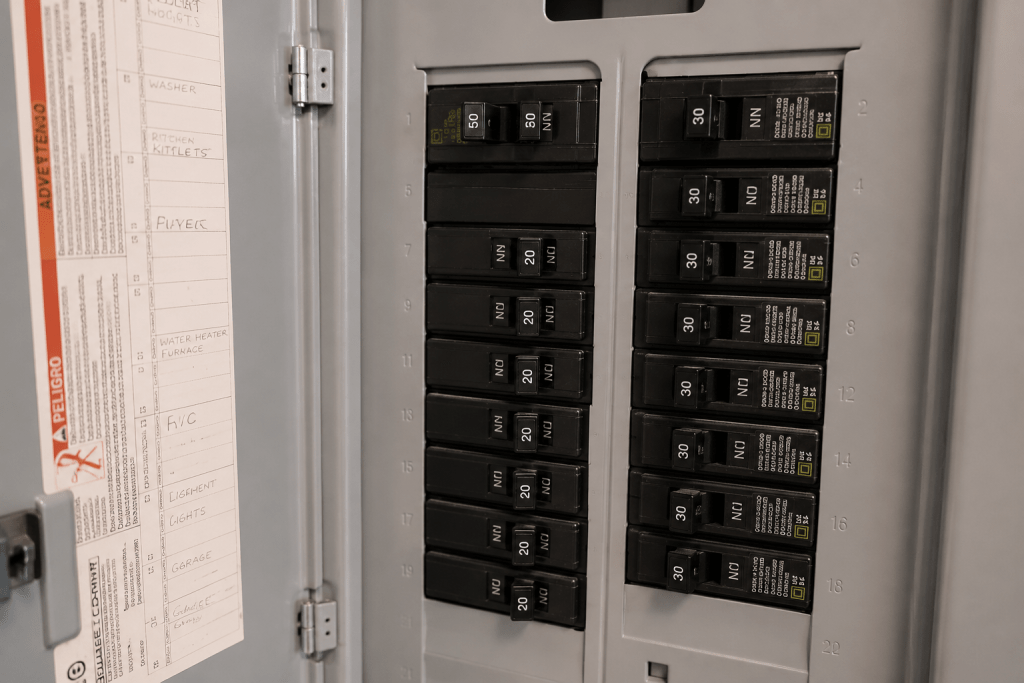
A tripped breaker is a protective response, not an inconvenience to defeat. It opens the circuit when it detects conditions such as excessive current or a fault. Resetting it once after checking for obvious hazards is reasonable. Resetting it repeatedly because “it almost stays on” is not.
Large appliances often have dedicated breakers, but older Cleveland homes may contain circuits that were modified over time. A refrigerator might share power with basement outlets, lights, or another appliance. When everything restarts after an outage, the combined load can trip the circuit. That does not necessarily mean the refrigerator is defective, but the electrical arrangement may need evaluation.
GFCI outlets protect against electrical current leaking along an unintended path. They are especially important in damp locations. A refrigerator or freezer in a garage or basement may be connected to GFCI protection, directly or through another outlet upstream. If the GFCI trips, several receptacles can lose power.
Reset the GFCI only when the area and your hands are dry. If it immediately trips again after the appliance is connected, unplug the appliance and leave it disconnected. The cause could be moisture, damaged wiring, a failing compressor, a heater fault, or another internal leakage path.
Possible surge-damage signs include a blank display despite verified power, scrambled or unresponsive controls, repeated reboots, error codes that return instantly, unusual electrical odors, and visible scorching. Damage can be limited to one board or spread across several components. A technician must test the machine rather than simply replacing the most obvious electronic part.
Check other household electronics too. If multiple devices failed at the same time, document everything. Homeowners insurance or utility claims may require model numbers, photographs, repair reports, and proof of the outage. Do not discard damaged parts or appliances before reviewing claim requirements.
Most importantly, distinguish appliance protection from household electrical safety. When outlets are hot, breakers buzz, lights change brightness, or multiple circuits behave abnormally, an electrician should assess the home before damaged appliances are reconnected.
Knowing which professional to call can save time. An appliance repair technician diagnoses components inside the appliance: motors, pumps, fans, control boards, heaters, sensors, compressors, valves, and internal wiring. An electrician evaluates the household power supply: breakers, receptacles, branch circuits, service connections, grounding, neutral conductors, and panel conditions.
Call an appliance technician when the outlet and circuit are functioning normally, other devices operate correctly, and the appliance alone remains unresponsive or produces a model-specific error. Refrigerator clicking, a washer that will not drain, a dishwasher with a dead control panel, or an oven showing an internal fault code usually begins with appliance service.
Call an electrician when a breaker will not reset, an outlet is melted or hot, multiple appliances on the same circuit behave strangely, lights dim or brighten abnormally, only part of the home has power, or a 240-volt appliance has an incomplete supply. Buzzing from the panel, burning odors near household wiring, and visible arcing also belong to an electrician.
Sometimes you need both. A surge may damage an appliance control board while also revealing weak household grounding or an aging receptacle. A technician can identify the failed appliance part, but replacing it before the electrical condition is corrected may expose the new component to the same risk.
For utility-side problems—downed lines, damaged service drops, widespread outages, or unstable neighborhood power—contact the electric utility. Do not approach outdoor electrical equipment or attempt repairs yourself.
When scheduling a visit, be specific. Tell the company that the failure followed a Cleveland power outage. Mention whether the appliance has power, whether a breaker trips, and whether there are odors or visible damage. That information helps the company send the right professional with appropriate tools.
A trustworthy professional should explain how the diagnosis was reached. “The board is bad” is less useful than an explanation that includes supply-voltage testing, component checks, and any evidence of surge damage. You are paying for a solution, not a guess.
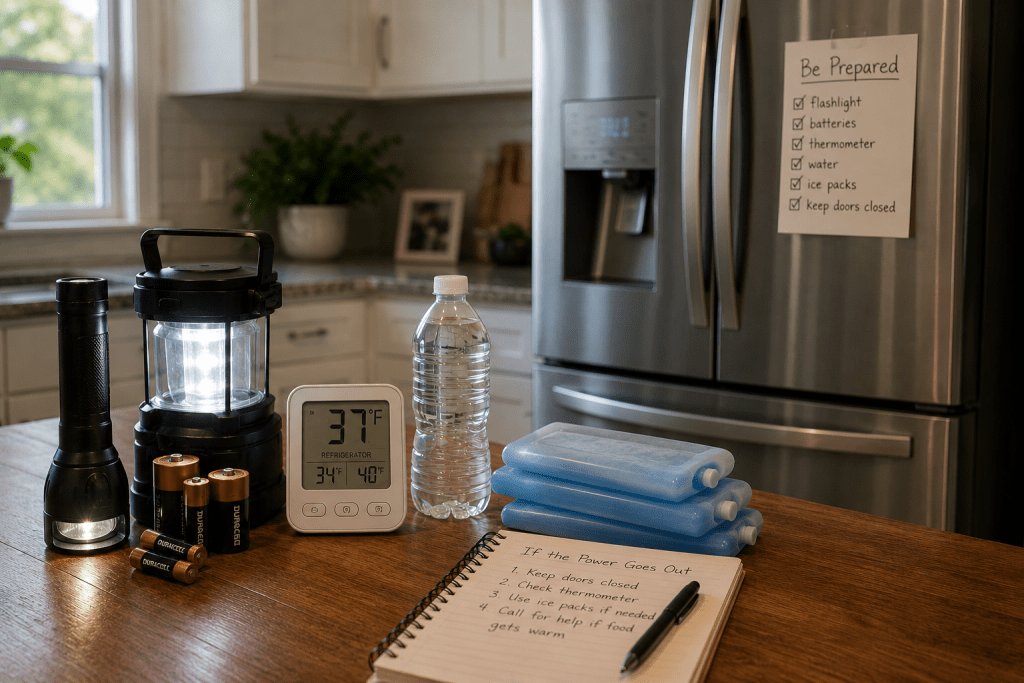
You cannot prevent every Cleveland outage, but you can make the next one much easier to handle. Begin with information. Label electrical-panel circuits clearly and update the labels after renovations. Keep appliance manuals, model numbers, warranty documents, and service contacts in one accessible place. A photo stored on your phone can be useful when the house is dark.
Place refrigerator and freezer thermometers where they are easy to read. Keep reusable ice packs frozen and maintain a clean cooler for emergencies. Avoid letting the freezer stay nearly empty; frozen containers of water can fill unused space and help maintain temperature. Leave enough room for water to expand as it freezes.
Consider power protection appropriate for your appliances. Small electronics can use quality surge protectors, while major appliances require devices specifically rated for their loads. A licensed electrician can discuss whole-home surge protection, grounding, dedicated circuits, and the condition of an older panel or receptacles. Whole-home protection does not make a property invulnerable, but it can add a useful layer of defense.
Maintain appliances before severe weather exposes weaknesses. Clean accessible refrigerator condenser areas, inspect power cords, replace damaged hoses, keep dryer vents clear, and repair loose outlets. An outage is much harder on equipment that is already overheating or struggling to start.
A portable generator can keep selected equipment running, but it introduces serious risks. Never operate a fuel-burning generator inside a house, basement, garage, enclosed porch, or near windows and doors. Carbon monoxide is colorless and deadly. Use properly rated outdoor equipment, follow manufacturer clearances, and connect appliances safely. Never backfeed a home by plugging a generator into a wall outlet. A professionally installed transfer switch is the safe method for connecting a generator to household circuits. CDC generator-safety guidance
Finally, create a simple outage routine: confirm the scope, unplug sensitive devices, keep cold-storage doors shut, document food temperatures, and restore appliances gradually. A written plan feels unnecessary until the lights go out. Then it becomes one of the most useful tools in the house.
When an appliance stops during a Cleveland power outage, the smartest first move is usually not a repair attempt. Confirm the outage, protect food, reduce electrical loads, and wait for stable power. Many appliances need a few minutes to reboot, equalize pressure, drain water, or clear an interrupted cycle after electricity returns.
Restore equipment gradually. Start with appliances that protect food or property, then bring other machines online one at a time. Watch for error codes, unusual sounds, burning odors, water leaks, and breakers that trip again. Write down what you observe before performing one controlled reset.
A working display does not prove an appliance is healthy, and a silent machine does not always mean it is ruined. Refrigerators may delay compressor startup. Washers may keep doors locked until water is drained. Dryers may tumble without heat when part of their electrical supply is missing. Ranges may require the clock to be reset before heating. Each symptom tells a different story.
Stop troubleshooting when you encounter smoke, sparks, gas odors, hot outlets, standing water near electricity, repeated breaker trips, or unstable household voltage. Those conditions require professional help. Call an appliance technician for internal machine failures and an electrician for household wiring, circuit, outlet, or panel problems. When the source is unclear, describe the symptoms fully so the service company can guide the call appropriately.
The best outage response is calm and organized. You do not need to become an electrician or appliance engineer. You need to protect people first, preserve food when possible, avoid making the problem worse, and recognize when testing has reached its safe limit. That approach gives your appliances the best chance of recovering—and gives you the clearest path when one of them does not.
We repair a wide range of household appliances including refrigerators, washers, dryers, ovens, dishwashers, and more. No matter the brand or model, our experienced technicians are ready to help. We repair commercial appliances as well: commercial washers dryers, commercial refrigerators & freezer & more.
We service a wide range of household appliances, including refrigerators, dryers, washers, ranges, cooktops, dishwashers, freezers, ice makers, ovens, and double ovens. Our technicians operate across many locations in Ohio, covering major cities like Cleveland, Akron, and Parma. We also serve surrounding areas including Lakewood, Westlake, Strongsville, and Brooklyn. Our service area extends to Rocky River, Euclid, Solon, Beachwood, and Cleveland Heights, as well as counties such as Cuyahoga, Lorain, Lake, and Medina. Additional cities we cover include North-Olmsted, North Ridgeville, Valley-City, Lorain, Avon Lake, Richfield, Brecksville, Garfield Heights, Seven Hills, Brunswick, Oakwood, Mentor, and Willoughby.