What to Check Before Calling for Appliance Repair in Cleveland
Published: August 24, 2026
You open the washing machine, expecting that clean, neutral smell that tells you the next load is ready to go. Instead, you get hit with something musty, sour, swampy, or strangely similar to an old basement drain. Maybe the odor is strongest inside the drum. Maybe it clings to towels after they dry. Maybe the machine smells fine when empty but turns unpleasant the moment warm water starts moving through it. Whatever form it takes, a smelly washing machine is more than an annoying household mystery.
The odor usually develops because water, detergent, body oils, lint, soil, and fabric products collect in places that do not dry completely. Over time, that mixture creates a thin residue layer inside the machine. Think of it like the film that develops inside a travel mug when it is rinsed but never properly scrubbed. The container may look clean from a distance, yet moisture and residue remain in the seams. A washer can develop the same hidden environment inside its gasket, dispenser, drain system, pump area, or outer tub.
Cleveland homeowners may encounter this problem more often when laundry equipment sits in a basement. Basements can remain cool, humid, and poorly ventilated, especially during spring thaws and muggy summer weather. A washer that already holds a little moisture between loads dries even more slowly in that environment. Cold-water washing, frequent short cycles, overloaded drums, and excessive detergent can add to the problem.
The good news is that most washer odors can be prevented without harsh treatment or constant repair calls. The solution starts with understanding where the smell comes from and changing the conditions that allow it to return. Cleaning matters, but cleaning alone is not enough. You also need the right detergent amount, good drainage, regular airflow, sensible loading habits, and attention to the room around the machine.
A washing machine does not create odors out of nowhere. The smell is a sign that organic residue, standing water, poor drainage, trapped moisture, or plumbing gases are present somewhere in or around the appliance. Spraying a fragrance into the drum may hide the odor for an hour, but it does not remove the material producing it. That is like spraying air freshener beside a full kitchen trash can. The room may smell sweeter for a moment, yet the source is still sitting there.
Musty odors usually point to damp residue and microbial growth. Sour smells often develop when detergent, body oil, skin cells, and fabric soil remain inside warm, wet areas. A sewage-like odor can indicate a drainage or plumbing issue, although a dirty washer can sometimes produce a surprisingly similar smell. A burnt or electrical odor is different and should be treated as a potential safety concern rather than a cleaning problem.
The location of the smell provides clues. If the odor is strongest around the door seal, the gasket may be holding water, hair, lint, or small objects. If it comes from the detergent drawer, thick product residue may be blocking drainage and airflow. If the drum smells worse after the washer drains, the pump, filter, drain hose, or household standpipe may be involved. If the entire basement smells unpleasant, the washer may be only one part of a larger plumbing or moisture problem.
Pay attention to timing too. Does the smell appear after the machine sits unused for several days? That suggests trapped moisture. Does it become stronger during draining? Look more closely at the drain path. Do towels leave the washer smelling clean but turn sour after sitting in the dryer or laundry basket? Residue may still be trapped in the fabric.
Treating the odor as a symptom changes the way you respond. Instead of repeatedly running empty cycles and hoping for a miracle, you can identify the environment that supports the smell. Remove the residue, improve drying, correct drainage, and change the habits feeding the problem. That is how you get a lasting result instead of a temporary cover-up.
A washing machine spends its working life moving water, so a little leftover moisture may seem harmless. The problem is that water does not remain clean after the cycle ends. It carries detergent, fabric products, body oils, lint, dirt, food particles, pet hair, and whatever else came off the laundry. When a thin layer of that water remains in a dark, enclosed part of the machine, it creates the perfect setting for odor.
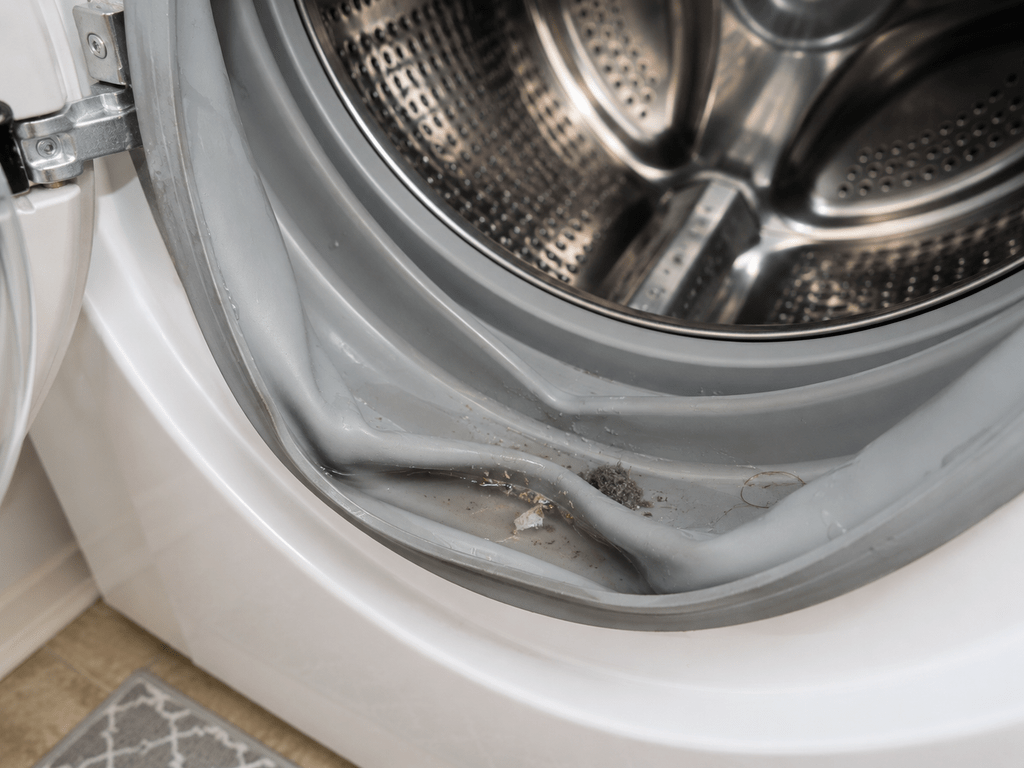
Some moisture stays inside the drum, but much of it hides where you cannot see it. Front-loading machines may retain water in the folds of the flexible door gasket. Both front-load and top-load designs can hold moisture in dispenser channels, drain hoses, pump housings, filters, and the space between the inner basket and outer tub. A small amount may also remain beneath internal components because the washer is slightly unlevel or the drain path is restricted.
Closing the door or lid immediately after every load traps humid air. The inside of the machine becomes a sealed container with wet surfaces and very little air movement. Even if the drum looks dry the next morning, hidden areas may remain damp. This is why washers used every day can begin smelling faster than homeowners expect. The machine rarely gets enough time to dry fully before another load adds more water.
The laundry room matters as well. A washer in a warm, dry, well-ventilated room loses moisture more quickly than one in a cool Cleveland basement with limited airflow. Humid summer air slows evaporation. Condensation on nearby pipes or walls can keep the entire area damp. Laundry left inside the machine after the cycle ends adds another source of moisture and organic material.
The answer is not to eliminate every drop of water. That is unrealistic. The goal is to shorten the amount of time surfaces stay wet. Remove laundry promptly, wipe accessible damp areas, leave the door open safely, and improve airflow around the appliance. Think of the washer like a shower. A bathroom that dries between uses stays fresher than one with wet towels, a closed door, and no ventilation. The same principle applies here.
Many homeowners assume that unpleasant odors call for more detergent. It sounds logical: if soap cleans clothes, extra soap should clean the machine too, right? Unfortunately, washing machines do not work that way. Too much detergent can create a sticky film that traps soil, oils, lint, and moisture inside the appliance. Instead of washing the odor away, you may be feeding the environment that produces it.
Detergent is designed to loosen dirt and hold it in the wash water until it can be rinsed away. When the amount exceeds what the load and water volume can handle, some of the product may remain behind. This is especially common with concentrated detergents, low-water wash cycles, lightly soiled loads, and homes where the user automatically fills the cap or dispenser to a high line. The extra product settles in the drum, gasket, dispenser passages, hoses, and outer tub.
The residue does not always look like soap. It may appear as a gray coating, slimy film, waxy deposit, or dark buildup mixed with lint. It can hide beneath the gasket or around the dispenser opening. Once body oils and fabric soil attach to it, the layer begins holding moisture and producing odor. Towels and athletic clothing may come out feeling coated or smelling sour because they are carrying some of that residue too.
Excess suds can also interfere with normal washing. A washer may have difficulty sensing water levels, balancing the load, rinsing efficiently, or draining as designed. Homeowners then add even more detergent because the clothing does not smell fresh, creating a cycle that gets worse with every load.
Use the smallest effective amount recommended for the detergent concentration, load size, soil level, and water conditions. Do not assume the largest line on the dispenser is the normal amount for every load. A lightly worn load of shirts needs less product than heavily soiled work clothes. If you have been using too much, reducing the dose may take several cycles to show a difference because old residue remains inside the machine.
A washer should rinse detergent away, not collect it like layers of paint. When in doubt, measure carefully and watch the results. Cleaner rinsing often produces fresher laundry than simply adding more soap.
Liquid fabric softener is designed to leave a coating on fibers. That coating changes how the fabric feels and reduces static, but it can also leave residue inside the washing machine. When the product is used heavily, poured into the wrong compartment, or allowed to build up in the dispenser, it creates a waxy layer that holds lint, body oils, and moisture. The result can be a stubborn smell that returns shortly after cleaning.
The dispenser is usually the first place to look. Fabric softener is thick, and it may not flush completely through narrow channels. Over time, the remaining product combines with dust, lint, and detergent. The mixture can become gummy or even develop dark, slimy patches. Because the dispenser receives water during the cycle, the buildup stays damp and continues producing odor.
Residue may also move deeper into the washer. It can coat the outer tub, hoses, and drainage areas that homeowners cannot easily see. This is one reason an empty cleaning cycle may improve the smell for a few days without solving it permanently. The visible drum gets rinsed, but the thick product layer remains elsewhere.
Fabric softener can affect laundry odor too. Towels and moisture-wicking clothing are designed to absorb or move water. A heavy coating may reduce that ability and trap body oils within the fibers. The items smell fresh when they leave the washer because the fragrance is strong, then turn sour after they become damp again. The scent masked the residue rather than removing it.
Homeowners dealing with recurring washer odor should consider reducing or temporarily stopping liquid softener while cleaning the machine and laundry. Clean the dispenser thoroughly according to its removable design. Use warm water and a soft brush rather than sharp tools that could damage seals or small openings. Make sure the product flows freely through the compartment.
This does not mean every fabric-softening product automatically ruins a washer. The problem is usually overuse, buildup, or poor dispenser maintenance. If the machine smells bad, though, heavily scented products can make diagnosis harder. A truly clean washer should smell neutral. Fragrance may be pleasant, but it should not be doing the job of cleanliness.
The inside of the drum gets all the attention because it is the part homeowners see. The worst buildup, however, often develops around the edges of the system. The door gasket, detergent dispenser, pump filter, lid area, and drain openings can remain wet and collect debris after every load. Cleaning only the shiny metal basket is like wiping the center of a kitchen counter while ignoring the sticky mess under the toaster.
On a front-loading washer, gently inspect the folds of the door gasket. Water, hair, lint, coins, tissues, small socks, and other debris can become trapped there. Look for dark spots, slimy residue, or water sitting in the lower portion. Wipe the entire accessible surface, including the hidden folds, using a method safe for the gasket material. Do not pull aggressively or use sharp objects, because a damaged seal can cause a major leak.
Top-loading washers have hidden areas too. Check beneath the lid, around the top rim of the basket, near the dispenser cups, and around any center components. Residue may collect where water splashes but airflow is limited. These locations can smell even when the visible tub appears clean.
Remove the detergent drawer if the design allows it. Wash the drawer and inspect the cavity behind it. Product often builds up inside that opening, where homeowners rarely look. Use a soft brush to reach corners and small channels, then allow the pieces to dry before reinstalling them.
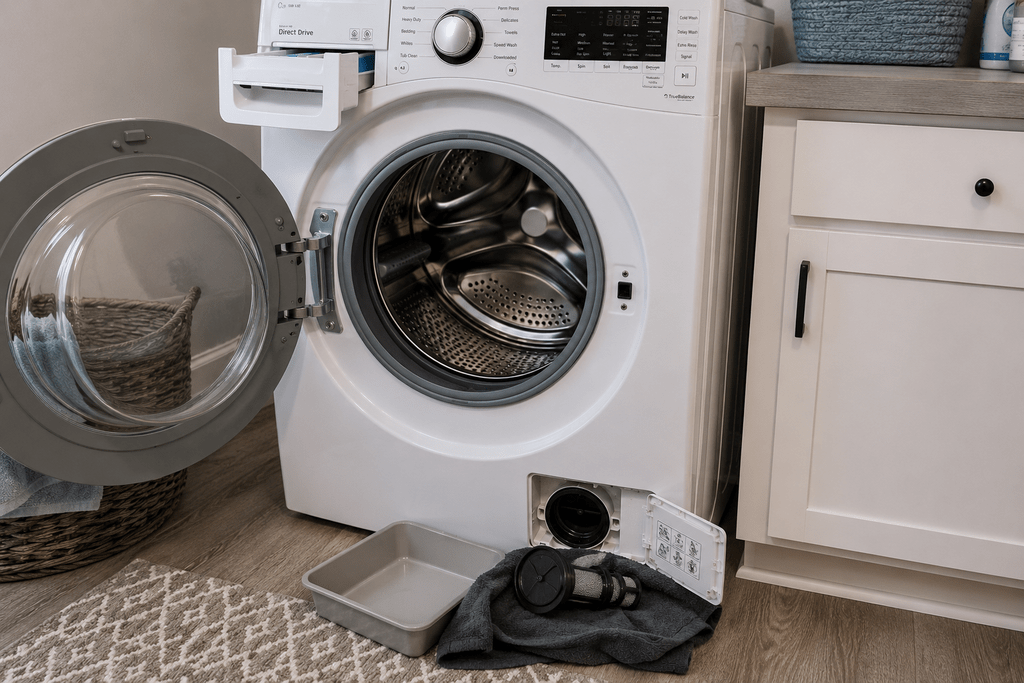
Some washers have an accessible drain-pump filter near the lower front. This filter can collect lint, coins, hair, small fabric pieces, and other debris. Turn off the appliance before opening the area, and prepare for water to drain out. Use towels and a shallow container. Wear gloves because sharp objects may be hidden inside.
If the filter is repeatedly packed with debris, adjust how you prepare laundry. Empty pockets, secure small items in a laundry bag, and remove loose objects before loading. These forgotten areas are not minor details. They are often the exact places where a clean-looking washer hides its worst odor.
Sometimes the smell is not coming from residue inside the washing machine at all. It may be traveling backward through the drain system. A washer empties water through a drain hose into a standpipe, sink, or another approved connection. If that setup is blocked, improperly installed, missing a proper water seal, or affected by a larger household drain issue, unpleasant gases and dirty water can move toward the appliance.
A sewage-like odor is the most obvious warning. It may become stronger during draining or after the washer has been unused for several days. The smell may also appear near the standpipe rather than inside the drum. If nearby drains gurgle, empty slowly, or produce similar odors, the problem likely extends beyond the washing machine.
Drain-hose placement matters. A hose pushed too deeply into a standpipe can interfere with airflow and create siphoning problems. A tightly sealed connection may prevent the drainage system from venting correctly. A hose that sits too low may allow dirty water to return to the machine. A kink or partial blockage can leave water trapped inside the washer’s pump and hose, where it becomes stale.
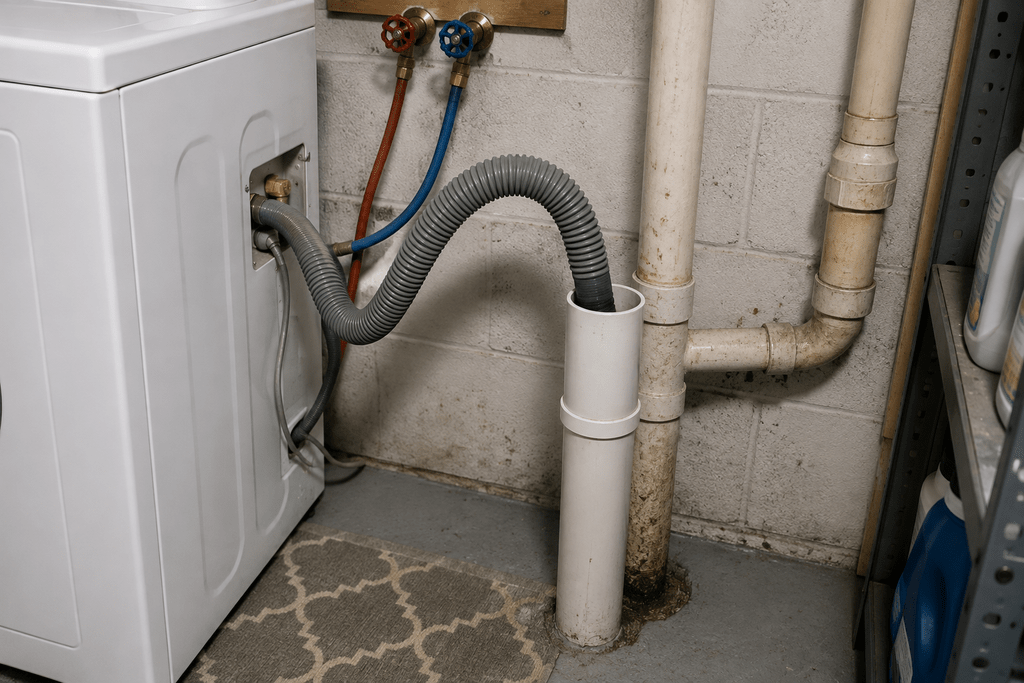
Basement floor drains can contribute to the confusion. If a drain trap dries out, gases may enter the room and seem to come from the washer. After heavy rain or snowmelt, a partially blocked drain line may produce odors or backups. Cleveland homeowners with older plumbing should pay attention when several fixtures show symptoms at the same time.
Inspect only the visible, accessible drain setup. Look for kinks, wet areas, loose connections, and signs that water has backed up. Do not disconnect hoses or open plumbing while the washer is full of water unless you are prepared to control the release. If multiple drains are affected, call a plumber rather than an appliance technician.
If the problem is limited to the appliance, professional washer repair can help diagnose a failed drain pump, internal blockage, or machine-related hose problem. A plumber handles household drainage, traps, vents, and sewer connections. Identifying which side of the system smells bad can save you from calling the wrong professional first.
Water carries dissolved minerals and other materials that can affect how detergent behaves inside a washer. The exact conditions vary from home to home, especially when plumbing age, water heating, treatment equipment, and neighborhood supply conditions differ. Mineral deposits may not create odor by themselves, but they can form rough surfaces where detergent residue, fabric soil, and moisture collect more easily.
You may notice chalky deposits around the dispenser, inlet areas, drum openings, or nearby plumbing fixtures. Inside the machine, mineral buildup can narrow small passages, coat heating surfaces, and reduce how efficiently products dissolve or rinse away. When combined with too much detergent, the deposits create a stubborn film that regular cycles may not remove.
Water temperature matters too. Cold-water washing is useful for many fabrics and can reduce energy use, but a machine that runs only cold cycles may accumulate oily residue more quickly. Body oils, lotions, and some detergents dissolve more effectively under warmer conditions. That does not mean every load should be washed in hot water. It means the machine may benefit from an occasional appropriate warm or hot maintenance cycle when allowed by its design.
Hot-water problems elsewhere in the house can also affect results. If the washer is supposed to receive warm water but the supply valve is partly closed, the hose is restricted, or the water heater is not delivering properly, the cycle may remain cooler than expected. Detergent may dissolve poorly, and greasy residue may remain on clothing and inside the machine.
Avoid guessing at water chemistry or dumping large amounts of cleaning chemicals into the washer. Products can react, damage seals, or create excessive foam. Use cleaning methods appropriate for the appliance and follow safe dilution instructions.
Watch the evidence. White crust suggests mineral buildup. Gray slime suggests a mixture of detergent and soil. Sour laundry suggests residue remaining in the fabric. The right response may involve adjusting detergent, improving water temperature, cleaning the dispenser, and correcting a supply issue rather than blaming the washer itself.
For more information about how mineral buildup can affect laundry appliances, see How Hard Water Damages Dishwashers and Washers.
Front-loading and top-loading washers can both develop odors, but they tend to hide moisture in different places. Understanding the design helps you clean the right areas instead of using the same approach for every machine.
Front-load washers use a flexible gasket to seal the door. That gasket folds inward and creates channels where water, lint, hair, and small objects can collect. The door closes tightly, so leaving it shut after a cycle traps humid air. Front-load machines also use relatively low water levels, which makes correct detergent measurement especially important. Too much product may not rinse away completely.
The advantage of a front-load design is that accessible gasket areas can be inspected regularly. The problem becomes much easier to control when the door is left open safely, laundry is removed promptly, and the gasket is wiped before residue becomes thick. Ignoring those habits can allow odor to develop surprisingly fast.
Top-load washers usually have more open airflow when the lid is raised, but they are not immune. Residue may collect around the upper basket, beneath the lid, inside dispensers, around a center component, or between the inner and outer tubs. Some top-load designs also use low water levels, so homeowners who expect the basket to fill completely may add too much detergent to compensate. That creates the same residue problem seen in front-load machines.
Top-load odors may be harder to trace because the dirtiest surfaces are not always visible. A homeowner opens the lid, sees a clean basket, and assumes the smell comes from the drain. In reality, detergent film may be coating the outer tub where ordinary wiping cannot reach.
Neither design is automatically cleaner or smellier. Maintenance habits matter more. A front-load washer with a clean gasket and good airflow may remain fresh for years. A top-load washer overloaded with detergent and left closed can develop severe odors.
Treat each design according to where it holds water. Inspect seals and folds on front-load machines. Inspect rims, dispensers, and hidden splash areas on top-load machines. Both benefit from correct dosing, complete drainage, prompt unloading, and regular maintenance cycles.
A deep cleaning should remove residue without damaging rubber, plastic, metal, sensors, or internal seals. The safest method begins with the washer’s approved cleaning cycle and cleaning instructions. Do not assume that combining several household chemicals will create a stronger result. Mixing cleaners can produce dangerous fumes, excessive foam, or reactions that damage the machine.
Start with an empty washer. Remove clothing, loose objects, and visible debris. Clean the detergent dispenser, including the cavity behind it. Wipe the door gasket or lid area carefully, paying attention to folds and lower sections where water sits. If the machine has an accessible pump filter, turn off power and prepare for retained water before opening it.
Choose one appropriate cleaning product or method rather than creating a chemical experiment. Run the dedicated cleaning cycle when available. If the machine does not have one, use the longest suitable hot-water cycle allowed by the appliance instructions. The cleaning process needs enough time and water movement to loosen residue from areas beyond the visible drum.
After the cycle, inspect the washer again. Wipe away loosened film around the gasket, dispenser, basket rim, and door. A single cycle may not remove years of buildup. Repeating a safe cleaning process after inspecting the results is better than using an overly concentrated mixture once.
Run an additional rinse when residue or strong cleaner odor remains. Then dry the accessible surfaces and leave the door or lid open safely. Clean the floor and wall around the washer too. A hidden leak, damp drain area, or moldy wall can make a clean machine smell bad again.
Deep cleaning should produce a neutral-smelling washer, not a heavily perfumed one. If the odor remains strongest during draining, the issue may be inside the pump, drain hose, or household plumbing. If black residue repeatedly returns around a damaged gasket, the seal may need professional replacement.
The point is to remove the environment supporting the odor. Scrubbing visible surfaces, flushing hidden residue, clearing the filter, and improving drying work together. One hot cycle without the rest may freshen the machine briefly, but it rarely solves a long-standing problem by itself.
Preventing odor is much easier than removing months of buildup. The best habits are small enough to follow after every load and practical enough that the entire household can remember them. You do not need to polish the washer daily. You simply need to reduce moisture, residue, and forgotten laundry.
Remove clothes promptly when the cycle ends. Wet fabric sitting in a closed drum raises humidity and gives odor-producing organisms more time to grow. Even clean laundry can develop a sour smell after several hours in a warm washer. Use a timer or phone reminder if you regularly forget loads.
Leave the door or lid open between cycles when it is safe to do so. In homes with small children or pets, use extra caution and make sure the appliance cannot become a climbing or trapping hazard. A partially open door usually provides enough airflow. Wipe visible water from the gasket, glass, dispenser, or lid area.
Measure detergent instead of pouring by instinct. Concentrated products require less than many homeowners expect. Adjust the amount for load size and soil level rather than using the same dose every time. Reduce fabric softener if the dispenser develops sticky buildup or towels begin smelling sour.
Avoid overloading. Clothing needs room to move so water can carry soil and detergent away. A tightly packed drum leaves poorly rinsed fabric and may trap small items against the gasket or drain area. Very small loads can create balance problems too, especially when washing one heavy item.
Empty pockets and secure tiny garments in a laundry bag. Coins, tissues, hair ties, and small socks can clog filters or settle in hidden spaces. Shake out heavily soiled items before loading, and address oily or muddy clothing appropriately rather than expecting an ordinary cycle to remove everything.
Run a maintenance cleaning cycle regularly, but do not rely on it as permission to ignore daily habits. A clean cycle cannot fully compensate for a closed wet drum and constant detergent overuse.
These routines take less time than brushing your teeth. The payoff is fresher laundry, fewer drain problems, less residue, and a machine that is easier to maintain over the long term.
For additional preventive maintenance tips, see How to Extend the Life of Your Washing Machine.
Many Cleveland laundry rooms are located in basements, and that environment can play a major role in recurring washer odor. Basements tend to remain cooler than the rest of the home. They may also experience higher humidity, condensation, minor seepage, and limited airflow. A washer placed in a dry upstairs laundry room can release moisture between cycles much faster than the same machine installed beside a damp foundation wall.
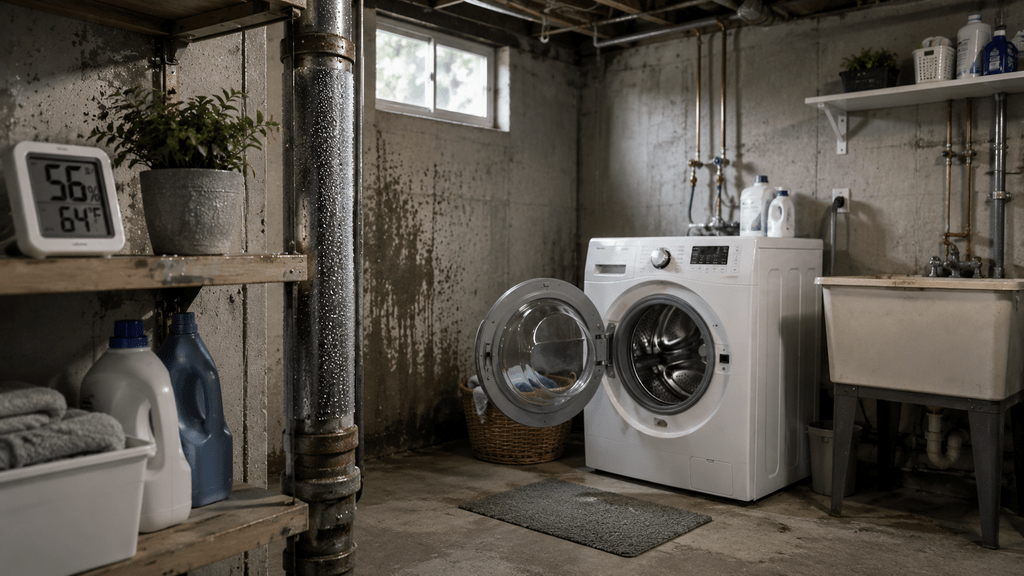
Spring thaws are a common trouble period. Melting snow can saturate soil around the foundation, and small amounts of moisture may appear on basement walls or floors. Even when water never reaches the appliance directly, humidity rises. The washer gasket, dispenser, and internal hoses stay damp longer, giving residue more time to smell.
Summer adds warm, humid air. Opening basement windows may feel like ventilation, but outdoor humidity can condense on cool basement surfaces. Pipes sweat, floors feel damp, and the laundry area develops a musty background odor. Homeowners may blame the washer when the room itself contributes to the smell.
Winter creates a different pattern. The basement may become dry near heating equipment but cold near exterior walls. Temperature differences can produce condensation behind the washer or around supply lines. If the appliance sits too close to a cold wall, hidden moisture may collect where it is difficult to see.
Use a simple humidity monitor near the laundry area. Look for condensation, rust, peeling paint, damp cardboard, or musty odors around the room. A dehumidifier may help manage seasonal moisture, but it should not be used to hide an active leak. Repair seepage, dripping pipes, faulty valves, and drainage problems at their source.
Leave space around the washer for airflow and inspection. Do not pack storage boxes tightly against the sides or back. Keep the floor drain accessible. Check beneath and behind the machine after heavy rain or rapid snowmelt.
A washer can only dry as well as the room allows. Controlling basement moisture may solve an odor problem that repeated machine cleaning never fully touched.
Cleveland homeowners dealing with appliance problems related to basement conditions can also read How Cleveland Weather Affects Garage and Basement Appliances. For local appliance service information, see appliance repair in Cleveland, OH.
Most washer odors respond to cleaning and better habits, but some smells point to a mechanical problem that homeowners should not attempt to repair themselves. The key is recognizing when the odor comes with symptoms such as poor drainage, leaking, overheating, unusual noise, repeated error codes, or electrical trouble.
A persistent sewage-like smell that becomes stronger during draining may indicate stagnant water inside the pump or hose. If the visible filter and drain setup are clear, an internal blockage or failing pump may be involved. A technician can inspect those components without damaging seals or flooding the floor.
A burning smell requires immediate attention. Stop the washer and disconnect power from a safe, dry location. The odor may come from an overheating motor, slipping component, damaged wire, failing control, or overloaded electrical connection. Do not run another cycle to see whether the smell disappears.
Leaks also change the situation. Water around the lower front, beneath the cabinet, or near electrical components can indicate a damaged gasket, pump seal, hose, valve, or tub component. Wiping up the puddle does not solve the source. Continued operation can damage the floor, wall, or electrical system.
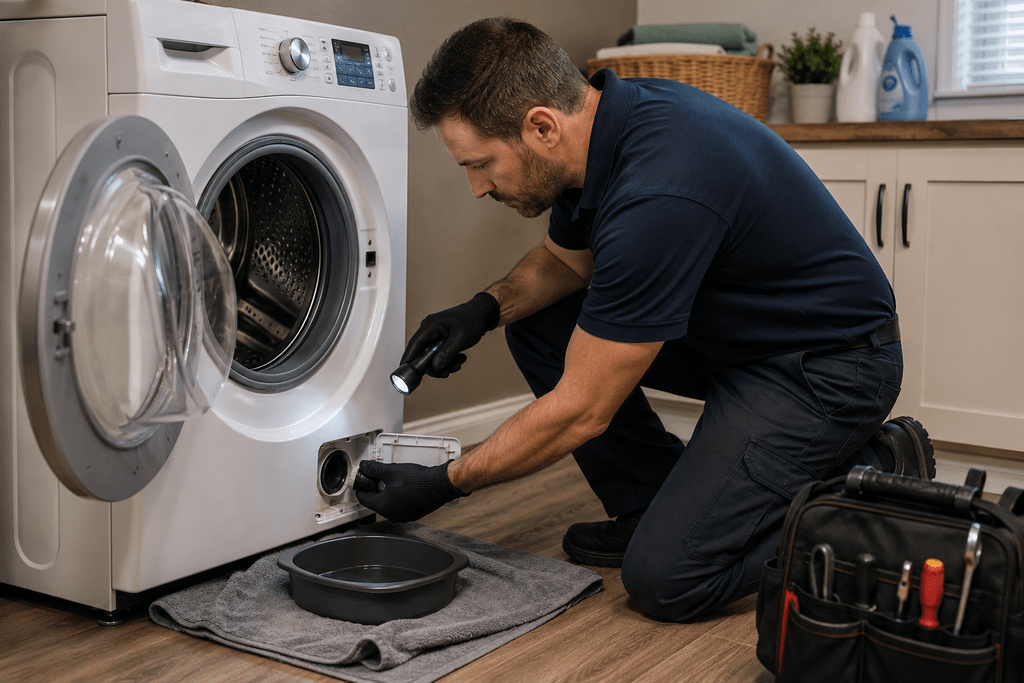
Call for washer repair when the washer does not drain completely despite a clean accessible filter and unkinked drain hose. Standing water quickly becomes stale and creates odor. A machine that repeatedly stops with water inside may have a pump, control, sensor, or wiring problem.
Severe mold-like growth around a damaged or permanently stained gasket may require replacement. Surface cleaning can remove residue, but cracked rubber and deeply contaminated folds may keep holding moisture.
Provide the technician with useful details. Explain when the odor appears, whether water remains inside, what cleaning steps you tried, and whether the machine makes unusual sounds. Mention recent plumbing work, outages, basement water, or freezing conditions.
Professional service is not only about replacing parts. A good diagnosis can separate an appliance problem from a plumbing, ventilation, or installation issue. That saves you from deep-cleaning the washer every weekend while the real cause continues operating behind the scenes.
A maintenance schedule turns odor prevention into a routine instead of an emergency project. The schedule does not need to be complicated. It should match how often your household does laundry, where the washer is installed, and how quickly residue builds up.
After every load, remove clothing promptly and inspect the door or lid area. Wipe visible water from the gasket when needed. Leave the machine open safely so air can circulate. Check that no small items remain in the drum or seal.
Once a week, wipe the door glass, gasket surface, lid rim, and detergent area. Clean spills before they harden. Look for trapped hair, lint, tissues, or small objects. If your household uses liquid fabric softener, inspect the dispenser for sticky buildup.
Once a month, remove and wash the detergent drawer if the design allows it. Inspect the cavity behind the drawer. Check accessible drain filters, but be prepared for water release. Look at visible hoses for moisture, bulges, cracking, rust, or sharp bends. Run the washer’s approved cleaning cycle.
Every few months, inspect the area behind and beneath the appliance. Look for rust, damp flooring, leaking valves, loose hoses, mold, and condensation. Confirm that the machine remains level and does not move excessively during spinning. Check the basement floor drain and surrounding humidity.
Before Cleveland’s humid summer period, clean the washer thoroughly and make sure the laundry area has adequate airflow. During spring thaws, inspect for seepage or drain problems. Before winter, check supply lines in cold areas and make sure the basement remains protected from freezing conditions.
Keep a simple note of recurring issues. If the filter fills quickly, pockets may not be emptied. If odor returns every two weeks, detergent or softener use may be too high. If the machine smells only after heavy rain, plumbing or basement moisture may be involved.
Maintenance works best when it responds to patterns. The calendar creates consistency, but the washer’s behavior tells you where extra attention is needed.
A washing machine usually smells bad because something wet and dirty is remaining where it should not. That “something” may be detergent film, fabric-softener residue, lint, body oil, standing water, drain debris, or moisture trapped in a gasket. In other cases, the odor comes from household plumbing or a damp basement rather than the machine itself.
The fastest improvement usually comes from addressing several small conditions together. Clean the gasket, dispenser, and accessible filter. Use less detergent. Reduce heavy fabric-softener use. Remove laundry promptly. Leave the door open safely. Check drainage and make sure the room around the washer can dry.
Do not judge cleanliness by fragrance. A strong scent can cover a sour washer without removing the residue. The goal is a machine that smells neutral when empty and produces laundry that remains fresh after drying. When towels turn sour again as soon as they become damp, residue may still be trapped in the fibers or washer.
Cleveland homeowners should pay special attention to basement conditions. Seasonal humidity, condensation, snowmelt, limited airflow, and slow drains can keep the laundry area damp. Cleaning the appliance without controlling the room may provide only temporary relief.
Avoid the temptation to pour several cleaners into the drum and hope they work together. Use one safe method appropriate for the machine, rinse thoroughly, and inspect the results. Harsh chemical combinations can damage parts or create dangerous fumes.
Know when the problem exceeds routine cleaning. Burning odors, leaks, repeated drain failures, grinding noises, electrical problems, and persistent sewage smells deserve professional evaluation. A technician or plumber can find problems that are not visible from the drum.
A fresh washer is not maintained by one dramatic cleaning day. It stays fresh because moisture does not sit for long, residue does not build layer by layer, and warning signs are handled early. Keep the machine dry, dose products carefully, and give hidden areas regular attention. Those habits are simple, but they work.
We repair a wide range of household appliances including refrigerators, washers, dryers, ovens, dishwashers, and more. No matter the brand or model, our experienced technicians are ready to help. We repair commercial appliances as well: commercial washers dryers, commercial refrigerators & freezer & more.
We service a wide range of household appliances, including refrigerators, dryers, washers, ranges, cooktops, dishwashers, freezers, ice makers, ovens, and double ovens. Our technicians operate across many locations in Ohio, covering major cities like Cleveland, Akron, and Parma. We also serve surrounding areas including Lakewood, Westlake, Strongsville, and Brooklyn. Our service area extends to Rocky River, Euclid, Solon, Beachwood, and Cleveland Heights, as well as counties such as Cuyahoga, Lorain, Lake, and Medina. Additional cities we cover include North-Olmsted, North Ridgeville, Valley-City, Lorain, Avon Lake, Richfield, Brecksville, Garfield Heights, Seven Hills, Brunswick, Oakwood, Mentor, and Willoughby.