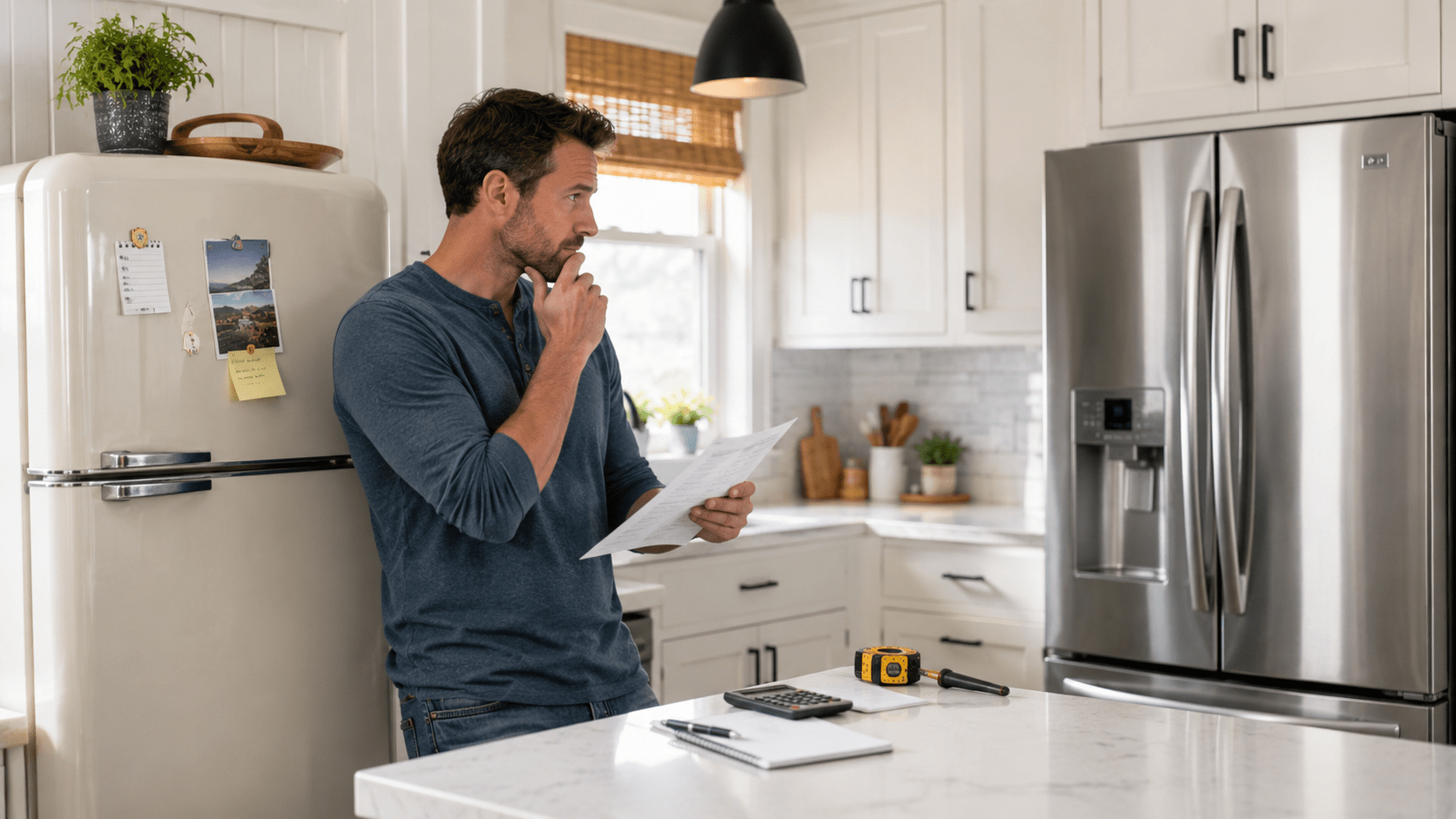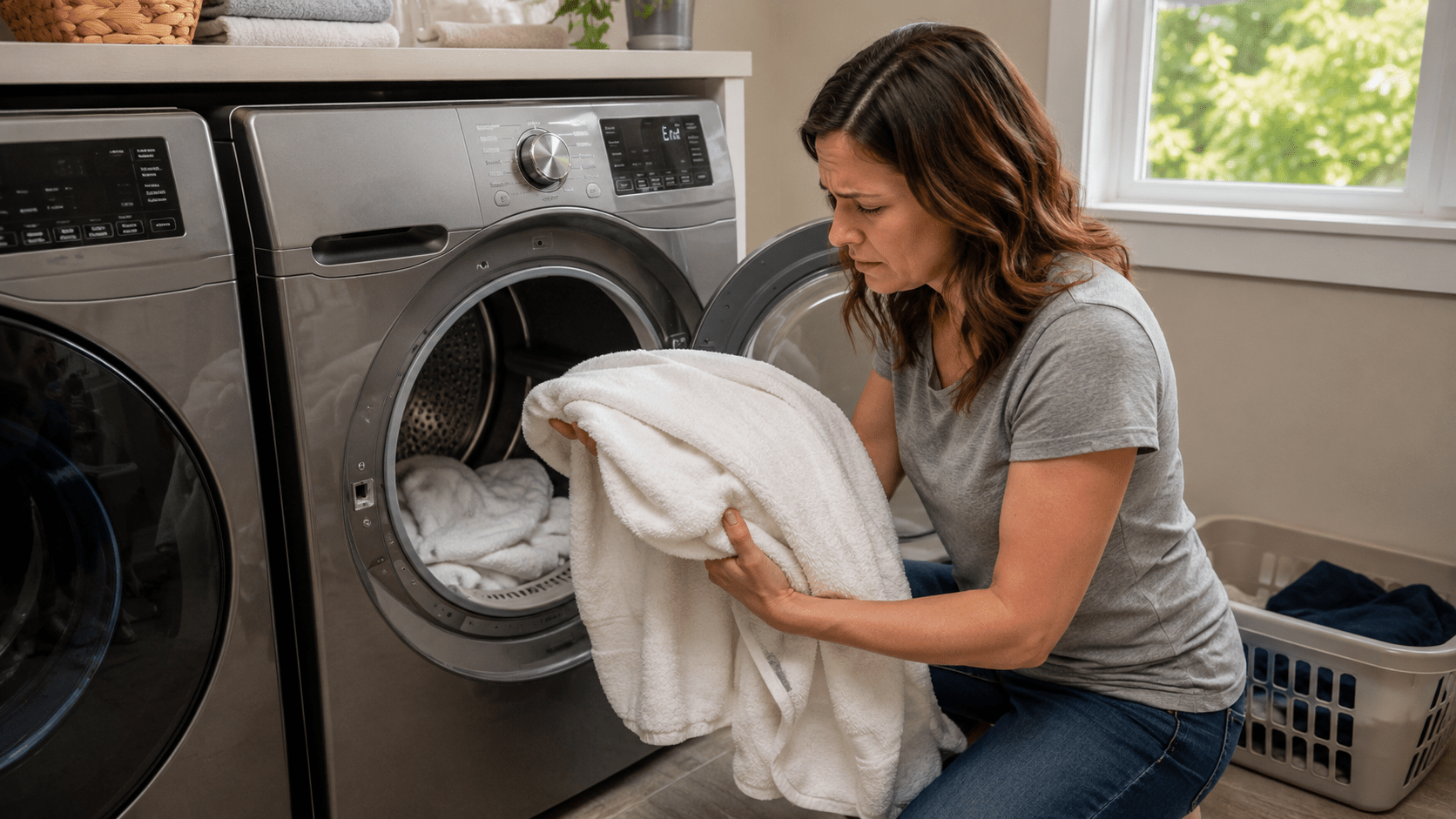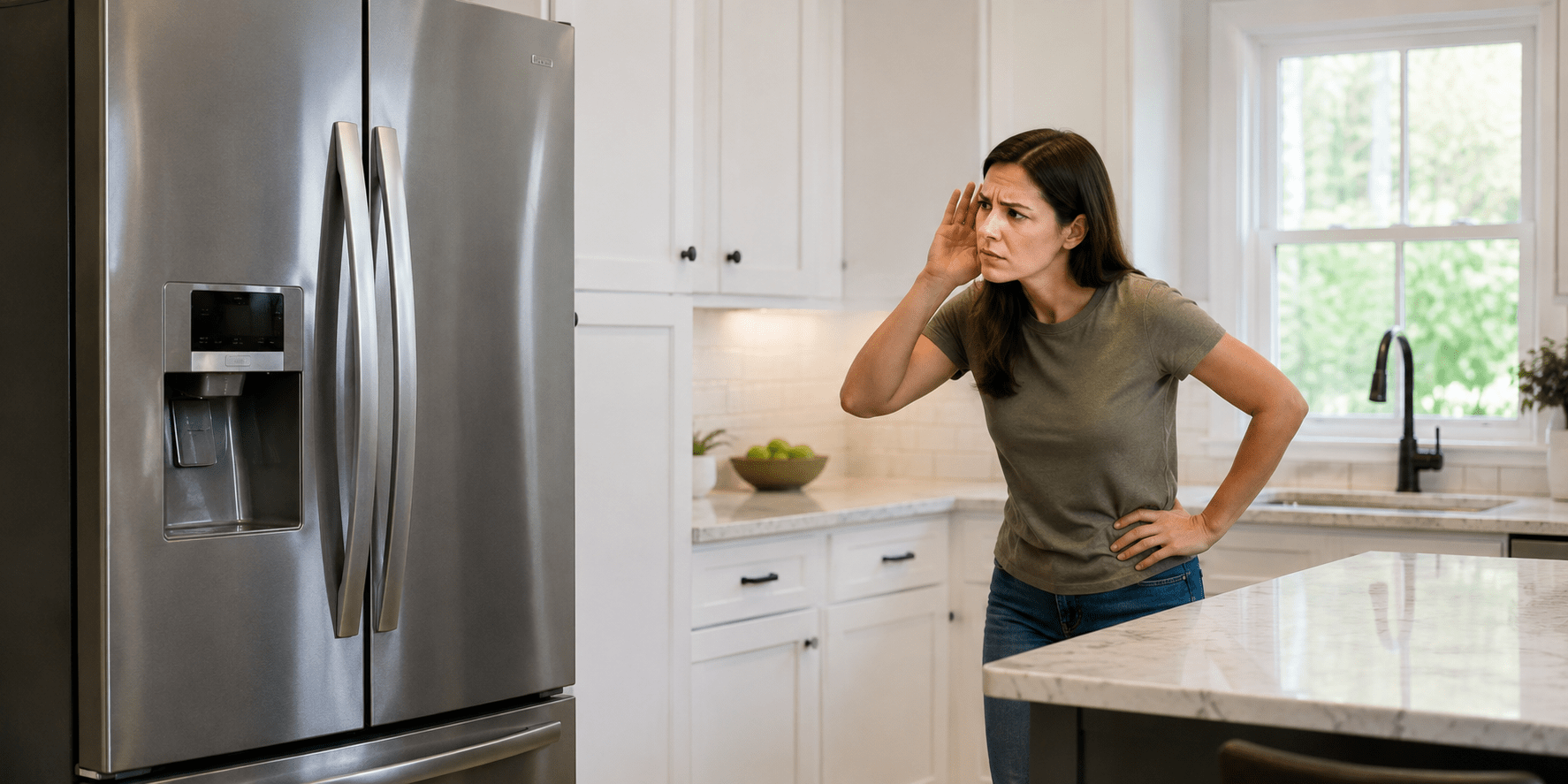
Why Is My Refrigerator Making Strange Noises?
Published: August 12, 2026
Few things create tension in a rental property faster than a broken appliance. The refrigerator stops cooling on a hot afternoon, the oven refuses to heat before dinner, or the washing machine leaves a full tub of water sitting in the basement. The tenant wants the problem fixed immediately. The landlord wants to know what happened, whether the appliance was used correctly, and who should pay. Suddenly, a machine that was quietly doing its job yesterday becomes the center of a lease disagreement today.
In Cleveland rental properties, appliance-repair responsibility is not always as simple as saying, “The landlord owns it, so the landlord pays.” Ownership matters, but the lease language, the condition of the appliance when the tenant moved in, the cause of the failure, and the way the tenant responded can all change the answer. A refrigerator compressor that wears out during normal use is very different from a refrigerator damaged while someone was trying to chip freezer ice with a screwdriver. Both refrigerators may stop cooling, but the responsibility question looks completely different.
The home itself can complicate the diagnosis. Many Cleveland rentals are older houses, duplexes, converted multifamily properties, and apartment buildings with plumbing, wiring, gas lines, drains, and vents that have been modified over the years. A dishwasher may appear defective when the kitchen drain is restricted. A dryer may take two hours because the vent is packed with lint. A refrigerator may reset because the outlet or shared circuit is unstable. Before anyone decides who receives the bill, someone needs to determine what actually failed and why.
That is the central idea of this article: responsibility should follow evidence, not assumptions. Tenants should report problems promptly and avoid unsafe do-it-yourself repairs. Landlords should arrange competent diagnosis instead of blaming the tenant before the cause is known. Both sides should read the lease, document the condition of the appliance, and communicate in writing.
This is practical information rather than legal advice. Lease terms and current housing rules can differ, so Cleveland renters and property owners should verify specific obligations with a qualified local attorney, housing professional, or the appropriate local agency when a serious dispute develops.
Appliances occupy an awkward position in rental housing. They are part of daily life, but not every rental includes the same equipment or promises the same level of service. One apartment may include a refrigerator, range, dishwasher, microwave, washer, and dryer. Another may provide only a refrigerator and stove. A third may contain an older washer that the landlord allows the tenant to use “as is” without clearly explaining who will repair it. That lack of clarity creates problems the moment something stops working.
Responsibility usually depends on several questions working together. Who owns the appliance? Was it included as part of the rental? Does the lease specifically mention maintenance or repair? Did the appliance fail through normal use, old age, defective installation, or a property-related condition? Did the tenant misuse it, overload it, block its airflow, or delay reporting a leak? Was the problem made worse by an unauthorized repair attempt?
Consider a dryer that no longer heats. The heating element may have failed from ordinary wear, which could point toward landlord responsibility when the dryer was supplied with the unit. Yet the element may have overheated because the tenant repeatedly ran the machine with a completely packed lint screen. In another property, the actual cause may be a blocked vent hidden inside the wall, which is generally beyond the tenant’s ability to inspect or correct. One symptom can lead to three different responsibility outcomes.
The same is true for water damage. A dishwasher hose may split because it aged, or it may be damaged when a tenant pushes the machine back after trying to repair it. A refrigerator supply line may leak because of a failed valve, or because a tenant pulled the appliance forward without realizing the line was stretched tightly behind it.
That is why good property management starts with clear expectations. The lease should identify included appliances, describe basic tenant maintenance, explain reporting procedures, and state how tenant-caused damage is handled. Clear language does not prevent every breakdown, but it makes the conversation much less emotional when one occurs.
When an appliance stops working, the lease should be the first document both parties review. It may identify which appliances are included, which are provided only for convenience, and who is expected to maintain or repair them. Some leases are highly specific. Others mention the kitchen appliances without discussing responsibility at all. The absence of detailed language does not automatically settle the issue, but it tells you whether the agreement provides a clear starting point.
Look for sections covering appliances, maintenance, tenant duties, utilities, alterations, damage, and reporting procedures. The relevant information may not appear under one obvious heading. A lease might state that the landlord maintains provided equipment, while another section requires tenants to clean filters, remove lint, avoid overloading machines, and report leaks promptly.
The move-in condition report is also important. If the refrigerator door was already damaged, the washer was making noise, or the dishwasher racks were rusty when the tenant moved in, that information can help establish that a later failure was not created by the tenant. Photos and written notes are much stronger than a vague memory months later.
Verbal promises can create confusion. A landlord may say, “There is a washer in the basement, but I do not maintain it,” while the tenant assumes that every machine on the property is included in the rent. Important conditions should be written into the lease or an addendum. Clear documentation protects both sides.
Tenants should not assume that a clause saying “tenant handles minor maintenance” automatically includes major appliance repair. At the same time, landlords should not assume that owning an appliance means every failure is their financial responsibility regardless of misuse. The actual cause still matters.
A lease should be read as a complete agreement rather than one isolated sentence. When the wording is unclear or appears to conflict with local legal requirements, professional guidance may be necessary. The lease provides the map, but it may not answer every question by itself.
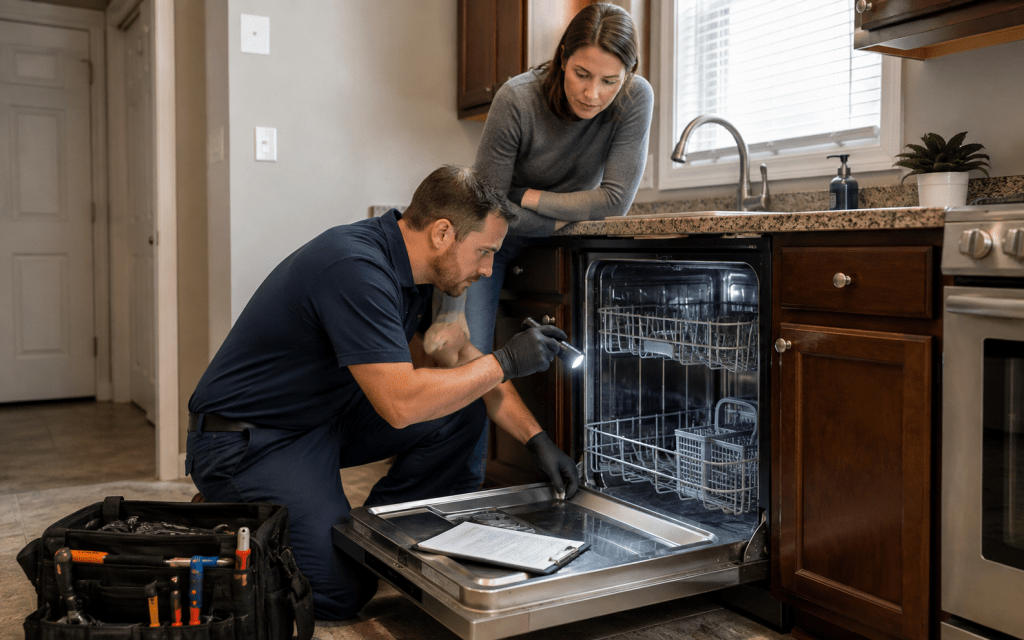
The difference between normal wear and tear and tenant-caused damage sits at the center of most appliance disputes. Normal wear means deterioration that develops through ordinary, reasonable use over time. Motors wear, seals harden, heating elements fail, bearings become noisy, and electronic controls eventually stop responding. Even a well-maintained appliance does not last forever.
Tenant-caused damage involves misuse, neglect, or an action that goes beyond normal operation. Overloading a washer with a heavy comforter after the manual clearly warns against it may damage the suspension or drive system. Using a knife to remove freezer ice can puncture refrigerant tubing. Pouring the wrong chemical into a dishwasher can damage seals and metal surfaces. Continuing to run a leaking machine for weeks without reporting it may turn a small repair into serious flooring or cabinet damage.
The difficult cases fall between those extremes. A dryer lint filter may be badly clogged, but was the tenant ever told to clean it? A dishwasher filter may contain food debris, but is cleaning that filter ordinary tenant maintenance or specialized service under the lease? A washer may smell because the door was always kept closed, yet the manufacturer’s care instructions may not have been provided.
A professional diagnosis can separate speculation from evidence. A technician may find a failed component with no sign of misuse. They may also find foreign objects in a pump, severe overloading damage, or a vent blocked in a location controlled by the landlord. The repair report can become the most useful document in the discussion.
Neither side should decide responsibility based only on the symptom. A broken door handle might result from brittle plastic, excessive force, or poor alignment that made normal opening difficult. A cracked refrigerator shelf might be caused by impact or by material that weakened over time.
The fairest approach is to ask what a reasonable person using the appliance normally would have expected to happen. If the machine failed despite ordinary use and reasonable care, the problem usually looks like maintenance. If a specific action or preventable neglect caused the damage, tenant responsibility becomes more likely.
Cleveland rental properties experience many of the same appliance failures found in owner-occupied homes, but rentals add extra variables. Equipment may be used by several tenants over its lifetime, maintenance histories may be incomplete, and previous repairs may not have been documented. Older buildings can also place modern appliances on aging electrical circuits, narrow drains, long dryer vents, and uneven floors.
Refrigerators frequently develop cooling, frost, water, and ice-maker problems. Ranges and ovens may fail to ignite, heat, or maintain temperature. Dishwashers commonly struggle with drainage, leaks, dirty filters, and weak circulation. Washers can stop draining or spinning, while dryers take too long, overheat, or become noisy.
Not every problem begins inside the appliance. A refrigerator may click because of a weak electrical connection. A washer may drain slowly because the property’s standpipe is restricted. A dryer can lose performance because the wall vent is blocked. A dishwasher may leak because the machine is tilted by uneven flooring or trapped behind multiple flooring layers.
The age and type of the property matter. A converted duplex may have laundry equipment in a damp basement. An older apartment kitchen may leave almost no clearance around the refrigerator. Shared laundry rooms may serve far more loads than residential machines were designed to handle.
Tenants often report the symptom rather than the cause, which is completely understandable. “The dryer does not dry” or “the refrigerator is loud” is enough to begin the process. The landlord or property manager should arrange diagnosis instead of expecting the tenant to identify the failed part.
The following categories represent some of the most common problems and the responsibility questions they create.
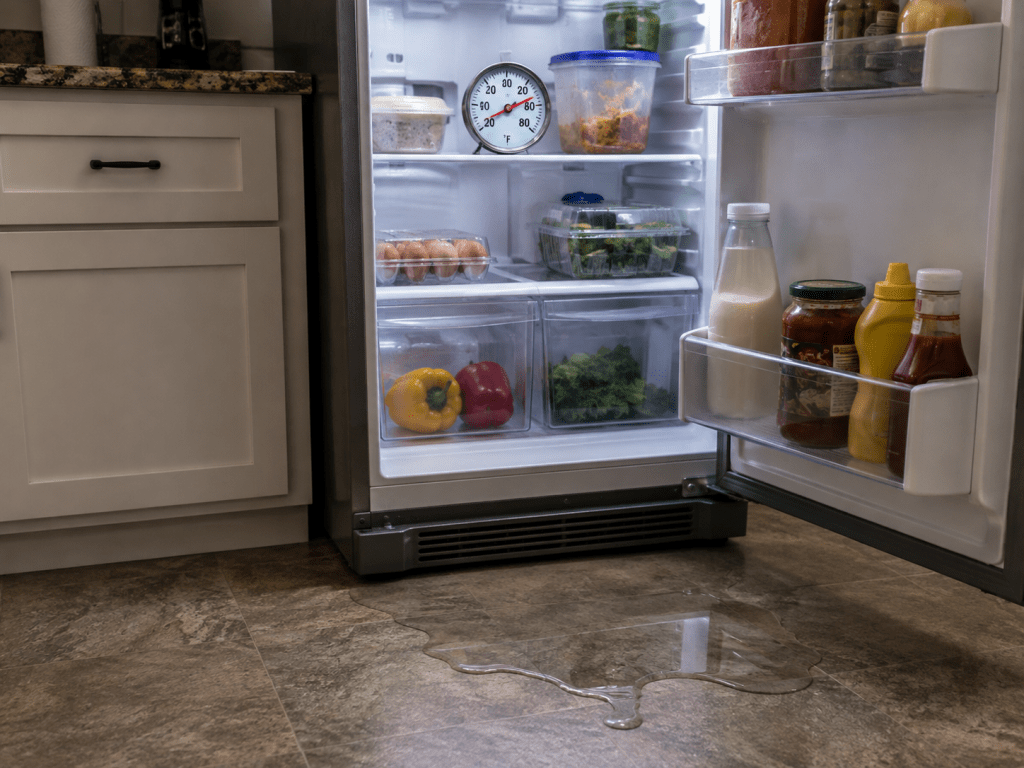
Refrigerator complaints usually feel urgent because food safety is involved. Common symptoms include a warm fresh-food compartment, a freezer covered in frost, constant running, repeated clicking, water under the drawers, a leaking supply line, or an ice maker that no longer produces ice.
Cooling failures can come from dirty condenser areas, blocked vents, failed fans, defrost problems, worn door gaskets, control faults, compressor issues, or unstable power. When the refrigerator was supplied with the rental and the problem developed through normal use, repair usually points toward the property owner. The same is generally true when poor cabinet clearance, an aging receptacle, or a defective water connection contributes.
Tenant responsibility becomes more possible when misuse is clear. Leaving the door open for long periods can create frost, although one accidental incident does not necessarily cause permanent damage. Overpacking the appliance so completely that airflow vents remain blocked can raise temperatures. Puncturing the freezer while removing ice is a much clearer example of tenant-caused damage.
Water leaks need immediate reporting. A small refrigerator line can release water continuously under household pressure. Tenants should not ignore the puddle, and landlords should not postpone inspection because the appliance still cools. The source may be the refrigerator valve, tubing, filter housing, household shutoff, or plumbing behind the wall.
Food loss creates a separate question from appliance repair. The lease, renter’s insurance, cause of the failure, and local rules may affect whether anyone reimburses spoiled groceries. Tenants should photograph temperatures and damaged food rather than assuming reimbursement is automatic.
The most important practical step is rapid communication. The tenant should keep the doors closed, move vulnerable food when necessary, and report the exact symptoms. The landlord should arrange competent service and avoid telling the tenant to keep resetting a refrigerator that clicks, overheats, or cannot hold safe temperatures.
Ranges and ovens often remain usable for many years, but their failures can raise serious safety concerns. Electric units may have failed elements, switches, sensors, control boards, or power connections. Gas models may develop weak igniters, clogged burner ports, failed valves, or ignition systems that click without lighting.
A provided range that stops heating during normal use is commonly a landlord maintenance issue. Cooking equipment is usually treated as an important part of a furnished kitchen when it was included with the rental. The landlord should arrange repair by someone qualified to work on the specific fuel type.
Tenant-caused problems can include foil placed where it blocks oven airflow, heavy impact that cracks a glass cooktop, or spills allowed to build until burner ports become obstructed. Yet responsibility should not be assigned casually. A glass cooktop may crack from impact, thermal stress, or an existing defect. A technician’s inspection matters.
Gas odor changes the situation immediately. Tenants should not continue operating the appliance, search for the leak with a flame, or repeatedly test the igniter. They should leave the area when appropriate and contact emergency or utility services from a safe location. The landlord should treat the report as urgent rather than an ordinary scheduling inconvenience.
Cleaning responsibilities should be defined. Tenants are normally expected to wipe spills and avoid severe grease accumulation, but they should not disassemble gas valves, remove high-voltage panels, or adjust combustion components. Deep internal service belongs to qualified professionals.
Power-supply issues can also create confusion. An electric range display may work while heating elements receive incomplete voltage. That points toward the household electrical system rather than the range itself. An appliance technician may identify the condition, but an electrician should repair the building wiring.
A safe, functioning range is not the place for guesswork. When the appliance was provided with the property, the owner should ensure that diagnosis and repair are completed competently, while the tenant should report unusual odors, sparking, delayed ignition, and control problems without delay.
Dishwashers create frequent disagreements because some problems involve routine cleaning while others involve pumps, valves, hoses, drains, and electrical components. A tenant may report that the dishwasher leaves dirty dishes, while the landlord discovers a filter packed with food. In another unit, the filter is clean but the circulation pump has failed. The symptom is similar, but responsibility is not.
Tenants should scrape heavy food from dishes, load racks reasonably, use appropriate detergent, and clean a removable filter when the manufacturer treats it as routine care. They should not pour drain chemicals into the appliance, force racks, or continue operating the machine when water leaks onto the floor.
Landlords are usually responsible for internal failures that arise through normal use, such as a bad inlet valve, drain pump, circulation motor, heating element, door seal, control, or installation problem. A restricted kitchen drain or corroded shutoff may involve the property’s plumbing rather than the dishwasher.
Leaks require fast action from both parties. The tenant should stop the cycle and report the problem. The landlord should determine whether water is coming from the door, hose, pump, valve, drain connection, or household piping. Delayed inspection can lead to swollen cabinets, damaged flooring, ceiling stains, and mold.
Hard water and mineral buildup can complicate the issue. White film on glassware does not always mean the dishwasher is broken. Detergent choice, rinse aid, water hardness, temperature, and maintenance all affect results. Yet heavy scale inside valves, heaters, and pumps may eventually require service.
A dishwasher that is technically operating but no longer cleaning may still need repair. Running water and a lit control panel do not prove that circulation, heating, and drainage are functioning correctly.
The fairest responsibility decision follows the cause. Routine residue caused by poor use may be a tenant issue. A failed mechanical component or property plumbing restriction generally points toward the owner when the appliance was included with the rental.
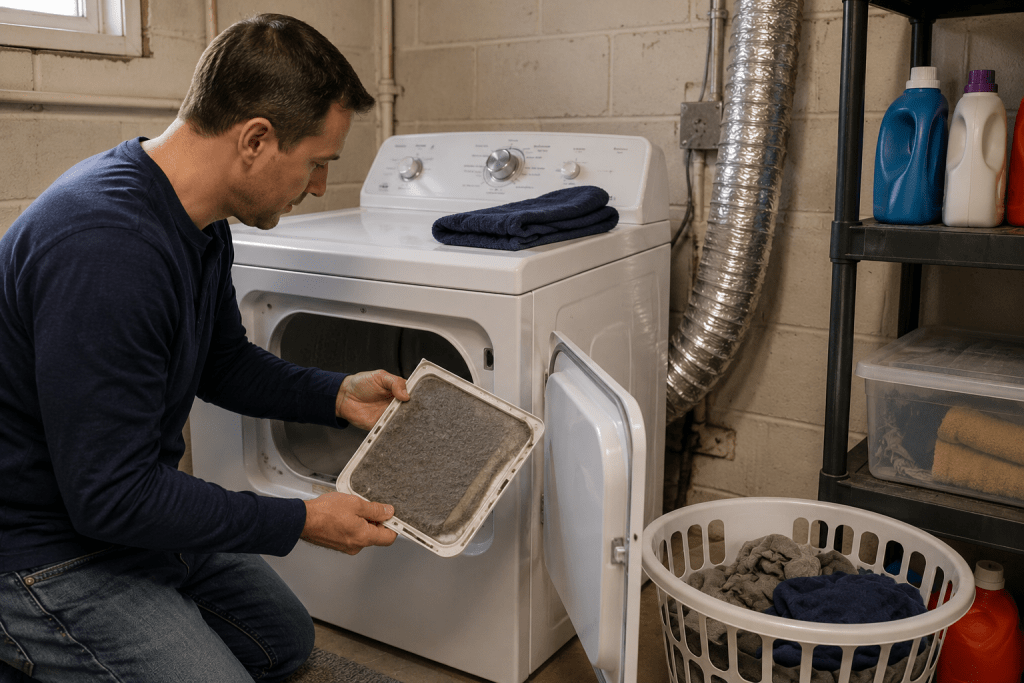
Laundry equipment can be located inside the apartment, in the basement of a single-family rental, or in a shared room serving multiple tenants. Each arrangement creates different responsibility questions.
Common washer problems include slow filling, standing water, failed draining, violent vibration, locked doors, leaks, unpleasant odors, and incomplete spinning. Dryers commonly develop long drying times, no heat, overheating, squealing, thumping, or repeated shutdowns.
For landlord-provided in-unit equipment, ordinary mechanical failure generally points toward landlord maintenance. Pumps, valves, door locks, belts, bearings, heating elements, igniters, controls, and motors wear out. Building-related causes, such as a restricted washer drain or clogged dryer vent inside the wall, also usually require owner attention.
Tenant behavior still matters. Overloading a washer can damage suspension and drive components. Coins, screws, and other objects left in pockets may block pumps. Failure to clean the dryer lint screen can reduce airflow and contribute to overheating. Repeatedly drying items contaminated with grease or flammable substances can create serious hazards.
Shared laundry equipment should receive regular owner or management inspection because no single tenant controls its total use. Machines may run continuously, lint can accumulate quickly, and one user’s misuse may affect everyone. Clear posted instructions help, but they do not replace maintenance.
Dryer vents deserve special attention in Cleveland basements. Long runs, damp lint, snow-blocked exterior hoods, and crushed transition ducts can make dryers slow and unsafe. Replacing a heating part without clearing the vent may lead to another failure.
Tenants should report machines that leak, smell hot, trip breakers, or fail to drain. Landlords should avoid telling tenants to keep using an appliance with obvious safety symptoms. Shared equipment in particular needs a predictable inspection and service routine rather than waiting for complete failure.
Landlord responsibility is strongest when the appliance was provided as part of the rental, the tenant used it normally, and the failure resulted from age, ordinary wear, defective installation, or a condition of the property. A refrigerator fan that fails, an oven igniter that wears out, or a dishwasher pump that stops working are common maintenance events rather than evidence of tenant misconduct.
Responsibility also usually points toward the landlord when the problem comes from building systems. A dryer cannot perform properly with a clogged vent inside the wall. A washer cannot drain into a blocked property line. A refrigerator cannot operate reliably on a failing receptacle. These supporting systems are generally beyond the tenant’s authority and expertise.
The lease remains important. It may state that the landlord maintains supplied appliances, or it may describe certain equipment differently. Even when the wording is limited, owners should be cautious about leaving a provided essential appliance unusable for an extended period without examining applicable obligations.
A landlord should arrange a qualified diagnosis rather than relying on assumptions. Asking the tenant what happened is reasonable. Deciding that the tenant caused the failure before inspection is not. A technician can identify wear, misuse, installation defects, and external causes much more reliably.
The owner is also responsible for choosing safe repair methods. An unqualified handyman should not bypass a dryer thermal fuse, improvise a gas connector, or install an incorrect electrical part. A cheap temporary fix can create much larger liability.
Communication matters. The tenant should receive a realistic update about scheduling, parts, access, and temporary measures. The landlord should document the repair, keep invoices, and record whether a property condition contributed.
The goal is not simply to restore the machine. It is to leave the appliance and its connections safe, functional, and unlikely to repeat the same failure.
Several patterns commonly support landlord responsibility. The first is ordinary component failure. The appliance worked normally, the tenant used it as intended, and a part reached the end of its service life. A worn dryer belt, failed refrigerator fan, bad oven sensor, or leaking dishwasher pump falls into this category.
The second is defective installation. A dishwasher may tilt forward because it was never secured correctly. A dryer vent may be crushed by the way the machine was installed. A refrigerator water line may be stretched tightly enough to leak whenever the appliance moves. The tenant did not create these conditions through ordinary use.
The third is a building-system problem. Electrical circuits, plumbing lines, gas connections, shutoff valves, drains, and concealed vents usually remain under owner control. When one of these systems prevents the appliance from working safely, the property needs repair even if the appliance itself is healthy.
The fourth is preexisting damage. Move-in photos, old service records, and repeated prior complaints can show that the issue began before the current tenant. An appliance that was already noisy or leaking cannot reasonably be treated as newly damaged without evidence.
The fifth is required safety correction. A gas leak, overheated outlet, damaged cord, unstable appliance, or repeated water leak needs professional action regardless of who may ultimately pay. The immediate priority is preventing injury and property damage.
Landlords should also consider whether the tenant could realistically perform the maintenance in question. Cleaning a lint screen is simple. Clearing a concealed dryer vent, replacing a refrigerator control board, or servicing a gas valve is not.
A responsible property owner separates access and safety from final billing. The appliance should be made safe and diagnosed first. Cost responsibility can be addressed after the cause is documented.
Appliance failures rarely stay neatly contained. A slow refrigerator leak can damage hardwood flooring and the ceiling below. A dishwasher drip can swell cabinet panels and create mold behind the toe kick. A washer hose can release hundreds of liters of water if it fails under pressure. A blocked dryer vent can overheat the machine and increase fire risk.
This is why delayed reporting and delayed response both matter. Tenants should not wait several weeks to mention water under the refrigerator. Landlords should not ignore a written leak report because the appliance still turns on.
Small symptoms often provide an inexpensive warning. A dryer taking longer may need vent cleaning before a thermal fuse or heating component fails. A washer making a new grinding sound may contain a foreign object that can be removed before it damages the pump. A refrigerator clicking intermittently may need a start component before food spoils.
Delayed repairs also make responsibility harder to determine. The original cause becomes mixed with secondary damage. A simple valve leak may damage the floor because the tenant continued using the machine. A tenant may argue that the landlord failed to respond, while the landlord argues that the report came too late. Written timelines help establish what happened.
Vacant units and shared laundry rooms need scheduled inspections because no resident may feel responsible for reporting early symptoms. Water lines, dryer vents, drain pans, and floor areas should be checked regularly.
Prompt repair is not only good customer service. It protects the building. Appliances connect directly to water, electricity, gas, drainage, and ventilation systems. A neglected failure can move beyond the machine and affect walls, cabinets, flooring, wiring, and neighboring units.
The cheapest repair is often the one made before the property itself becomes part of the damage.
A tenant may be responsible when clear evidence shows that misuse, neglect, unauthorized modification, or failure to report a known problem caused the damage. The important phrase is clear evidence. Responsibility should not be assigned simply because the appliance failed while the tenant lived in the unit.
Misuse can include overloading a machine beyond reasonable limits, forcing a jammed door, placing inappropriate items in an appliance, bypassing safety controls, or using the wrong fuel or chemical. Neglect can include allowing a dryer lint screen to remain completely blocked, ignoring an active leak, or failing to follow simple written care instructions.
Unauthorized repairs create another problem. A tenant may mean well when removing panels or replacing parts, but incorrect work can damage wiring, seals, tubing, gas connections, and electronic controls. It can also make the original failure harder to diagnose. Tenants should report the problem and obtain permission before arranging significant service on a landlord-owned appliance.
Foreign objects are common. Coins, nails, screws, underwire, toys, and other items can enter washer pumps and dryer systems. The responsibility question may depend on whether the object clearly came from the tenant’s belongings and whether the damage could reasonably have been prevented.
Cleaning and maintenance expectations should be proportionate. Tenants can reasonably be expected to remove lint, wipe spills, avoid blocking vents, and use the correct detergent. They should not be expected to dismantle pumps, clean concealed ducts, or test high-voltage systems.
When a landlord charges for tenant-caused damage, documentation should include the technician’s findings, photos, invoice, and lease provision. A vague statement that the tenant “must have done something” is not a strong basis for billing.
Misuse is easiest to identify when the damage matches a specific action. A cracked glass cooktop with a clear impact point, a punctured freezer wall, a washer pump containing several metal objects, or a dryer damaged by operating with an intentionally bypassed safety switch creates a direct connection between behavior and failure.
Neglect is less obvious because it develops over time. A lint screen covered by one load’s worth of fibers is normal. A screen sealed by thick lint and fabric-softener residue after repeated warnings may support a neglect claim. A small leak that was reported immediately is different from a leak that continued for months and damaged the floor.
Unauthorized work can shift responsibility even when the original failure was not the tenant’s fault. Suppose an oven element fails through ordinary wear, but the tenant installs an incorrect replacement and damages the control board. The landlord may remain responsible for the original element failure while the tenant becomes responsible for the additional damage. That distinction requires good documentation.
Preventable damage should also be judged reasonably. Tenants are not appliance technicians. They may not recognize a subtle compressor sound or hidden drainage problem. Clear warnings such as standing water, smoke, gas odor, sparks, and active leaking are different because a reasonable person should stop using the equipment and report the issue.
Landlords can reduce disputes by providing simple written care instructions at move-in. Explain lint-screen cleaning, dishwasher filter care, washer loading, refrigerator airflow, and the procedure for reporting leaks. Tenants cannot be expected to follow rules they were never told existed, especially when appliance designs vary.
Responsibility works best as a cause-and-effect analysis. What did the tenant do or fail to do? How did that action damage the appliance? What would have happened under normal use? A technician’s findings should answer those questions before charges are assigned.
Some rental-appliance situations do not fit neatly into landlord or tenant responsibility. An appliance may have been left by a previous tenant. The landlord may allow its use without promising maintenance. A tenant may replace an old appliance with permission but fail to clarify ownership. Shared laundry equipment may be operated by many people, making misuse difficult to assign.
These gray areas become disputes because expectations were never documented. One person views the appliance as part of the rental. Another views it as a free bonus with no repair obligation. Both interpretations may feel reasonable until the machine breaks.
The solution is written clarity before failure. The lease or addendum should identify whether each appliance is landlord-owned, tenant-owned, inherited, or provided without a maintenance commitment where legally permissible. It should explain whether the tenant can remove, replace, or repair the equipment.
Temporary replacement appliances create another issue. A landlord may provide a used refrigerator while waiting for parts. Is that an acceptable temporary measure? The answer depends on whether it cools safely, fits the unit, and allows reasonable use. A nonworking or unsafe substitute is not a meaningful solution.
Cosmetic problems also create disagreement. A scratched appliance may still operate normally, while a broken shelf or rack may reduce usability. The lease and condition report should help determine whether the issue is damage, wear, or merely appearance.
Gray areas become manageable when both sides focus on function, ownership, cause, and written terms rather than emotion.
A landlord-provided appliance is usually one that belongs to the property owner and is included with the rental. The owner generally controls replacement, service authorization, and the decision to repair or replace. Tenants should not remove or dispose of it without written permission.
A tenant-owned appliance is usually the tenant’s responsibility, including repair, maintenance, and removal. Yet the installation can still affect the property. A tenant-owned washer connected to the landlord’s plumbing may create a leak. A portable dishwasher may overload an old outlet. A second freezer may exceed circuit capacity. Landlords can reasonably require approval for certain installations.
Ownership can become unclear when an appliance is abandoned by a previous tenant. If the new tenant is allowed to use it, the lease should state who owns it and whether maintenance is included. Otherwise, the first breakdown creates an argument.
Tenant upgrades create another gray area. A renter may ask to replace a basic refrigerator with a preferred model. The parties should agree in writing about ownership, installation, storage of the original appliance, and what happens at move-out. Without that agreement, the tenant may expect to take the new refrigerator while the landlord expects it to remain.
Even tenant-owned appliances must be installed safely. Gas connections, 240-volt circuits, water lines, and dryer vents may require qualified professionals. A landlord can protect the property by requiring proof of proper installation.
Clear ownership prevents confusion over repair bills, warranties, and disposal. It also helps a technician know who can authorize work.
Shared laundry equipment operates under heavier and less predictable use than most in-unit machines. Several households may use the same washer and dryer every day, and no single tenant sees the full pattern. One person notices a slow drain, another hears a squeal, and a third assumes the machine always behaves that way.
Because the landlord or property manager controls the common area, routine inspection and repair usually belong to management. This includes cleaning concealed dryer vents, checking supply hoses, testing drains, maintaining payment systems, and responding to leaks or electrical problems.
Tenants still have responsibilities. They should clean accessible lint screens, follow load limits, remove personal items, avoid washing prohibited materials, and report problems. Posted instructions should be clear and easy to understand.
Assigning damage to one tenant can be difficult unless evidence is strong. A foreign object found in a washer may not identify who left it. Camera use in laundry areas raises privacy and legal considerations, so property managers should use lawful, proportionate methods rather than treating every failure as tenant damage.
Out-of-service signs should be used when a machine is unsafe or likely to worsen damage. A dryer that smells hot or a washer that leaks should not remain available simply because repair is scheduled for later.
Common-area equipment affects multiple tenants, so communication matters. Post repair updates, remove standing water, keep the room ventilated, and provide a clear reporting method.
Shared laundry rooms work best when management treats them like building systems rather than unattended convenience machines.
When a rental appliance fails, the tenant’s best protection is a calm, documented response. Stop using the machine when continued operation could cause damage or create a safety risk. Water leaks, smoke, burning odors, gas smells, sparks, grinding, and repeated breaker trips all justify immediate shutdown.
Take photos or video of the symptom. Record error codes, unusual sounds, water location, temperature readings, and the condition of the surrounding area. A short video of a washer leak or refrigerator clicking can be much more useful than a description written several days later.
Report the problem through the method required by the lease. An online maintenance portal, email, or text creates a written record. Emergency conditions may require a phone call as well, but written follow-up is still helpful.
Describe what happened without attempting to diagnose the part. “The freezer is 20°F, the refrigerator is 48°F, and the back clicks every four minutes” is more useful than “the compressor is dead.” Mention when the problem began, what cycle was running, and whether there is water, odor, or electrical behavior.
Do not hire a technician or replace the appliance without authorization unless the lease or an emergency legal process clearly allows it. Unauthorized work can create billing and ownership disputes.
Provide reasonable access for service and keep the area around the appliance clear. Remove food, laundry, or household items that prevent inspection.
Most importantly, avoid making the problem worse. Do not use sharp tools on freezer ice, reset a tripping breaker repeatedly, pour chemicals into a dishwasher, or run a leaking washer “one last time.”
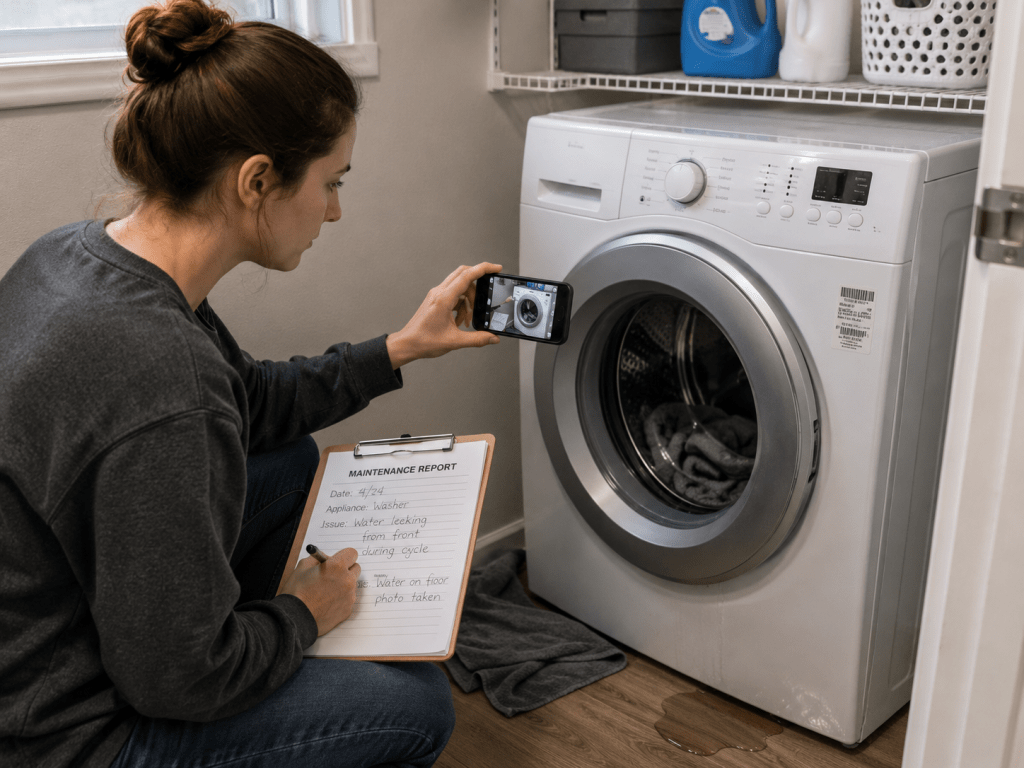
A strong maintenance report should answer five questions: Which appliance is affected? What exactly is it doing? When did the problem begin? Is there a safety or property-damage risk? What basic checks have already been made?
For a refrigerator, include compartment temperatures, noises, frost, and leaks. For a washer, describe whether it fills, drains, spins, or locks. For a dryer, state whether it tumbles, heats, and moves air outdoors. For a dishwasher, mention standing water, leaks, cleaning failure, and error codes.
Photograph the appliance model label when accessible. The model number helps the landlord or technician identify parts and service information before arriving.
Use neutral language. A clear report is stronger than an angry accusation. “Water is spreading from beneath the dishwasher and has reached the cabinet base” communicates urgency without guessing who is at fault.
Keep copies of messages, photos, and appointment notices. Write down when the technician arrived and what they said. Ask for a summary of the diagnosis when responsibility may be disputed.
If the problem is urgent and no response arrives, follow the escalation process described in the lease and seek current local guidance. Do not invent your own rent-deduction or repair process without confirming legal requirements.
Good documentation is not about preparing for a fight. It helps the problem get fixed faster and preserves an accurate timeline if disagreement develops later.
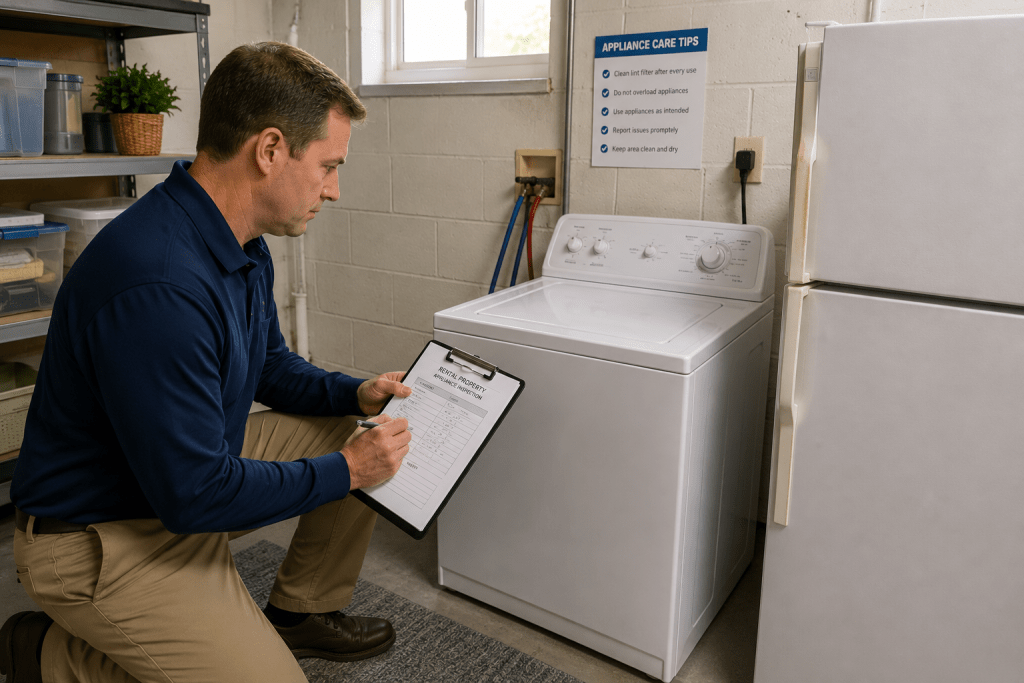
The easiest repair dispute to resolve is the one prevented before move-in. Landlords should list every included appliance in the lease, document its condition, and clarify basic tenant maintenance. Photographs should show interiors, doors, controls, racks, hoses, and visible damage.
Provide simple instructions for lint-screen cleaning, dishwasher filter care, refrigerator loading, washer capacity, and emergency shutoffs. Long manuals may go unread, but a one-page care guide can prevent common misuse.
Use qualified installers and service technicians. Poor installation creates failures that later look like tenant damage. Secure dishwashers, level washers, protect refrigerator water lines, and verify dryer vent airflow.
Keep repair records by appliance and model number. Repeated failures reveal when replacement becomes more sensible. Records also show whether a problem existed before the current tenant.
Respond quickly to leaks, gas odors, electrical symptoms, and failed refrigeration. Triage matters. A broken ice maker is inconvenient; a warm refrigerator full of food or a leaking washer is urgent.
Require technicians to describe the cause, not just the replaced part. “Drain pump failed” is incomplete when a foreign object caused the failure. “Thermal fuse opened” is incomplete when the dryer vent remains blocked.
Communicate billing decisions with evidence. When tenant damage is documented, provide the report, invoice, photos, and lease basis. When the failure is ordinary wear, handle it as maintenance without creating unnecessary conflict.
A fair, consistent process builds trust. Tenants report problems earlier when they do not expect automatic blame, and early reports protect the property.
Appliance problems in Cleveland rental properties are common, but responsibility should never be decided by guesswork. The lease, ownership of the appliance, cause of failure, condition at move-in, tenant behavior, and building systems all matter.
Landlords are generally in the strongest position of responsibility when they supplied the appliance and it failed through ordinary wear, age, defective installation, or a property-related condition. Tenants may be responsible when clear evidence connects misuse, neglect, unauthorized work, or delayed reporting to the damage.
The symptom alone does not reveal responsibility. A slow dryer may have a clogged lint screen, a concealed vent restriction, or a failed heating component. A leaking dishwasher may have a worn seal, damaged hose, poor installation, or misuse. A professional diagnosis provides the missing evidence.
Tenants should stop unsafe operation, document the problem, report it in writing, and avoid unauthorized repairs. Landlords should respond promptly, arrange qualified service, and communicate the findings clearly.
Cleveland’s older housing stock adds electrical, plumbing, ventilation, moisture, and access challenges that can make appliance failures more complicated. The machine and the building should be evaluated together.
The best outcome is not winning an argument over a repair bill. It is restoring a safe appliance, protecting the property, and creating a fair record of what happened. Clear leases, good maintenance habits, fast reporting, and evidence-based decisions make that outcome much more likely.
We repair a wide range of household appliances including refrigerators, washers, dryers, ovens, dishwashers, and more. No matter the brand or model, our experienced technicians are ready to help. We repair commercial appliances as well: commercial washers dryers, commercial refrigerators & freezer & more.
We service a wide range of household appliances, including refrigerators, dryers, washers, ranges, cooktops, dishwashers, freezers, ice makers, ovens, and double ovens. Our technicians operate across many locations in Ohio, covering major cities like Cleveland, Akron, and Parma. We also serve surrounding areas including Lakewood, Westlake, Strongsville, and Brooklyn. Our service area extends to Rocky River, Euclid, Solon, Beachwood, and Cleveland Heights, as well as counties such as Cuyahoga, Lorain, Lake, and Medina. Additional cities we cover include North-Olmsted, North Ridgeville, Valley-City, Lorain, Avon Lake, Richfield, Brecksville, Garfield Heights, Seven Hills, Brunswick, Oakwood, Mentor, and Willoughby.