Cleveland Power Outage: Prevent Refrigerator Food Loss
Published: August 26, 2026
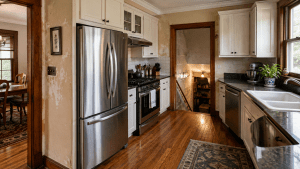
Walk into an older Cleveland house and you can usually feel its history before you notice any individual detail. Maybe it has original hardwood floors, thick plaster walls, a basement that has seen more than a few Northeast Ohio winters, and a kitchen that has been updated several times without the rest of the house changing quite as much. That character is a big part of why people love older homes. The problem is that modern appliances do not always love old houses back. A refrigerator, washing machine, dishwasher, dryer, or electric range may be relatively new, yet it can still develop problems because the electrical, plumbing, drainage, ventilation, or flooring around it is decades older.
This is one of the biggest misunderstandings homeowners run into with appliance problems in older Cleveland houses. When an appliance acts up, the natural reaction is to blame the machine. Sometimes that is exactly where the problem lies, of course. Heating elements burn out, pumps fail, bearings wear down, switches stop working, and seals lose flexibility. But in an older property, an appliance problem is often more like a detective story. The symptom shows up in the machine, while the real cause may be hidden in a wall, underneath the floor, behind a vent, or farther down a drain line.
Cleveland’s climate adds another layer. Cold winters, humid summers, temperature swings, damp basements, and long heating seasons all affect the environment in which appliances operate. That does not mean every old house is an appliance disaster waiting to happen. Far from it. It simply means homeowners considering appliance repair in Cleveland can get better results when they look at the appliance and the house as one connected system. Understanding that relationship is often the difference between fixing a problem once and paying to fix the same symptom again six months later.
A modern appliance is designed with certain assumptions in mind. It expects reasonably stable voltage, adequate grounding, dependable water pressure, clear drainage, proper ventilation, level flooring, and enough space for heat to escape. Put that same appliance inside a house built many decades ago, and some of those assumptions may no longer hold. The appliance can be perfectly capable of doing its job while the surrounding infrastructure quietly makes that job harder. Think of it like putting a new engine into an old car without checking the fuel system, wiring, cooling system, or exhaust. The engine might run, but every weakness around it suddenly matters more.
Older Cleveland homes have often been renovated in stages. One homeowner adds outlets. Another updates the kitchen. Someone else moves the laundry area. Years later, a new appliance is installed where a completely different piece of equipment once stood. Each individual improvement may have made sense at the time, but the end result can be a patchwork of old and new systems. That is why two houses on the same street, built in the same decade, can behave very differently when it comes to appliances.
Age also changes the physical structure of the house. Floors settle. Basement slabs crack slightly. Pipes corrode internally. Vent ducts accumulate lint or become partially restricted. Shutoff valves get stiff. Connections loosen. Moisture enters places it should not. None of those conditions necessarily causes an immediate failure, which is why they are easy to ignore. Instead, they create stress little by little.
That slow stress is what makes troubleshooting older homes interesting. A washer that shakes violently may not have a mechanical defect at all; it may simply be sitting on an uneven floor. A dishwasher that seems weak may be dealing with poor water flow. A dryer that suddenly needs two cycles may be pushing air through an old, restrictive vent. In older Cleveland properties, the smartest repair approach usually begins with one question: Is the appliance actually failing, or is the house making it fail?
Electrical problems deserve special attention because modern household appliances can place significant demands on a home’s power system. Older Cleveland houses were built during periods when families owned far fewer electrical devices. Kitchens did not have the same number of countertop appliances, entertainment systems were simpler, air-conditioning loads were different, and laundry equipment had different electrical requirements. Many homes have since been upgraded, but upgrades are not always uniform throughout the entire property.
Voltage fluctuations, loose connections, overloaded circuits, aging receptacles, and improper grounding can create appliance symptoms that seem strangely inconsistent. A control board may behave normally most of the time but reset occasionally. A refrigerator compressor may struggle during startup. An electric range may heat more slowly than expected. Breakers may trip only when several appliances operate simultaneously. These intermittent problems frustrate homeowners because the appliance can test normally when someone inspects it.
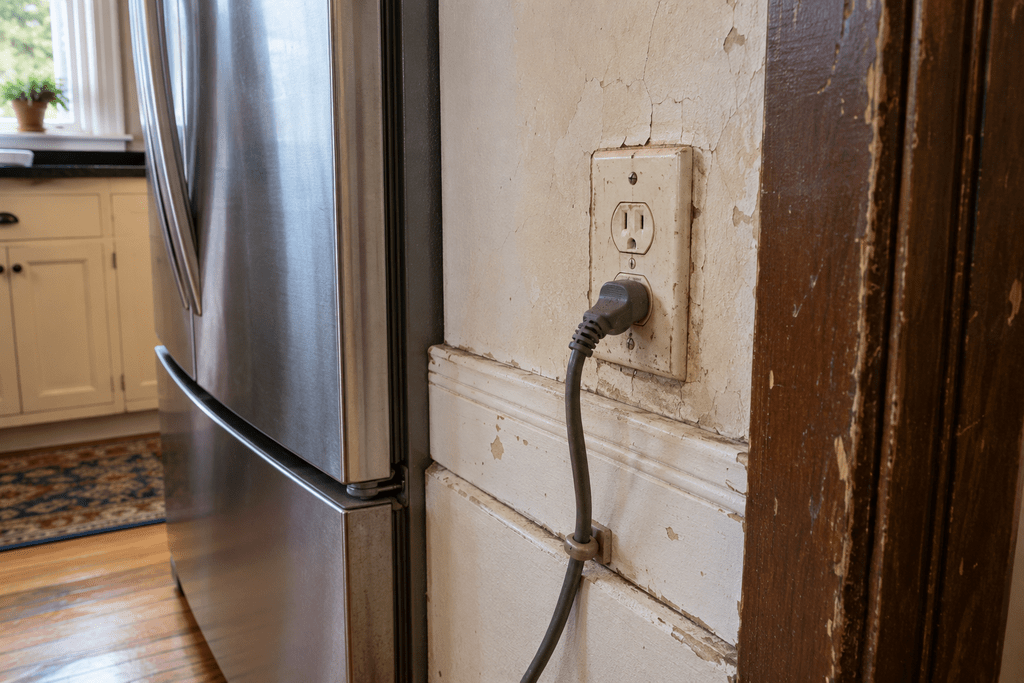
Heat is another concern. A loose or deteriorated electrical connection creates resistance, and resistance creates heat. That can damage plugs, outlets, terminal blocks, wiring connections, and appliance components. If an outlet feels unusually warm, shows discoloration, produces a burning smell, or makes crackling sounds, that is not a minor appliance annoyance. It deserves prompt attention from a qualified electrical professional.
Homeowners should also avoid assuming that replacing an appliance automatically solves an electrical problem. A newer machine may actually be more sensitive to voltage quality because electronic controls are common in modern appliances. If multiple appliances experience unusual resets, unexplained errors, dimming lights, or repeated breaker trips, the pattern matters. One appliance failing may be an appliance issue. Several unrelated appliances showing electrical symptoms can point toward the house itself. In an older property, that distinction can save a lot of unnecessary repair work.
Refrigerators are among the hardest-working appliances in any house because they operate around the clock. That makes them especially good at exposing problems in their environment. In older Cleveland homes, homeowners sometimes notice a refrigerator running almost constantly, cycling strangely, producing a humming sound before shutting off, or occasionally tripping a circuit. Any of those symptoms can originate inside the refrigerator, but the surrounding electrical and physical conditions should also be considered.
Start with the basics. Refrigerators need room to release heat. If the appliance is pushed tightly into an older cabinet opening with little ventilation, the condenser system may have to work harder. Dust around accessible coils or vents makes that problem worse. Add a warm kitchen during summer, and the compressor may run much longer than the homeowner expects. A worn door gasket can create the same effect by allowing cold air to escape continuously.
Electrical conditions can complicate the picture. Compressors draw additional current when starting. If the circuit already carries other significant loads or if there is a poor electrical connection somewhere upstream, startup may expose the weakness. The result can be dimming lights, a tripped breaker, or a compressor that repeatedly attempts to start. Repeatedly resetting a breaker without determining why it tripped is not a good troubleshooting strategy.
Older floors can cause another surprisingly common refrigerator issue. If the appliance is not level, doors may not close as naturally as they should, especially when hinges or gaskets are already worn. A door that looks closed may remain slightly open, forcing the refrigerator to run harder while moisture and frost build inside.
So when a refrigerator in an older house appears to be “working too hard,” do not focus only on the compressor. Check airflow, door sealing, level, cleanliness, circuit behavior, and surrounding temperature. Refrigeration problems often develop through a combination of small issues rather than one dramatic failure. If these checks do not explain the symptoms, refrigerator repair may be needed to determine whether the problem is inside the appliance.
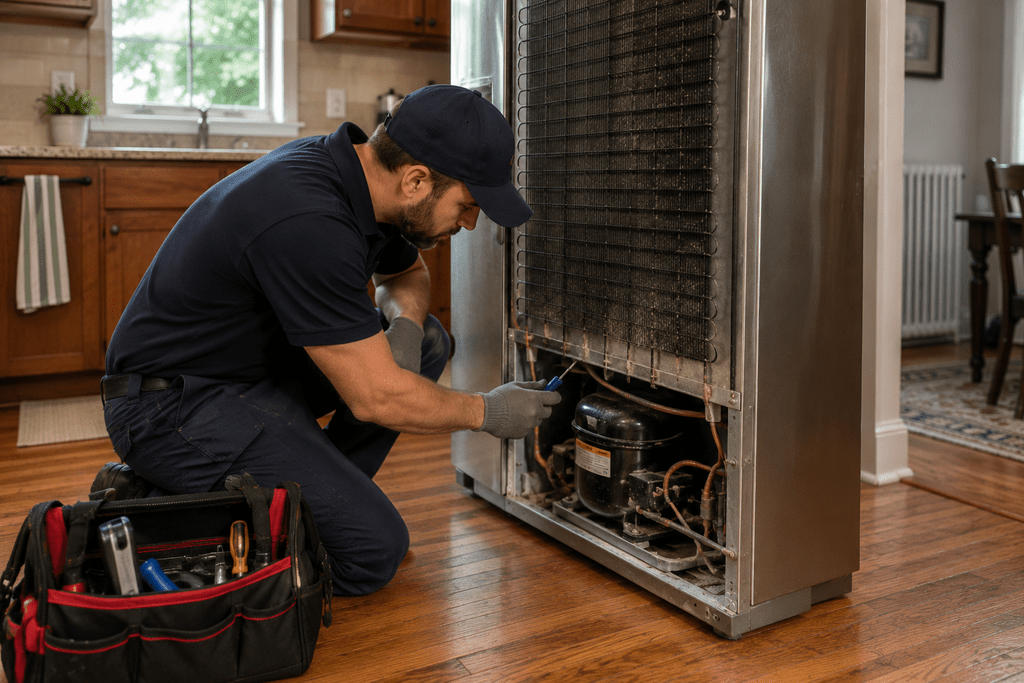
Few appliance problems are more irritating than an oven that seems to have its own opinion about temperature. You set it for dinner, wait for the preheat signal, put the food inside, and somehow one side cooks faster while the center stays behind. In older Cleveland homes, inconsistent oven or range performance can come from normal appliance wear, but electrical supply issues and installation conditions can also contribute.
Heating elements are obvious suspects. Over time, an element can develop damage, create hot spots, or stop heating altogether. Temperature sensors and control components can also drift or fail. Yet before assuming the oven itself is defective, it is worth paying attention to patterns. Does the issue occur only when other heavy electrical loads are operating? Does the range take noticeably longer to heat than it used to? Have breakers tripped? Has anyone noticed heat, discoloration, or looseness around the electrical connection?
Electric ranges require substantial power, so poor connections matter. An appliance may receive enough electricity to operate partially without performing correctly under full load. That can create confusing symptoms because lights, displays, and smaller components work while the primary heating function struggles.
Older kitchens add physical complications too. Floors may no longer be perfectly level, which can make pans sit unevenly on the cooking surface. An oven cavity that is noticeably out of level can also affect how liquids and baked foods cook. It sounds minor, but anyone who has tried to bake on a sloping rack knows how quickly “minor” becomes annoying.
Homeowners should separate cooking complaints into three categories: appliance failure, electrical supply, and installation conditions. That simple mental checklist prevents tunnel vision. An old house can create a situation where replacing a heating element solves only part of the problem because the power connection or surrounding setup still needs attention. When inconsistent heating is caused by a fault within the appliance, professional oven repair or range repair can help identify the source of the problem.
Dishwashers and washing machines depend heavily on the plumbing system around them. They need water to arrive at the right rate, valves to open properly, hoses to remain clear, and wastewater to leave without resistance. In an older Cleveland house, those conditions are not always guaranteed. A machine can be mechanically healthy while outdated plumbing quietly reduces its performance.
Older supply pipes may develop internal corrosion or mineral buildup that restricts flow. The pipe can look perfectly normal from the outside while its usable interior diameter has become much smaller. That restriction can cause slow fill times and poor cleaning performance. Shutoff valves are another common trouble spot. A valve that has not been moved for many years may not open completely, even when the handle appears to be in the correct position.
Drainage creates its own set of headaches. Older drain systems may accumulate grease, soap residue, lint, sediment, or other material. Certain older pipe materials can become rough inside as they age, making buildup easier. A partially restricted drain may still work well enough for sinks but struggle when an appliance suddenly discharges a larger volume of water. That is when backups, slow draining, unpleasant odors, or error conditions begin appearing.
Homeowners sometimes replace a pump or blame a machine for “not draining” when the actual restriction is farther downstream. The reverse happens too: a clogged appliance filter gets mistaken for a plumbing problem.
The best way to troubleshoot water-related appliance issues is to follow the entire path. Where does the water come from? Is the valve fully open? Is the hose kinked? Does the appliance fill at a normal rate? Where does wastewater go? Does a nearby sink drain slowly too? Looking beyond the appliance cabinet often reveals the clue that makes the whole problem suddenly make sense.
A dishwasher can be one of the first appliances to reveal hidden plumbing problems because its performance depends on a precise combination of water flow, temperature, spraying action, filtration, and drainage. When something in that chain becomes weak, dishes come out cloudy, gritty, greasy, or still covered in food. Homeowners often assume the dishwasher has simply reached the end of its life, but that conclusion can be premature.
Slow filling is one possible cause. If an old supply valve is partially restricted or the water line has poor flow, the machine may not receive the amount of water it expects. Cleaning performance drops because the spray system is trying to do the same job with less water. Water temperature matters too. If hot water takes a long time to reach the kitchen, the first fill may be cooler than expected, especially in a house with long plumbing runs.
Drainage is equally important. A dishwasher that cannot remove dirty water efficiently may leave residue behind or produce unpleasant smells. Food debris can clog filters, while the drain hose can become restricted or improperly positioned. A slow household drain can also contribute. One useful clue is whether the kitchen sink shows drainage problems at the same time. When several fixtures in the same area drain slowly, the dishwasher may be reporting a plumbing problem rather than creating one.
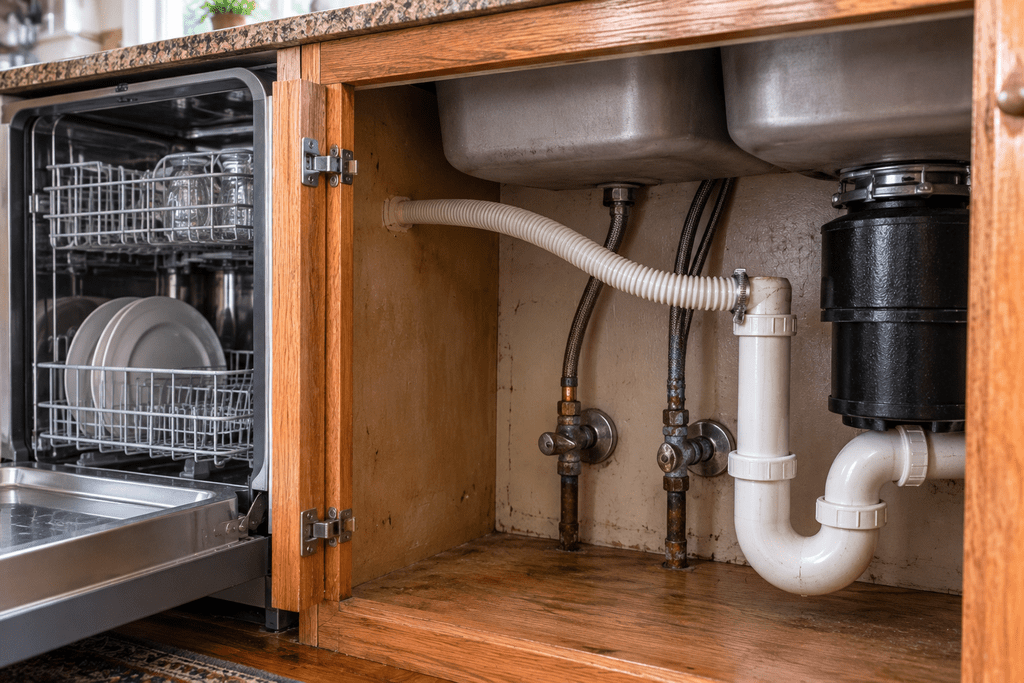
Homeowners should also inspect the simple mechanical items that are easy to overlook. Spray arms need to rotate freely. Filters need regular cleaning. Racks should not block detergent release or spray patterns. Door seals should remain clean and flexible.
In an older Cleveland kitchen, dishwasher problems often become easier to solve when you stop treating the machine like an isolated box. It is connected to hot water, drainage, cabinetry, electricity, and the floor beneath it. Every one of those connections can influence how clean the dishes look at the end of a cycle. If the household plumbing is working normally but the dishwasher still drains slowly or leaves dishes dirty, dishwasher repair may be needed to diagnose an appliance-related problem.
Washing machines can make an older house reveal every little structural imperfection it has. A washer spins a heavy, water-soaked load at high speed, so even a slightly uneven or flexible floor can turn normal movement into serious shaking. In homes with older wood framing, basement slabs, or laundry areas added during a later renovation, vibration complaints are especially worth evaluating from both a mechanical and structural angle.
An unbalanced load is the simplest cause, but persistent shaking deserves a closer look. The washer should be level and stable, with all feet making solid contact with the floor. If the floor flexes when someone walks nearby, the machine may amplify that movement during the spin cycle. Internal suspension components can wear as well, so a previously stable washer that suddenly begins bouncing should not automatically be blamed on the house.
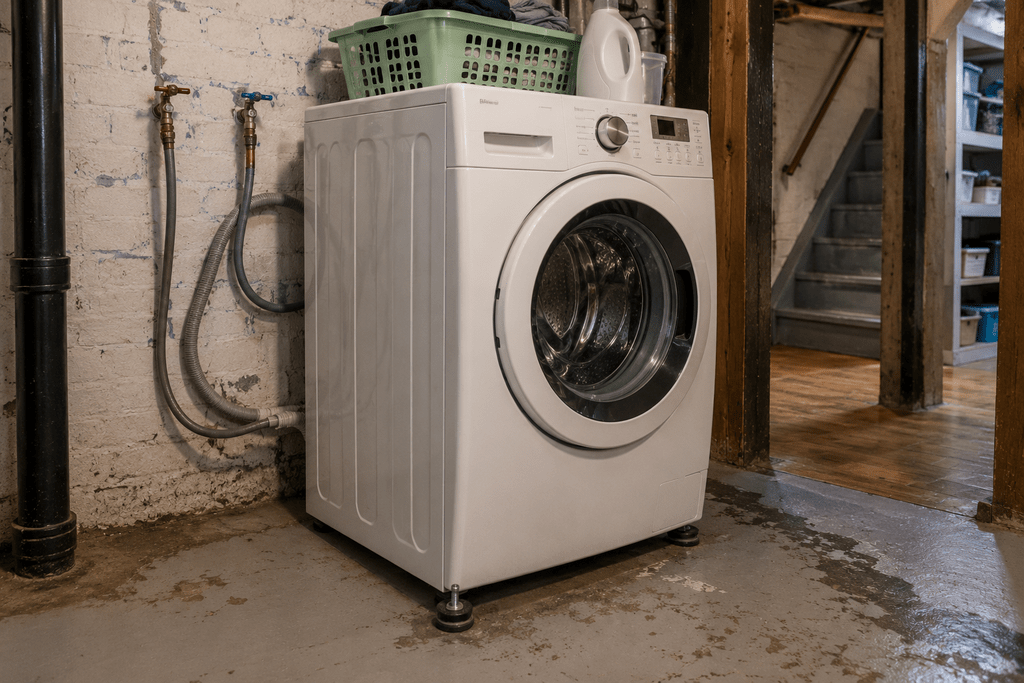
Water supply problems create a different set of symptoms. Older valves may provide reduced flow, inlet screens can collect debris, and hoses may kink behind the machine. A homeowner may notice that one temperature setting fills much slower than another, which can point toward a restriction on one supply line.
Drain problems are also common. Washing machines release water quickly, and an older standpipe or drain line may struggle with that volume if it is partially restricted. Overflowing or gurgling during draining is a warning sign worth investigating before water ends up across the floor.
Then there are hoses. They spend years under pressure and are easy to forget because they sit behind the machine. Regular inspection for bulges, cracking, corrosion at fittings, or seepage is a small task with potentially large consequences. A washing machine problem is inconvenient; a failed water hose can become a house problem in minutes. In older properties, where water may quickly reach finished basements or aging floor assemblies, prevention matters even more. When the water supply, drain, and installation are not causing the symptoms, washer repair can help determine whether the problem comes from the machine itself.
Airflow is one of the least glamorous parts of appliance ownership, which is probably why it gets neglected so often. Nobody buys a dryer because they are excited about the vent duct. Nobody remodels a kitchen because they cannot wait to discuss exhaust airflow. Yet poor ventilation is responsible for a surprising number of performance complaints, especially in homes where vent routes were created decades ago or modified during later renovations.
Older Cleveland houses can have complicated layouts. Laundry rooms may be located in basements, interior rooms, converted porches, or spaces that were never designed for modern equipment. Dryer vents sometimes travel farther than ideal or make several turns before reaching the exterior. Every bend adds resistance. Lint buildup makes that resistance worse. The dryer responds by operating longer and hotter because moist air cannot leave efficiently.
Kitchen appliances face similar issues. Cooking generates heat, steam, grease particles, and moisture. If that air is not effectively removed, it settles onto cabinets, walls, controls, and nearby appliances. In winter, warm humid air can also condense on cold surfaces. Over time, moisture can contribute to corrosion and can make the kitchen feel stuffy even when the cooking appliance itself works properly.
Good ventilation is not about making an appliance “more powerful.” It is about allowing the appliance to perform the job it was designed to do without fighting the room around it.
When diagnosing appliance performance, airflow should be treated the same way as electricity and water. Is air entering where it should? Can hot or moist air leave? Are vents blocked, crushed, disconnected, or unusually long? Those questions are particularly important in older homes because the visible appliance may have been replaced many times while the hidden ductwork behind it remained largely unchanged.
A dryer that suddenly needs two cycles to finish a normal load is telling you something. The heating system might be failing, but one of the first things to consider is airflow. Dryers do not simply heat clothes. They heat air, move that air through damp fabric, collect moisture, and push the moist air out of the house. Restrict that airflow and the entire process slows down.
Lint is the most familiar culprit. Cleaning the lint screen after every load is basic maintenance, but lint can also accumulate deeper in the vent system. Older vent runs may contain bends, long horizontal sections, crushed areas behind the machine, or sections that were altered during renovations. A restriction does not need to block the duct completely to cause trouble. Even partial resistance can increase drying times dramatically.
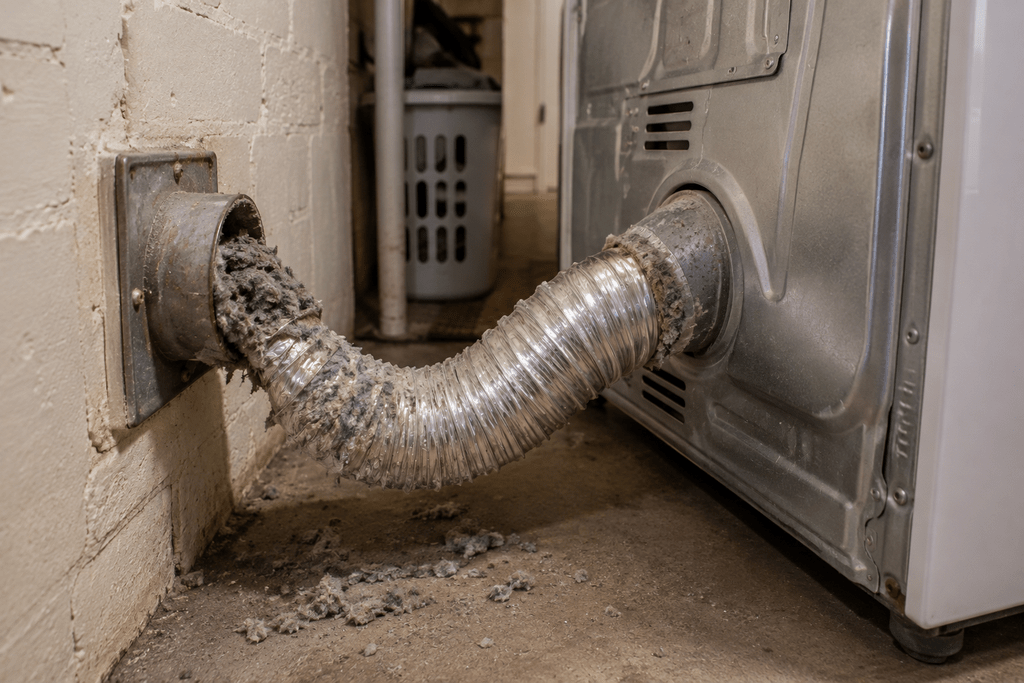
Excessive heat is especially important to take seriously. If the top or sides of the dryer seem much hotter than usual, clothes come out extremely hot, or the laundry room becomes unusually warm and humid, the vent path should be checked. Poor airflow creates unnecessary stress on heating components and other internal parts. It can also create a safety concern when lint and heat accumulate together.
Cleveland winters add another wrinkle. Exterior vent terminations can become obstructed by debris, ice, snow, or a stuck flap. That means a vent system that worked normally in fall may suddenly struggle after harsh weather.
The simplest comparison is to think of a dryer vent like the exhaust on a car. The machine can create all the heat in the world, but if exhaust cannot escape efficiently, performance suffers. Before assuming the dryer itself needs a major repair, make sure it can actually breathe. If the vent path is clear but the dryer still takes too long to dry clothes or runs unusually hot, dryer repair may be needed to identify an appliance-related problem.
Cooking produces far more moisture than many homeowners realize. Boiling pasta, simmering soup, running several burners, and opening a hot oven can release a significant amount of heat and water vapor into the kitchen. In a newer home with effective ventilation, much of that moisture is carried outdoors. In an older Cleveland house with weak or poorly routed exhaust, it may simply spread into the room.
You can often see the evidence. Cabinets develop a slightly sticky film. Paint near the cooking area discolors. Windows fog more easily during cold weather. Metal surfaces show early signs of corrosion. Controls feel greasy even after regular cleaning. None of those symptoms necessarily means the range or oven is defective, but they create an environment that can shorten the life of components around the cooking area.
The problem becomes more noticeable during Cleveland winters. The air inside the house is warm, while exterior walls and windows can be much colder. Warm cooking moisture hits those cold surfaces and condenses. That is basic physics, but in daily life it looks like wet windows, damp corners, peeling finishes, or persistent kitchen humidity.
Homeowners should pay attention to whether an exhaust system actually moves air outdoors rather than simply making noise. A fan can sound powerful while airflow remains poor because of dirty filters, blocked ductwork, or an ineffective installation. Cleaning grease filters and checking the visible exhaust path are useful starting points.
Appliance care does not stop at the appliance door. Keeping heat, grease, and moisture under control protects switches, electronics, finishes, cabinetry, and nearby equipment. In an older kitchen, where ventilation may have been added long after the house was built, that environmental maintenance can make a noticeable difference in how reliably cooking appliances perform.
Basements are extremely common in Cleveland-area housing, and they are convenient places for laundry equipment, freezers, secondary refrigerators, and other household appliances. They also create conditions that can be rough on machinery. Moisture, temperature changes, dust, floor unevenness, occasional seepage, and limited airflow all affect how appliances age.
Humidity is one of the biggest concerns. Metal components do not need to be visibly wet to experience corrosion. A consistently damp environment can slowly affect cabinet panels, fasteners, electrical connections, and exposed metal surfaces. If the basement has a history of condensation or water intrusion, appliances sitting directly on the floor may be even more vulnerable.
Temperature matters too. Some unfinished basements stay relatively cool year-round, while others experience significant seasonal swings. Appliances that depend on surrounding air for heat exchange can behave differently when room conditions change. Dust and debris add another source of stress. Basement appliances often receive less frequent cleaning because they are out of sight, so vents and accessible coils can collect dirt for years.
Then there is the floor itself. Older basement slabs may slope toward a drain or may have settled unevenly over time. That is useful for water management but not always ideal for an appliance that expects to sit level. Washers can vibrate, refrigerators may not close naturally, and freezers can develop uneven door alignment.
The basement should therefore be considered part of the appliance installation, not just the place where the machine happens to sit. Controlling moisture, maintaining airflow, keeping the area reasonably clean, and ensuring appliances are level can prevent a surprising number of problems. Sometimes the difference between an appliance lasting comfortably and constantly acting temperamental is simply the environment surrounding it.
The basement refrigerator has a special role in many households. It holds extra drinks, holiday food, bulk groceries, or whatever would otherwise overcrowd the kitchen. Because it is not the main refrigerator, though, it is easy to forget about it until something goes wrong. That neglect can be especially costly in a damp or dusty basement.
These appliances still need ventilation around their heat-releasing components. Pushing one tightly against a wall and surrounding it with storage boxes may reduce airflow. Add dust around accessible vents or coils and the unit has to work harder to maintain temperature. A door gasket that has become stiff or dirty can increase the workload further.
Basement moisture creates another layer of wear. Surface corrosion may appear around hinges, panels, or fasteners. Electrical connections can be affected by persistent dampness, especially if the space experiences condensation. Homeowners should also be cautious about placing appliances in areas that have experienced water intrusion. Even a small amount of standing water around electrical equipment requires serious attention.
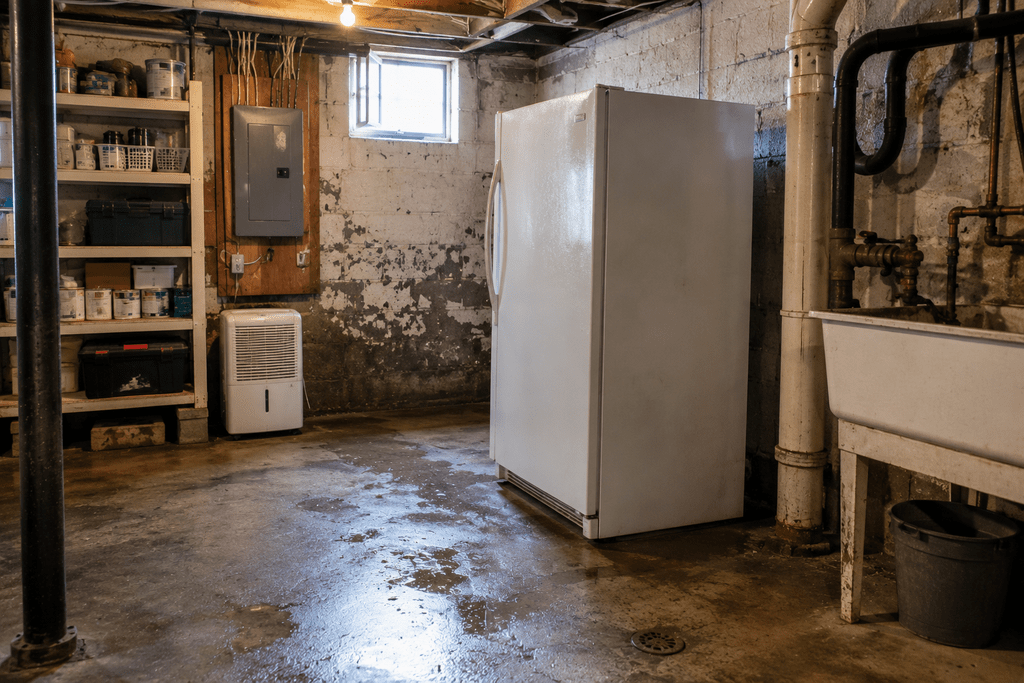
Another problem is that secondary appliances may go unchecked for long periods. A kitchen refrigerator gets opened every day, so temperature problems become obvious quickly. A basement freezer might remain closed for several days. A failure can progress quietly until food begins thawing or an unusual smell finally gives it away.
A simple routine helps. Check the temperature periodically, keep the surrounding area clear, clean dust from accessible ventilation areas, inspect door seals, and look for moisture nearby. Listen for major changes in operating sounds too.
Older basement appliances are not doomed to fail. They simply need a little more attention because their location can hide developing problems. Five minutes of inspection every few months is much cheaper than discovering an entire freezer full of food has been sitting warm since the weekend. If a freezer or secondary refrigerator cannot maintain the proper temperature despite suitable basement conditions, freezer repair or refrigerator repair may be needed to diagnose the appliance itself.
Every appliance wears out eventually, even when the house around it is perfect. Rubber becomes brittle. Plastic fatigues. Lubrication breaks down. Electrical contacts wear. Bearings develop play. Motors lose efficiency. Pumps collect debris. These are ordinary mechanical realities, not evidence that anyone did something wrong. In older houses, however, environmental and infrastructure problems can accelerate that normal wear.
Consider a refrigerator door gasket. In a level, climate-controlled kitchen, it may seal reliably for years. Put the same refrigerator on a slightly sloping floor in a warm kitchen with poor ventilation, and the compressor may run longer while the door struggles to seal evenly. The gasket did not create every problem, but its weakness suddenly matters more.
Washing machines provide another good example. Worn suspension components may remain barely noticeable on a rigid floor. Move the machine onto a flexible or uneven surface and vibration becomes much more obvious. A marginal component and an imperfect installation amplify each other.
This is why homeowners should be cautious about looking for one dramatic root cause. Appliance failures are often cumulative. A restricted vent makes a dryer run longer. Longer run times create more heat. More heat stresses components. Eventually one component fails, but replacing that part without correcting airflow leaves the underlying stress in place.
The same logic applies throughout the house. Poor water flow makes pumps work under less-than-ideal conditions. Dirty condenser areas make refrigeration systems run longer. Moist basements encourage corrosion. Loose outlets create heat.
Good troubleshooting looks for the chain, not just the broken link. If a part failed earlier than expected, ask what may have been putting extra stress on it. That question is particularly useful in older Cleveland houses because the building itself has had decades to develop quirks. Repairing both the failed component and the condition that accelerated its wear gives the appliance a much better chance of staying fixed.
Some of the most important appliance parts are also some of the least impressive to look at. A rubber gasket does not seem nearly as important as a compressor or motor, yet a small sealing problem can affect performance every hour of the day. Hoses are similar. They are inexpensive compared with the appliance they serve, but one neglected hose can cause far more property damage than many major mechanical failures.
Refrigerator and freezer door seals should remain flexible and make consistent contact around the entire opening. Food residue, age, misalignment, and uneven flooring can prevent a proper seal. When cold air escapes, the appliance runs longer to compensate. Frost or condensation may appear, especially near the affected area.
Dishwasher door gaskets need similar attention. Food debris and detergent residue can collect along the sealing surface. If the gasket becomes damaged or distorted, small leaks may develop around the door. Washing machine seals and hoses can also deteriorate gradually, sometimes showing only a slight bulge or damp fitting before a larger failure occurs.
Water supply hoses deserve regular visual inspection. Look for cracking, swelling, rust at fittings, or any sign of seepage. Do not ignore a tiny drop of water because “it only happens during the cycle.” Small leaks often become large leaks at inconvenient times.
Dryer vent connections should also be checked for crushing or separation. While not a water hose, the same principle applies: flexible connections are common failure points.
These parts are easy to forget because they usually work silently. That is exactly why routine inspection matters. Homeowners tend to notice a motor when it starts making noise, but a gasket can waste energy quietly for months. In an older house, where floors, cabinetry, and connections may already be slightly out of alignment, simple seals and hoses deserve more respect than they usually get.
Appliances talk. Not literally, of course, but changes in sound are often one of the earliest clues that a mechanical part is wearing out. A new grinding noise, rhythmic thumping, high-pitched squeal, buzzing sound, or scraping noise deserves attention, especially when it develops gradually. The difficult part is figuring out whether the sound comes from normal aging, a loose object, an installation problem, or a failing component.
Washing machine bearings and suspension systems are classic examples. A washer may become much louder during high-speed spin as bearings wear. However, an uneven floor can create similar complaints by allowing the entire machine to move. Before assuming an expensive internal failure, verify that the appliance is stable and level.
Dishwasher pumps can become noisy when debris reaches areas where it does not belong. Refrigeration fans may produce rattling or scraping sounds when ice, dust, or worn bearings interfere with normal rotation. Dryer rollers, idlers, bearings, and blower components can create a variety of squeaks and thumps as they age.
The key is change. Most appliances have a normal sound profile. You get used to the clicks, hums, water movement, fan noise, and mechanical transitions without thinking about them. When that familiar pattern changes, pay attention.
Noise is useful because it often appears before total failure. A noisy bearing may continue operating for quite a while, but ignoring it can allow additional damage. A rattling fan may be a minor obstruction today and a failed fan motor later.
Older houses can amplify sounds through wood framing, basement ceilings, cabinets, and uneven flooring, so the loudest location is not always the actual source. Listen carefully, note when during the cycle the noise occurs, and watch for accompanying symptoms such as vibration, poor cooling, weak draining, or overheating. Those details make diagnosis far more accurate.
The repair-versus-replacement question sounds simple until you are standing in front of an appliance that works just well enough to make the decision difficult. Age matters, but it should not be the only factor. The type of failure, general condition, repair cost, installation environment, and condition of the home’s supporting systems all influence whether fixing the machine makes sense.
Start by separating appliance condition from house condition. Suppose a washing machine has a failed pump, but the real reason it has struggled is an old drain line that repeatedly backs up. Replacing the washer without correcting the drain may simply transfer the same problem to the new machine. Likewise, installing a new dryer on a severely restricted vent does not create a truly new system. You have just attached a new appliance to an old problem.
Repair can make sense when the appliance is otherwise in good condition, the failure is isolated, and the supporting electrical, plumbing, or ventilation systems are sound. Replacement becomes more attractive when several major components are showing wear, repairs are becoming frequent, or the machine has performance problems that cannot be economically corrected. For a more detailed comparison, see our guide on whether to repair or replace an appliance.
Installation costs should also be considered. In an older Cleveland house, replacing an appliance can occasionally reveal other work that needs attention: outdated connections, deteriorated valves, damaged flooring, insufficient clearances, or venting issues. That does not mean replacement is a bad idea. It simply means the appliance price is not always the whole project price.
Avoid making the decision based solely on frustration. A ten-minute diagnostic check can sometimes reveal a blocked filter or loose connection that makes an appliance look much worse than it is. On the other hand, repeatedly repairing an aging machine with multiple worn systems can become a money pit.
The best decision accounts for both the machine and the house. Fix the environment when necessary, then decide whether the appliance itself still deserves another chapter.
Preventive maintenance does not have to become a weekend hobby. Most of the useful habits are simple, inexpensive, and easy to add to a normal household routine. The goal is not to make appliances last forever. It is to prevent avoidable stress and catch small problems before they grow into expensive ones.
Start with airflow. Clean dryer lint screens consistently and pay attention to changes in drying time. Keep refrigeration ventilation areas reasonably free of dust and avoid packing storage tightly around basement refrigerators or freezers. Maintain kitchen exhaust filters and notice whether steam actually clears while cooking.
Next, inspect water connections. Look behind washing machines and dishwashers when possible. Check hoses, fittings, shutoff valves, and surrounding flooring for signs of moisture. A stain, mineral deposit, rust mark, or slight dampness can be an early warning.
Drain behavior matters too. If a kitchen sink, laundry standpipe, or nearby fixture begins draining more slowly, do not wait until an appliance overflows before investigating. Appliances often expose a partially restricted drain before the restriction becomes a complete blockage.
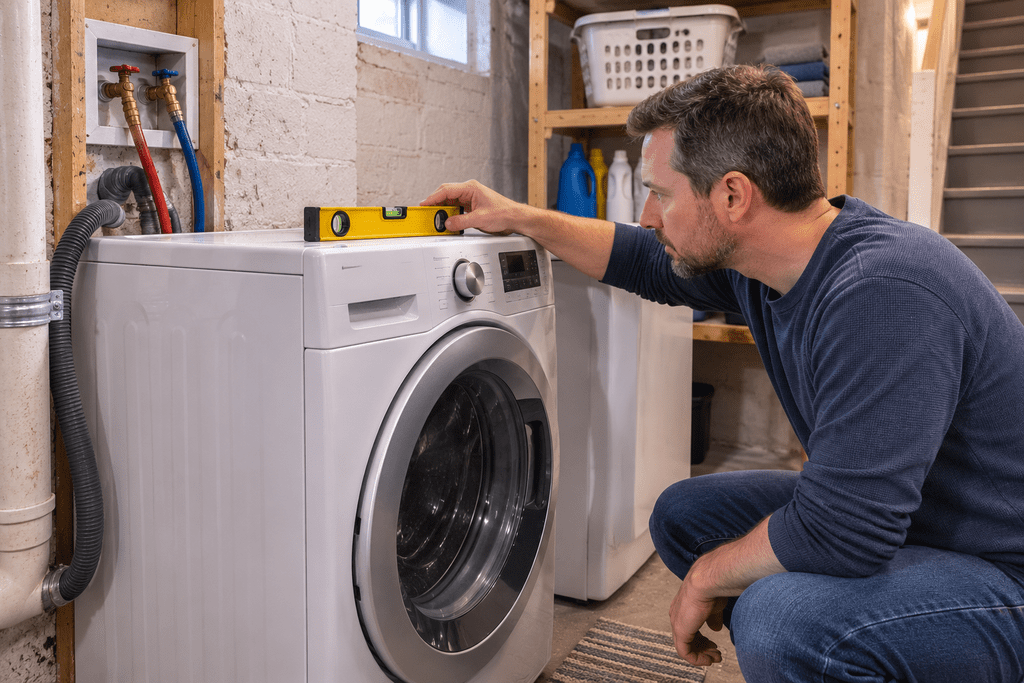
Keep machines level. This is especially important for washers, refrigerators, and freezers in older houses where floors may slope. A few minutes spent checking stability can improve door sealing and reduce vibration.
Pay attention to electricity. Repeated breaker trips, flickering lights, hot outlets, burning smells, or discolored connections are not routine appliance quirks. They require proper evaluation.
Finally, listen to the machine. You know your house better than anyone. You know what your refrigerator normally sounds like at night and how your washer usually behaves during spin. When that pattern changes, investigate early.
Preventive appliance care is mostly about observation. You do not need to become a repair technician. You simply need to recognize when the house or the appliance starts behaving differently than it did last month.
Older Cleveland houses have plenty of personality, but that personality sometimes extends to their electrical systems, plumbing, floors, basements, and ventilation. Those conditions can turn relatively minor appliance weaknesses into major performance complaints. A dishwasher may seem defective when an old water valve is restricting flow. A dryer may appear worn out when the vent is clogged. A washer may shake because the floor beneath it has settled. A refrigerator may run constantly because poor airflow and a worn seal are working against it at the same time.
That is why appliance repair in older houses requires a broader way of thinking. The machine should always be inspected, but so should the systems that feed it and carry away heat, water, and exhaust. Appliances do not operate independently from the building. They are connected to it every minute they run.
The good news is that many common problems give early warnings. Drying times get longer. Water drains more slowly. A motor sounds different. A gasket stops sealing evenly. A breaker begins tripping occasionally. These signals are easy to dismiss when the appliance still technically works, but catching them early usually creates more repair options.
Homeowners can prevent a surprising amount of trouble with basic maintenance: keep vents clear, inspect hoses, clean filters, monitor drainage, control basement moisture, keep appliances level, and take electrical warning signs seriously. None of that removes the natural aging process, but it reduces unnecessary stress.
An older house and modern appliances can absolutely coexist. The trick is understanding that you are maintaining a system, not just a collection of machines. Once you start looking at appliances that way, many mysterious problems become much easier to diagnose, prevent, and solve.
We repair a wide range of household appliances including refrigerators, washers, dryers, ovens, dishwashers, and more. No matter the brand or model, our experienced technicians are ready to help. We repair commercial appliances as well: commercial washers dryers, commercial refrigerators & freezer & more.
We service a wide range of household appliances, including refrigerators, dryers, washers, ranges, cooktops, dishwashers, freezers, ice makers, ovens, and double ovens. Our technicians operate across many locations in Ohio, covering major cities like Cleveland, Akron, and Parma. We also serve surrounding areas including Lakewood, Westlake, Strongsville, and Brooklyn. Our service area extends to Rocky River, Euclid, Solon, Beachwood, and Cleveland Heights, as well as counties such as Cuyahoga, Lorain, Lake, and Medina. Additional cities we cover include North-Olmsted, North Ridgeville, Valley-City, Lorain, Avon Lake, Richfield, Brecksville, Garfield Heights, Seven Hills, Brunswick, Oakwood, Mentor, and Willoughby.