Common Appliance Problems in Older Cleveland Homes
Published: August 28, 2026
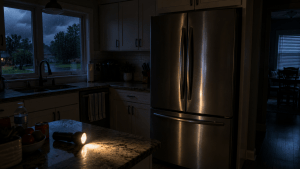
A Cleveland summer power failure has a funny way of turning an ordinary refrigerator into the most important appliance in the house. One minute you’re watching a thunderstorm roll across the neighborhood, and the next minute the lights blink, the air conditioner goes quiet, and you’re standing in the kitchen wondering whether the chicken, milk, leftovers, and frozen food you bought yesterday are about to become an expensive trash-bag situation. Refrigerator food loss during a power outage isn’t just about wasted money, either. Once refrigerated food gets too warm for too long, you’re dealing with food safety, not simply food quality, and those are two very different things. The good news is that you usually have more control than it feels like you do in that first dark, quiet moment. An unopened refrigerator can hold a safe temperature for a limited period, while a properly packed freezer can remain cold much longer, which means the decisions you make during the first few hours matter far more than repeatedly checking whether the lettuce still feels chilly.
The challenge in Cleveland is that summer outages can arrive with heat, humidity, strong thunderstorms, wind, and neighborhood-level electrical problems all at the same time. If the house begins warming quickly, your refrigerator is essentially a heavily insulated cooler with no new cold being produced, and every time you open the door you’re letting part of that stored cold escape. Think of it like having a bucket with a tiny leak: you cannot refill the bucket until the electricity returns, so your job is to stop making the leak bigger. Knowing how long food stays safe without power, which foods need attention first, how to use ice and coolers correctly, and what to inspect when electricity comes back can save a surprisingly large portion of your groceries. More importantly, having a plan keeps you from making decisions based on smell, appearance, or wishful thinking. During a Cleveland summer outage, the smartest strategy is simple: protect the cold you already have, watch the clock, use temperature instead of guesswork, and never gamble with food that has clearly crossed the safe limit.
Summer is particularly unforgiving to refrigerated food because the temperature difference between the inside of your refrigerator and the rest of your house can become enormous. Your refrigerator normally works to keep food at 40°F or colder, while a Cleveland home without air conditioning during a warm outage may steadily climb into the 70s or 80s, especially if the outage lasts through the afternoon. That means heat is constantly trying to move into the refrigerator even though the compressor can no longer remove it. The insulation slows that process, but it does not stop it, which is why the clock begins running as soon as the power disappears. You may open the refrigerator after an hour and think, “Everything still feels cold, so I’m fine,” and technically you probably are at that point, but feeling cold with your hand is not the same thing as verifying a safe internal temperature. Human touch is an incredibly poor thermometer when the difference between safe and questionable food may be only a few degrees.
Humidity can make the situation feel even more confusing because refrigerated containers may stay cool on the surface while the interior temperature of food slowly rises. Large containers, dense foods, and products stored toward the back may stay colder longer than small containers sitting near the door, which creates a refrigerator full of different temperature zones after several hours without power. That is one reason blanket statements like “the fridge was off for five hours, so everything is bad” or “it still felt cool, so everything is good” are not particularly useful. The condition of the food depends on time, temperature, location, and how often the doors were opened. A packed refrigerator may also hold cold slightly differently than an almost empty one, while a freezer that is tightly packed can preserve its frozen temperature for considerably longer because the frozen items act like blocks of stored cold. In other words, you’re not racing toward one sudden moment when every food item becomes unsafe. You’re managing a gradually warming environment, and the better you preserve that environment, the more groceries you are likely to save safely.
When the power disappears, resist the urge to immediately start reorganizing the refrigerator. Unless you already know the outage will be extended and have a prepared cooler ready, opening the refrigerator to “see how cold it is” accomplishes almost nothing and costs you valuable cold air. Your first move should be outside the appliance: note the time, verify that the outage is not simply a tripped household circuit if it is safe to do so, and make sure everyone in the house understands that the refrigerator and freezer doors should stay shut. If you have appliance thermometers with external displays, check them without opening the door; if not, leave everything alone for the moment. People often create more food-loss risk during the first hour of an outage than the outage itself creates because everyone wanders through the kitchen opening doors, grabbing drinks, looking for snacks, and checking the same shelves over and over.
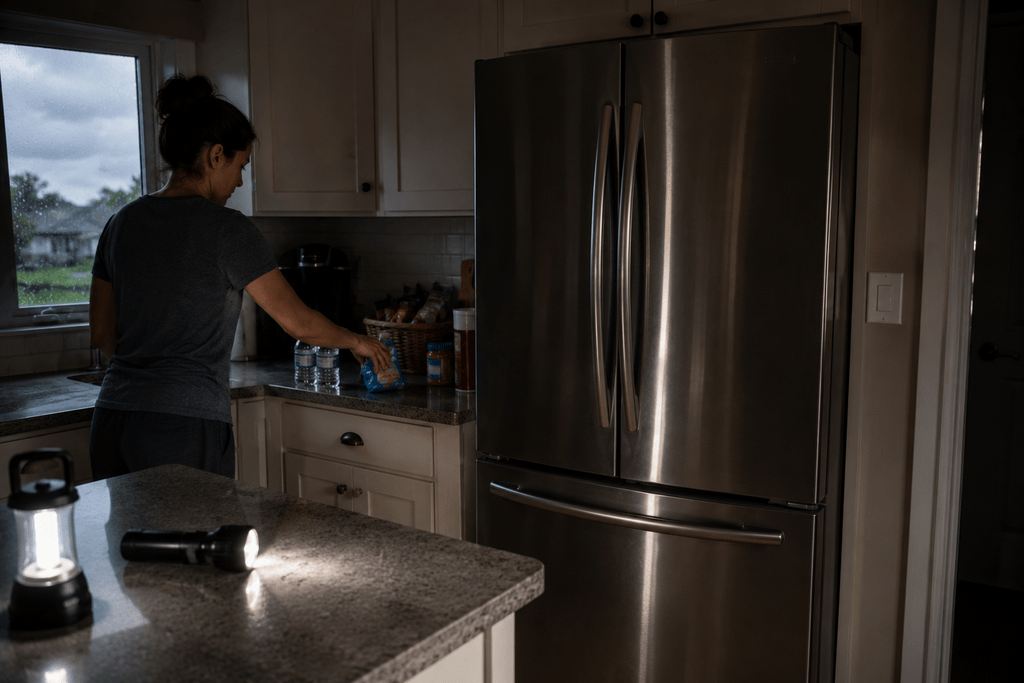
It also helps to mentally separate convenience from food preservation. If you know you are going to want bottled water, canned drinks, fruit, shelf-stable snacks, or other items during the outage, use what is already outside the refrigerator whenever possible. If you absolutely must retrieve something, make one quick, deliberate opening instead of six casual ones, and know what you’re getting before the door opens. A good summer power-outage routine is almost boring: close everything, write down the time, gather coolers and ice if you have them, check reliable outage information by whatever communication methods remain available, and avoid making dramatic moves too early. You do not necessarily need to transfer refrigerated food to a cooler the second the power fails because the refrigerator itself may initially be the better insulated cold-storage box. Moving food prematurely can expose it to warm kitchen air while you sort containers, hunt for ice, and leave both the cooler and refrigerator open. The goal is not to look busy. The goal is to preserve cold as efficiently as possible until you know whether the outage is short, prolonged, or likely to continue beyond the refrigerator’s safe holding period.
If there is one piece of advice worth sticking on the refrigerator before storm season, it is this: stop opening the door during an outage. A closed refrigerator traps a limited amount of cold air and keeps warm household air from freely circulating around your food. Every opening creates an exchange, and even a quick look can release part of the cold air you’ve been trying to preserve. You cannot “check whether the food is still cold” without making the refrigerator warmer in the process, which is a little like opening your front door every ten minutes during winter to check whether the furnace is still keeping the house warm. Children and other family members should know this rule too because an outage can quickly turn the kitchen into a gathering place, especially when everyone is bored, hot, and looking for something to eat.
The freezer deserves even more discipline because it can protect food for much longer when it remains closed. Frozen food has enormous thermal value: every frozen package is effectively another cold pack helping stabilize the temperature around the items beside it. Opening the freezer repeatedly lets warm, humid summer air enter, and that warm air speeds the thawing process. It can also create additional frost and condensation once power returns, depending on how much warm moisture entered. If you need something from the freezer during a prolonged outage, plan the opening like a pit stop rather than a shopping trip. Know exactly what shelf the item is on, open the door, retrieve it, and close the door immediately.
One practical household trick is to put a temporary note on the doors that says something like “POWER OUT — DO NOT OPEN.” It sounds almost silly until you realize how automatic refrigerator use becomes in everyday life. People walk into the kitchen and pull the handle without even thinking. During a Cleveland summer outage, breaking that habit can buy meaningful time. The cold inside your appliances is a limited resource until electricity returns, so treat every door opening as spending some of that resource.
Food safety decisions become much harder when nobody knows how long the power has actually been off. An outage that began at 2:15 in the afternoon and one that began at 5:30 may feel almost identical by evening, especially if everyone has been dealing with a storm, checking phones, lighting rooms, and trying to keep the house comfortable. By the time electricity returns, somebody says, “I think it was only three or four hours,” while someone else remembers the lights going out before dinner prep even started. That uncertainty matters because refrigeration guidance relies heavily on elapsed time and food temperature. Writing down the outage start time takes five seconds and gives you a reliable reference point later.
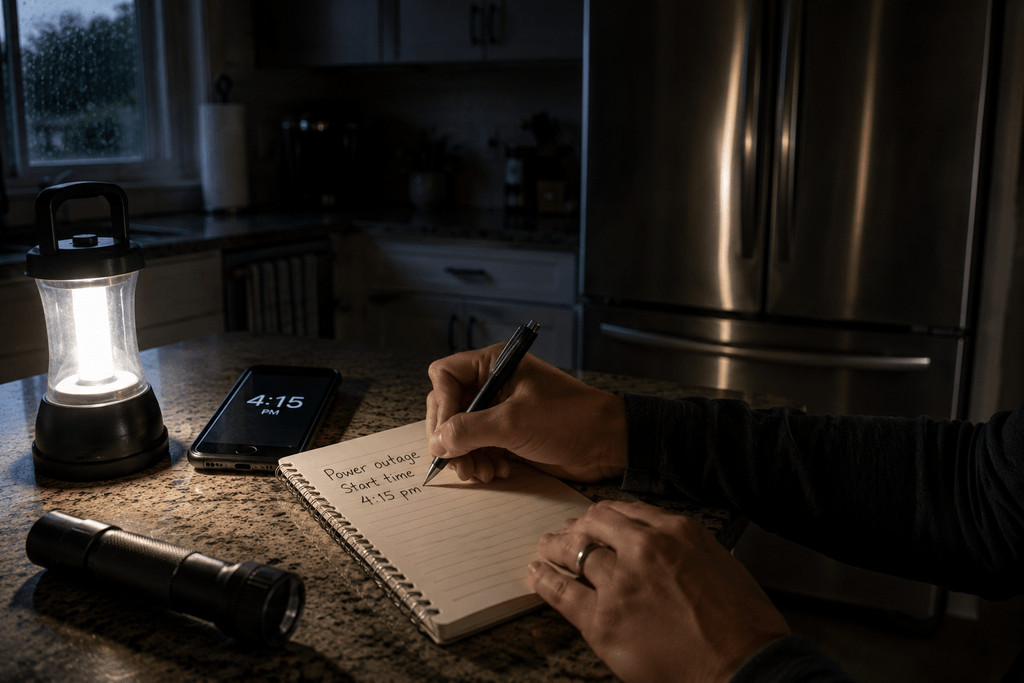
Use any method that does not depend on memory. Write it on paper, put it in your phone if you still have battery life, or send a message to yourself so there is a timestamp. If power flickers on briefly and then fails again, record that too rather than assuming the short return automatically reset the clock. A refrigerator that regained power for ten minutes may not have had enough time to bring warmed food fully back below 40°F, so what matters is the actual temperature history rather than the fact that lights came on momentarily. This is especially important during severe summer weather when electrical service may cycle several times before stabilizing.
Once you’ve recorded the time, avoid obsessively checking the clock every fifteen minutes. Use the information to make planned decisions. If the outage has only lasted an hour and the refrigerator has stayed closed, there is generally no reason to panic. As you approach the commonly recommended refrigerator window, however, you can begin considering whether high-risk perishables should move into a prepared cooler containing enough ice to keep them safely cold. Having an exact start time allows you to make that transition calmly instead of guessing. Good outage food safety is basically a combination of temperature management and record keeping, and the clock is one of the few tools that continues working even when your refrigerator does not.
The most useful food-safety numbers are easy to remember, and knowing them before a storm means you don’t have to invent your own rules when the kitchen is dark. Under standard federal food-safety guidance, a refrigerator that remains unopened can generally keep food safely cold for about four hours. A full freezer can generally maintain its temperature for around 48 hours when kept closed, while a freezer that is about half full is closer to 24 hours. Those numbers are not magical expiration alarms; they are practical safety guidelines based on how insulated appliances and frozen foods typically hold temperature. Room temperature, appliance condition, how full the compartments are, initial food temperature, and door openings all affect the real result, which is why a thermometer is far more valuable than the clock alone.
There is another important threshold to understand: perishable foods that have been above 40°F for more than about two hours generally should not be kept. That does not mean the entire refrigerator automatically jumps above 40°F exactly four hours after power loss. If you have reliable thermometer readings showing that food stayed at or below the safe temperature, you have better information than the clock alone provides. The problem arises when you have no temperature data and the refrigerator has been powerless long enough that you can no longer reasonably assume perishables remained cold enough. In that situation, being conservative is much safer than trying to rescue an expensive package of meat based on how it looks.
Think of these guidelines as guardrails rather than trivia. Four hours for the closed refrigerator, approximately 48 hours for a full closed freezer, approximately 24 hours for a half-full closed freezer, and caution with perishables that spend more than two hours above 40°F are the numbers you want in your head. Once you know them, a Cleveland summer power failure stops feeling like a completely unpredictable event. You have a timetable, you can make intentional decisions, and you can prioritize the foods that genuinely need protection instead of wasting precious cold space on items that were never particularly vulnerable.
The four-hour refrigerator rule is probably the single most useful guideline for a homeowner dealing with a summer outage. If the refrigerator was at a safe temperature when power failed and the door remained closed, it can generally keep food cold for about four hours. That gives you a meaningful window to wait out many shorter outages without immediately moving groceries. The problem is that people often interpret the rule too casually, imagining it means refrigerated food is automatically safe for four hours no matter what happens. It does not account for a refrigerator that was already too warm, a door opened repeatedly, food that sat on the counter before the outage, or an appliance in an unusually hot kitchen.
Once the refrigerator temperature rises above 40°F, high-risk foods become the priority. Raw or cooked meat, poultry, seafood, milk, soft cheeses, eggs, cooked leftovers, cut fruit, cooked vegetables, and many prepared refrigerated foods need more careful handling than mustard, unopened shelf-stable beverages, whole uncut fruit, or some high-acid condiments. This is why you should not think of a refrigerator as one giant category where every item receives the same decision. A bottle of acidic condiment and a container of cooked chicken may sit six inches apart, but they do not present the same food-safety risk after prolonged warming.
If you’re approaching the four-hour point and the outage appears likely to continue, that is when a properly iced cooler becomes valuable. You want enough ice or frozen cold packs to maintain food at 40°F or below, not just enough to make the cooler feel chilly. Move the most temperature-sensitive foods first, work quickly, and keep the cooler closed once packed. If you do not have enough ice to protect everything, prioritize safety over dollar value or sentiment. A forgotten container of leftovers is not worth risking illness to save. The four-hour rule is useful precisely because it prevents emotional decision-making: it gives you a clear moment to shift from “leave the refrigerator closed” to “protect the most perishable food with verified cold storage.”
Your freezer is much more resilient during a power outage than your refrigerator, especially if it is full and you leave it alone. A full freezer can often hold a safe frozen temperature for approximately 48 hours, while a half-full freezer is generally closer to 24 hours, assuming the door remains closed. Why such a big difference? Frozen food acts as thermal mass. A tightly packed freezer is essentially a cabinet filled with hundreds of pounds—or at least many pounds—of ice-cold material helping keep everything around it cold, while a nearly empty freezer contains much more air that warms relatively quickly.
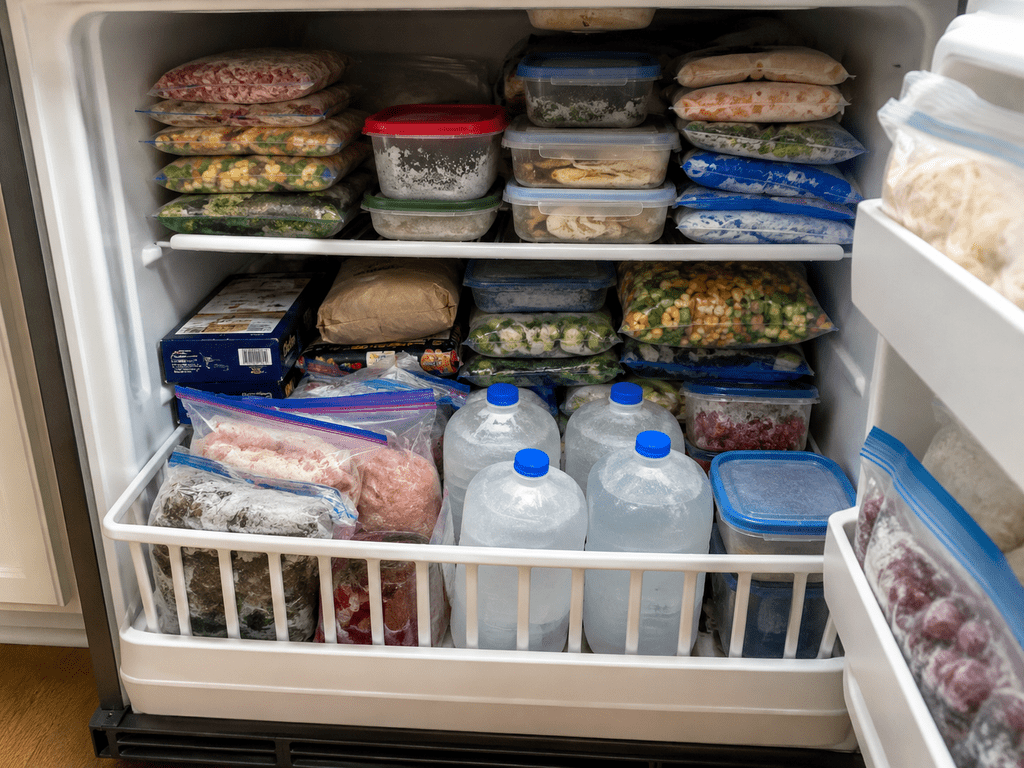
This is also why keeping frozen containers of water in unused freezer space can be so useful before storm season. Those blocks of ice fill empty space and create additional stored cold that works for you when the electricity stops. During an outage, resist the temptation to separate or spread frozen foods out. Keeping items grouped together helps them stay colder longer, a bit like people huddling together for warmth except you’re doing the opposite—you’re huddling packages together to preserve cold. If a prolonged outage is expected and you have access to additional ice or another safely cold storage option, you can make decisions later rather than opening the freezer immediately.
When power returns, partially thawed food is not automatically trash. If a food still contains ice crystals or has remained at 40°F or below, it may generally be safe to refreeze, although texture and quality can suffer. Meat, vegetables, prepared dishes, and frozen desserts all respond differently to thawing and refreezing, so quality becomes a separate consideration from safety. What you should not do is see one tiny ice crystal in a package that has otherwise sat warm for hours and use that as an excuse to keep it. The bigger picture matters. A freezer thermometer gives you much better evidence than touching packages and guessing. Treat those 48-hour and 24-hour figures as planning windows, then use actual temperature and food condition to make the final call.
The easiest power outage to manage is the one you prepared for before the weather forecast turned ugly. You do not need an elaborate emergency kitchen or a basement full of specialized equipment. A few low-cost habits can dramatically improve your odds of preserving food safely: keep appliance thermometers in the refrigerator and freezer, maintain some frozen water containers or cold packs, avoid running the freezer almost empty during storm-prone summer periods, and know where your coolers are before the lights go out. Preparation sounds boring right up until a severe storm knocks out electricity at 4:00 p.m. and everybody on the block suddenly wants ice at the same time.
Temperature is the most important thing to measure. Your refrigerator should normally be at or below 40°F, and your freezer should be around 0°F under normal operating conditions. A simple thermometer gives you a baseline before an outage and useful information afterward. Without one, you’re relying on touch, appearance, and guesses about how long the appliance stayed cold. Even if you never experience a prolonged outage, monitoring temperature can alert you to ordinary refrigerator problems before food starts spoiling. If the appliance continues having trouble maintaining a safe temperature after normal power has been restored, it may be time to consider professional refrigerator repair rather than treating the problem as an outage-related temperature change.
It also helps to think about what you store before severe weather. If storms are expected, avoid preparing an enormous amount of perishable food that will require refrigeration unless you know you’ll use it immediately. Cooked leftovers are wonderful when the power is stable but can become one more high-risk item competing for cold storage during an extended outage. Meanwhile, freezing items you will not use immediately can give them a much longer safety window.
Finally, keep the kitchen organized enough that you can find high-risk food quickly if you need to transfer it. Digging through twelve mystery containers with the refrigerator door open wastes cold. Preparation is less about buying emergency products and more about removing uncertainty. Know your temperatures, know where your ice is, know which food matters most, and know how you will act if four hours becomes eight.
An appliance thermometer may be the least exciting thing in your kitchen, but during a power outage it can become one of the most valuable. Without a thermometer, homeowners tend to make decisions based on whether a carton feels cool or whether frozen food still seems “pretty hard,” neither of which tells you enough about safety. A thermometer gives you an objective number. If your refrigerator is still holding at or below 40°F, you know the food has remained within the recommended cold range, and if the freezer remains well below freezing, there is no reason to begin transferring packages simply because the electricity has been off for several hours.
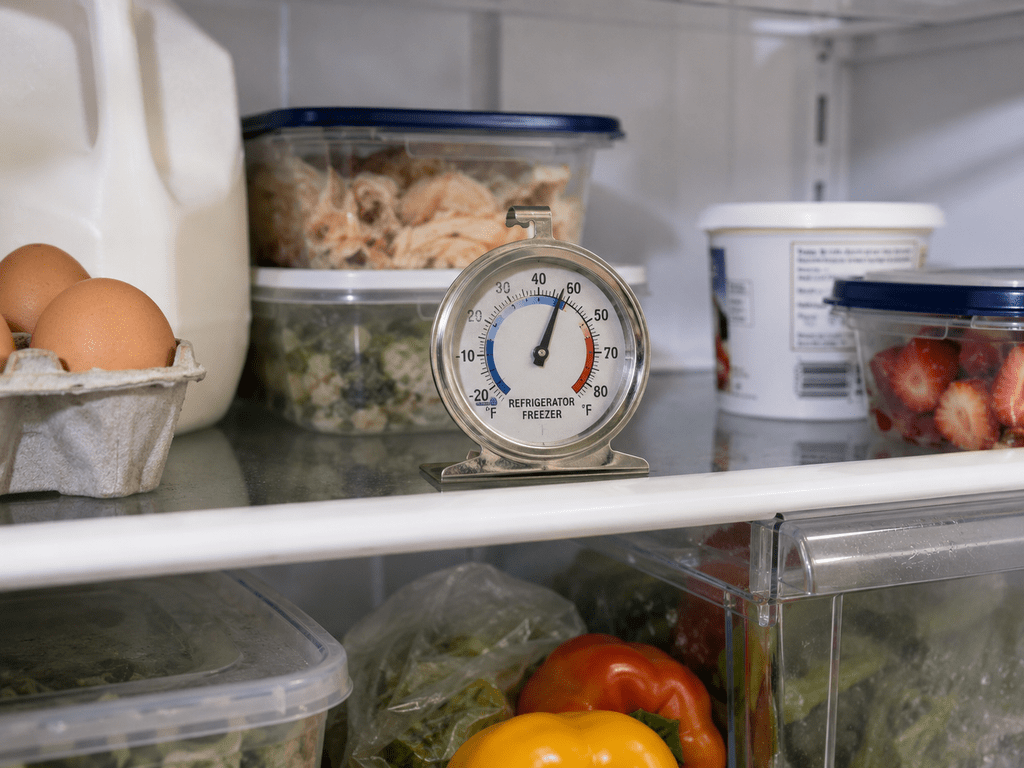
Frozen water is another simple tool. Leave a little expansion space in sturdy freezer-safe containers, freeze the water ahead of time, and use the containers to fill unused areas in the freezer. You’re effectively creating homemade thermal batteries: while the power is on, the freezer stores energy by turning that water into ice, and during an outage the ice absorbs incoming heat as it slowly melts. Larger solid blocks generally last longer than small pieces of loose ice because they have less surface area exposed to warm air. You can later transfer some of those frozen containers to a cooler if your refrigerator approaches the end of its safe holding window.
Smart staging means keeping frozen foods relatively grouped rather than scattering small items across an almost empty freezer. A dense cluster stays cold longer than isolated packages surrounded by air. You can also keep high-value or high-risk frozen items toward the center of the group, where temperatures tend to change more slowly than near the door.
None of this requires obsessing over your freezer every day. It is simply good summer readiness in a city where strong weather can occasionally interrupt electricity. A thermometer tells you what is happening, frozen water buys you time, and smart packing helps preserve the cold you’ve already paid to create. Together, those three habits turn your refrigerator and freezer from passive boxes into much more resilient food-storage systems.
When people talk about saving refrigerator food during an outage, they often picture moving everything into coolers. In reality, not everything in your refrigerator deserves equal priority. Your limited ice and cold storage should go first to high-risk perishable foods: raw meat and poultry, seafood, milk, eggs, soft or fresh cheeses, cooked meat, leftovers, cut produce, and prepared foods that normally require continuous refrigeration. These are the foods where unsafe bacterial growth becomes a genuine concern as temperature rises. Meanwhile, many whole fruits, unopened shelf-stable items, bread products, certain acidic condiments, and other foods may be far less urgent, depending on the specific product.
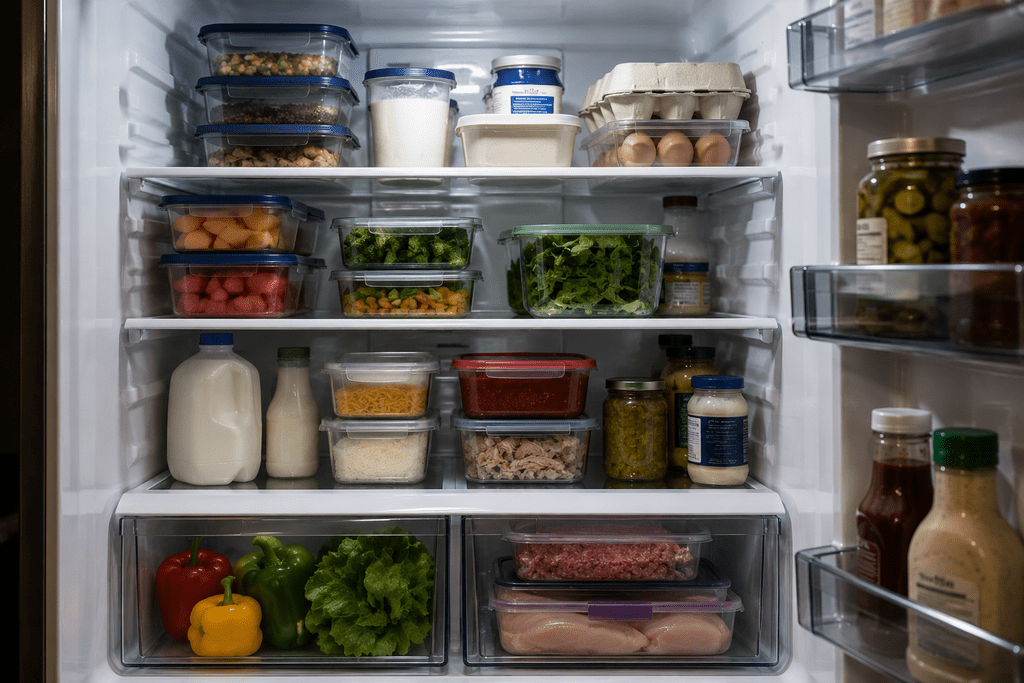
Organization makes this easier. If your raw meat is buried underneath five takeout containers, three beverage cartons, and a produce drawer full of vegetables, you may spend several minutes sorting through the refrigerator during the exact period when you’re trying to keep warm air out. A reasonably organized refrigerator lets you identify the foods you would move first if the outage passes the point where action becomes necessary. You don’t have to arrange it like a showroom. Just know where your high-risk foods live.
There is also a safety benefit beyond the outage itself. Raw animal products should already be stored in a way that limits dripping or cross-contamination, ideally contained and separated from ready-to-eat food. During an outage, condensation and warming can make messy packaging even more troublesome, particularly if you begin transferring items into a cooler. Place raw products in sealed bags or containers before packing them beside food that will be eaten without additional cooking.
If ice is limited, prioritize by risk, not by price alone. The expensive jar of specialty condiment may survive warming better than an inexpensive container of cooked rice or chicken. This is where knowing your refrigerator pays off. You’re not trying to save every ounce of food at any cost; you’re trying to use limited cold storage intelligently. A little organization before storm season means you can make those decisions in minutes instead of standing in front of an open refrigerator debating every shelf.
A cooler can save refrigerated food during a prolonged Cleveland power failure, but only if you use it as actual cold storage rather than as a box containing a few scattered ice cubes. The target is still 40°F or below for perishable food. A cooler that feels cool when you reach inside may nevertheless be holding food at an unsafe temperature, especially if it is repeatedly opened or sitting in direct sunlight. Pack it with plenty of ice, frozen cold packs, or frozen water containers, use a thermometer if possible, and keep the lid closed. Put the cooler in the coolest practical part of the house rather than on a sunny porch, inside a hot garage, or beside a window.
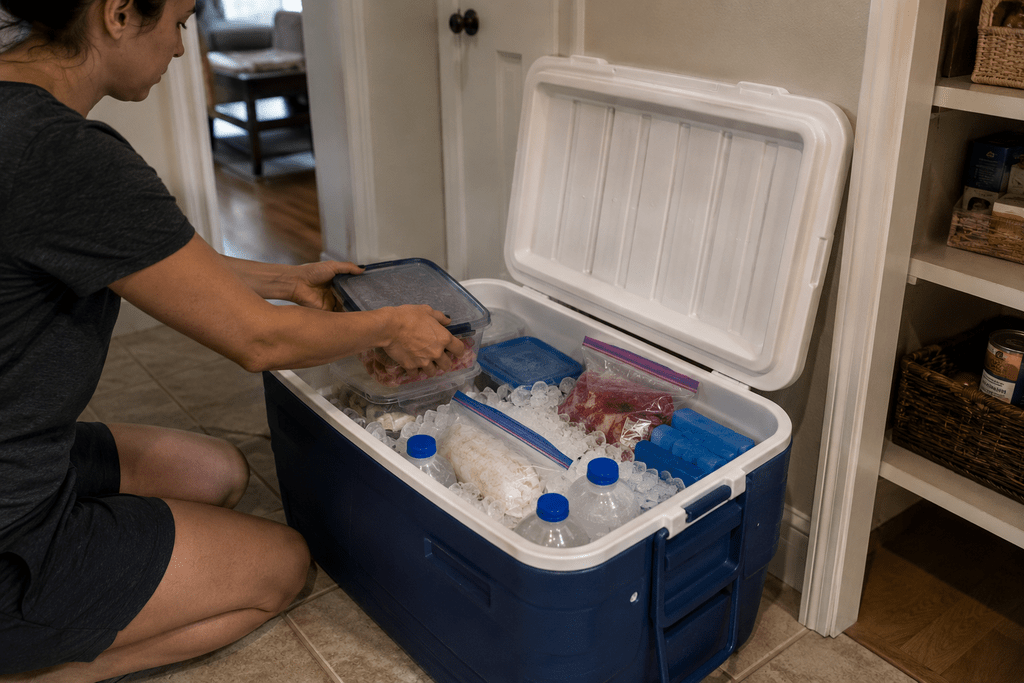
Pack strategically. Cold air sinks, but melting ice and direct contact can chill food unevenly, so distribute cooling sources throughout the cooler rather than placing one small bag of ice on top and assuming the whole interior will remain safe. Keep raw meats tightly sealed so melting ice water cannot spread contamination to ready-to-eat foods. If you have two coolers, an excellent strategy is to use one for frequently accessed drinks and snacks and reserve the second for perishables that stay closed as much as possible. That way people can grab water without releasing cold from the food you are actually trying to protect.
You may hear suggestions about using extremely cold cooling materials during long outages. Those can be effective, but they also require proper ventilation, gloves, and careful handling, and they should never be treated casually in an enclosed living area. For most households, ordinary bagged ice, frozen water, and good cooler discipline are simpler.
The biggest mistake is moving food into a warmer environment too early. If your refrigerator has been closed for only an hour but your cooler has been sitting empty in an 82°F kitchen, the refrigerator is probably the better place for the food at that moment. Transfer perishables when you can actually improve their temperature situation, not simply because transferring them feels proactive. Food safety rewards measured action, not frantic motion.
The lights coming back are a relief, but they are not an automatic reset button for food safety. Your refrigerator may start cooling immediately, yet food that spent too much time above a safe temperature does not become safe again simply because it is cold now. That is one of the most important concepts to understand after an outage. Refrigeration slows bacterial growth; it does not reverse whatever may have occurred during a prolonged warm period. This is why the notes you made about outage duration and any thermometer readings are so valuable once the compressor starts humming again.
Begin by checking the refrigerator and freezer temperatures rather than immediately sampling food. If the outage was short, the doors stayed closed, and the refrigerator remained at or below 40°F, your decision may be straightforward. If the outage lasted beyond the normal closed-refrigerator window, evaluate high-risk perishables based on how warm they became and how long they were above 40°F. With frozen food, look for remaining ice crystals and check temperature whenever possible. Items that remained at 40°F or colder may often be safely refrozen, although texture and flavor can change.
Next, inspect for leaks and packages that may have thawed. Raw meat liquids can spread as food warms, especially when packages have shifted or softened. Clean contaminated shelves and surfaces carefully rather than simply putting everything back where it was. If melted freezer contents leaked into drawers or onto other foods, handle cross-contamination separately from the temperature question.
Do not rush because you are worried about the refrigerator warming further—the power is back now, so the appliance can recover. Take the time to make safe choices. Tossing food is frustrating, particularly after a large grocery trip, but the money has already been spent whether the questionable food goes into dinner or the trash. Eating it cannot recover the cost. Once power returns, your job changes from conserving cold to evaluating food history calmly and letting the refrigerator and freezer return to normal operating temperatures.
If the refrigerator or freezer does not return to normal cooling after power is restored, the outage may have exposed an appliance problem rather than only a temporary loss of electricity. See Appliance Problems After a Cleveland Power Outage for signs to check after electrical service returns.
This is the part nobody enjoys. You’re holding a package that looks perfectly normal and thinking, “Surely this is still good.” The safest answer comes from time and temperature, not appearance. High-risk perishables that have been above 40°F for more than about two hours generally should be discarded, while foods that remained at or below 40°F have stayed within the standard refrigerated safety range. If you have no thermometer and the refrigerator has been without power for significantly longer than the commonly recommended four-hour closed-door window, you should be cautious with vulnerable foods instead of assuming they remained safe.
Meat, poultry, seafood, cooked leftovers, milk, eggs, soft cheeses, cooked vegetables, cut fruit, creamy foods, and many prepared refrigerated dishes deserve particular attention. They can support bacterial growth without developing a dramatic smell or visual change. Other items may tolerate warming better, but individual foods differ, so when you’re uncertain about a specific product, rely on established food-safety guidance rather than kitchen folklore.
For frozen food, thawing does not automatically mean disposal. If food still has ice crystals or has stayed at 40°F or below, it can often be refrozen safely, although you may notice a loss of texture. Frozen fruit may become softer, vegetables may lose crispness, and some prepared foods may separate. That’s a quality problem rather than necessarily a safety problem.
Never taste questionable food as a safety test. A tiny bite cannot tell you whether harmful bacteria or toxins are present, and “it tasted fine” is not useful evidence. The same goes for sniffing. Spoilage organisms may create obvious odors, but dangerous contamination does not always announce itself. When the food’s temperature history clearly places it outside safe limits, throwing it away is the correct decision even when it looks completely normal. That’s painful when the item was expensive, but food poisoning is a terrible way to try to get your money’s worth.
Avoiding refrigerator food loss during a Cleveland summer power failure is mostly about staying calm long enough to make a few smart decisions in the correct order. You do not need to empty the refrigerator the moment the lights go out, and you definitely do not need to stand there opening the door every half hour to see whether the milk still feels cold. Record the outage start time, keep refrigerator and freezer doors closed, preserve the cold already inside, and remember the core safety guidelines: an unopened refrigerator can generally hold safe temperatures for about four hours, a full closed freezer may remain cold for roughly 48 hours, and a half-full freezer is generally closer to 24 hours. When temperature information is available, use it. Forty degrees Fahrenheit is the number that matters for refrigerated perishables, not whether a container feels chilly in your hand.
Preparation makes everything easier. Appliance thermometers eliminate much of the guesswork. Frozen water containers add thermal mass and can later become cooler ice packs. Keeping high-risk foods organized allows you to transfer them quickly if an outage becomes prolonged. A well-packed cooler can extend safe storage, but only when it actually maintains food at 40°F or colder.
When electricity returns, resist the urge to declare victory and put everything back into normal circulation. Ask what happened to the food while the power was out. How long was it warm? What did the thermometer show? Does frozen food still contain ice crystals? Was raw food kept separate from ready-to-eat items?
Cleveland summers can deliver weather that changes quickly, and no household can prevent every power failure. What you can prevent is unnecessary food loss caused by repeated door opening, poor preparation, or guesswork. Protect the cold, track the time, measure the temperature, and be conservative when food safety is uncertain. That’s the formula. It is simple enough to remember in the dark and effective enough to save a freezer full of groceries when summer weather decides to make dinner plans for you.
We repair a wide range of household appliances including refrigerators, washers, dryers, ovens, dishwashers, and more. No matter the brand or model, our experienced technicians are ready to help. We repair commercial appliances as well: commercial washers dryers, commercial refrigerators & freezer & more.
We service a wide range of household appliances, including refrigerators, dryers, washers, ranges, cooktops, dishwashers, freezers, ice makers, ovens, and double ovens. Our technicians operate across many locations in Ohio, covering major cities like Cleveland, Akron, and Parma. We also serve surrounding areas including Lakewood, Westlake, Strongsville, and Brooklyn. Our service area extends to Rocky River, Euclid, Solon, Beachwood, and Cleveland Heights, as well as counties such as Cuyahoga, Lorain, Lake, and Medina. Additional cities we cover include North-Olmsted, North Ridgeville, Valley-City, Lorain, Avon Lake, Richfield, Brecksville, Garfield Heights, Seven Hills, Brunswick, Oakwood, Mentor, and Willoughby.