Appliance Problems After a Cleveland Power Outage
Updated: July 30, 2026


Cleveland summers can be a little sneaky. One week feels comfortable enough to leave the windows open, and the next brings heavy air, sticky countertops, and afternoon temperatures that make the kitchen feel warmer than the rest of the house. During those hot and humid stretches, your refrigerator becomes one of the hardest-working appliances in your home. It has to keep groceries safely chilled while dealing with warm room air, frequent door openings, moisture, crowded shelves, and the extra food and drinks that tend to arrive with cookouts, vacations, and family gatherings. When any part of the cooling system is already worn, dirty, or poorly ventilated, summer weather can expose that weakness quickly.
Many homeowners assume a refrigerator either works or it does not. Real life is rarely that simple. A struggling refrigerator may still sound normal, keep the freezer reasonably cold, and turn on its interior light while the fresh-food compartment slowly warms. It may run almost constantly without reaching the temperature shown on the control panel. Water may appear under the vegetable drawers, frost may spread across the freezer wall, or the ice maker may suddenly act like it has gone on vacation. These symptoms are not random annoyances. They are clues that help reveal whether the problem involves airflow, refrigerant movement, drainage, door sealing, sensors, electrical components, or the conditions around the appliance.
The tricky part is that summer refrigerator problems often overlap. A dirty condenser can make the compressor run longer. Longer operating cycles create more heat. That heat can worsen the effect of poor ventilation around the cabinet. Meanwhile, humid air entering through a weak gasket can produce condensation and frost, which restrict airflow and make temperatures rise even more. What begins as one small issue can become a chain reaction.
Understanding the most common refrigerator problems Cleveland homeowners face in summer can help you respond before groceries spoil or a minor repair becomes a major one. You do not need to become an appliance technician. You simply need to know which symptoms are harmless, which checks are safe, and when your refrigerator is clearly asking for professional attention.
A refrigerator works by moving heat, not by manufacturing cold air out of nowhere. Inside the cabinet, refrigerant absorbs heat from your food and the surrounding air. The system then carries that heat outside the refrigerator and releases it into the room. On a cool spring day, this process is relatively manageable. During a hot Cleveland afternoon, especially in a kitchen without strong air conditioning, the appliance must release its heat into air that is already warm. It is a bit like trying to cool down after a workout while standing in a crowded room with no fan. The job is possible, but it takes longer and demands more energy.
Humidity adds another challenge. Every time someone opens the refrigerator door, warm, moisture-heavy air enters the cabinet. The refrigerator must cool that air and remove much of the moisture from it. In a busy household, the door may open dozens of times during a summer day. Children look for cold drinks, guests check the snack shelves, and someone stands with the door open while deciding what to cook. Each opening may seem harmless, but together they create a significant cooling load.
Older Cleveland homes often have compact kitchens, narrow appliance openings, radiators, poorly insulated exterior walls, or limited air circulation. These characteristics can affect not only refrigerators but many other household appliances. If you would like to learn more about how older homes influence appliance performance, read our guide: Why Appliances in Older Cleveland Homes May Require Special Repair Attention.
Summer does not automatically cause refrigerator failure. A healthy, correctly installed appliance should handle normal seasonal changes. However, hot and humid weather can reveal problems that remained hidden during cooler months. Weak fans, dirty coils, failing sensors, worn door seals, and marginal compressors may all become noticeable once the refrigerator has less room for error. That is why a refrigerator that seemed perfectly fine in April may begin struggling in July.
When the temperature around a refrigerator climbs, its cooling cycles naturally become longer. The compressor, which acts as the heart of the sealed cooling system, must circulate refrigerant until the interior reaches the target temperature. In moderate conditions, it may run for a while, shut off, and remain quiet until temperatures rise again. In a hot kitchen, it may restart sooner and operate for longer periods. This does not always mean something is broken. The real concern begins when the compressor rarely stops, the cabinet stays too warm, or the exterior surfaces become unusually hot.
Fresh groceries can add a surprising amount of heat. Imagine returning from a West Side Market trip or a large grocery run with several bags of produce, drinks, meat, and prepared food. Everything entering the refrigerator may be warmer than the cabinet interior. The appliance must remove that heat before it can settle back into its normal cycle. Placing hot leftovers directly inside creates an even heavier load. One warm pot of soup can raise the surrounding temperature enough to make the refrigerator work aggressively for hours.
Direct sunlight and nearby appliances also affect performance. A refrigerator beside a frequently used oven or dishwasher absorbs some of the heat those appliances release. Sunlight coming through a kitchen window can warm one side of the cabinet for several hours each day. Even a tight decorative panel can trap heat around the condenser area. The refrigerator may be functioning exactly as designed while the installation forces it to operate under difficult conditions.
Homeowners sometimes respond by turning the temperature control to its coldest setting. That can make matters worse. The appliance may run longer without addressing the real cause, increasing wear and possibly freezing food near the cold-air outlets. A better response is to measure the actual interior temperature, check airflow around the unit, and look for obvious heat sources. The fresh-food section should generally remain around 37°F, while the freezer should stay near 0°F. A small refrigerator thermometer is far more reliable than judging temperature by touching a milk carton or feeling the air when the door opens.
Humidity is invisible until it becomes water, frost, or a sticky film inside the refrigerator. Warm summer air can hold much more moisture than cold air. When that air enters the chilled cabinet, the moisture condenses on cold surfaces, much like water forming on the outside of a glass of iced tea. The refrigerator’s defrost and drainage systems are designed to manage normal amounts of moisture. Problems begin when humid air enters faster than the appliance can remove it.
Frequent door openings are one cause, but damaged seals can create a continuous leak. A small gap in the gasket allows room air to enter around the clock. The refrigerator responds by cooling longer, while moisture collects on shelves, food containers, vents, and freezer panels. In the freezer, that moisture becomes frost. As frost thickens, it can interfere with fan movement and block the pathways that carry cold air into the refrigerator compartment. The original seal problem then creates an airflow problem, which creates a temperature problem.
Uncovered food adds moisture too. Cut fruit, warm leftovers, open pitchers, and loosely wrapped vegetables release water vapor into the cabinet. During humid weather, the system is already dealing with extra moisture from the room, so poor food storage can push it further. Containers should be covered once food has cooled enough for safe storage. Produce drawers should not be packed so tightly that air cannot circulate around them.
External condensation can also appear around door edges, dispenser areas, or cabinet surfaces. A small amount of surface moisture during extremely humid weather may not indicate a defect, especially if the home is not air-conditioned. Heavy dripping, recurring puddles, or condensation in one specific location deserves a closer look. The cause could be a failed anti-sweat heater, poor gasket contact, incorrect door alignment, damaged insulation, or an improperly closed door.
Think of humidity as an uninvited guest that slips in whenever it finds an opening. The refrigerator can escort a few visitors out without trouble. When the door seal, usage habits, and room conditions allow a crowd to enter, moisture begins showing up everywhere.
A warm refrigerator is the summer problem that gets everyone’s attention. Milk does not feel cold, produce wilts sooner than expected, leftovers develop unusual odors, and drinks never become refreshing. The first instinct is often to blame the compressor, but several simpler problems can create the same symptom. Poor airflow, dirty condenser coils, a blocked vent, an open door, incorrect settings, or a failed fan can all prevent the appliance from maintaining a safe temperature.
The freezer may provide an important clue. If the freezer is cold but the refrigerator section is warm, the sealed cooling system may still be working. Many refrigerators generate most of their cold air in the freezer and use a fan and air channels to move some of it into the fresh-food compartment. When frost, food packages, a broken damper, or a failed evaporator fan interrupts that flow, the freezer can appear normal while the refrigerator warms. In that situation, adding refrigerant would not solve the problem because refrigerant loss may not be involved at all.
If both compartments are warming, look at the appliance’s operating behavior. Is the compressor running? Can you hear a fan? Is the refrigerator completely silent except for the light? Did a breaker trip? Was the unit accidentally switched to a showroom, vacation, or cooling-off mode? Modern control panels can be changed by leaning against them or cleaning them, so settings deserve a quick check before assuming the worst.
Food safety should guide your response. Perishable food should not remain above 40°F for extended periods. Do not rely on smell alone because harmful bacterial growth is not always obvious. Use a thermometer, limit door openings, and move vulnerable food to a working refrigerator or a properly iced cooler when temperatures continue rising.
A refrigerator that cannot maintain safe temperatures during ordinary use needs attention, even if it occasionally feels cold. Cooling performance should be consistent. If the temperature swings widely or improves only at night when the kitchen cools down, the appliance may be operating at the edge of its capacity.

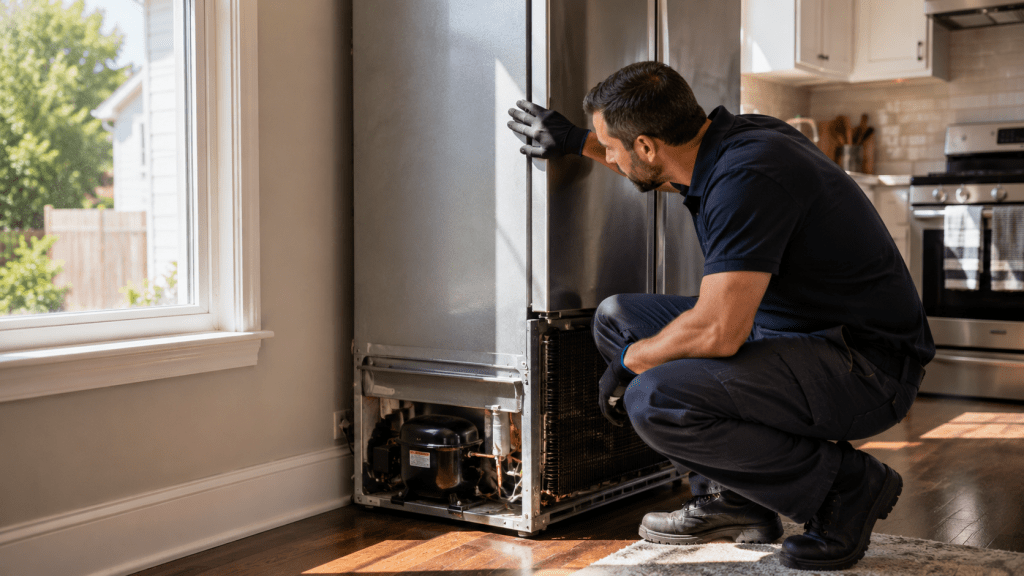
Condenser coils release the heat removed from inside the refrigerator. Depending on the model, they may be located underneath the cabinet, behind a lower front grille, or across the rear of the appliance. As air moves across them, dust, pet hair, grease, and lint collect on their surfaces. That layer works like a winter coat the refrigerator never asked to wear. Heat becomes trapped, operating pressures rise, and the compressor must run longer to produce the same amount of cooling.
Summer is when dirty condenser systems often reveal themselves. The refrigerator may have managed adequately during cooler months because the surrounding air helped absorb heat. Once the kitchen becomes warmer, the appliance loses that advantage. The compressor runs for long stretches, exterior panels feel hot, and temperatures begin creeping upward. If the condenser fan is also obstructed or failing, the effect can be dramatic.
Cleaning accessible condenser areas can be valuable preventive maintenance, but homeowners should proceed carefully. Unplug the refrigerator before cleaning near mechanical or electrical components. Use a coil-cleaning brush and a vacuum rather than sharp objects or high-pressure air that might damage wiring or drive debris deeper into the machine. Some modern models have condenser designs that manufacturers do not expect homeowners to access, so the owner’s manual should guide the process.
Airflow around the cabinet matters just as much as coil cleanliness. A refrigerator needs the clearances specified by its manufacturer. Pushing it tightly against the wall can crush ventilation space, while installing it inside a custom enclosure may trap warm air above and behind the unit. Items stored on top can block vents on certain models. Dust-covered front grilles can also reduce air movement.
After cleaning and correcting obvious clearance issues, allow the appliance time to stabilize. A refrigerator does not return to normal temperature instantly, especially when it contains warm food. If cooling remains weak, the problem may involve the condenser fan, compressor, start components, refrigerant circuit, temperature controls, or internal airflow. Clean coils help a healthy refrigerator breathe, but they cannot revive a failed mechanical component.
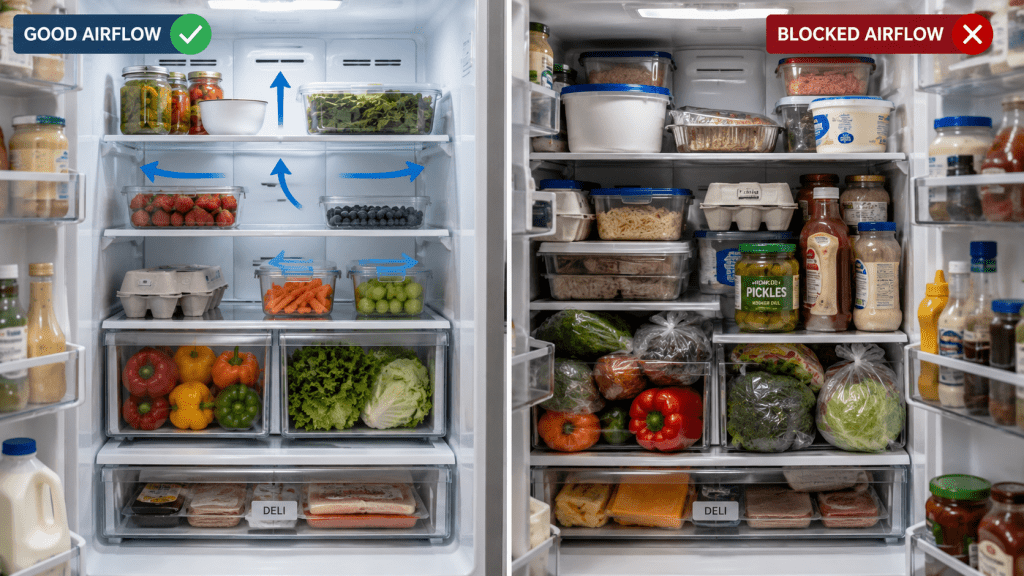
A packed refrigerator may look efficient, especially before a holiday weekend or backyard cookout. In reality, filling every inch can prevent cold air from moving where it needs to go. Refrigerators depend on circulation. Fans push chilled air through vents, around shelves, and back toward temperature sensors. When large containers, grocery bags, pizza boxes, or tightly packed produce block those pathways, some areas become too cold while others warm up.
The location of food matters. Items pushed against the rear wall may freeze because they sit near cold-air outlets or the evaporator area. Food stored in the door may warm more quickly because the door is exposed to room air each time it opens. Tall packages can block supply vents near the top or rear of the compartment. When airflow becomes uneven, the control system may receive misleading temperature information and run the compressor longer than necessary.
A refrigerator should be comfortably full, not crammed. Stored food helps maintain temperature when the door opens, but air still needs room to circulate. Avoid lining shelves with towels, foil, cardboard, or solid mats unless the manufacturer specifically approves them. These materials can block downward airflow and create warm pockets. Keep visible vents open, and leave space around large containers.
Overloading the freezer creates similar trouble. Packages can block the evaporator fan cover or prevent the door from closing completely. A slightly open freezer door may not trigger an obvious alarm, especially on an older model. Humid air enters, frost develops, and the fan eventually struggles to move air through the frozen buildup. The refrigerator section then warms because it is no longer receiving enough cold air.
Before scheduling a repair for uneven cooling, reorganize the interior and verify that both doors close freely. Check for packages protruding from shelves, ice bins installed incorrectly, and drawers that do not slide fully into place. Give the refrigerator several hours to recover after making changes. If temperatures remain unsafe or the airflow from the vents feels weak, a fan, damper, sensor, or defrost problem may require professional diagnosis.
A refrigerator should run regularly during hot weather, but it should not sound as though it is competing in a marathon with no finish line. Long cycles are normal after a large grocery trip, during a heat wave, or after the doors have been open for an extended period. Continuous operation becomes concerning when it lasts day and night, creates excessive heat, raises utility usage, or fails to produce properly cold temperatures.
Several conditions can keep the compressor running. Dirty condenser coils prevent efficient heat release. Poor cabinet clearance traps warm air. A damaged door gasket allows continuous heat and moisture infiltration. Weak fans reduce airflow, while a failing temperature sensor may incorrectly report that the interior is too warm. Refrigerant problems or compressor wear can also reduce cooling capacity, forcing the system to run longer without reaching its target.
Some refrigerators sound active even when the compressor is off. Fans may continue operating, ice makers may cycle, dampers may adjust, and electronic controls may produce soft humming sounds. Learning the appliance’s normal sounds can prevent unnecessary concern. The useful question is not simply, “Can I hear it?” but, “Is the compressor running nearly all the time, and are temperatures correct?”
The exterior can become warm during normal operation because the refrigerator is releasing heat. Some models also route warm refrigerant lines near door openings to reduce condensation. Warmth is expected; extreme heat accompanied by a burning smell, repeated clicking, or poor cooling is not. Avoid touching internal components or removing energized panels to investigate.
A constantly running refrigerator should be evaluated as a complete system. Start with temperature measurements, door closure, coil condition, room temperature, and airflow. Consider recent changes, such as moving the appliance, installing new cabinets, loading it heavily, or changing the control setting. When basic corrections do not restore normal cycling, a technician can test electrical loads, sensors, fans, sealed-system pressures, and compressor performance.
Ignoring continuous operation is expensive in two ways. It wastes energy today and accelerates wear on the appliance’s hardest-working components tomorrow.
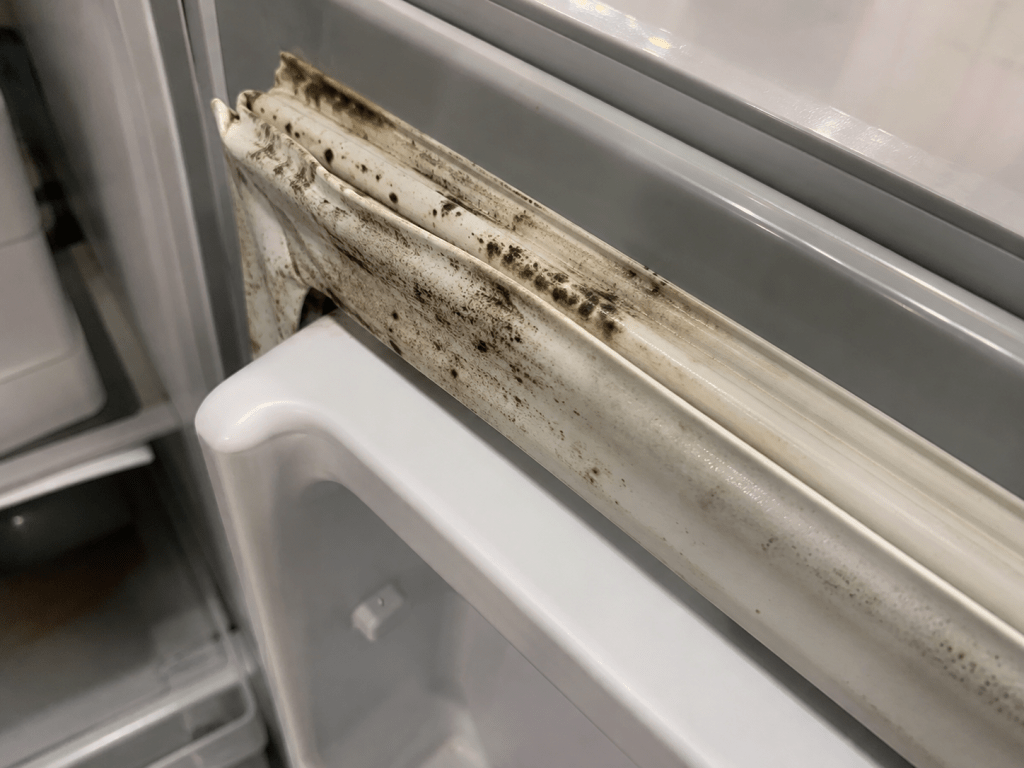
The rubber gasket around a refrigerator door looks simple, but it performs one of the appliance’s most important jobs. It creates a flexible seal between the cold cabinet and the warm kitchen. When the gasket is clean, correctly shaped, and pressed evenly against the frame, the refrigerator can maintain temperature efficiently. When it is torn, hardened, warped, dirty, or partially detached, warm humid air slips inside every minute of the day.
A failing gasket can cause several symptoms at once. The refrigerator runs longer. Moisture forms around shelves or door edges. Frost develops in the freezer. Food near certain areas warms or spoils quickly. The door may appear closed but reopen slightly after someone walks away. In severe cases, condensation drips onto the floor or collects beneath drawers.
Homeowners can perform a simple visual inspection. Look for cracks, loose corners, hardened sections, food residue, and areas that do not contact the cabinet evenly. Clean the gasket with mild soap and warm water, then dry it thoroughly. Grease and sticky spills can prevent proper contact. Avoid harsh chemicals that may damage the material.
The familiar paper test can also provide clues. Close the door on a thin strip of paper and gently pull it. You should feel resistance. Repeat the test at several points around the perimeter because one section may leak while the rest seals properly. This test is not perfect, but a strip that falls out without resistance suggests weak contact.
The gasket is not always the original problem. A refrigerator that is not level can allow the door to hang incorrectly. Heavy containers stored in the door can strain hinges. A broken hinge cam or worn closer can prevent full closure. Shelves, bins, and food packages may also interfere. Replacing the gasket without correcting alignment can leave the leak unchanged.
During Cleveland’s humid summer weather, even a small opening can introduce a surprising amount of moisture. Repairing the seal reduces cooling demand, limits frost, and protects food. It is one of those small fixes that can make the entire refrigerator seem healthier.
Water around a refrigerator can come from several sources, and not all of them indicate the same repair. Condensation may form because humid air is entering through a poor seal. A defrost drain may be clogged, causing meltwater to overflow into the fresh-food compartment or onto the floor. A water-supply line may be loose or cracked. The ice maker could be overfilling, or the dispenser system might be leaking after use. Finding the location and timing of the water is essential.
Start by observing where moisture appears. Water beneath the vegetable drawers often points toward a blocked defrost drain on models that route meltwater through the refrigerator compartment. A puddle behind the appliance may come from the supply line, inlet valve, drain pan, or household shutoff. Water at the front may be traveling from a door, dispenser, or internal drain before reaching the floor. Because floors are not always level, the visible puddle may be several feet from the actual leak.
Summer humidity makes diagnosis more confusing. Condensation can develop on cold water lines, cabinet surfaces, and door frames without a traditional leak. A sweating supply line may drip enough to create a puddle, particularly in a warm basement or unconditioned kitchen. Wiping the area dry and watching where moisture returns can help distinguish condensation from pressurized leakage.
Do not ignore small refrigerator leaks. Water can damage hardwood flooring, loosen laminate, stain ceilings below the kitchen, and encourage mold in hidden spaces. A slow supply-line leak may continue even when the refrigerator is unplugged because household water pressure remains present. If water is flowing actively, use the appropriate shutoff valve when it can be operated safely. Do not force a corroded valve that appears likely to break.
Electrical safety matters whenever water reaches cords, outlets, or powered components. Avoid standing in water while touching the appliance. Disconnect power only when it is safe to reach the plug or breaker. A technician may need to coordinate with a plumber when the leak originates from household piping rather than the refrigerator itself.
Frost-free refrigerators periodically warm the evaporator area to melt accumulated frost. That water is supposed to travel through a drain tube into a pan near the bottom of the appliance, where it evaporates. When food particles, ice, dust, or biological buildup blocks the drain, water has nowhere to go. It may collect beneath drawers, freeze into a sheet on the freezer floor, or leak from the front of the cabinet.
A clogged drain often creates a repeating pattern. Water appears, gets cleaned up, and returns after another defrost cycle. In a freezer-on-top model, homeowners may notice ice on the bottom of the freezer and water dripping into the refrigerator below. In a bottom-freezer model, a thick slab of ice may form beneath the drawer. The exact pattern depends on the appliance design.
Clearing a defrost drain can sound simple, but access varies widely. Some drains are reachable through an interior opening, while others require removal of panels near sharp metal edges, fans, heaters, sensors, and wiring. Pushing a rigid object into the drain can puncture tubing or move a blockage deeper. Pouring excessive hot water can overflow into electrical areas. When access is not clearly described in the owner’s manual, professional service is the safer route.
Sweating doors involve a different mechanism. Refrigerator cabinets may use electric heaters or warm refrigerant tubing around door openings to prevent condensation. Some models include an energy-saving control that reduces this heat. During humid weather, turning on an anti-condensation feature may help if the appliance offers one. Persistent sweating can also result from gasket leaks, damaged insulation, poor door alignment, or a kitchen humidity level that is simply overwhelming the appliance.
Wipe moisture promptly and inspect the seal before assuming an internal failure. Check whether the door closes evenly and whether the refrigerator is level. If one area repeatedly becomes wet while the rest remains dry, the location provides a useful diagnostic clue. Water has a path and a cause; finding both is more effective than repeatedly placing a towel under the appliance.
The ice maker often becomes the first refrigerator feature to struggle during a hot summer. Demand increases just as the appliance’s workload rises. Families fill coolers, make iced drinks, and empty the ice bin faster than usual. At the same time, warm kitchen air, frequent freezer-door openings, and fresh groceries make it harder for the freezer to maintain the low temperature required for efficient ice production.
An ice maker needs more than water. It needs sufficiently cold temperatures, correct water pressure, a working inlet valve, an unobstructed fill tube, functioning sensors, and a clear mechanical path for harvesting cubes. If the freezer temperature rises even modestly, ice production may slow or stop. The refrigerator can still keep food frozen enough to appear normal while remaining too warm for reliable ice-making cycles.
Small or hollow cubes often indicate restricted water flow. A partially closed shutoff valve, clogged filter, frozen fill tube, weak inlet valve, or low household pressure can limit the amount of water entering the mold. Large fused clumps may result from partial melting and refreezing, a dripping valve, or warm air entering around the door. Cloudy or unpleasant-tasting ice can come from an old filter, stale ice, uncovered food, or a dirty bin rather than a mechanical failure.
The filter deserves attention, but it should not become the automatic explanation for every ice problem. Replacing a filter will not repair a failed fan or restore proper freezer temperature. Some nonapproved filters can also create flow issues if they do not fit or seal correctly. Follow the refrigerator manufacturer’s specifications and replacement schedule.
Freezer performance affects more than ice. Soft ice cream, flexible frozen vegetables, frost-covered packages, or meat that repeatedly thaws at the edges are warning signs. The freezer may be too warm even though everything still looks frozen. Measure the temperature rather than guessing. A freezer near 0°F provides safer storage and allows the ice maker to operate as intended.
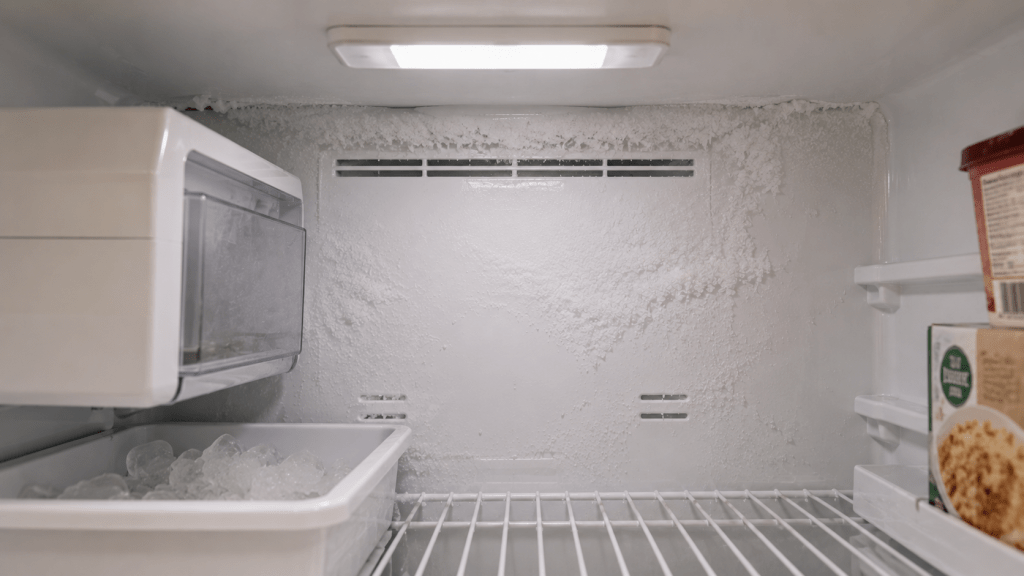
Frost inside a freezer tells a story. A light coating on a package after the door was left open may be harmless. Thick frost on the back wall, around vents, or across multiple packages suggests that excess moisture is entering or the automatic defrost system is not working correctly. The location and texture of the frost can help distinguish between door leakage, airflow problems, and component failure.
When the defrost heater, sensor, thermostat, or control system fails, frost accumulates on the evaporator coil behind an interior panel. At first, the freezer may seem especially cold. As the ice thickens, however, it blocks airflow. The fan can no longer move enough cold air into the refrigerator section, and temperatures begin rising. Homeowners often discover the problem when milk warms even though the freezer still contains ice.
Soft ice cream is a useful early warning because it responds quickly to small temperature changes. Frozen vegetables may feel firm at temperatures where ice cream becomes noticeably soft. Slow ice production provides another clue. If the ice maker has water but produces only a few batches per day, the freezer may not be reaching the temperature required to trigger regular cycles.
Door leakage can create similar symptoms. A package may prevent the drawer from closing fully, or frost may build along one edge where the gasket does not seal. Warm humid air enters, moisture freezes, and the appliance runs longer. Before assuming a defrost-system failure, check the entire door perimeter, drawer alignment, and storage arrangement.
Do not remove heavy frost with a knife, screwdriver, hair dryer, heat gun, or boiling water. Sharp tools can puncture refrigerant tubing, while concentrated heat can deform plastic and damage wiring. Unplugging and completely defrosting the appliance may temporarily restore airflow, but it does not repair a failed defrost component. The frost will return.
A professional can test the heater, sensors, fan, controls, and temperature performance rather than replacing parts by guesswork. That matters because several failures produce nearly identical visual symptoms. The goal is not simply to melt the ice. It is to discover why the refrigerator allowed it to build up.
Refrigerators make more sounds than many homeowners realize. Refrigerant can gurgle through tubing. Plastic liners pop as temperatures change. Fans hum, dampers click, and ice makers fill with water before dropping cubes into the bin. Modern variable-speed compressors may change pitch as their workload changes. During summer, these sounds may become more noticeable because the refrigerator runs longer.
The useful distinction is between normal operating sounds and new, persistent, or aggressive noises. A fan blade striking frost can produce a rhythmic scraping or buzzing sound. A worn fan motor may squeal or rumble. Repeated clicking near the compressor can indicate that a start device is trying unsuccessfully to energize it. Vibration may come from the cabinet touching a wall, a loose drain pan, or an unlevel floor rather than an internal failure.
Odors require similar detective work. Spoiled food, dirty drip pans, old ice, clogged drains, and spills beneath drawers are common causes. An electrical or burning odor is different and should be taken seriously. Hot insulation, damaged wiring, a failing motor, or an overheated connection can produce smells that resemble burning plastic, hot dust, or fish. Continuing to operate the refrigerator without investigation may increase the risk of component damage or fire.
Electrical symptoms include dimming lights, flickering displays, repeated control resets, tripped breakers, warm outlets, and cords that feel hot. A refrigerator compressor draws extra current during startup, so weak receptacles and loose connections may reveal themselves at that moment. Extension cords and lightweight power strips are not appropriate long-term supplies for a refrigerator.
When a strange sound or odor appears, note exactly when it occurs. Does the noise begin when the compressor starts, when the freezer door closes, or when the ice maker fills? Does the smell come from inside the food compartment or from behind the appliance? Those observations can shorten the diagnostic process. A smartphone recording may also capture an intermittent sound that disappears before the technician arrives.
A single click can be normal. Refrigerators contain relays, dampers, ice-maker mechanisms, and controls that engage throughout the day. Repeated clicking every few minutes, especially when the compressor does not begin running, is more concerning. It may indicate a failing start relay, an overloaded compressor, unstable voltage, or a control issue. The appliance may briefly hum, click off, sit quietly, and try again.
Buzzing can also have several meanings. A short buzz when the ice maker fills may be normal valve operation. A louder buzz with no water entering can occur when the ice maker is switched on but the supply is closed. Buzzing from the freezer may come from a fan striking frost. A continuous electrical buzz near the compressor or control area should be evaluated, especially if cooling performance changes.
Burning smells deserve immediate caution. If the odor is clearly electrical, unplug the refrigerator when doing so is safe and avoid reconnecting it merely to “see whether it happens again.” Food can be protected in another refrigerator or an ice-filled cooler while the appliance is inspected. If the plug, outlet, or wall plate is hot, discolored, melted, or sparking, the household electrical connection may require a licensed electrician in addition to appliance service.
Do not remove the rear access cover while the refrigerator is energized. Capacitors, moving fans, exposed terminals, and hot compressor surfaces can create hazards. A compressor can remain hot long after the unit is disconnected. Water from a nearby leak can make electrical diagnosis even more dangerous.
A useful emergency rule is simple: new noise plus poor cooling, noise plus repeated electrical interruption, or any burning odor deserves prompt attention. The refrigerator may continue running, but continued operation is not proof of safety. Mechanical and electrical failures often worsen under summer load because components receive fewer opportunities to cool.
Professional testing can determine whether the problem is a replaceable start component, a fan obstruction, a supply-voltage issue, or a failing compressor. Those outcomes have very different repair costs, so accurate diagnosis matters.
You can gather valuable information without dismantling the refrigerator. Begin with actual temperature measurements. Place an appliance thermometer in the center of the fresh-food compartment and another in the freezer. Avoid checking immediately after loading groceries or leaving the door open. Give the refrigerator several hours under normal use, then record the readings. This simple step turns “it feels warm” into useful evidence.
Next, inspect the doors. Make sure food packages, bins, and drawers are not interfering with closure. Look for gaps around the gasket, and clean sticky residue with mild soap and water. Confirm that the interior light switches off when the door closes. A light that stays on adds heat, although verifying this may require using the door switch rather than trying to watch through a closing door.
Check the controls for accidental changes. Digital panels may display error codes or indicate a cooling-off mode. Mechanical dials can be bumped by large containers. Do not immediately choose the coldest setting. Start with the manufacturer’s recommended position and allow enough time for the system to respond.
Listen for fans and compressor operation, but keep your hands away from moving or energized components. Look through accessible ventilation grilles for heavy dust. Check whether the appliance has reasonable clearance from the wall and whether nearby heat sources are affecting it. Inspect the visible water-supply line for moisture, kinks, or damage without pulling the refrigerator so aggressively that the line or power cord becomes stressed.
Homeowners should stop when diagnosis requires electrical measurements, refrigerant work, internal panel removal, or access to sharp and energized areas. The same applies to heavy appliances that cannot be moved safely. Refrigerators can tip, damage flooring, or tear water lines when handled incorrectly.
The purpose of these checks is not to replace professional repair. It is to rule out simple causes and provide better information. Knowing the temperature, symptom pattern, recent changes, and location of water or frost can save time and help a technician arrive prepared.
A good maintenance routine does not need to consume an entire weekend. A few focused habits can reduce strain during Cleveland’s hottest and most humid weeks. Start by checking temperatures every month during summer. A small change may reveal a developing problem before food begins spoiling. Keep the refrigerator around 37°F and the freezer near 0°F, unless the manufacturer recommends a different setting for your model.
Clean visible door gaskets regularly. Spilled juice, syrup, crumbs, and grease can prevent a smooth seal. Inspect corners for tears and make sure the door closes without needing a hard push. Avoid placing oversized containers in door bins if their weight causes sagging or misalignment.
Keep interior vents open and organize food so air can circulate. Use covered containers, especially for moist leftovers and cut produce. Allow very hot food to stop steaming heavily before refrigerating it, but do not leave perishable food at room temperature for an unsafe period. Dividing a large batch into smaller shallow containers helps it cool more efficiently.
Inspect accessible condenser areas according to the owner’s manual. Homes with shedding pets, kitchen remodeling dust, or heavy cooking grease may need more frequent cleaning. Keep the front grille clear and avoid storing objects against ventilation openings. Confirm that the refrigerator is not pushed so tightly against the wall that heat cannot escape.
Replace water filters with approved models when required. Old filters can reduce dispenser and ice-maker flow, while poorly fitting replacements may leak. Empty stale ice, wash the removable bin, and check for clumping that could indicate partial melting.
During vacations, avoid switching off a refrigerator that contains food. If the appliance will be empty and unplugged, clean and dry it thoroughly, then leave the doors safely propped open to prevent odors and mold. For normal summer travel, remove highly perishable items before leaving and consider placing a cup of frozen water with a coin on top in the freezer. If the coin sinks deeply into refrozen water, a prolonged thaw may have occurred.
Some refrigerator problems can be corrected by cleaning a gasket, reorganizing shelves, adjusting a setting, or improving ventilation. Others require tools, training, model-specific information, and safe access to electrical and refrigerant components. The challenge is knowing when the appliance has crossed that line.
Call for professional service when the refrigerator cannot maintain safe temperatures after basic checks, especially when both compartments are warming. Repeated compressor clicking, a nonrunning fan, heavy frost behind an interior panel, recurring water leaks, electrical odors, tripped breakers, and error codes that return after a reset also deserve diagnosis. A refrigerator that works only intermittently can be more difficult to troubleshoot, but intermittent operation is not a reason to ignore it.
Sealed-system repairs require specialized equipment and legal handling of refrigerants. Symptoms may include weak cooling in both compartments, unusually long compressor operation, partial frost patterns, or a compressor that runs without producing enough temperature change. These symptoms can also come from simpler problems, which is why testing matters. Adding refrigerant without identifying and repairing a leak is not a proper long-term solution.
Choose a technician who asks about the model number, temperature readings, noises, frost location, water patterns, and recent changes. Clear communication is a good sign. A professional should explain what failed, how it was tested, whether another condition contributed, and whether the repair makes economic sense.
Repair-versus-replacement decisions depend on age, overall condition, part availability, efficiency, repair cost, and the value of the appliance. A failed fan in an otherwise reliable refrigerator may be worth repairing. A major sealed-system failure in an older basic model may not be. Built-in and premium refrigerators can justify more extensive repairs because replacement and installation costs are higher.
During summer, scheduling service early matters because a marginal refrigerator may deteriorate rapidly under heavy load. Do not wait until every item is warm. The appliance usually offers clues first: longer cycles, softer frozen food, slow ice production, condensation, or unusual sound changes. Paying attention to those early warnings can protect both your groceries and your budget.
Hot and humid Cleveland weather does not magically break refrigerators, but it does make existing weaknesses harder to hide. A refrigerator that has dirty coils, a weak fan, worn gaskets, blocked vents, drainage problems, or aging electrical components may perform acceptably during cooler months. Once summer heat increases the workload and humidity adds moisture, those small weaknesses can become obvious failures.
The most common symptoms are connected. Poor cooling can result from blocked airflow. Blocked airflow can come from frost. Frost can develop because a door is leaking humid air or the defrost system has failed. A constantly running compressor may be responding to dirty coils, warm room conditions, incorrect temperature information, or a sealed-system problem. Water on the floor may come from a clogged drain, sweating line, damaged supply tube, or dispenser leak. Looking at only one symptom can lead to the wrong conclusion.
Cleveland homeowners can prevent many summer problems by measuring temperatures, keeping vents clear, cleaning accessible condenser areas, checking door seals, covering food, replacing filters correctly, and responding quickly to unusual moisture or sounds. These habits are simple, but they reduce the amount of heat and humidity the appliance must manage.
The most important rule is to respect food safety and electrical warning signs. A refrigerator that remains above safe temperatures should not be trusted with perishable food. A burning smell, hot outlet, active leak near electrical components, or repeated breaker trip requires immediate caution. These are not problems to postpone until the weather cools.
Your refrigerator is easy to take for granted because it works quietly in the background every day. During a Cleveland summer, however, it is doing serious work. Give it enough airflow, keep its doors sealed, watch for early changes, and bring in a qualified Cleveland refrigerator repair professional when the symptoms move beyond simple maintenance. A timely diagnosis is almost always less painful than discovering a warm refrigerator full of groceries on the hottest afternoon of the year.
We repair a wide range of household appliances including refrigerators, washers, dryers, ovens, dishwashers, and more. No matter the brand or model, our experienced technicians are ready to help. We repair commercial appliances as well: commercial washers dryers, commercial refrigerators & freezer & more.
We service a wide range of household appliances, including refrigerators, dryers, washers, ranges, cooktops, dishwashers, freezers, ice makers, ovens, and double ovens. Our technicians operate across many locations in Ohio, covering major cities like Cleveland, Akron, and Parma. We also serve surrounding areas including Lakewood, Westlake, Strongsville, and Brooklyn. Our service area extends to Rocky River, Euclid, Solon, Beachwood, and Cleveland Heights, as well as counties such as Cuyahoga, Lorain, Lake, and Medina. Additional cities we cover include North-Olmsted, North Ridgeville, Valley-City, Lorain, Avon Lake, Richfield, Brecksville, Garfield Heights, Seven Hills, Brunswick, Oakwood, Mentor, and Willoughby.